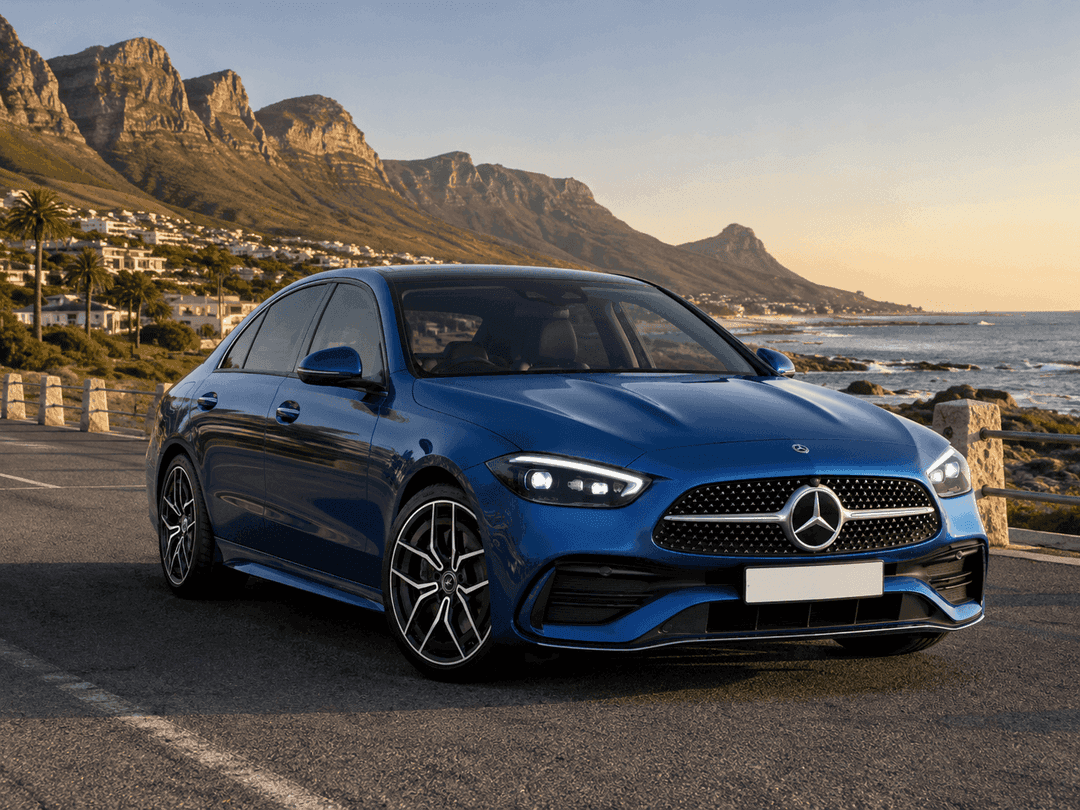
R1.045m Mercedes-Benz GLC 200 vs a Used GLC 300: Which Makes More Sense?

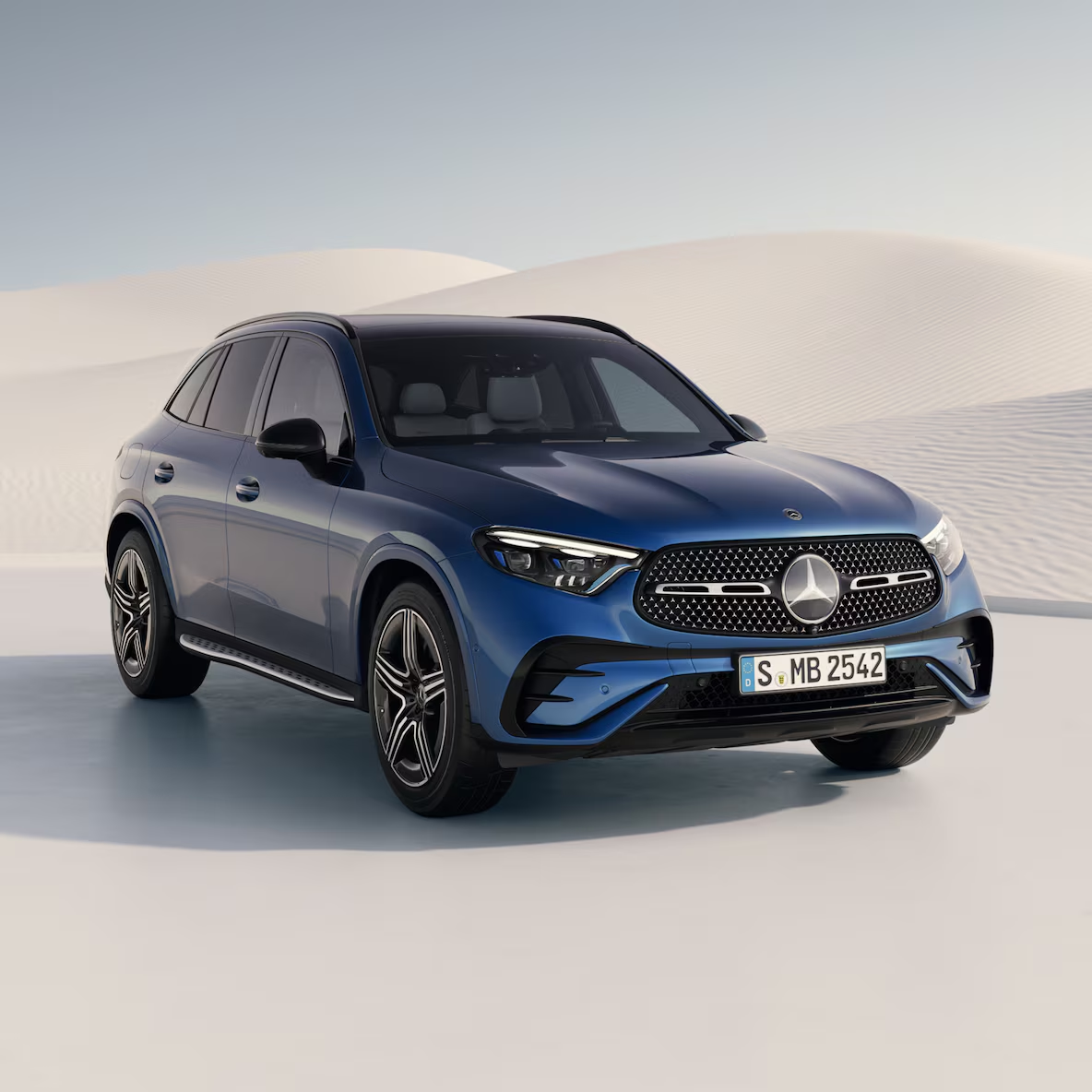
A desirable, polished SUV with genuine badge appeal. Yet the cheapest new GLC isn’t automatically the cheapest GLC, and careful buyers have stronger-value routes into the same X254.
Introduction
Here’s the uncomfortable question behind this Mercedes-Benz GLC 200 review South Africa: is the cheapest new GLC actually the cheapest way into one?
For 2026, the answer depends on how much you value a full warranty, predictable early running costs and being the first owner. The GLC 200 4Matic Avantgarde is priced at around R1.06 million locally, making it the entry point to Mercedes-Benz’s premium midsize SUV range.
That sounds significant until you look at the used market, where low-mileage X254 GLCs with stronger engines can be found for noticeably less.
So, is new really cheaper? Bring out the calculator.
Key takeaway: The GLC 200 is the cheapest new GLC, but a lightly used GLC 300d in the same body can deliver more car for less money.
Design & Exterior
Expensive from every angle. That’s the X254 GLC, and Avantgarde trim complements its restrained shape without making the entry model look like the budget choice. Chrome detailing, standard LED lighting and tidy surfacing convey status without shouting across the Sandton Mercedes-Benz showroom.
Visually, very little gives the game away. Park a GLC 200 next to a GLC 300d and most people won’t identify the cheaper derivative, which should make anyone paying mainly for kerb appeal pause.
- Standard LED headlamps and taillamps across the Avantgarde grade.
- 17.4 cm ground clearance (174 mm) - sufficient for corrugated gravel farm roads, but no invitation to follow the Hilux into the rough stuff.
- Five doors, five seats and the familiar upright SUV profile that continues to support local resale demand.
Cabin & Practicality
Inside, the C-Class connection brings polish and irritation in almost equal measure. A large portrait touchscreen dominates the dashboard. It’s crisp, quick and visually impressive, but it’s also responsible for my biggest complaint.
Where Mercedes cut the trim
Look below the glossy upper surfaces, and the cost-saving becomes easier to spot. Some lower door plastics and pieces of switchgear feel ordinary in an SUV costing R1m-plus, while the touch-sensitive steering-wheel pads remain fiddly over broken R21 tar. I once changed a display setting twice while trying to steady my thumb through a rough section. Proper buttons would fix that. OTA software updates could improve the menu logic, but no download will install physical dials after delivery.
Space and family use
Rear legroom is generous, while two ISOFIX points make the GLC properly useful for parents. The boot swallowed 2 folded prams and still left floor space for three soft bags; a full Woolworths shop barely challenges it. If you pack smart, four people can manage a weekend away without turning loading into a family argument.
On the Road
Right, so the specification needs a bit of context. The Mercedes-Benz GLC 200 pairs a 2.0-litre turbocharged petrol engine with 48V mild-hybrid assistance and 4Matic all-wheel drive.
The used-market sample behind this comparison, however, is weighted heavily towards diesel X254 GLCs. That means the performance and fuel-consumption figures reflect a diesel-led used pool rather than the petrol GLC 200 itself. That distinction matters when comparing the two.
Powertrain and gearbox
Mercedes’ 9G-Tronic automatic shifts cleanly, makes sensible decisions and then fades into the background. Good. Diesel derivatives in the listing pool offer outputs reaching 150kW and a substantial 320Nm, giving them the advantage while towing or overtaking on the N3 at altitude.
- 0-100 km/h in 7.8 seconds (diesel spec in the used pool).
- Claimed 5.6 L/100km - credible during a steady N1 cruise, though an indicated 7.8 L/100km better reflects mixed Gauteng driving.
- 62-litre tank delivers proper Joburg-to-Durban reach, reducing fuel stops on a journey already burdened by N3 tolls.
Ride and refinement
Quiet composure defines the experience. Coarse Highveld tar and those familiar N3 expansion joints are dealt with calmly, while 4Matic adds a welcome layer of reassurance on wet winter roads and loose gravel.
This isn’t trying to be a hot hatch. Comfort is the brief, and the GLC gets it right.
Data & Comparison
Now we reach the useful bit. Affordability leads the GLC 200 sales pitch, but the word means very little until you compare its price with used examples wearing the same X254 body.
What used GLCs actually cost
Based on current live listings from local dealers and major retailer groups, including franchised Mercedes-Benz outlets, the GLC depreciation curve looks like this by model year:
| Model Year | Typical Asking (median) | Listings |
|---|---|---|
| 2020 | R689 900 | 2 |
| 2021 | R679 900 | 4 |
| 2022 | R779 900 | 8 |
| 2023 | R999 850 | 6 |
| 2024 | R1 228 888 | 3 |
| 2025 | R1 799 850 | 6 |
| 2026 | R1 244 850 | 6 |
A three-year-old GLC averages around R967 866 in the current pool. Remember that number. A new GLC 200 Avantgarde only narrowly undercuts it, while the used alternative often includes a more powerful engine and stronger long-distance economy.
GLC 200 vs GLC 300
Choosing between the GLC 200 vs GLC 300 is really the heart of this buying decision. A 2023 GLC 300d with its 550Nm diesel drivetrain can trade around the R1-million mark on the used market, putting it firmly in new GLC 200 territory. The new GLC 200 gives you full warranty cover and less uncertainty over repair costs. The used 300d, meanwhile, offers stronger overtaking and towing ability.
For South Africans regularly covering long N1 or N3 distances, that extra diesel muscle can make a meaningful difference.
Rivals at the money
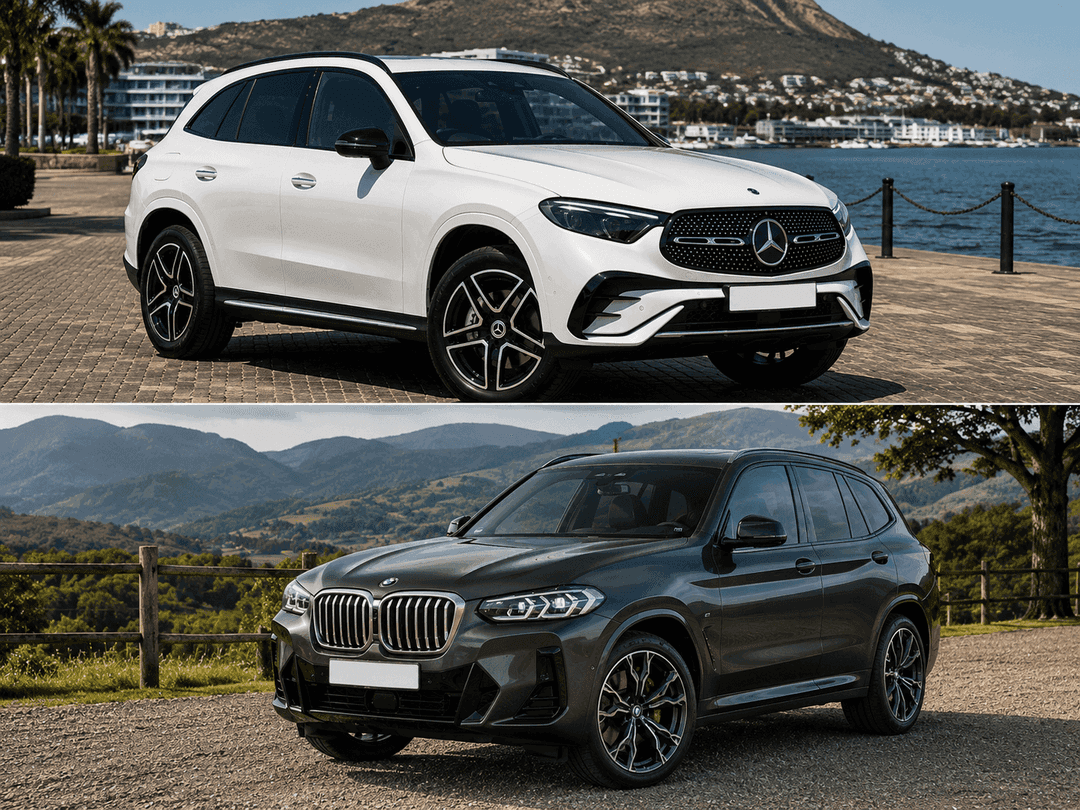
| Spec | GLC 200 (new) | Used GLC 300d | BMW X3 20d |
|---|---|---|---|
| Approx price | ~R1.045m | ~R1.0m | ~R1.05m |
| Drivetrain | AWD | AWD | AWD |
| Fuel | Petrol MHEV | Diesel | Diesel |
| Torque | 320 Nm | 550 Nm | strong |
| Warranty | Full new | Remaining | Full new |
GLC 200 running costs
Here’s the bit launch presentations tend to hurry past: Mercedes-Benz GLC running costs aren’t cheap. Factor in the five-year service plan and estimated ownership costs can reach around R230,000 before insurance, which generally sits above the luxury-SUV average.
That’s serious money. Anyone researching GLC 200 running costs should also keep some cash aside for premium-brand servicing once the plan expires.
Editorial Focus
So, is the cheapest new GLC the cheapest credible route into GLC ownership?
Purely on sticker price, the Mercedes GLC 200 4Matic Avantgarde 2026 at roughly R1.045 million is the entry point, with the 2026 range realignment making that entry about 20% cheaper. Impressive, at least on paper.
But Mercedes GLC resale value South Africa adds an uncomfortable layer. Mercedes introduced fresh internal identification codes after cutting prices, partly to protect existing owners’ residual values. That tells you how seriously the brand viewed the risk.
A three-year-old GLC 300d using the same X254 body, but with considerably more torque, is currently listed around R967,866. Buying used means letting someone else take the biggest depreciation hit, although you accept greater maintenance risk. The petrol GLC 200 also won’t flatter high-mileage drivers at the fuel pump.
Then there’s a new BMW X3 20d at roughly R1.05 million, offering diesel economy and another fresh alternative for similar money.
My position is straightforward: a used Mercedes GLC for sale around R1 million often gives you more useful hardware per rand than the new 200. New wins on warranty cover, predictable early costs and the pleasure of collecting an untouched car.
Both make sense. Just don’t confuse “cheapest new GLC” with “best-value GLC”. They’re not the same thing.
Safety rating
ANCAP · tested 2022
★★★★★ 5/5 adult occupant
Australian-market RHD rating — indicative for SA only where the SA derivative matches the tested safety spec (airbags/ESC/AEB). Official factsheet.
Verdict
Mercedes has produced a quiet, polished SUV that handles premium-family duty with little drama. Still, the GLC 200 is only the smart purchase for certain buyers. Here’s how the groups divide:
- Buy it - badge-first new buyers: If a full warranty and a factory-fresh three-pointed star from a franchised dealer are non-negotiable, the 200 is the cheapest legitimate entry. Wanting a new car needs no apology.
- Shortlist it - long-term keepers: Keep it for eight-plus years and the maintenance plan, warranty protection and predictable early expenses could justify buying new, despite the initial depreciation hit.
- Consider it - balloon-payment financiers: A balloon can make the monthly instalment appear manageable, but the residual risk following the 2026 price cut is real. Calculate your final exposure before signing anything.
- Avoid it - value hunters: A three-year-old GLC 300d near R967 866, or a new BMW X3 20d for similar money, provides more useful hardware per rand. Skip the new 200.
One reason remains to wait: the electric Mercedes GLC is coming. If you’re looking beyond 2027, I’d hold off until South African battery sizes, real-world range, pricing and DC charging speeds are confirmed. Load-shedding and uneven public-charging reliability still matter to the ownership case, but this petrol-and-diesel chapter is clearly heading towards its final pages. Buying late in a generation rarely does your Mercedes GLC resale value in South Africa any favours either.
Summary
A South African buying analysis of the 2026 Mercedes-Benz GLC 200 4Matic Avantgarde, comparing its new-car sticker with live used prices for stronger GLC 300 and diesel models, plus local depreciation and cost-per-km implications.
Ratings
Pros
- ✓If a full warranty and a factory-fresh three-pointed star from a franchised dealer are non-negotiable, the 200 is the cheapest legitimate entry.
- ✓Wanting new needs no apology.
Cons
- ✗A three-year-old GLC 300d near R967 866, or a new BMW X3 20d for similar money, offers more useful hardware per rand.