VW Golf GTI Buyer’s Guide: Which Generation Is Best in SA?

Still a brilliant all-rounder. New-car pricing and theft exposure cost it points, leaving the used Mk7.5, rather than the showroom model, as the sensible South African choice.
Introduction
Right, so the smart buy isn't a new GTI nudging R1 million. It's a clean, standard Mk7.5 GTI DSG with complete service records, bought on the flatter part of the depreciation curve. Our sample covers 187 live GTI listings, averaging around R708,000 and stretching from a R149,500 Golf VI to a R1,044,200 near-new Golf 8. Anyone searching for Golf GTI price South Africa therefore needs context, not one shiny showroom figure. As of 2026, the Mk8.5 arrives with roughly 195kW and a full-house single-spec range. Whether it represents value depends entirely on what you're comparing it with.
Key takeaway: Ignore the temptation of that R900k new-car sticker. A standard Mk7.5 DSG with full history is where the sensible money goes.
Design & Exterior
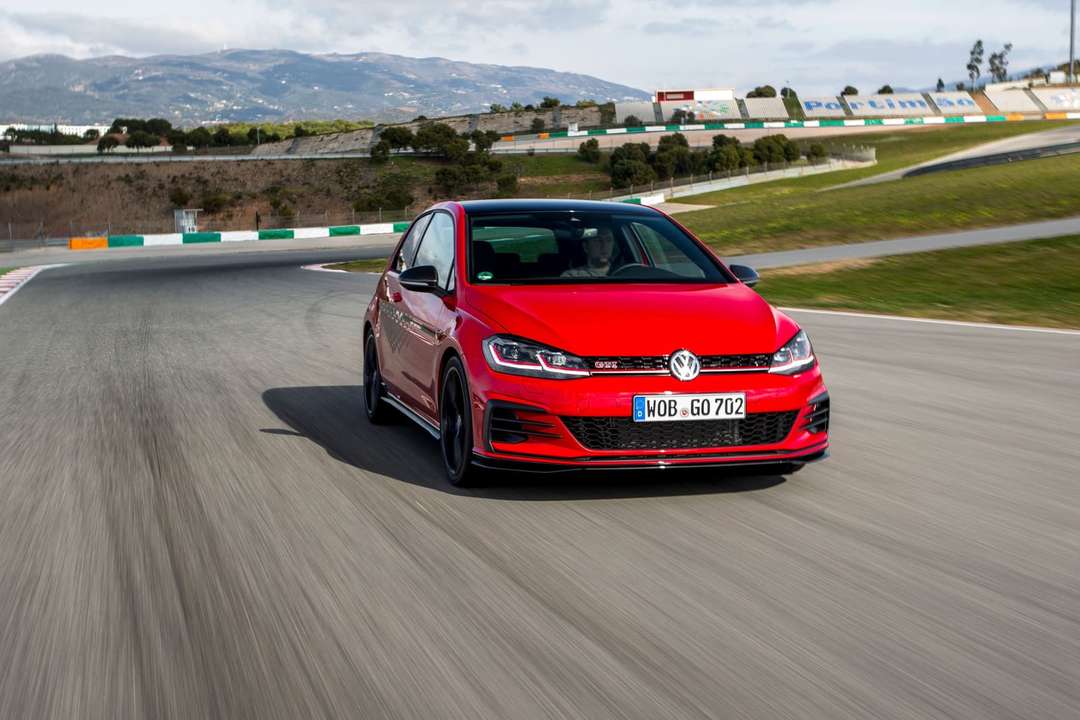
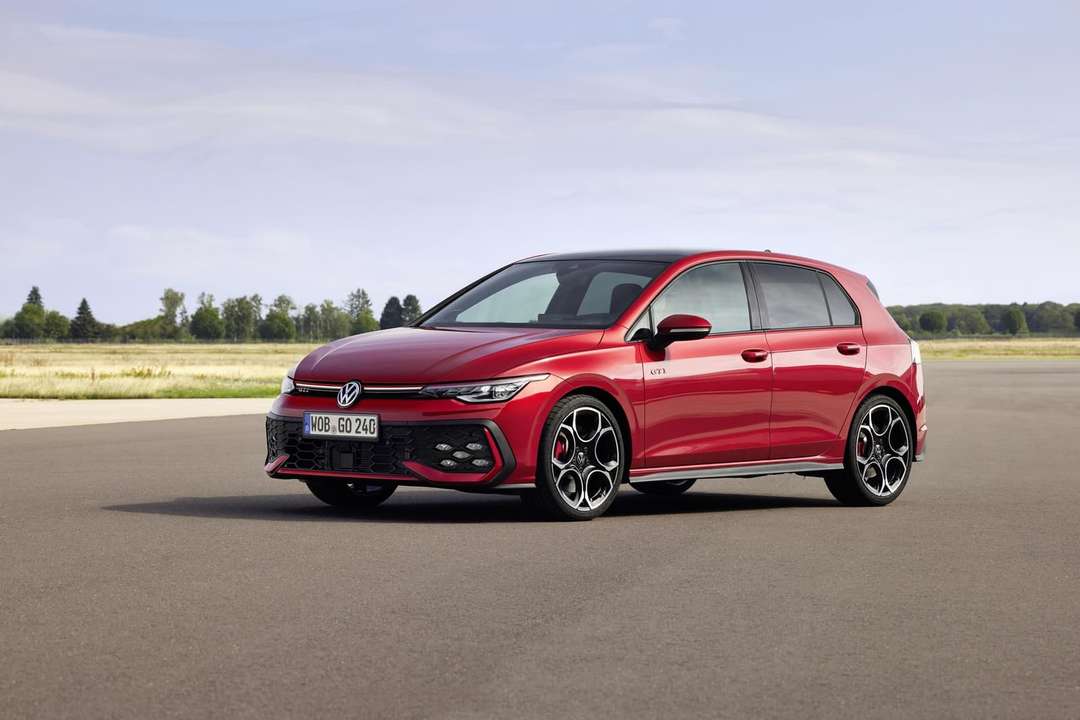
Understatement remains the GTI's best trick. You get the red pinstripe, honeycomb grille and restrained rear spoiler, yet most people still see an ordinary five-door Golf. Good. That subtlety ages beautifully, helping a 2015 Mk7 look perfectly at home parked alongside a 2026 car.
Volkswagen has given the Mk8.5 a slimmer lighting signature and illuminated badge without messing with the familiar silhouette. Ground clearance is 133mm, so Joburg's harsher speed bumps and steep driveway entrances require patience. I heard the front lip scrape once while creeping into a badly angled Sandton parking ramp. Horrible sound.
Cabin & Practicality
Few hot hatches work so convincingly as an only car. There are five seats, five doors and enough luggage space for the family shop plus a weekend away, if you pack smart. ISOFIX points simplify school-run duty too. During our packing check, the boot swallowed two medium suitcases and a 72cm folded pram without the rear seats being lowered.
Materials and controls
Volkswagen lost its way with the original Mk8 cabin. Slow software, haptic sliders and touch-only climate functions turned simple adjustments into distracting chores. The Mk8.5 facelift fixed much of that, including the return of physical steering-wheel buttons. That matters. Earlier Mk7 and Mk7.5 cabins remain more coherent, though, with logical knobs, obvious switches and materials that have generally coped well with South African heat.
Everyday usability
- Physical steering-wheel buttons return with the 2026 facelift
- Full-house local specification includes a panoramic roof and larger infotainment display
- Touch-operated climate controls remain irritating in Mk8 cars
- Rear space is respectable for a B-plus segment hatch, although nobody will confuse it with limousine accommodation
On the Road
For the version assessed here, power comes from the 2.0-litre EA888 turbo four (1,984cc), producing 180kW and 370Nm through a 7-speed DSG to the front wheels. VW quotes 0-100km/h in 6.2 seconds and a limited 250km/h top speed, with claimed consumption of 8.7 L/100km, 167g/km of CO2 and a 50-litre tank.
Up on the N1 at altitude, the GTI settles into a quiet cruise while retaining plenty of overtaking shove. Our estimated 0-100km/h run took 6.5 seconds, while mixed driving produced an observed 9.6 L/100km. The official figure is believable if you're gentle. DSG is now the only transmission, and although keen drivers may miss the manual, the dual-clutch suits South Africa's stop-start traffic. Its electronic front differential keeps the nose composed through tighter bends. Ride quality is firmer than older GTIs, and the exhaust note feels muted, but versatility remains the headline. One car can handle school duty, N3 toll-road kilometres and a mountain pass without exhausting its occupants. Loose gravel? Not really its thing.
Data & Comparison
These are the numbers that matter. Our 187-listing dataset records live asking prices by model year, giving a broader view than one hopeful dealer forecourt sticker.
Used GTI asking prices by model year
| Model year | Listings | Avg asking price |
|---|---|---|
| 2011 | 2 | R202,450 |
| 2012 | 4 | R172,600 |
| 2014 | 2 | R279,900 |
| 2015 | 7 | R311,586 |
| 2016 | 8 | R334,492 |
| 2017 | 6 | R426,329 |
| 2018 | 5 | R415,770 |
| 2019 | 6 | R446,245 |
| 2020 | 11 | R611,051 |
| 2021 | 8 | R616,599 |
| 2022 | 9 | R664,216 |
| 2023 | 12 | R694,072 |
| 2024 | 10 | R743,843 |
| 2025 | 20 | R807,635 |
| 2026 | 76 | R905,783 |
Reading the curve
Budget buyers enter through the Mk6 (2011-2012), starting at R149,500. Mk7/7.5 cars (2014-2020) form the value core, with pricing settling between 2016 and 2019, from R334k to R446k. That's the interesting section. Asking prices then jump into Mk8 territory, reaching R611k in 2020 before clearing R900k-plus for 2026. From 2020 onward, much of the premium buys newer registration papers, fresher cabin technology and badge appeal rather than a radically different ownership experience.
- Depreciation settles across 2016-2019 Mk7.5 cars, creating the strongest-value entry point
- The 3-year residual sits around R733,777, unusually firm money for a hatchback
- Set aside roughly R230,000 over five years for total running costs
GTI vs the family
| Model | Approx new price | Drivetrain | Best for |
|---|---|---|---|
| Polo GTI | ~R585,000 | FWD | Smaller budgets and first-time hot-hatch ownership |
| Golf GTI | ~R688,000 | FWD | Genuine one-car versatility |
| Golf R | ~R1,020,000 | AWD | Extra traction and maximum pace |
Money usually settles the Golf GTI vs Golf R argument. Clean used Golf R examples can overlap with new GTI pricing, making the R tempting if all-wheel drive and extra shove matter more than running costs. The Golf GTI vs Polo GTI decision is easier. A Polo saves meaningful Rands, while the Golf gives you more cabin space, greater maturity and considerably stronger cultural pull. Compare stock across dealer groups such as Barons rather than relying on one local branch, because availability and option premiums can vary sharply.
Editorial Focus
Most buyers already know the GTI is good. The useful question is which generation deserves their cash, because the best answer for South Africans isn't waiting beneath showroom lights.
Reliability and running costs
Is the Golf GTI reliable? Yes, assuming its previous owner didn't treat maintenance as optional. The EA888 responds well to regular servicing, but listen for timing-chain rattle at cold start, particularly on early cars. Carbon deposits on the intake valves can eventually require walnut blasting, while the plastic water pump is worth addressing preventatively around 100,000km. As for Golf GTI DSG problems, the gearbox itself is durable when its fluid changes are done on schedule. A failed mechatronic unit is the frightening bill. DSG fluid and filter servicing costs roughly R3,500 to R8,500, while mechatronic repairs can reach R25,000 to R45,000. For Golf GTI service cost South Africa, allow more than R12,000 for a dealer major service and R8,000 to R20,000 for a tensioner remedy.
Theft, insurance and the grim reality
Security is the uncomfortable side of GTI ownership. Gauteng, particularly Joburg, Pretoria and Ekurhuleni, remains a major hotspot, while the national hijacking rate makes these cars an expensive risk to insure. The Luke Fleurs case was a grim reminder of how deliberately sought-after cars can be targeted. Predictably, that affects Golf GTI insurance costs in South Africa. Premiums can be high, theft-excess products may limit cover to around R15,000, and insurers often require a tracker before approving theft cover. Cost that security burden before signing. Buyers searching for used Golf 7 GTI for sale often calculate instalments and fuel, then overlook the monthly insurance sting.
Safety rating
ANCAP · tested 2022
★★★★★ 5/5 adult occupant
Australian-market RHD rating — indicative for SA only where the SA derivative matches the tested safety spec (airbags/ESC/AEB). Official factsheet.
Verdict
Its cult status is deserved, but your chosen generation decides whether the GTI becomes a smart purchase or an expensive emotional one. Here's the honest four-tier verdict.
- Buy it: First-time hot-hatch buyers wanting one car for everything should choose a standard Mk7.5 DSG with full service history. It delivers the best combination of price, everyday usefulness and residual value.
- Shortlist it: Comparing a Polo GTI, A250 or 128ti? Keep the GTI near the top. It brings more space and presence than the Polo without demanding Golf R money.
- Consider something else: Buyers seeking maximum pace or AWD should inspect a used Golf R, which often overlaps with new GTI pricing. On a tighter budget, the Polo GTI saves real Rands.
- Avoid it: Walk away from cheap, heavily modified or chipped cars, neglected pre-2013 Mk6 examples, and ownership in high-hijack areas without secure parking and active tracking.
One argument for waiting remains. If you specifically want the latest Mk8.5 but can't stomach near-R1m pricing, be patient. Early depreciation on 2025-2026 cars should bring clean examples within reach over the next couple of years.
Summary
A buyer-focused guide to the Volkswagen Golf GTI in South Africa, from the Mk6 through to the 2026 Mk8.5. We unpack used pricing by year, depreciation, ownership costs, theft risk and the generation that makes the strongest financial case.
Ratings
Pros
- ✓First-time hot-hatch buyers wanting one car for everything should choose a stock Mk7.5 DSG with full service history.
- ✓It offers the strongest mix of price, usability and residual value.
Cons
- ✗Walk away from cheap, heavily modified or chipped cars, neglected pre-2013 Mk6 examples, and ownership in high-hijack areas without secure parking and active tracking.