Honda FIT 1.5 Elegance CVT (2021) Review

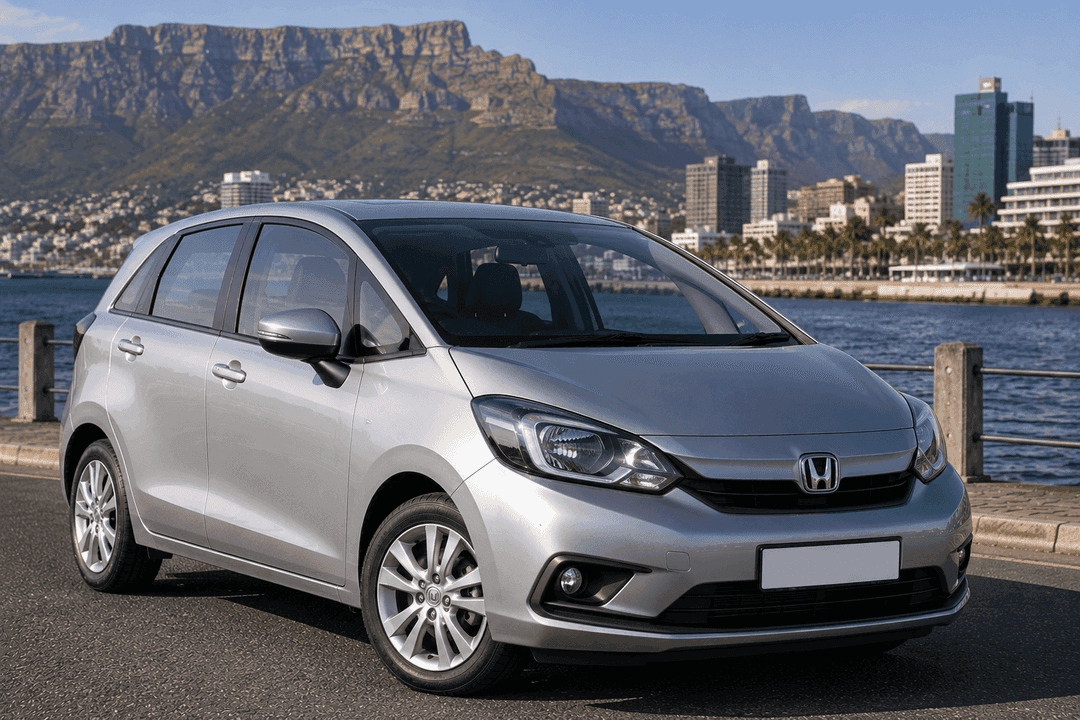
The Honda FIT 1.5 Elegance is cleverly packaged, well built, and honest. The CVT gets noisy when pushed and the price asks you to value substance over flash. And that’s the point.
Introduction
Right, so the Honda FIT 1.5 Elegance CVT isn’t the cheapest B-segment hatch, nor is it the fastest. But if you want a petrol hatch that swallows actual cargo and will probably outlive your bank loan, you’re in the right place. For 2026, Honda has doubled down on what actually makes life easier: physical climate controls, clever cabin packaging, and a solid, naturally aspirated engine. The rest of the segment focuses on digital dashboards and turbo threes. It’s what the FIT should have been from the start - a grown-up small car that doesn’t treat you like an Instagram addict. And that matters.
Key takeaway: The Honda FIT 1.5 Elegance is the practical, adult-friendly, naturally-aspirated alternative in a turbo-packed crowd. Worth the extra cash if you care more about durability and load-carrying than who’s got the biggest touchscreen.
Design & Exterior
Honda’s fourth-gen FIT ditches the old bug-eyed look for calm, simple lines. Still a bit manga in profile, but now with a flatter nose and slim headlights. Where most rivals slap on a giant fake grille, the FIT goes for a body-coloured panel. At 4 043 mm long and 1 694 mm wide, it’s actually smaller than a Polo. That means squeezing through tight parkades or narrow lanes is less stressful - you’ll appreciate that when you’re running late.
Stance and proportions
That 1,537 mm height isn’t just for show. It gives the FIT its standout cabin space. Honda’s trademark thin A-pillars help too; you’ll notice it the first time you take a sharp bend on Du Toitskloof Pass. Forward visibility is outstanding, better than most so-called "crossovers" costing twice as much.
Trim differences worth flagging
- Elegance rides on 16-inch alloys wrapped in 185/55 tyres - a sensible match for South African tar and the odd pothole.
- You lose out on keyless entry, full leather, and heated seats compared to the Executive spec.
- But you keep the Magic Seats, touchscreen, and - crucially - physical climate controls.
One detail that matters: this FIT is built in Japan, not India. It’s not in the brochure, but you’ll see it in the tight panel gaps and paint finish.
Cabin & Practicality
This is the section that sells the car. The FIT’s cabin is why people keep buying it, even though it’s pricier than a Starlet or Rio.
The Magic Seats - still the best trick in the segment
No contest. Honda’s Magic Seats flip up like cinema chairs, leaving a tall, flat load bay behind the front seats. I once slotted a 29-inch hardtail mountain bike into the FIT in Linden - wheels on, no tools, no drama. Try doing that in a Polo Vivo. Seats fold flat for long stuff, and you can nearly flatten the front passenger seat for a surfboard. Most buyers won’t, but it’s there if you need it.
Materials, controls and tech
Soft-touch up top, hard-wearing plastic down low. It’s not luxury, but it won’t fall apart. The 9-inch touchscreen offers wireless Apple CarPlay and Android Auto, and Honda’s stuck to physical buttons for climate, volume, and drive modes. After a week with a rival where you need three taps just to turn the fan down, I was genuinely relieved to have proper knobs again.
Honda FIT boot space and family duties
Boot space is a real win here. The figures say 304 litres up, 1 205 litres down (to the roof) - and we get the full-size boot in South Africa, since there’s no battery pack eating into it. ISOFIX is standard, and the rear doors swing open nearly 90 degrees. If you’ve ever tried to wedge a child seat into the back of a hatch, you’ll understand why that detail matters.
- Seats up: 304 litres - plenty for the weekly shop at Checkers or a modest family holiday if you pack smart.
- Seats down to window line: 844 litres.
- Seats down to roof: 1 205 litres.
- Rear legroom: nearly a metre - surprisingly generous given the compact exterior.
On the Road
Under the bonnet, Honda’s 1.5-litre i-VTEC four makes 89 kW and 145 Nm, sending power to the front wheels through a CVT. On paper at least, that’s more grunt than the Mazda2 or Kia Rio. But the real story is how the CVT feels in South African conditions.
Powertrain feel
Take it easy, and the CVT is smooth, unobtrusive, and keeps revs down. Need to overtake trucks up Sir Lowry's Pass with a full load? The engine buzzes at 4 500 rpm, and the CVT gets vocal while the speed catches up. It’s not really a FIT problem - it’s a CVT thing - but Honda’s fake “steps” do help hide the elastic-band feeling. Still noisy at full throttle, though. That’s just honest.
Ride, refinement and chassis
Big surprise here. Honda’s put actual effort into the ride quality, and it shows. The FIT handles patched tar and expansion joints on the N1 between Joburg and Bloem like a bigger car. Yes, it’ll lean a bit through corners, but it never pretends to be a hot hatch. Light, accurate steering and a small turning circle mean U-turns are a breeze outside your local Spar, even with taxis cutting across.
Honda FIT fuel consumption - claim versus reality
Honda claims 5.5 l/100km combined. In the real world, expect between 7.0 and 7.4 l/100km depending on how much city versus highway you do. My best tank over a week, mixing school runs and highway, came to 7.1 l/100km. Still decent for a non-turbo 1.5, and it’ll happily run on 93 unleaded - which saves a few rand when 95 is all that’s left at the pumps during load-shedding.
Data & Comparison
Honda FIT price in South Africa and ownership
The FIT 1.5 Elegance CVT price in South Africa sits in the high R300k range for 2024, with the Executive above and the e: HEV Hybrid costing around R70k more. Price is the FIT’s biggest hurdle - a Toyota Starlet will leave you with change for new tyres. But you’re paying for Magic Seats, Japanese build, and a 4-year/60 000km service plan (15 000km intervals), plus a 5-year/200 000km warranty. Crunch the numbers and the five-year running costs come out at roughly R364 750, which is fair once you add in Honda’s strong resale and decent fuel use.
Spec snapshot
| Metric | Honda FIT 1.5 Elegance |
|---|---|
| Engine | 1.5L naturally-aspirated petrol |
| Power | 89 kW |
| Torque | 145 Nm |
| Transmission | CVT automatic |
| Drive | FWD |
| Claimed combined | 5.5 l/100km |
| Length/width/height | 4 043 / 1 694 / 1 537 mm |
| Seats/doors | 5 / 5 |
How it stacks up against rivals
| Model | Power | Torque | Claimed l/100km | Aspiration |
|---|---|---|---|---|
| Honda FIT 1.5 Elegance | 89 kW | 145 Nm | 5.5 | Naturally aspirated |
| Mazda2 1.5 Dynamic | 85 kW | 148 Nm | 6.0 | Naturally aspirated |
| Kia Rio 1.4 EX | 73 kW | 135 Nm | 6.2 | Naturally aspirated |
| Toyota Starlet 1.5 XR | 77 kW | 138 Nm | 5.5 | Naturally aspirated |
Segment trend context
B-segment hatches are losing ground fast: our tracking shows interest in the low 40s for 2025, well below SUVs (mid-70s) or double cabs (low-60s). South Africans want higher ride heights and more metal for their money. But that shrinking pool keeps Honda’s residuals strong - fewer cars, loyal buyers.
Verdict
The FIT is the small hatch I’d send my parents or my aunt in Pinetown to buy. Also, the one I’d tell a new graduate to get as a first car. It’s not the budget leader or the infotainment king, but it’s the one you’ll still be happy to drive seven years from now. Skip it if boot space isn’t your worry and you want the lowest price - the Starlet wins there. If you want total running cost savings and can stomach the upfront price of the hybrid, wait for the e: HEV. But the petrol Elegance is the better buy today for most South Africans.
Summary
Here's the honest take on the Honda FIT 1.5 Elegance CVT (4th gen, GR/GS): practical, quietly satisfying, and made for South Africans who actually use their car for moving people and things, not just for sitting in traffic. I cover the stuff that matters - how it fits your life, how it rides, how it