2026 Toyota Corolla Cross Hybrid Review: Is Resale Risk Really a Myth?

A frugal, sensible and value-retaining family crossover, held back by ordinary cabin materials and a troubling safety-spec gap on cheaper derivatives.
Introduction
Look, if you’ve chosen the petrol Corolla Cross because hybrid batteries and resale make you nervous, this Toyota Corolla Cross 2026 review may change your mind. The hybrid is the one I’d buy, chiefly because the numbers make a strong case for it. As of 2026, our listing and valuation data show the Corolla Cross Hybrid holding its value better than any other derivative.
With petrol clearing R26 a litre inland, while load shedding remains part of everyday life, the hybrid’s ability to run without ever needing a plug becomes even more appealing. Yet showroom wisdom often has it backwards. Here’s where the R44k premium goes, when it starts paying you back and why the battery probably shouldn’t keep you awake.
Key takeaway: The Corolla Cross Hybrid is the sensible choice. It uses less fuel, requires no charging and resells more strongly than its petrol twin.
Design & Exterior
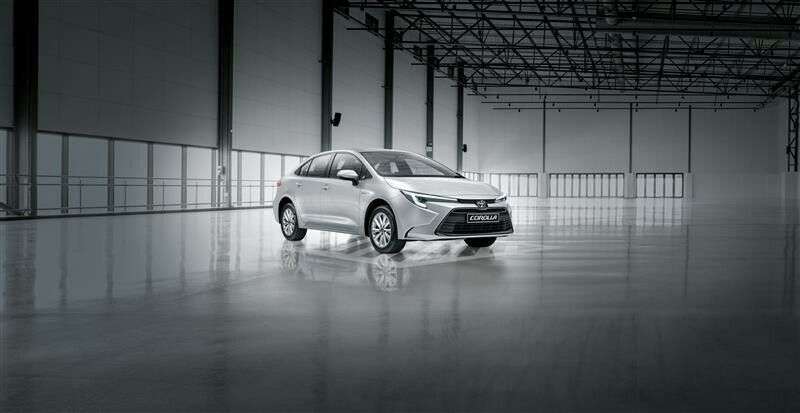
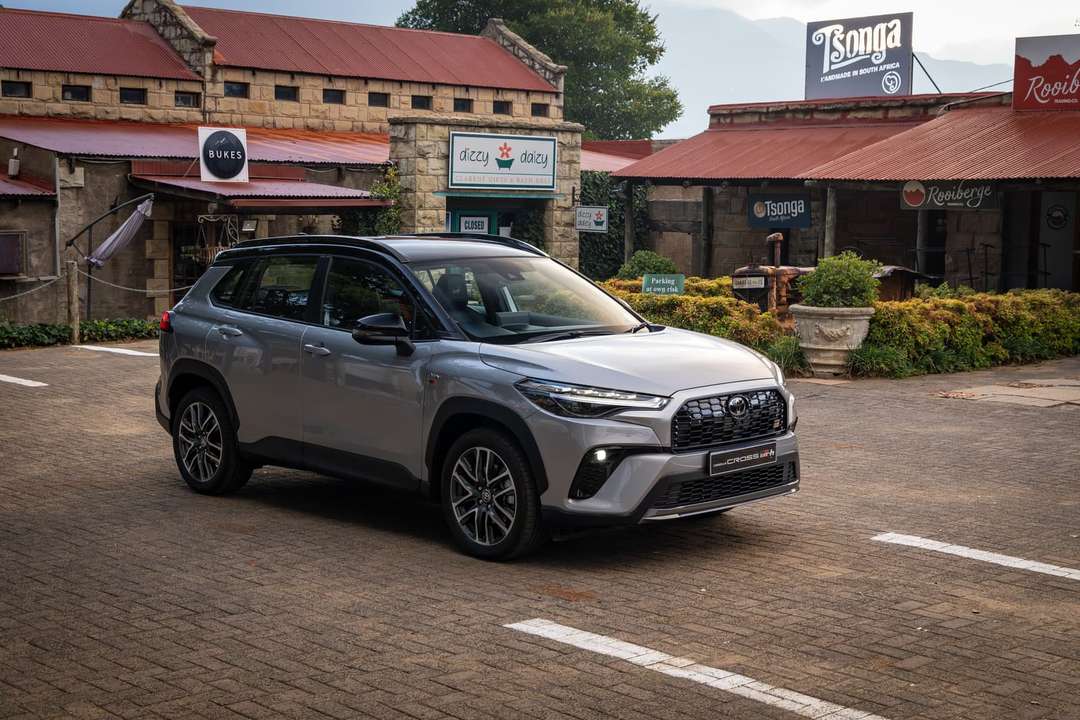
Toyota hasn’t reinvented the Corolla Cross for 2026. The facelift sharpens the nose, gives the hybrid its own restrained grille treatment and cleans up the lower bumper. You’ll spot the newer car without staring, but nobody’s turning around for another look. Fair enough. It’s a family crossover, not jewellery.
Ground clearance is 161mm, enough for rutted game-farm gravel but not serious off-road work. You get five doors, five seats and proportions that make daily life easy. The GR-Sport brings darker trim and bodykit theatre, though its changes are mostly cosmetic. XS and XR models will remain the volume sellers, whether you’re shopping through Motus Toyota or your local dealer.
Parked among brasher crossovers, it looks almost plain. Good. Restrained designs tend to age better, while fussy trim dates quickly and can hurt resale.
Cabin & Practicality
Materials and controls
Facelift changes include larger instrument and infotainment displays, plus more useful centre-console storage on higher specifications. Better still, Toyota retained physical climate controls. I’ll applaud that every time, because hunting through a touchscreen to demist the windscreen on a soaked N3 morning is distracting nonsense. Some plastics feel hard and workmanlike, but the cabin doesn’t pretend to be premium. It’s honest.
Space and family duty
With four adults aboard, space is comfortable; add a fifth and shorter journeys are preferable. ISOFIX points simplify child-seat duty, while the boot takes two compact prams with about 90mm of loading height to spare. Family-adequate, then, rather than enormous.
- Physical climate dials remain across the range, so basic functions aren’t buried in menus.
- Facelifted models gain larger infotainment and driver displays.
- ISOFIX mounts make child-seat installation less of a wrestling match.
- Useful door bins are joined by improved centre-console cubbies.
One detail many international reviews miss is the fuel tank. The petrol carries 47 litres, while the hybrid’s smaller tank requires planning on long Karoo runs towards the Eastern Cape. You’ll stop more frequently, despite using less fuel, so include that in your touring calculations.
On the Road
Powertrain and the eCVT drone
Toyota’s 1.8-litre petrol produces 90kW and 142Nm, with a claimed 0-100km/h time of 10.0 seconds and a 170km/h top speed. An independently timed two-up run suggested 11.2 seconds at altitude, which feels more representative in the real world. Properly brisk, it isn’t.
Ask for a quick R21 overtake and the CVT pins the engine at high revs while the speed builds gradually. Ease off, though, and the Corolla Cross becomes quiet, calm and far more convincing. It’s happier settling into a cruise than being hurried.
Town versus highway economy
Here’s the important split. Stop-start traffic suits the hybrid, allowing its electric motor to do more of the work while braking recovers energy that would otherwise be lost as heat. Out on the N1, with the petrol engine carrying more of the load, that advantage shrinks. The petrol version claims 4.9 L/100km, but the hybrid can improve meaningfully on that around town.
During my week in Joburg, the hybrid returned an observed 5.1 L/100km across 438km, including traffic, short errands and an N1 highway stint. At one point, after crawling through a long queue, I glanced down and realised the engine had remained silent for most of it. That’s where a series-parallel hybrid earns its keep. Load shedding can’t interrupt the process because there’s nothing to plug in.
Data & Comparison
What used examples cost by year
From 274 listings, the current average asking price is around R386,834, with cars spanning R267,000 to R561,700. Depreciation by model year looks like this:
| Model year | Typical asking price (median) |
|---|---|
| 2021 | R299,900 |
| 2022 | R329,950 |
| 2023 | R364,875 |
| 2024 | R389,900 |
| 2025 | R427,898 |
| 2026 | R452,200 |
For a mainstream crossover, that’s a gentle depreciation curve. A three-year-old example holds around R366,307 in typical residual terms, with hybrid derivatives occupying the stronger end of the range.
Running costs and the payback
- Five-year total cost of ownership comes to nearly R230,000 on our figures.
- The hybrid costs roughly R44,000 more than its petrol twin.
- At current inland fuel prices, typical commuters recover that premium around the four-year mark.
- Heavy urban users and 5-year-plus keepers reach clear hybrid savings sooner.
How it stacks up against rivals
| Model | Claimed economy | Power | Local build |
|---|---|---|---|
| Toyota Corolla Cross 1.8 | 4.9 l/100km | 90kW | Yes (Prospecton) |
| Haval Jolion | ~8.1 l/100km | ~106kW | No |
| Kia Seltos | ~7.4 l/100km | ~84kW | No |
Against imported rivals, the Corolla Cross benefits from Prospecton production and Toyota’s extensive dealer and parts network. If you live far from a major metro and need a service component quickly, that matters.
Safety, stated plainly
Safety needs blunt wording. The SA-built Corolla Cross scored 2 stars for adult and 3 stars for child occupant protection in Global NCAP’s 2026 #SaferCarsForAfrica test of the standard Xi/XS 5-airbag spec. Those derivatives lack curtain (side head) airbags, which capped the result. ESC is standard throughout, so the shortfall concerns side-head protection rather than stability control. XR and GR-Sport versions add curtain airbags for 7 total, but neither was tested, leaving them unrated rather than 2-star or confirmed better. Ignore anyone quoting the pre-facelift 2021 5-star result, because it doesn’t apply here.
Editorial Focus
The hybrid is not the risky one
Buyers often default to petrol because they fear poor hybrid resale or a frightening battery invoice at trade-in. Actual values tell a different story. Corolla Cross Hybrids from 2022 to 2024 retain roughly 80 to 85 per cent of value after three years on typical figures, making them the range’s strongest resellers. Petrol twins don’t beat that. The supposedly risky choice is, financially, the safer one.
The payback and the warranty
Factor stronger resale into the R44k initial gap and payback drops below the four-year fuel-only break-even point. Toyota’s 8-year/195,000km battery warranty also addresses the costly replacement fear that keeps many buyers loyal to petrol. No wall box, public charger or Eskom schedule is involved. Here’s the four-tier verdict by derivative:
- Petrol XS - Consider it: sensible for mostly highway driving or three-year ownership, although you sacrifice urban economy and stronger hybrid resale.
- Hybrid XR - Just buy it: the sweet spot, combining the range’s best residual, excellent town economy and enough equipment for most commuters.
- Hybrid GR-Sport - Shortlist it: the same intelligent powertrain with added cosmetic drama. Appealing, yes, but hardly necessary.
- Loaded petrol flagship - Avoid it: spending close to hybrid money leaves you with weaker residuals and a thirstier drivetrain.
Cross-shop carefully. The same R450k-plus budget buys a nearly-new C-HR, while a two-year-old hybrid can represent roughly a R150k saving against live new-car inventory. Get a firm valuation on your current car before signing anything.
Safety rating
Global NCAP Africa · tested 2026
★★☆☆☆ 2/5 adult occupant
★★★☆☆ 3/5 child occupant
Applies to the standard-equipment derivatives — Xi and XS (5 airbags, no curtain airbags), petrol and hybrid, since all SA Corolla Cross variants have ESC standard. Official factsheet.
Verdict
Plainly, this Corolla Cross hybrid review South Africa verdict favours electrification, without pretending the car is exciting. It isn’t. What it offers is dependable family transport, low fuel consumption, manageable running costs and strong trade-in value. In the current economy, that combination matters far more than showroom sparkle. If you’re buying with your head rather than your heart, the hybrid makes the stronger Corolla Cross case.
- Buy it if: you commute in traffic, keep cars for five years or longer and want the range’s strongest residual. Choose the Hybrid XR.
- Skip it if: you expect driving thrills or rich cabin materials; a RAV4 or used C-HR may suit you better.
- Wait if: regular long-distance Karoo touring makes the small tank irritating. Budget for extra stops or consider a larger-tank alternative.
Summary
A South African review of the 2026 Toyota Corolla Cross, with emphasis on hybrid ownership, real-world fuel use, resale value, Global NCAP Africa safety and which powertrain makes financial sense.
Ratings
Pros
- ✓You commute in traffic, keep cars for five years or longer and want the range’s strongest residual.
- ✓Choose the Hybrid XR.
Cons
- ✗You expect driving thrills or rich cabin materials; a RAV4 or used C-HR may suit you better.