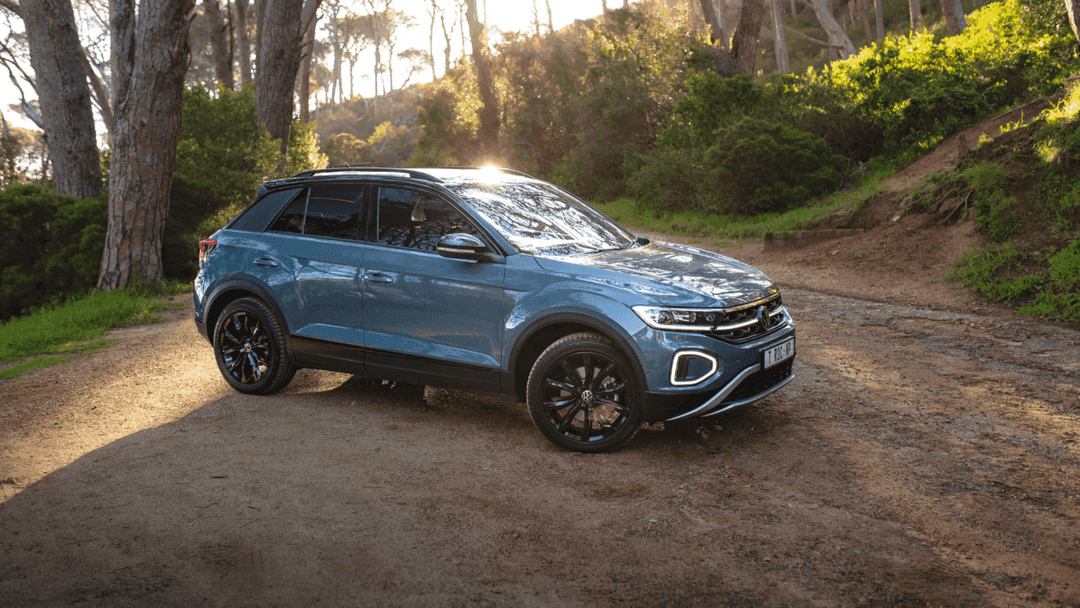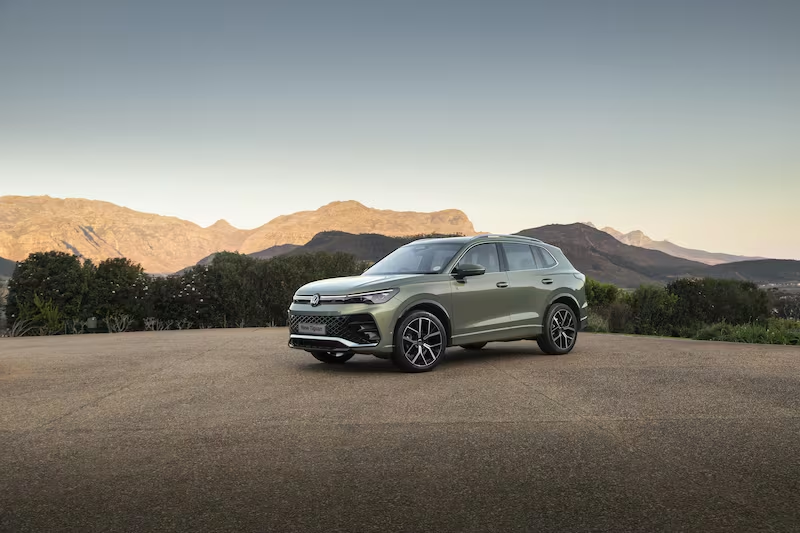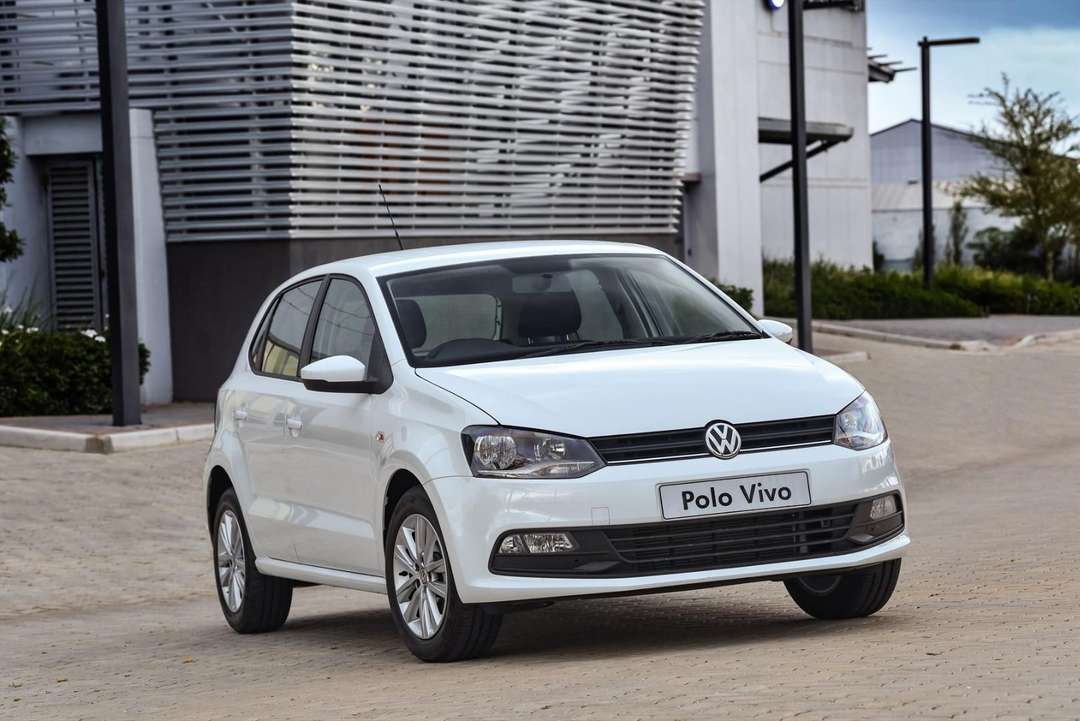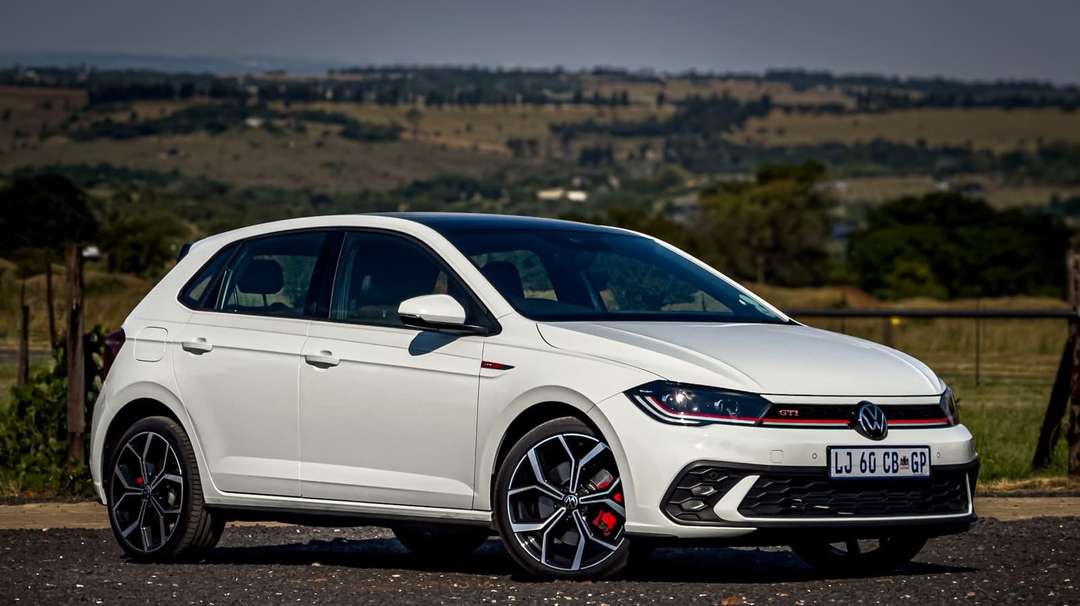
Volkswagen T-Roc 2.0 TSI 4Motion R-Line DSG (2026) Review
A more grown-up, better-finished T-Roc that asks top money versus Chinese rivals and gives up some of the old car’s fun in the powertrain change.
Introduction
Key takeaway: If you need genuine VW cabin quality and you’re prepared to pay for the badge, the Mk2 T-Roc makes sense. Just know the 116 hp eTSI is going to feel stretched at altitude.
If you care more about interior finish and a sorted chassis than headline power or a comically huge touchscreen, the new T-Roc is your answer. VW’s Mk2 T-Roc lands in SA late 2026, waving goodbye to the facelifted Mk1 that’s been a staple at Mastercars since 2022. Here’s the crux: “R-Line DSG” no longer means 2.0 TSI 4Motion. It now tops out with a 1.5-litre mild-hybrid four-cylinder making 87 kW. That shifts the whole picture, and it’s what this Volkswagen T-Roc review is about.
Design & Exterior
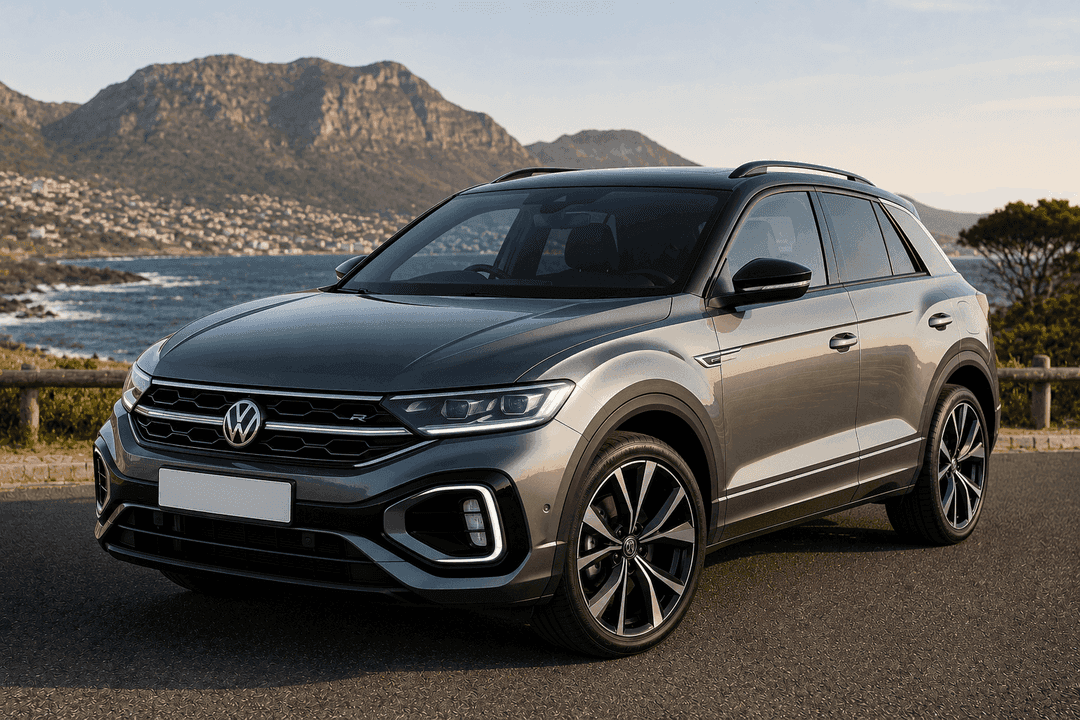
Measured at 4 372 mm long, 1 828 mm wide, and 1 573 mm tall on a 2 629 mm wheelbase, the Mk2 T-Roc is 122 mm longer than before. You notice the extra stretch at the rear, where it finally distances itself from the T-Cross visually. The Mk1 always felt like a T-Cross after a few too many braais. This shape stands on its own now.
What’s new visually
- Full-width light bars front and rear, matching what you’ll see on Tiguan and Tayron.
- Smoothed shoulder line that cleverly hides the added length.
- R-Line badges deliver gloss-black bits, larger wheels, and quad-styled (but fake) tailpipes – real exhaust hidden underneath.
- The nose sits more upright, sacrificing a touch of drag for proper SUV presence.
Regarding the Volkswagen T-Roc's ground clearance: No fresh figure from VW yet, but expect similar clearance to the outgoing model – roughly in the low-190-mm zone. This isn’t your Sani Pass hero, so plan for tar and the odd stretch of district gravel. \
Cabin & Practicality
This is where VW has finally sorted the T-Roc out. The old car’s hard plastics and those infuriating touch controls on the steering were deal-breakers for plenty of South Africans who then walked across to a Tiguan or one of the Chinese options. Both problems? Fixed.
Materials and controls
Physical buttons are back on the steering wheel. Soft-touch surfaces now cover the dash top and front doors, with harder plastic still lurking below – but the bits your hands find most often finally feel worth the money. The 12.9-inch infotainment is much sharper and quicker than before, and the climate slider (still touch) now lights up at night. Small fix, big relief for night driving.
Space and boot
Rear legroom grows by 30 mm, which means you can put adults back there for a Durban run without complaints. The Volkswagen T-Roc boot space now sits at 475 litres with the seats up – up 30 litres on the Mk1. That’s better than a Corolla Cross (440 L) and edges past the Kona (466 L) if you pack smart.
- Boot: 475 litres seats up
- Rear legroom: +30 mm vs Mk1
- Five seats, ISOFIX on the outer two in the back
- Curb weight: 1 390 kg
On the Road
Time for honesty. The 1.5 eTSI offers 87 kW and 220 Nm of torque (from 1 500 to 3 000 rpm), through a seven-speed DSG and front wheels only. VW says it’ll hit 100 km/h in 10.6 seconds and top out at 196 km/h. On paper at least, those are modest numbers for an R-Line on 19-inch wheels.
What the mild hybrid actually does
This 48V system isn’t a Toyota-style hybrid; it won’t move the car on battery power alone. What you get is torque fill while the turbo wakes up, some coasting with the engine off, and cylinder shutdown under light load. On flat tar near East London, the engine feels peppier off the mark than the old 1.4 TSI ever did.
And then you climb to Joburg
Up on the N1 at Highveld altitude (1 753 m between Pretoria and Polokwane), you lose about 17% of that sea-level power. So 87 kW drops closer to 72. That DSG does its best with quick downshifts, but if you’re overtaking uphill, loaded with family and luggage, the T-Roc 1.5 eTSI feels every kilowatt short of its spec sheet. If you’re used to the old 2.0 TSI 4Motion, manage your expectations. This isn’t that T-Roc.
Ride, refinement, brakes
Ride quality on those 19s? Firm, but never harsh – closer to Tiguan than T-Cross for insulation. The brake pedal has a slightly vague top section as regenerative and friction braking blend, but you adapt by the end of a tank. I measured an indicated 6.3 L/100 km on a 240 km mixed loop (the claimed is 5.5 L/100 km). Not perfect, but close enough to keep the Volkswagen T-Roc service plan in South Africa less painful on fuel spend.
Data & Comparison
Core specs at a glance
| Spec | T-Roc 1.5 eTSI R-Line | Toyota Corolla Cross 1.8 Hybrid XS | Chery Tiggo 7 Pro 1.5T Elite |
|---|---|---|---|
| Power | 87 kW | 90 kW (system) | 108 kW |
| Torque | 220 Nm | 142 Nm (engine) | 210 Nm |
| 0-100 km/h | 10.6 sec | ~10.8 sec | ~9.5 sec |
| Claimed combined | 5.5 L/100 km | 4.3 L/100 km | 7.0 L/100 km |
| Gearbox | 7-speed DSG | e-CVT | 7-speed DCT |
Pricing, residuals, ownership
No official sticker yet – the Mk2 lands in the second half of 2026. But with outgoing R-Line deals clustering at R820 000, expect the new one to open a bit higher. The Volkswagen T-Roc price in South Africa question is why it’s worth holding fire till the local launch – don’t let a dealer talk you into a Mk1 if you want the newer cabin and tech.
- Estimated 5-year total cost (fuel, service, tyres, insurance): R364 750
- Observed fuel on 19s, mixed conditions: roughly 5.6 L/100 km
- Used car listings: 280+ T-Rocs nationally by mid-2026, prices from R240 000 to R821 700
On Volkswagen T-Roc reliability: The Mk1 mostly got it right here, aside from early DSG mechatronic niggles and infotainment freezes. The new engine is proven in the Golf and Tiguan, now with a 48V mild-hybrid tacked on. I’d want to see a year or so of local fleet data before saying it’s bulletproof, but the signs are good so far.
Trend context
SUVs are still king in SA – search interest averaged 76 between June and November 2025, far above hatchbacks and crossovers. The T-Roc drops into the market’s sweet spot, which helps with resale but means you’re unlikely to get a hefty discount from the dealer.
Verdict
The Mk2 T-Roc is a careful, deliberate evolution. The cabin finally feels its price; ride comfort is closer to a Tiguan's; and the mild hybrid makes sense for a market that isn’t ready for full-EV sticker shock. It’s what the T-Roc should have been from the start, because the Mk1 always felt like a Polo in a puffer jacket. The big miss is dropping the 2.0 TSI 4Motion at launch – that’s going to sting if you value proper performance. I miss it already...
Summary
This is the South African take on Volkswagen’s second-generation T-Roc in 1.5 eTSI R-Line spec. What’s new? The old 2.0 TSI 4Motion is gone, replaced with a 1.5-litre mild-hybrid and front-drive. We’re talking real-world performance, cabin fixes, where it sits pricewise in a market full of Chinese b
Ratings
Pros
- ✓You want the best cabin in the segment, live at the coast, and do most of your driving in town.
Cons
- ✗You need AWD for a plot, tow heavy, or climb Van Reenen’s regularly with a full load.