BAIC X55 Plus Premium (2026) Review

- beats the obvious rivals on drive and spec, but depreciation and patchy dealer support hold it back.
Introduction
If you're after a mid-size SUV under R510k that doesn't look like everything else in the parking lot and comes packed with kit, the BAIC X55 deserves a spot on your shortlist. That's the upfront call. The 2026 Plus update irons out some of the old car's obvious flaws, while Gqeberha assembly means parts supply is less of a headache than some import-only Chinese rivals. Still, the BAIC X55 price in South Africa isn't just about what you pay today - it's also a question of what you'll get back in three years. We'll talk about that.
Key takeaway: The X55's punchy engine, loaded Premium trim, and 5-year warranty make it a solid value option - if you find a dealership you trust.
Design & Exterior
What stands out on the kerb
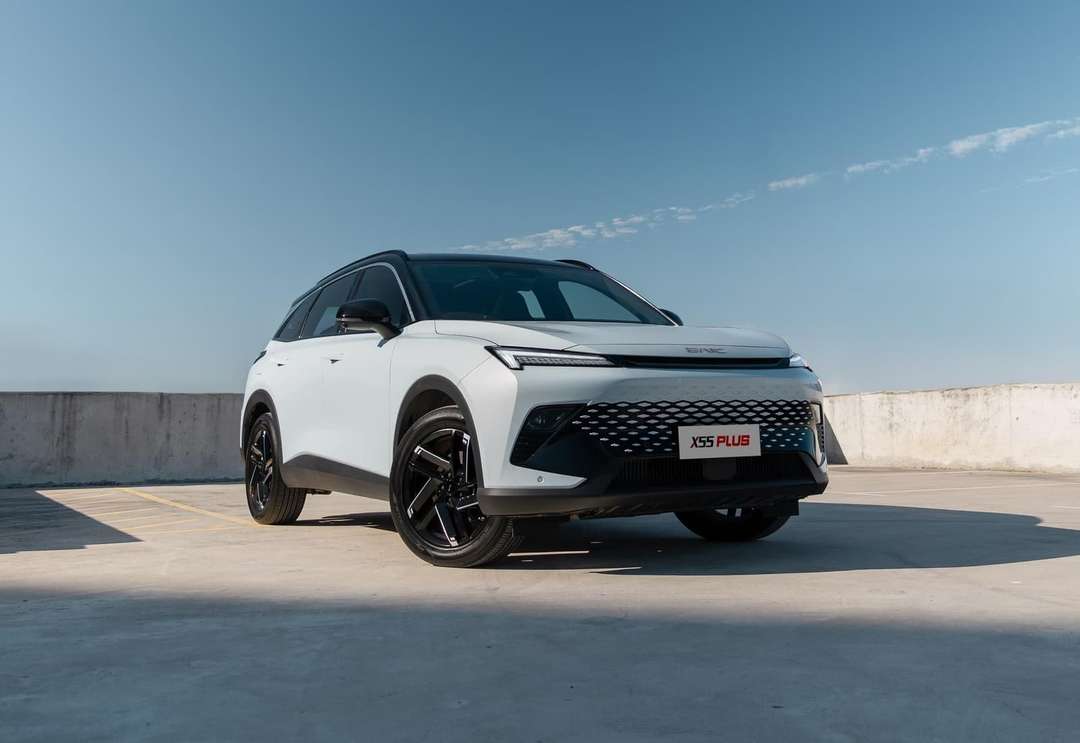
BAIC appears to have spent serious money on bodywork and it shows. The X55 has a pricier look than anything Haval Jolion or Chery Tiggo 7 Pro can manage, at least from some angles. Hidden door handles, a split rear spoiler, and a wide, planted stance give it real presence. Its 4620 mm length and 1886 mm width are both generous, and the 2735 mm wheelbase pays off inside. This car gets attention in places where most crossovers just fade in.
Segment context
At 1680 mm tall and weighing 1550 kg, it's dimensionally close to the Hyundai Creta and Toyota Corolla Cross, but the X55 looks more assertive. I once had someone at a Sandton coffee shop mistake it for a new Lexus. Not even close, but the fact that anyone asks says a lot. Most buyers in this bracket blend in; the BAIC doesn't.
Cabin & Practicality
Materials and controls
Premium trim means BAIC's thrown everything at the dashboard: ventilated and heated front seats with driver memory, panoramic sunroof, ambient lighting, a beefy 8-speaker audio, and a 360-degree camera. The 10.25-inch digital cluster and 10.1-inch touchscreen are slick, and BAIC has wisely kept physical climate shortcuts close to hand. Too many rivals bury basic controls in menus - this matters for real-world sanity.
Not everything impresses. The gear lever has a bit of wobble, and one hot afternoon outside Menlyn I noticed a faint creak from the B-pillar when I leaned in. It's value-tier fit and finish. Not a dealbreaker, but you do clock it.
Space and boot
- Five seats, reclining rear backrest in Premium
- Boot is about 350 litres (seats up), stretching to roughly 1500 litres folded
- Rear legroom takes priority over boot depth - tall adults can sit behind each other
- ISOFIX for two outer rear seats
If you pack smart, 350 litres covers a weekend for two with room for a cooler. A family of four on a week-long Ballito run? You'll be fighting for space. Chery Tiggo 7 Pro and Creta do better for luggage - that's just the truth.
On the Road
Powertrain character
The 1.5T four-cylinder puts out 138 kW and 305 Nm, driving the front wheels through a 7-speed DCT. BAIC claims 0-100 km/h in 7.84 seconds, and on a flat N1 stretch outside Pretoria, it feels every bit as quick as promised. Independent figures back it up. Against a Corolla Cross 1.8 Hybrid or Creta 1.5T, the X55 just has more urge. That's why you go Chinese in this segment.
Gearbox and ride
This DCT will split opinion. On the open road, shifts are clean and the power delivery feels more natural than the rubbery CVTs you get elsewhere. In nose-to-tail traffic, there's a quirk around 3-4 km/h where gentle braking briefly cuts drive. Once you learn the trick, it fades into the background, but first-time DCT drivers might find it odd.
Ride comfort is a surprise. Comfort mode deals with Joburg's cratered tarmac far better than expected. Sport mode? Too stiff for daily use, at least for me. Steering carries some weight, which I like, but it's not quite as nimble as a Creta if you're threading through a tight parking garage.
BAIC X55 fuel consumption in the real world
BAIC says 7.18 L/100km combined - that's optimistic. My week included a Parys round-trip and urban slog; I averaged 9.6 L/100km. Best highway figure at 120 km/h was 7.9. In traffic, it crept past 10. Realistically, expect 9-10 L/100km living with it. The 53-litre tank gets you roughly 550 km between stops, which is decent for road trips but not groundbreaking.
Data & Comparison
Spec snapshot
- Engine: 1.5T petrol, 138 kW / 305 Nm
- Transmission: 7-speed DCT, front-wheel drive
- 0-100 km/h: 7.84 seconds
- Claimed combined consumption: 7.18 L/100km
- Dimensions: 4620 mm long, 1886 mm wide, 1680 mm tall, 2735 mm wheelbase
- Kerb weight: 1550 kg
- Seats: 5
How it stacks up on power
Here’s the relevant number: the segment median sits at 163 kW, so the X55’s 138 kW is about 15% shy, at least on paper. But the median includes some outliers. Against the real rivals - Corolla Cross, Creta, Jolion - the X55 feels stronger. Context matters.
Rivals at this money
| Model | Power (kW) | Approx. price (ZAR) | Notes |
|---|---|---|---|
| BAIC X55 1.5T Premium | 130 | R378 565 avg | Locally assembled, DCT, 5-year warranty |
| Mini Countryman Cooper 1.5 Steptronic | 100 | R377 449 | Premium badge, smaller boot, older platform |
| Mahindra XUV700 2.0 TGDi Automatic | 149 | R379 900 | 7-seat option, more cargo, less polish |
| Volvo XC40 1.5 T3 | 110 | R379 950 | Used market only, premium cabin, smaller engine |
BAIC X55 vs the cross-shop
If you’re torn between the BAIC and Mahindra XUV700, it’s polish versus practicality: XUV700 offers seven seats and more outright grunt, but the BAIC’s cabin is quieter and better finished. Mini’s got badge cachet and resale, but boot space is a letdown. As for the XC40, at this price you’re looking at second-hand, but it’s still a tempting package if you value interior quality above all else.
Ownership cost
- 5-year / 150 000 km warranty
- 5-year / 60 000 km service plan
- Estimated 5-year TCO: R405 910
- Built in Gqeberha, which helps with parts supply
The service plan and warranty combo puts BAIC on par with the Japanese and Korean establishments. The five-year total cost of ownership lands just north of R405k, assuming average fuel and maintenance spend - finance excluded.
The depreciation reality
Here's the rub. Used 2023 Premium models with 20 000-50 000 km are trading for R350 000-R400 000, down from a R509 900 sticker. That’s a big first-owner loss. If you buy new, you need to accept this. If you’re shopping used at three years, the X55 suddenly looks like a steal...
Verdict
BAIC’s X55 Plus Premium is a genuinely interesting alternative to the usual suspects. It looks like it costs more; it’s properly quick for the money, Comfort mode is well judged, and the after-sales package is competitive. Downsides are clear: smallish boot, DCT quirks, real-world fuel use higher than claimed, and depreciation that stings new buyers. Assembly in Gqeberha is an underrated plus for local support.
Summary
This is the BAIC X55 review for South African buyers who actually plan to put one in their driveway. Here's a look at the locally assembled 1.5T DCT Beijing X55: what it really costs to run, how the cabin shapes up, and where it stands in the R380k-R510k SUV crowd.
Ratings
Pros
- ✓You want a feature-rich, distinctive SUV under R510k and you’ve done your dealer homework.
Cons
- ✗Resale value is your top concern or you need a big boot.