Renault Captur 1.2T DYNAMIQUE EDC 5DR (88KW) (2017) Review
Great space and ride comfort for the money, but the gearbox and engine history mean it’s only a bargain for buyers who do their due diligence.
Summary
Here’s the Renault Captur review South Africa actually needs: a street-level, used-buyer’s take on the Renault Captur 1.2T Dynamique EDC 5dr (88kW) as it stands in 2024. We’ll get into the real-world headaches (and highlights) around the EDC dual-clutch gearbox, what the 1.2 TCe delivers after a few years in Gauteng, and whether that French cabin magic still matters now that tidy examples cost less than a new base Polo Vivo. If you’re searching for the full Renault Captur RENAULT CAPTUR 1.2T DYNAMIQUE EDC 5DR (88KW) review south africa, this is it - warts, quirks, and all.
Introduction
Look - if affordable flair tops your list, but you wince at Polo prices, the Renault Captur 1.2T Dynamique EDC deserves a spot on your shortlist. There’s a catch, though: skipping a meticulous pre-purchase inspection is playing with fire, especially if you ignore those EDC gearbox gremlins. Built between 2015 and 2021, with the sharper facelift showing up after 2017, the 88 kW Dynamique EDC headlined the original J87 range. By 2024, you’ll find mid-mileage 2019s listed from R165 000, with some stretching to R210 000 - proof that the Renault Captur 2019 price South Africa buyers see is pure used-car territory now. That changes the whole equation.
Key takeaway: The Captur is a clever, likeable used buy - packed with practical touches - but only if the EDC gearbox and 1.2 TCe motor pass a proper workshop check. Don’t cut corners here.
Design & Exterior
Time’s been kind to the Captur. Unlike the try-hard “urban tough” look you’ll find on some 2014-2019 rivals, Renault stuck with something softer. At 4122 mm long, 1778 mm wide, and 1566 mm tall, you’re in the classic B-segment crossover set - think Haval Jolion Lite or an early T-Cross, not a baby Qashqai.
The styling that still works
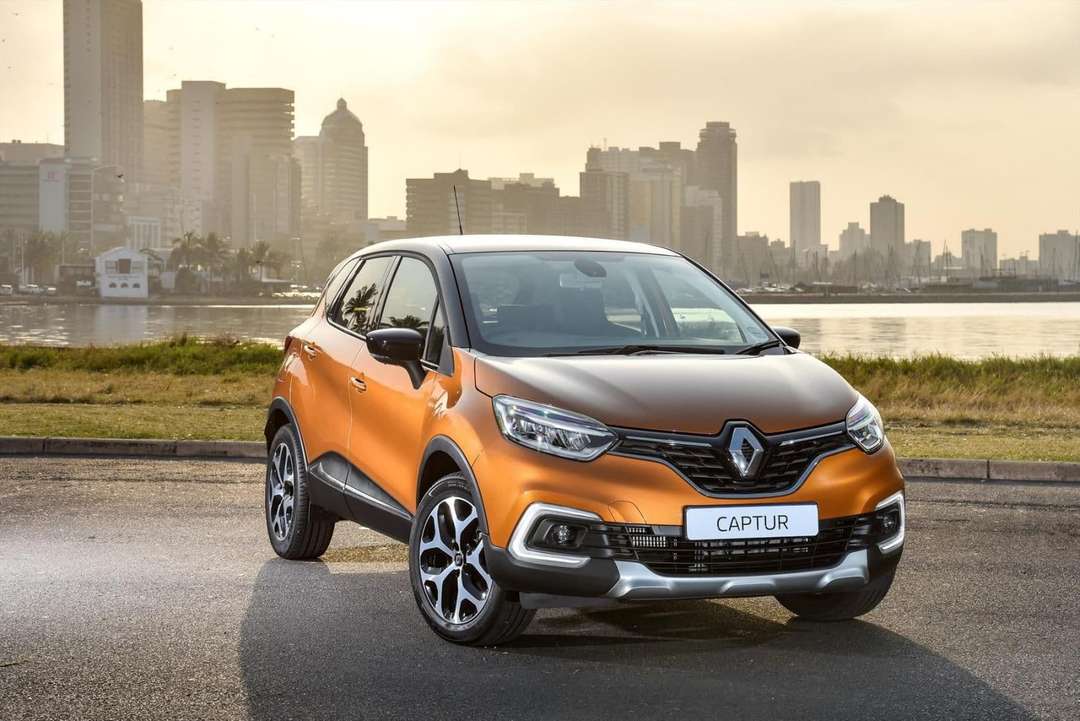
Two-tone paint, chunky arches, chrome-trimmed DRLs - the face still pops, even parked next to a newer Korean rival. Dynamique trim’s 17-inch alloys (shod in 205/55 Michelins) save it from looking under-wheeled, and there’s just enough stance to fool your neighbour into thinking you spent more than you did.
Where it dates itself
Halogen headlights with LED accents get the job done, but on a misty N3 night run out of Harrismith, you’ll wish for full projectors. The short overhangs and tall glasshouse? Classic Clio in hiking boots. It’s more hatch-on-stilts than wannabe SUV, and that matters once you start measuring parking bays or squeezing down tight city streets.
Cabin & Practicality
Inside is where the Captur turns heads. Renault’s engineers clearly asked themselves, “why don’t more small cars do this?” and then actually delivered.
The clever stuff
- Zip-off, machine-washable seat covers - decent if you’ve got kids, or your friend’s muddy Staffie.
- Reversible boot floor with carpet on one side, plastic on the other - quick to clean after a muddy hike up Sani Pass gravel.
- Sliding rear bench: trade legroom for boot space or vice versa, depending on your load.
- Twin-level glovebox with a hideaway drawer for valuables and toll change.
- 7-inch MediaNav touchscreen with Bluetooth and reverse camera, standard on Dynamique spec.
Renault Captur boot space and rear-seat reality
Renault claims 455 litres of boot space with the rear bench forward - top of the pile for this class. Slide it back and it drops to about 377 litres. At 1.81 m, I sat behind my driving position and still had two fingers of kneeroom, which is more than I managed in the last T-Cross I tested on the M1.
Materials and ergonomics
Hard plastics? Yes. But they’re textured, well-assembled, and feel built to take a beating. Physical climate dials live on the centre stack - worth their weight when you’re fumbling for aircon in a Highveld thunderstorm. The driving position is upright, sightlines are solid, and 200 mm of ground clearance means you’ll clear battered city kerbs or a gravel detour near Krugersdorp.
On the Road
Renault’s 1.2L turbo-petrol makes 88 kW and 190 Nm, routed to the front wheels through a 6-speed EDC dual-clutch. On paper at least, it’s a smart fit for this market.
The good
At highway speeds, this is the smoothest engine the Captur ever had. Sitting at 120 km/h on the N1 up to Polokwane, the 1.2 TCe is quiet - wind noise trumps engine note. The 205/55 tyres take the sting out of patched tar and those infamous Ben Schoeman expansion joints. Bumps don’t rattle the cabin; you get a soft thump, not a crash.
The not-so-good
EDC gearbox? That’s the headache. In stop-start traffic, it’s hesitant off the line, sometimes grabbing first with a lurch. Overtaking a slow truck on the R21, the box pauses, eventually drops two cogs, and the 1.2 gets vocal. Brakes have a long, soft pedal travel, so smooth stops take a few days to master. I remember nearly rolling through a Sandton robot my first week with one...
Real-world fuel consumption
Renault claims 5.4 L/100 km combined, but that’s fantasy for most Gauteng drivers. Expect between 8.0 and 8.6 L/100 km in mixed use. On long, steady runs, you might just see high sixes - but most owners will land closer to 8.5. Factor that into your budget.
Data & Comparison
The numbers that matter
- Engine: 1.2L turbo-petrol, 88 kW, 190 Nm.
- Gearbox: 6-speed EDC dual-clutch, FWD.
- Dimensions: 4122 mm (L), 1778 mm (W), 1566 mm (H).
- Seats: 5. Doors: 5.
- Boot: up to 455 litres with rear bench forward; 377 litres with it back.
- Claimed combined fuel: 5.4 L/100 km.
- Production: 2015–2021 (J87 gen).
How it sizes up against rivals
| Spec | Renault Captur 1.2T EDC | Ford EcoSport 1.5 Auto | Mazda CX-3 2.0 Auto |
|---|---|---|---|
| Power (kW) | 88 | 91 | 115 |
| Torque (Nm) | 190 | 150 | 204 |
| Gearbox | 6-speed dual-clutch | 6-speed torque converter | 6-speed torque converter |
| Max boot (L) | 455 | 356 | 350 |
| Length (mm) | 4122 | 4241 | 4275 |
Ownership costs and the residual story
New, you got a 5-year/150 000 km mechanical warranty and a 3-year/45 000 km service plan. By 2024, every 2017–2019 car is out of warranty - hence the price drop. Five-year running costs tally up to around R362 300, including fuel, maintenance, tyres, and a safety net for EDC work. That gearbox buffer is non-negotiable.
Renault Captur service plan South Africa and parts
Some Renault SA dealers offer extended service plans if you ask, but many buyers use independent Renault specialists in Joburg or Cape Town. Parts for the J87 are still easy to source, and thanks to a strong aftermarket, costs haven’t spiralled like they have on some rivals.
Renault Captur reliability: the elephant in the showroom
This is where things get real. The Renault Captur 2019 common problems (and 2014 ones, too) centre on the 1.2 TCe (H5F) engine’s oil consumption. Pre-2016 cars are the real worry - some went through so much oil they triggered lawsuits in France. Later models got improved piston rings, but you must insist on a documented 1 000 km oil usage test before buying. That’s not negotiable, for me.
Other Renault Captur 2014 common problems and 2019 headaches?
- Excessive oil thirst on the 1.2 TCe engine, especially early builds.
- EDC gearbox jerkiness at low speed; a dealer software update sometimes sorts it.
- EDC actuator failures - budget R15 000–R25 000 locally for repairs.
- Full clutch-pack or transmission overhauls: expect R45 000–R85 000 if you’re unlucky.
- Stop-start system flattening the battery on cars left standing for weeks.
- Key-card glitches, and recalls for front brake hoses and some 2017 hub cracks.
EDC fluid services every 60 000 km are gospel, but many original owners skipped them. That’s what separates a happy Captur owner from a wallet-burned one.
SA segment trend context
B-segment SUV demand hit 78 points in September 2025, with crossovers hovering between 35 and 41 points all year. Even though new Captur sales have ended, used demand is running strong - proof that local buyers still want clever, small crossovers that don’t break the bank.
People Also Ask
Is the Renault Captur 1.2 EDC reliable?
If it’s been serviced properly, yes - but only with proof of low oil consumption (especially on pre-2016 builds) and an up-to-date EDC gearbox scan. Always get an independent to check both before you sign.
What is the Renault Captur 2019 price in South Africa on the used market?
You’re looking at R165 000 to R210 000 for a 2019 Captur 1.2T Dynamique EDC, depending on mileage and condition. That’s cheaper than most rivals with this much spec, which makes it a tempting buy for value hunters.
How much boot space does the Renault Captur have?
With the bench forward, you get a claimed 455 litres - top of this segment. Slide it back for adults in the rear and it drops to 377 litres. The reversible boot floor actually works, if you pack smart and need to haul muddy gear.
What is the Renault Captur ground clearance?
Official spec is 200 mm on facelifted models, which is enough for gravel shortcuts and city kerbs. I’ve cleared a badly rutted verge outside Fourways Mall without a scrape. Just don’t expect real off-road chops - it’s still FWD only.
How does the Renault Captur 1.2T Dynamique EDC 5dr (88kW) review south africa compare to a Ford EcoSport?
The Captur brings more clever features and a bigger boot (455 litres) than the Ford. Ride is softer, cabin feels a bit more upmarket, and the sliding bench wins for flexibility. The EcoSport’s auto is smoother in traffic, though. Horses for courses.
What does a Renault Captur service plan in South Africa cost?
Dealer extensions run R8 000–R15 000 for two or three more years, depending on mileage. Independents do fixed-price services from R2 500 to R4 500 per visit using OE-equivalent parts. Shop around, the savings add up over three years.
Verdict
Properly sorted, this is one of the most appealing used B-segment crossovers in South Africa - and also one of the riskiest for buyers who skip the homework. The Renault Captur RENAULT CAPTUR 1.2T DYNAMIQUE EDC 5DR (88KW) price south africa is low enough to tempt, but you need to walk in with your eyes open. You get French design, a genuinely clever cabin, 455-litre boot, and relaxed ride for less than most older Japanese options. It’s what the Captur should have been from the start - especially once those EDC software fixes landed. I’d buy one, but only after a full oil and gearbox check. That matters.
Buy it if: you want character, cabin cleverness, and you can live with the odd French quirk, provided you have a trusted workshop and budget upfront for inspection and possible gearbox repairs.
Skip it if: you’re stuck in Joburg traffic all day and want the smoothest auto, or you can’t set aside R25 000–R45 000 for a worst-case gearbox scenario.
Wait scenario: If you’ve got your eye on the newer European Captur coming via grey import, give it another year - prices will settle, and you’ll get more for your money.
Rating
6.5 / 10. Loads of space and comfort for the price, but only a bargain for buyers who do their homework and budget for the known weak points.
Summary
This is a real-world, used-buyer’s look at the Renault Captur 1.2T Dynamique EDC 5dr (88kW), focused on how it holds up in South Africa in 2024. I get into what it’s actually like to drive, why the EDC dual-clutch causes headaches for some owners, cabin tricks, practical issues, and the big reliabil
Ratings
Pros
- ✓You want a practical, personality-filled little crossover for the family, can use a trusted independent for servicing, and are willing to pay for a serious inspection upfront.
Cons
- ✗You’re stuck in stop-start traffic all day and want the smoothest auto, or you can’t set aside at least R25 000 for possible gearbox repairs.