Renault Triber 1.0L Evolution MT (2026) Review
It does exactly what it says on the tin, and finally nails safety and warranty. Lack of ESC and a lethargic engine at altitude keep it from a higher score.
Introduction
If you want seven seats and a five-year warranty for under R220 000, you’re basically looking at the Triber or… nothing else new. Renault’s facelifted Triber arrives for 2025 with a softer grille, six airbags standard, and a price that undercuts its closest seven-seat rival by nearly R90 000. No, it’s not exciting. Nor is it loaded with gadgets. But it’s the only new car that answers a very South African question: how do you move a big family or crew, cover the school run, and not empty your bank account?
Key takeaway: The most affordable new seven-seater in South Africa now gets more safety kit and sharper looks, but the Evolution trim is still basic and the 54 kW engine is, frankly, out of breath at altitude.
Design & Exterior
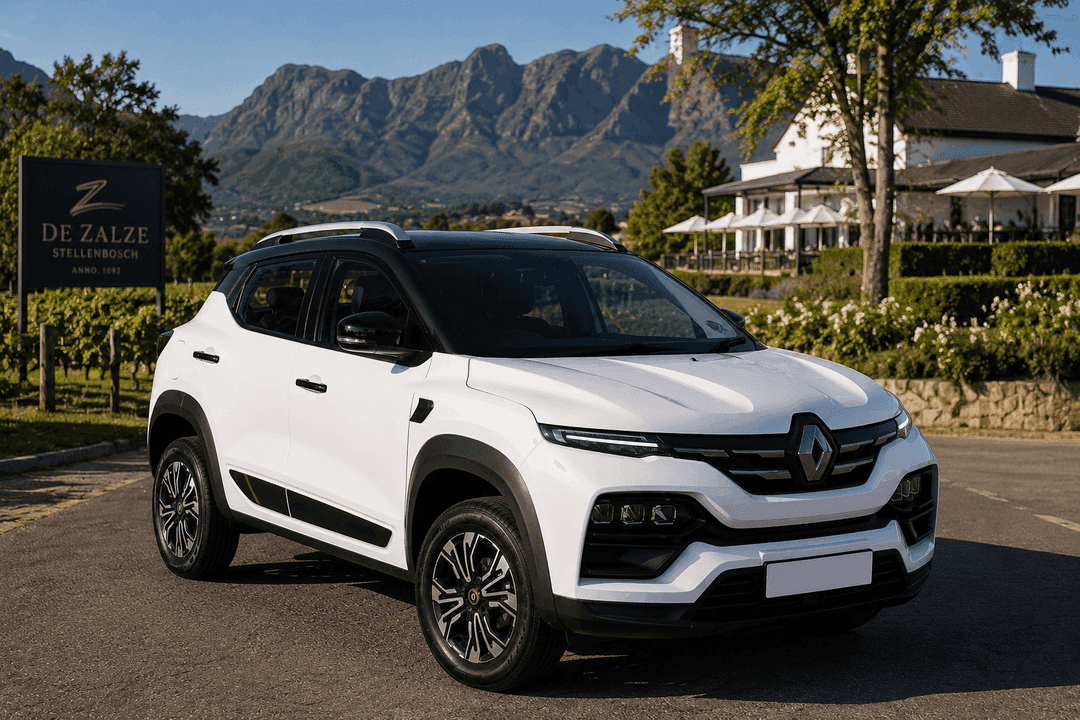
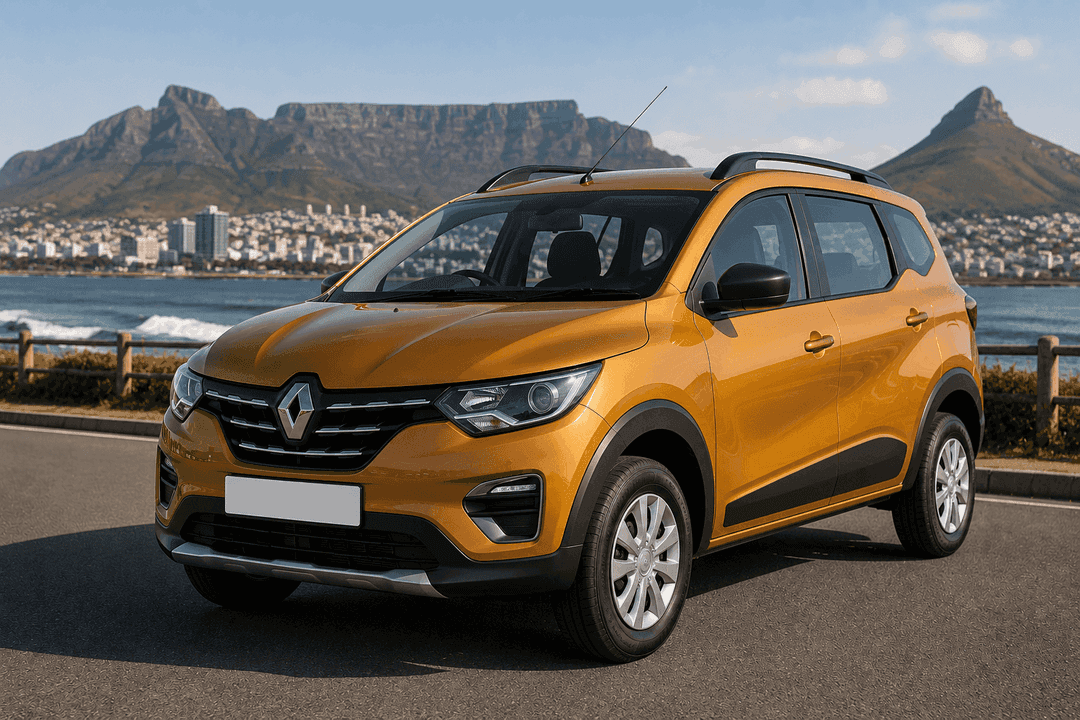
Don’t expect a revolution. What you get is a tidy polish: new grille, tweaked bumpers, and fresher wheel covers. The Triber finally looks like it belongs in Renault’s family, at least from a few parking bays away at Game. That’s a step up from the apologetic look of the old one, which always screamed “budget” from across the lot.
Dimensions that actually work for SA
Here’s the trick: the Triber squeezes seven seats into a hatchback footprint.
- Length: 3 985 mm (short enough for those tight Sandton City ramps)
- Width: 1 734 mm
- Height: 1 643 mm
- Wheelbase: 2 636 mm
- Kerb weight: 1 538 kg
It’s shorter than a Polo, yet fits three rows. That tall roof means proper headroom in row two, and upright windows make it easy for new drivers to judge corners. No fake coupe rooflines here.
Evolution-specific notes
Evolution is the entry point in Renault’s new three-tier line-up (Evolution, Techno, Iconic). For the headline price, you lose LED headlights, reverse camera, auto lights, and cruise control. Steel wheels with covers, halogens, painted door handles – it’s all functional, just not flashy. Most of the visual sparkle sits higher up the range.
Cabin & Practicality
Inside, Renault has done the smart thing by fixing what owners actually noticed. The dashboard is lighter, the faux-wood strip on the upper trims gives it a lift, and the steering wheel finally feels modern. On Evolution, things remain basic but the design is a clear upgrade from the old grey-and-beige mix.
The seven-into-five trick
This is where the Triber genuinely earns its keep. The third row isn’t just foldable – you physically remove it and leave it at home when you don’t need it. That unlocks some useful cargo options:
- All seven seats up: 87 litres boot space (two backpacks, that’s it).
- Five seats: 625 litres, and the boot is actually square and usable.
- Third row out, second row folded: a van-like bay for your next Makro mission.
With five seats, that 625-litre boot rivals crossovers costing much more. With seven seats up? It’s mostly school bags and lunchboxes – don’t expect to fit a family’s luggage.
Materials and ergonomics
It’s hard plastic, everywhere. That’s just reality at this price, and complaining would miss the point. What counts is that Renault kept physical climate dials and a real volume knob. The 8-inch touchscreen on higher specs is bigger, but still slow to react. Evolution’s simpler radio is easier to live with day-to-day. ISOFIX and proper three-point belts for every seat are now standard, and you get six airbags even on base. That’s a big step forward. But there’s a glaring omission: no electronic stability control, even in 2025. That’s something you need to raise at the dealership.
On the Road
Here comes the honest bit: you really need to know what you’re buying into.
The engine, and what altitude does to it
The 999cc three-cylinder puts out 52 kW and 96 Nm. Down at the coast, say on the flat stretches between Ballito and Umhlanga, it feels peppy enough. The car is light, the gears are short, and there’s a cheerful three-cylinder thrum – at least when you’re alone.
But bring it to Joburg and things change. Naturally aspirated motors lose around 17% of their grunt at altitude, so you’re looking at the real-world power dropping to about 45 kW. Load up four adults and bags, aim it up Van Reenen’s Pass, and you’ll be rowing the five-speed box, sitting in third for kilometres. I once drove the previous Triber up the N3 near Heidelberg with three mates, and the engine sat at 4 000 rpm in fourth just to hold 110 km/h. Nothing’s changed on the facelift – physics is physics.
Ride, steering, refinement
This is where Renault’s experience shows. Ride comfort is genuinely good for a car in this price bracket. Broken tar in old Joburg suburbs? Sani Pass-style gravel in the Magaliesberg? The Triber just gets on with it. With 182 mm of ground clearance, potholes and township speed bumps barely register. Steering is light for parking (useful in those tight N1 toll plazas), but gets vague at highway speeds. Above 120 km/h, wind noise picks up – tall body, small engine, you’re working it hard.
Data & Comparison
Spec callouts
- Engine: 999cc, 3-cylinder naturally aspirated petrol
- Power: 52 kW
- Torque: 96 Nm
- Gearbox: 5-speed manual (Evolution and Techno); AMT for Iconic only
- Drive: front-wheel drive
- Kerb weight: 1 538 kg
- Power vs segment: -25% (54 kW vs 72 kW median)
Renault Triber price in South Africa and ownership
The Renault Triber 1.0L Evolution MT price in South Africa is the cheapest new seven-seater you can buy. Used models show the outgoing 1.0 manual averaging R234 951, AMT at R209 990 – so depreciation is gentle for the class. Five-year running costs land near R230 000, which is affordable thanks to local parts and 15 000 km service intervals on the standard 2-year/30 000 km plan. The 5-year/150 000 km warranty is proper peace of mind at this price.
Renault Triber vs the rivals
| Model | Power | Seats | Gearbox | Approx price |
|---|---|---|---|---|
| Renault Triber 1.0 Evolution MT | 54 kW / 96 Nm | 7 | 5MT | From ~R219k |
| Suzuki Ertiga 1.5 GA | 77 kW / 138 Nm | 7 | 5MT | From ~R305k |
| Toyota Rumion 1.5 | 77 kW / 138 Nm | 7 | 5MT | From ~R339k |
| Renault Triber 1.0 Iconic easy-R | 54 kW / 96 Nm | 7 | AMT | From ~R260k |
The price gulf is the real headline. Yes, the Ertiga and Rumion are stronger and more refined, but they’re R85 000 to R120 000 pricier. If you’re running an e-hailing gig, that difference covers months of fuel bills.
Verdict
The Renault Triber review is a simple one. The Renault Triber 1.0L Evolution MT review in South Africa lands where it should: if you have a tight budget and need seven seats, it’s a clear pick. If you’re often carrying seven adults, or you’re driving loaded up on the Highveld, it’s not the answer. The Evolution model asks you to live without cruise control, LED lights, or a reverse camera, but if you’re mostly in the city and parking is a hassle, those sacrifices make sense for the price.
Buy it if you run an e-hailing business, need kid-hauling flexibility once a week, or are a small business needing staff transport. Skip it if you tow, commute on the N3 fully loaded, or if ESC is non-negotiable – Ertiga and Rumion give you both, at a price. If you can stretch to R260k, the Iconic with AMT brings the gearbox and kit most buyers want.
Summary
This is a full review of the 2025 Renault Triber 1.0L Evolution MT, aimed at South Africans who need honest seven-seat practicality without blowing the budget. If you want to know how it stacks up against the Suzuki Ertiga, Toyota Rumion, and its own AMT sibling, especially in real-world conditions