Renault Kiger 1.0L Evolution (2026) Review
The Kiger Turbo CVT is what the Kiger should have been from the start. The value is undeniable, the engineering is honest, and its compromises are visible—not hidden. In a class full of half-promises,
Introduction
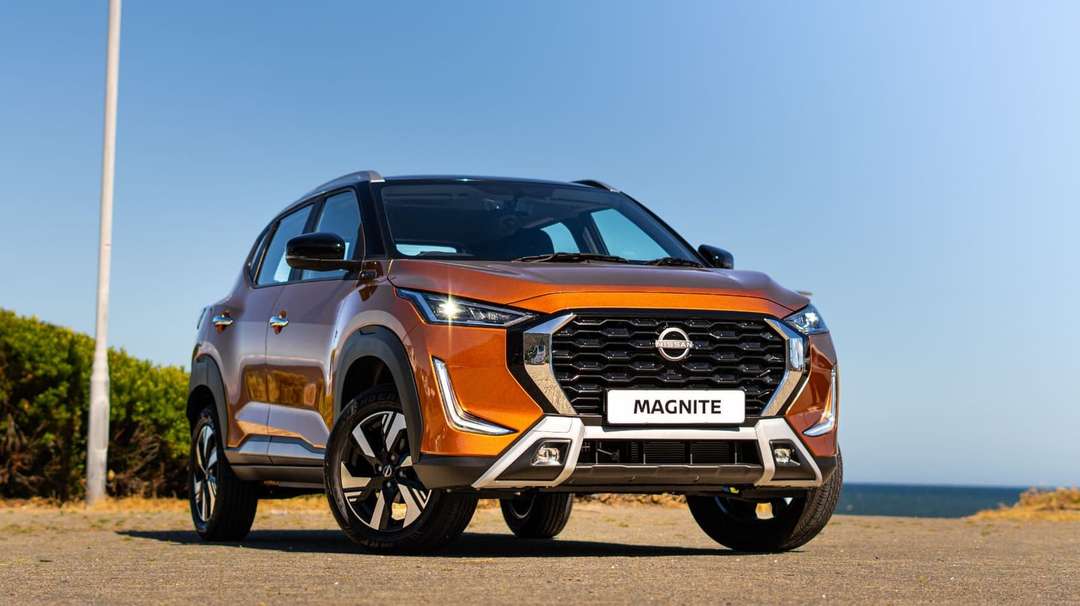
Right, so you’re eyeing the sub-R330k crossover rack and want a turbocharged auto that doesn’t feel like a budget penalty box. Renault’s refreshed Kiger 1.0 Turbo CVT lands right in your crosshairs. But you’ll want to know exactly where Renault splurged - and where the red pen came out. That’s the whole thrust of this Renault Kiger review: is it a steal or just clever corner-cutting? The truth, in this recent update, is that it’s squarely both. Here’s how the split plays out. The Kiger jumps into South Africa’s most hotly fought segment, battling it out with the likes of the Magnite, Sonet, Fronx, Tiggo 4 Pro, Mahindra’s XUV 3XO, and Toyota’s Starlet Cross. Miss the mark on spec, and you’ll be left behind by Monday morning.
Key takeaway: The Kiger 1.0 Turbo CVT gives plenty of value for its price, but you can’t miss the shortcuts: road noise, hard plastics, and a brake pedal that’s been carried over instead of re-engineered for the auto.
Design & Exterior
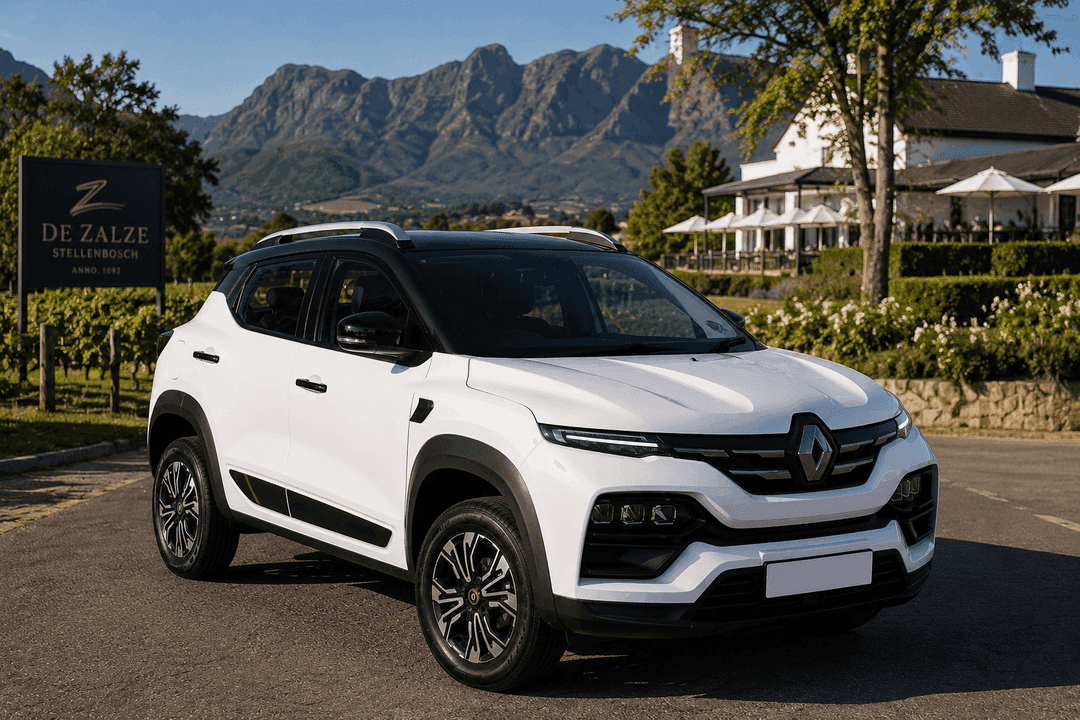
No wild reinvention - just a crisp facelift to sharpen things up. The split-headlight face still dominates: slim DRLs perched on top, chunky main beams set low in the bumper. I parked a charcoal Kiger next to a Magnite, and the Renault looked tangibly more spirited. That’s nothing in a segment where so many rivals fade into the scenery.
Those rear C-shaped tail-lights? Instantly recognisable at night, clean and not trying too hard. The 16-inch alloys are the right size for Joburg and Pretoria roads - any bigger and you’d rattle your fillings out. The ride’s already veering on the firm side there, so this size is a sweet spot.
Stance and proportions
The Kiger stands on the CMF-A+ platform, and a Renault Kiger ground clearance of 205 mm means you can tackle almost any suburban obstacle. Ever detoured up a rutted, washed-out driveway to a Dullstroom B&B? That extra height saves your sills. Approach and departure angles are more than decent for a city crossover, but let’s not kid ourselves - it’s not for Lesotho passes.
Cabin & Practicality
Renault SA has clearly tried to justify the Iconic-spec Turbo CVT’s sticker price inside. You score a 20.32 cm touchscreen, wireless Apple CarPlay and Android Auto, ventilated faux-leather seats, and a digital cluster that actually looks upmarket. But there’s still a swathe of hard plastic running along the lower dash - no hiding its price point there.
Material quality and controls
That gloss-black centre console? Forget about it staying pristine - watched a mate’s car key leave a scratch on day one. The upside: Renault kept physical climate dials, so you’re not poking at a screen as you dart onto the freeway. That’s more than you can say for some Chinese rivals, who throw every control onto a touchscreen and call it progress.
Boot, ISOFIX and rear-seat reality
- 405-litre boot: competitive for the class, will handle a full Checkers run plus a folded pram if you pack smart.
- ISOFIX anchors on both outer rear seats.
- Rear legroom is fine for a 1.78 m adult sitting behind another, but not much more than that.
- The rear seat base is short; tall adults won’t love a three-hour haul.
On the Road
This is where the Turbo CVT earns its spot. That 1.0-litre triple, borrowed from the Nissan Magnite, offers 53 kW and pulls well from 1,800 rpm upward. Paired with the X-Tronic CVT, it finally makes the Kiger a fit for real South African driving - stop-go, fully loaded, sudden hills out near Hartebeespoort.
Powertrain character
Turbo lag? The CVT softens it enough. Over 4,000 rpm, the engine gets vocal - no way around it. It doesn’t quite match the polish of a Venue or Sonet, but there’s the trade-off. In Gauteng’s lurching traffic, 60–100 km/h feels relaxed. Renault claims 6.0 L/100 km combined; I logged 6.7 L/100 km on a mixed loop that included the M1 south - respectable, but not record-breaking.
Ride and handling on the SA tar
Suspension is firmer than before. On fresh N3 tar at 120 km/h, it’s planted and stable. Get onto the patchwork, and you’ll feel every join. That stiffness also calls out a little niggle: the brake pedal is a slim manual-style unit, not the broader auto pedal, and it sits a bit too close to the seat. You notice for the first 20 minutes, then your foot learns, but it’s a clear cost decision in plain view.
Figure on 0–100 km/h in about 11.2 seconds - average, but you’ll hold your own in the school rush.
Data & Comparison
Let’s talk hard numbers. The Kiger Turbo lands well below the segment average for power, and its price reflects that reality.
| Model | Power (kW) | Avg price (ZAR) | Difference vs Kiger Turbo CVT |
|---|---|---|---|
| Renault Kiger 1.0 Turbo CVT | 53 | Around the segment median | - |
| Citroen C3 Aircross 1.2 PureTech Auto | 60 | R259,900 | −R6,757 |
| Honda Elevate 1.5 i-VTEC | 90 | R274,875 | +R8,218 |
| Mitsubishi ASX 2.0 CVT | 111 | R257,700 | −R8,957 |
Spec callouts and ownership
- Power deficit: 60 kW versus a 97 kW median - 23.7% below the average, on paper at least.
- 5-year TCO estimate: Around R230,000 (fuel, tyres, insurance, servicing).
- Ground clearance: 205 mm - best you’ll find at this price.
- Boot: 405 litres.
Looking at sales demand through November 2025, auto.co.za’s index put SUVs in the high-70s, Crossovers in the mid-30s. Simply put, buyers want SUV style at crossover prices - exactly where Renault is aiming the Kiger.
Service plan, accessories and reliability
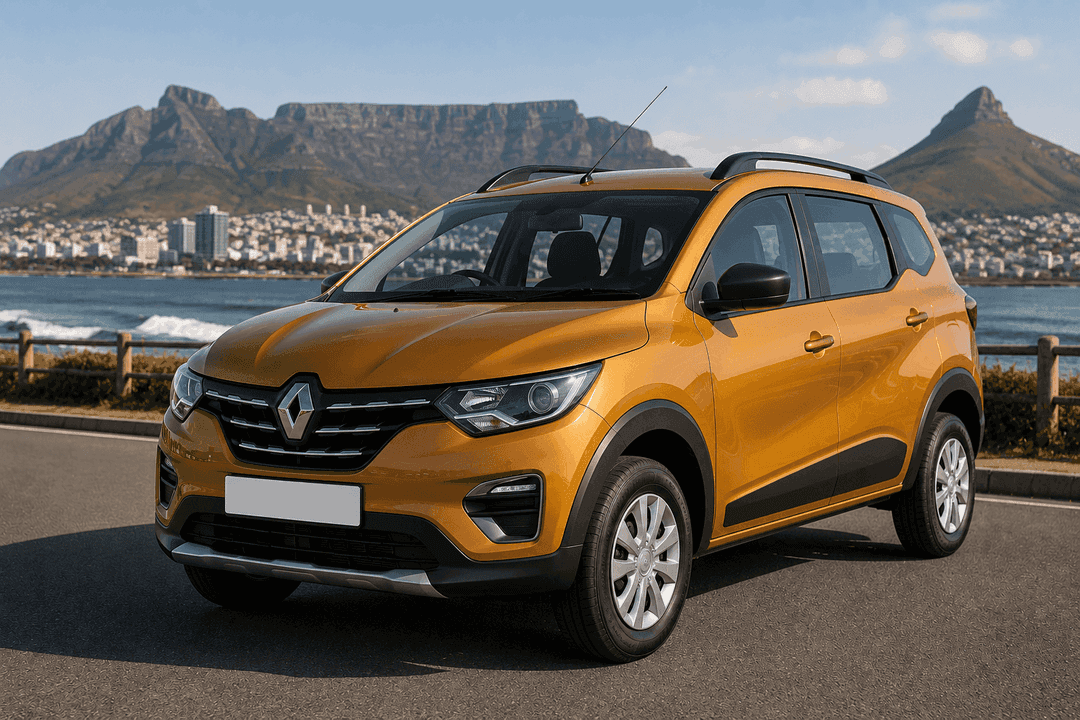
Renault Kiger service plan in South Africa matters because running costs are where small brands win or lose buyers. The Kiger Turbo comes with a 2-year/30,000 km service plan and a 5-year/150,000 km mechanical warranty - strong, though Sonet still leads on cover. On Renault Kiger reliability, most of the feedback is good: the Nissan-sourced HR10DET turbo is solid. Renault Kiger problems in South Africa mostly show up as infotainment bugs and the odd dashboard rattle - most of the infotainment issues have been ironed out with software updates. Dealer support for Renault Kiger accessories in South Africa is decent: roof rails, boot mats, and more are available at Renault, and you’ll find plenty at Midas too, since the underpinnings are shared with Triber and Kwid.
Earlier Kigers had squeaky brakes and paint that marked easily. The facelift fixes some, but not all, of these. If you’re buying, check the paintwork on dealer stock - some show room rash before you even get the keys.
Editorial Focus
Unbeatable Value or Corner-Cutting?
Both - and the split is easier to spot than you’d think. The value checklist is long: turbo triple with a proven Nissan engine, CVT that finally fits the car, 205 mm ground clearance for battered local roads, 405-litre boot, six airbags, ESC, traction control, ventilated faux-leather, multi-view camera - all for under R330k on the Iconic CVT. The current Renault Kiger price in South Africa is about R30,000 below the pre-facelift Intens CVT. That’s more than just trimming a few features - it’s a proper price reset. Stack it against the C3 Aircross, Elevate, and ASX, and the Kiger Turbo CVT lands well on value, giving you more spec per rand than most. That matters because the bulk of buyers here are financing over 72 months and feel every R500 fluctuation in the monthly debit.
Shortcomings? They’re there, but likely not deal-breakers for the average buyer. The engine gets loud when you work it hard, the brake pedal wasn’t properly adapted for the auto, the gloss-black trim scratches at the slightest provocation, and SA’s colour range is thinner than India’s. The Kiger also lost out to the Sonet in the 2026 CAR Top 12 Best Buys Budget Crossover. Still, value wins out - because Renault’s cost-cutting is mostly cosmetic or about cabin noise, not safety or fundamentals.
People Also Ask
What is the Renault Kiger 1.0L Evolution price in South Africa?
Evolution is the entry-level, naturally aspirated spec - well below the Turbo CVT price. If you’re after the 1.0 Turbo X-Tronic CVT tested here, that’s the Iconic trim for SA, at about R329,999. There’s no local Evolution Turbo.
How is the Renault Kiger 1.0L Evolution review in South Africa shaping up?
The Evolution (non-turbo) does well as a cheap city commuter but misses the turbo’s extra shove in the midrange. For city runs, it’s fine. For Gauteng’s highways and passing power, the Iconic Turbo CVT is the pick - and it’s the one I’d suggest to friends.
Is the Renault Kiger reliable in South African conditions?
Generally, yes. The turbo engine is Nissan’s HR10DET and shares its platform with other Renault-Nissan models, so parts aren’t hard to come by. Complaints are usually about infotainment quirks or the odd trim squeak. Major mechanical issues are rare, and that 5-year mechanical warranty offers genuine peace of mind.
What's covered by the Renault Kiger service plan in.South Africa?
The Kiger Turbo’s 2-year/30,000 km service plan covers scheduled maintenance - oil, filters, labour - at Renault dealers. Mechanical warranty is 5 years/150,000 km. If you’re driving more than 25,000 km per year, consider extending both.
How does the Renault Kiger's ground clearance compare to rivals?
With 205 mm, the Kiger leads its sub-R330k class. Magnite matches it, but Sonet, Fronx, and Starlet Cross all sit lower. In South Africa, where gravel, speed bumps, and the odd water crossing are routine, that extra clearance is a real asset - more than just a spec sheet brag.
Are Renault Kiger accessories in South Africa easy to source?
Yes. Renault SA dealers offer a strong range - roof bars, mudflaps, boot mats, and styling packs. Aftermarket options (Midas, AutoZone, Takealot) are plentiful. Tyres in 195/60 R16 are common and easy on the wallet.
Verdict
The Renault Kiger 1.0 Turbo X-Tronic CVT is a smart buy if you care about value-per-rand, do mostly urban miles with the occasional long trip, and don’t mind a three-cylinder that likes to be heard. It’s a logical step up for first-time SUV buyers coming from a Polo Vivo or Starlet, or for retirees wanting a higher seat without a Haval-sized debit order.
Maybe give it a skip if road noise and cabin hush are non-negotiable, if you’re a daily N1 or R21 commuter where engine drone will grind you down, or if you’re obsessed with resale - Sonet still takes that crown. And if you’re dead-set on the Evolution Turbo, you’ll be stuck waiting. It’s not on offer here, and that’s the point.
Rating: 7.5/10. The Kiger Turbo CVT is what the Kiger should have been from day one. The value is undeniable, the engineering is upfront, and the compromises are all right there - not hidden. In a class full of almosts, that’s something you can actually respect.
Summary
Buy the Renault Kiger 1.0 Turbo X-Tronic CVT if value-per-rand matters, you mostly drive urban with the odd long trip, and you don’t mind a three-cylinder that likes to make itself heard. It’s a smart move for first-time SUV buyers upgrading from a Polo Vivo or Starlet, or for retirees who want a commanding view without a Haval-sized debit order.