BYD Atto 2 1.5 DMi Dynamic (AF-20) PHEV (2026) Review

Smartly priced plug-in hybrid crossover, let down only by a handful of software quirks and the eternal PHEV warning: you actually need to plug it in for the magic to happen...
Introduction
Let's get straight to it: the BYD Atto 2 DM-i Dynamic only makes sense if you can charge at home. Plug in daily, and you'll see fuel use that makes a Citi Golf blush, with the bonus of electric drive for most errands. Can't charge at home? Just get a Corolla Cross Hybrid and spare yourself the faff. Too many PHEV reviews dodge that reality, so I'm not going to.
2026 is the year BYD stops being a left-field import and starts playing for keeps in South Africa. The Atto 2 DM-i slots under the Sealion 5 and lands squarely in the R449 900 to R489 900 bracket - and that sort of plug-in hybrid value is rare here, no matter what the spec sheet says.
Key takeaway: Small, practical PHEV crossover at a price that punishes lazy owners and rewards anyone who plugs in religiously. Buy it for the plug, not the logo.
Design & Exterior
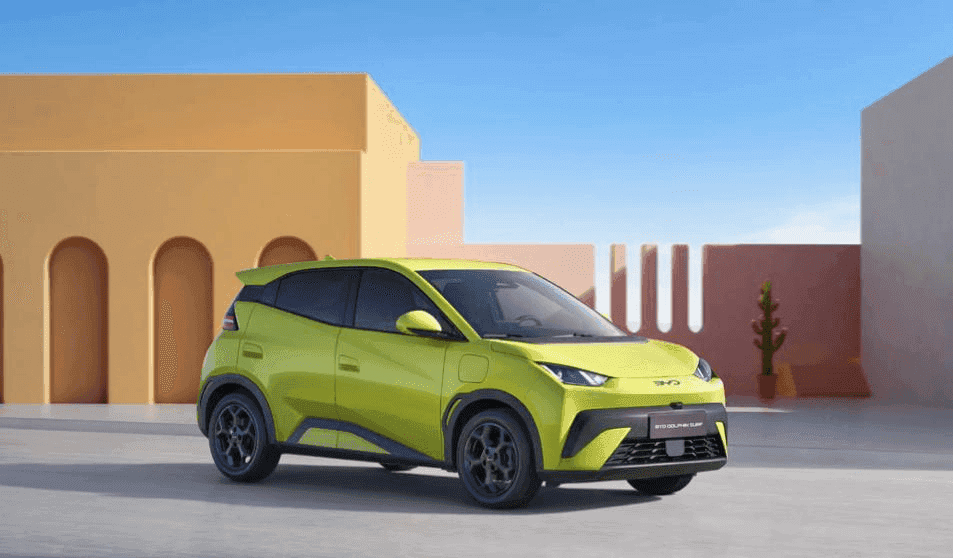
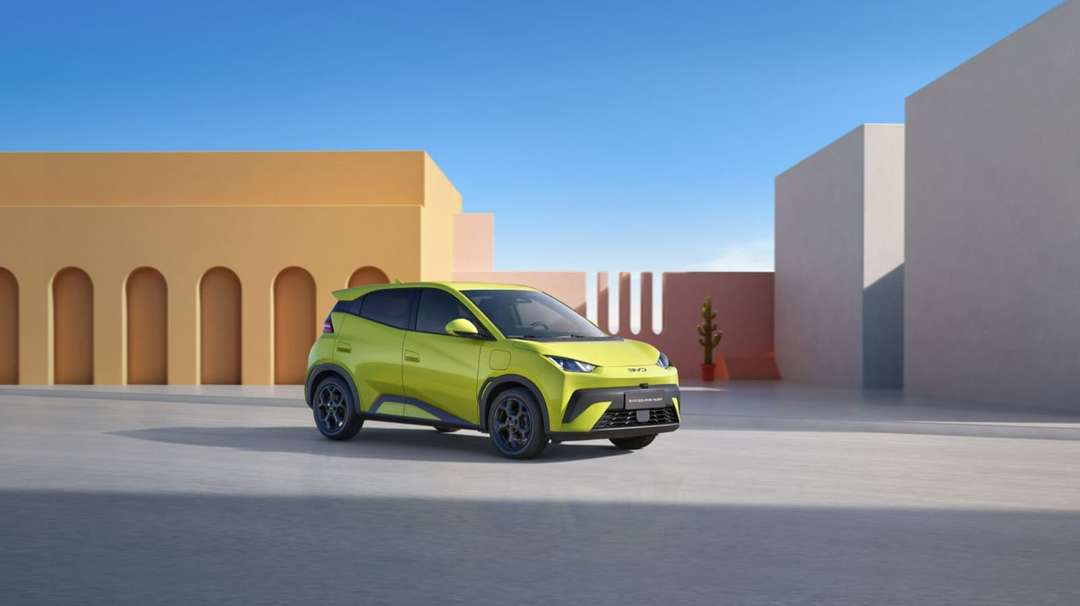
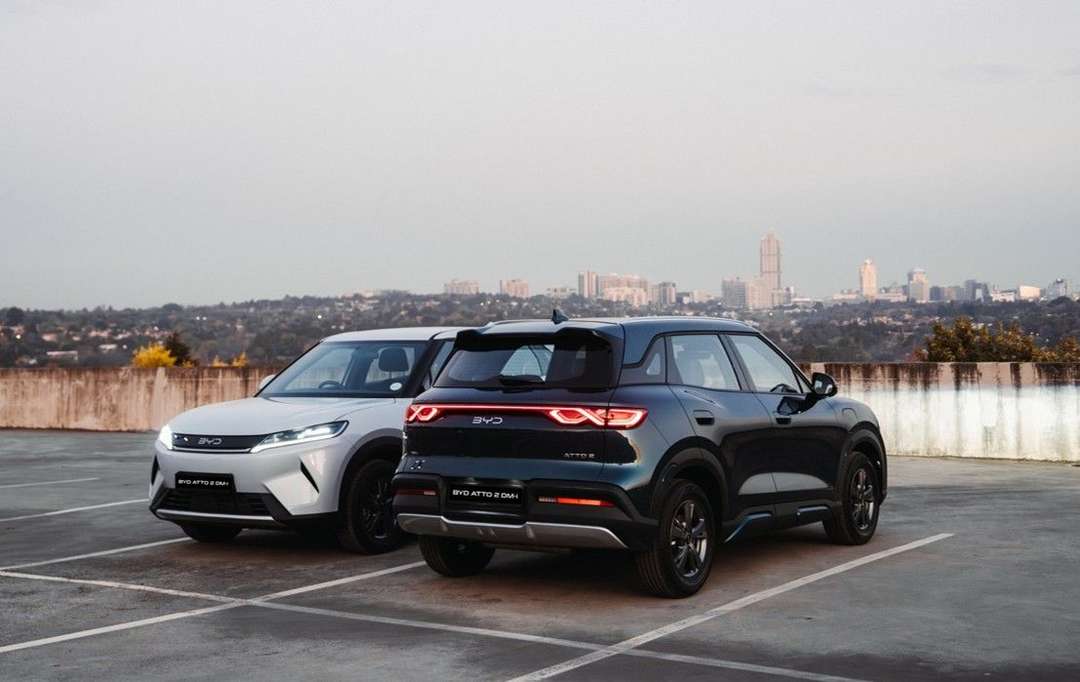
First impressions? The Atto 2 looks like a BYD design team binge-watched Volvo XC40 and Kia Niro reviews and then tried to split the difference. Blocky, upright, approachable. At 4 330 mm long and 1 830 mm wide, it parks firmly in the compact-crossover camp, but the 1 675 mm height adds a bit of visual muscle. In a parking lot, it stands taller than a Yaris Cross and somehow manages to look bigger than it is.
Stance and detailing
Alloys fill the arches properly, the front is clean and avoids trying too hard, and the rear three-quarter hints at Range Rover Evoque without crossing into copycat territory. Dynamic trim gets larger wheels and colour-coded bumpers that tie the look together. The Comfort trim? Not bad, just lacks presence.
Where it sits in the segment
Against the Chery Tiggo Cross and Corolla Cross, the Atto 2 looks more grown-up and less like a cartoon. Park it next to a Hyundai Kona, and you notice how clean the BYD's lines are. That matters because local buyers still judge cars hard on face value, and BYD hasn't given anyone a reason to walk straight back out the dealership door.
Cabin & Practicality
Step inside, and the Atto 2 really starts to make its case. The 12.8-inch rotating touchscreen still feels like a party trick, even three years after BYD arrived in SA, but it does work, runs Google apps natively, and dominates a cabin that feels almost too posh for the price. Top dash and door materials are soft-touch and genuinely nice. Get lower down and, yes, there’s hard plastic, but nothing that screams cost-cutting. It’s honest for R489 900.
Practical numbers that matter
- Seats five, five doors, and the 2 620 mm wheelbase pays off in real rear legroom.
- The boot is rated at 425 litres - bigger than plenty of regular hatches, and it swallowed a full pram with room left for groceries on my test.
- Front USB-C (60 W) charges a laptop while driving. No more hunting for adapters.
- Wireless phone charging on Dynamic, plus an electric driver’s seat.
- At 1 620 kg, it’s on the heavy side for the class, but that’s the battery’s fault.
Ergonomics and physical controls
This is where I start to rant. BYD, like most new players, hasn't figured out that South Africans love physical climate buttons. Almost everything lives in the touchscreen. There's a volume knob (thank you), but no row of climate controls. The menu structure makes sense, and the screen is quick enough, but you’ll find yourself tapping at the glass to change the fan on the R21 at speed when you'd rather have your eyes on the road. Not ideal.
On the Road
Yes, it's a PHEV, but on battery it feels like a range-extender EV. The 1.5-litre engine mostly acts as a generator, only stepping in as a traction motor when you really ask for it. On a trip from Sandton to Hartbeespoort, I clocked the engine running maybe twice with a full battery. Otherwise, it’s silent, smooth, and properly quick off the line.
Performance and refinement
Output sits at a solid 122 kW, with BYD claiming 0-100 km/h in 7.5 seconds. That’s brisk for anything in this price bracket. Official combined consumption is 5.1 L/100 km, but on launch, I averaged 5.8 L/100 km driving as I stole it, which is close enough to call the claim honest. The big catch? You have to start with a charged battery. Once the 18 kWh pack is empty, fuel use climbs to the high sixes, and the engine gets busier.
Ride and handling on local roads
The shocker is the ride quality. It’s more forgiving on Joburg potholes than most UK reviews gave it credit for, which suggests our local cars may have a softer spring setup or simply suit our battered tar better. It handled a string of ugly speed bumps without a single scrape. Body control is fine, steering is light, and the brakes now blend regen and friction noticeably better than early BYDs. Still, there's a springy bite to the pedal that took me a few days to trust.
The mode-transition wrinkle
Push hard with a low battery, and you hit a split-second hesitation while the computers figure out if they should fire up the engine or squeeze the last volts. Not dangerous, just clunky. Wouldn't be surprised if a future OTA update sorted this, given BYD’s track record of fixing software issues post-launch. Honestly, I'd rather wait for a software patch than live with a baked-in hardware flaw. It's what the Atto 2 should have been from the start.
Data & Comparison
Headline specs
- Powertrain: DM-i 1.5L with 18 kWh battery, 122 kW combined
- 0-100 km/h: 7.5 seconds
- Combined consumption: 5.1 L/100 km
- Dimensions: 4 330 mm L x 1 830 mm W x 1 675 mm H
- Wheelbase: 2 620 mm
- Curb weight: 1 620 kg
- Drive: Front-wheel drive, E-CVT
- BYD Atto 2 BYD Atto 2 1.5 DMi Dynamic (AF-20) PHEV price south africa: R489 900 for the Dynamic trim as tested in 2025
How it stacks up against rivals
| Model | Powertrain | 0-100 km/h | Claimed L/100 km | Approx. price |
|---|---|---|---|---|
| BYD Atto 2 1.5 DM-i Dynamic | PHEV 122 kW | 7.5 s | 5.1 | R489 900 |
| Toyota Corolla Cross 1.8 HEV XR | Hybrid 90 kW | ~11.4 s | 4.3 | ~R535 000 |
| Chery Tiggo Cross 1.5T | Petrol 115 kW | ~9.5 s | 7.0 | ~R399 000 |
| Haval Jolion 1.5T HEV | Hybrid 140 kW | ~8.0 s | 5.0 | ~R485 000 |
Five-year ownership maths
BYD puts five-year running costs at R245 300, but that relies on you actually plugging in at home. The service plan covers the usual maintenance at most big dealer groups - I’ve seen Atto 2s at CMH, Bidvest McCarthy and even a pop-up at Gateway Mall. Coverage now stretches from Cape Town to Joburg to Durban, so you’re not stuck in one city. No word yet on three-year resale values. Chinese PHEVs are still too new to call depreciation, so I'd be cautious until we see some real trade-ins.
Segment trend signal
South Africans are still obsessed with SUVs, with demand sitting above 73 for most of 2025. Hybrid interest remains strong above 72. Pure EVs? Not keeping up, bouncing between 58 and 64. That’s exactly why BYD expects the Atto 2 DM-i to outsell the pure-electric version locally. Can't say they're wrong.
Safety rating
ANCAP · tested 2022
★★★★★ 5/5 adult occupant
Australian-market RHD rating — indicative for SA only where the SA derivative matches the tested safety spec (airbags/ESC/AEB). Official factsheet.
Verdict
This is the right car for the right buyer. If you have a driveway, a wall charger, a commute under 40 km, and do the odd long trip, the Atto 2 DM-i Dynamic is one of the most wallet-friendly ways to drive a quiet, well-equipped small crossover in South Africa right now. The interior is impressive, the ride suits our roads, and the running costs check out.
But skip it if you live in a block of flats or mostly drive long distances on the N3. A self-charging Corolla Cross Hybrid will match it on fuel economy without the hassle of charging and won’t make you lug around a battery you never use. Also not for you if you want sharp handling or B-road fun - this BYD is about comfort and family first.
If you can wait, hang back for the 2026 model’s software upgrades. BYD is good at rolling out meaningful fixes through OTA updates within the first year, and that could sort out the little niggles with drive modes and menu logic. That matters here.
Summary
A full, no-nonsense review of the BYD Atto 2 1.5 DMi Dynamic plug-in hybrid, aimed at real South African buyers. We'll unpack powertrain credibility, cabin quality, real-world fuel costs, and whether a compact PHEV crossover is a smart buy in a country where many can't just plug in at home.