BYD Shark 6 1.5 Double Cab Pickup PHEV (2026) Review
- A genuinely new kind of bakkie for South Africa that nails the urban-and-gravel brief, with workhorse caveats that buyers must understand before they sign.
Summary
Here’s a BYD Shark 6 review that cuts through the noise for South Africans: genuine plug-in hybrid bakkie utility, real-world battery and fuel numbers, actual BYD Shark 6 price in South Africa, and why it’s not just a talking point for load-shedding. We’ll get into BYD Shark 6 problems, reliability, what you can fit in the bin, and how it shapes up as a daily double-cab below R1 million.
Introduction
Right, so you want the quickest, most tech-heavy double cab you can buy for less than a bar, and you can actually charge at home. That’s the BYD Shark 6 1.5 Double Cab Pickup PHEV’s whole pitch. If your weekends mean hauling a 3,000 kg trailer over thick sand or you live for low-range boulder crawling, you’re not the buyer here. I tested the Premium AWD, fresh in SA showrooms for 2026, and it’s diving headfirst into the country’s most competitive segment. Double cabs aren’t just popular - they’re a battleground. BYD didn’t come to play it safe. This is their opening shot, and a lot is riding on it.
Key takeaway: The Shark 6 is a lifestyle-first, plug-in bakkie with proper urban and gravel ability, but it’s not a load-hauler or a 3.5-tonne workhorse. Know that before you sign.
Design & Exterior
Footprint and stance
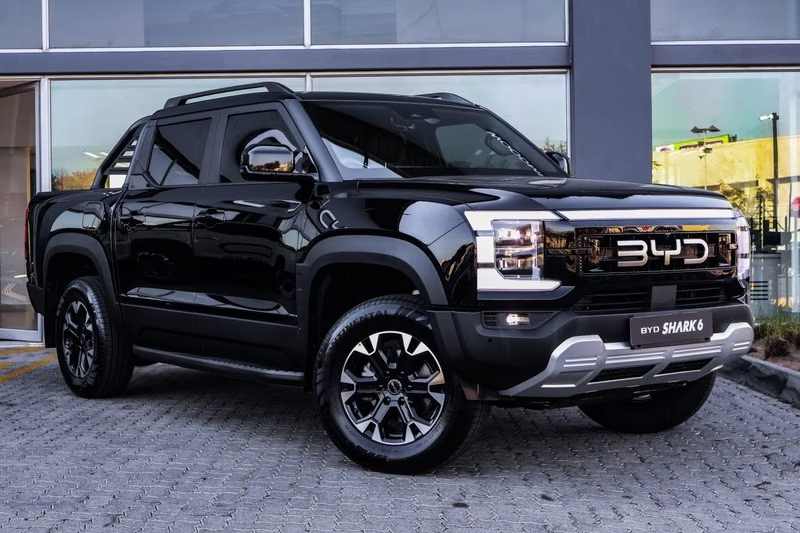
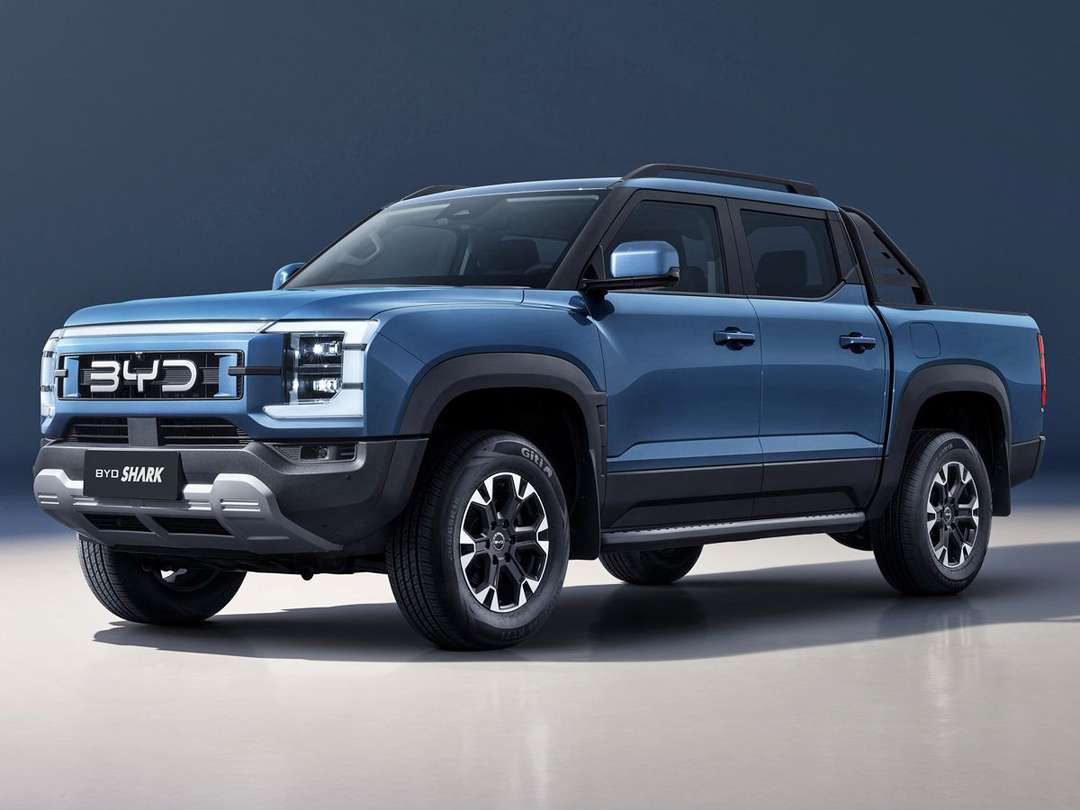
Measured at 5,457 mm nose to tail and 1,971 mm wide, the BYD Shark 6 is longer than the Hilux and almost as broad as the Ranger. Its 1,925 mm height gives it real presence, but it doesn’t look like a delivery van. Stuck next to an Amarok, it looks right at home, not out of place at all.
Styling cues
Subtle is not on the menu. There’s a full-width lightbar, a chunky tailgate, those swollen arches, and a big glowing badge shouting its name. It’s the bakkie for people who want to be seen, not just blend in at the rugby clubhouse. People stare; some come over for a chat. But will the look survive five years of South African fashion swings? That’s the risk, and curb appeal does matter for resale here, sometimes more than what’s under the bonnet.
Practical touches
BYD put three plug points in the load bay - vehicle-to-load, not just for the spec sheet. I actually ran my laptop and a drone charger off the V2L at a construction site outside Pretoria: no inverter, no fuss, no generator drone. It’s a real local advantage, especially during load-shedding.
Cabin & Practicality
Materials and layout
Inside, the Shark leans hard toward SUV comfort, not builder-basic. Leather on the dash, console, and steering wheel. The 15.6-inch rotating touchscreen dominates, but - crucially - BYD kept real buttons for climate and drive mode. Anyone who’s tried to swipe through menus while bouncing down a rocky Magaliesberg pass will know why that matters.
Space for five
Seats five grown-ups. The extra width means three adults genuinely fit across the back, and two ISOFIX points make it family-friendly. Even with the panoramic sunroof, I still had decent headroom (I’m 1.85 m), which isn’t a given in this segment.
Tech worth using
- 15.6-inch rotating touchscreen with built-in navigation
- 12-speaker Dynaudio audio
- Head-up display
- Wireless charging pad
- Three V2L sockets in the load bay for kettles, tools, or a fridge during load-shedding
Load bay? BYD Shark 6 boot space is generous: quad bike or full camping kit, no problem. If you pack smart, two mountain bikes fit diagonally. The independent suspension is the big shift - no leaf-spring bounce, so it actually feels like a family car most days. That changes the reality far more than any spec number.
On the Road
The drivetrain explained
This is where the BYD Shark 6 stops playing by the usual bakkie rules. Up front: a 1.5-litre turbo-petrol. Both axles get electric motors - there’s no mechanical driveshaft front-to-rear, so it’s all managed by software. You get 324 kW and 650 Nm combined. Most of the time, the petrol engine just acts as a generator. Under 100 km/h and with a gentle foot, it’s EV-quiet and instant. No diesel drone, just torque. On paper at least, it’s what the modern double cab should have been from the start.
Urban manners
I collected the Shark in Sandton, crawled through Rosebank traffic, and the petrol engine barely woke up. Completely silent, instant shove, and it feels hefty in a good way. That 5.7-second 0-100 km/h claim? I believe it. Both axles get electric torque, so traffic-light launches are way quicker than any Hilux. You notice it.
Open road and gravel
Heading down the N3 toward Harrismith, the petrol motor finally comes alive above 100. It’s a bit gruff but never intrusive. It’s not as smooth as a Ranger V6 diesel, but it doesn’t drone on like the old-school workhorses. On gravel, it’s a different beast: electric torque to every wheel means it grips on loose stuff where a diesel just spins. That four-corner suspension irons out potholes and corrugations better than any leaf-sprung rival I’ve tried. But for proper off-roading? Nope. No low range, average off-road angles, and all that battery weight mean deep sand still wins. Don’t buy it for Sani Pass heroics.
Data & Comparison
Specifications at a glance
| Spec | BYD Shark 6 Premium |
|---|---|
| Engine | 1.5L turbo-petrol + dual e-motors |
| Power | 321 kW |
| Torque | 650 Nm |
| Drive | AWD (no mechanical link) |
| Transmission | Single-speed automatic |
| Fuel consumption (combined, charge-sustaining) | 2.0 L/100 km |
| Length / Width / Height | 5,457 / 1,971 / 1,925 mm |
| Seats / Doors | 5 / 4 |
Fuel consumption in the real world
That 2.0 L/100 km is only possible if you leave home with a full battery. If you run the N1 from Joburg to Bloem with a flat battery, expect closer to 9 L/100 km - so budget for that if you’re a rep or road warrior. If you’re commuting under 80 km and plug in every day, you might not see a petrol station for weeks. That’s the BYD Shark 6 trick, and it’s a big one if you have home charging.
How it stacks up
| Model | Power | Drive | Body |
|---|---|---|---|
| BYD Shark 6 Premium | 324 kW | AWD (PHEV) | Double cab |
| Ford Ranger Wildtrak 2.0 BiT | 154 kW diesel | 4x4 with low range | Double cab |
| Toyota Hilux GR-Sport III 2.8 | 165 kW diesel | 4x4 with low range | Double cab |
| GWM P500 Ultra | 135 kW diesel | 4x4 with low range | Double cab |
Ownership and pricing context
- Estimated 5-year total cost of ownership: R236,000 (excluding fuel/electricity).
- BYD Shark 6 price South Africa: Premium AWD launches just under R1 million, with most dealers quoting high R900,000s - directly up against the Hilux GR-Sport and Ranger Wildtrak.
- Warranty and maintenance are strong, outpacing diesel rivals at this sticker price.
Looking for BYD Shark 6 accessories in South Africa? Dealers in Gauteng, Cape Town and Durban have tonneau covers, roll bars, and nudge bars in stock. If you’re rural, the dealer network isn’t everywhere yet - expect a drive for service or extras. That’s not unique to BYD but is worth factoring in.
Segment trend
Latest figures say double-cab demand is steady in the low- to mid-60% range, while hybrid and PHEV interest is punching past 72. The BYD Shark 6 is the first to hit that overlap, and that’s the point.
People Also Ask
What is the BYD Shark 6's fuel consumption in real-world driving?
Officially, it’s 2.0 L/100 km with a full battery. But on longer highway drives with a flat battery, expect mid-9s. If your daily drive is under 80 km and you charge at home, you may go weeks without buying fuel.
Does the BYD Shark 6 have reliability problems?
Internationally, most BYD Shark 6 problems are minor software niggles - over-sensitive driver attention alerts, a few early towing issues. Over-the-air updates have fixed most of them. Mechanical faults are rare, but BYD Shark 6 reliability in South Africa still needs a year of local data, especially in our dust and heat.
Is the BYD Shark 6 good for towing and off-road work?
Rated to tow 2,500 kg (braked) - that’s less than the 3,500 kg Hilux or Ranger. There’s no low-range transfer case, and off-road angles are average. For gravel and mild trails, it’s excellent. For serious overlanding or farm work, a diesel with low range still wins.
What makes the BYD Shark 6 stand out from rivals?
Fastest production bakkie on sale in South Africa: 324 kW, 0-100 in 5.7 seconds. Three V2L sockets make it a mobile generator during load-shedding. Interior quality is a step above diesel competitors, and the independent suspension means it rides like an SUV, not a farm truck.
How much does the BYD Shark 6 cost in South Africa?
BYD Shark 6 South Africa price in rands: Premium AWD double cab lists just below R1 million, typically in the high R900,000s at dealers. That’s Ranger Wildtrak, Hilux GR-Sport and Amarok Style territory, but still cheaper than the incoming Ranger PHEV.
Can you charge a BYD Shark 6 at home in South Africa?
Yes. The 29.6 kWh Blade battery takes 7 kW AC from a wallbox. On public DC, it pulls up to 55 kW - expect 30-80% in roughly 20 minutes. Regular plug at home is overnight; wallbox is far quicker and worth installing.
Verdict
Shark 6? Easily the most interesting bakkie since the Amarok V6. It’s quick, well-specced, plush inside, and those V2L sockets are a real South African perk. There are trade-offs: it’s not a hardcore off-roader, towing is capped, and BYD Shark 6 reliability problems - if they exist - will only show after a year or two on our roads. Resale for new Chinese badges is also still unknown.
If you’re a city dweller with a garage plug, want EV silence and effortless torque but still need a bakkie boot, it makes sense. If you’re towing heavy or spending weekends axle-deep in the bush, stick with diesel. If budget is tight, wait for a cheaper 4x2. The Ranger PHEV will rattle the loyalists soon enough…
Rating
8.0 / 10 – A bakkie that finally gives South Africans a real plug-in hybrid option for city and gravel, with clear workhorse caveats. Know what you’re buying, and it’ll reward you daily.
Summary
Here’s a full, head-on review of the 2025 BYD Shark 6 1.5 Double Cab Pickup PHEV, tuned for South African buyers. We’ll get into the plug-in hybrid powertrain, interior quality, load-shedding flexibility, gravel manners, charging habits, and how it stacks up against diesel double-cab stalwarts under