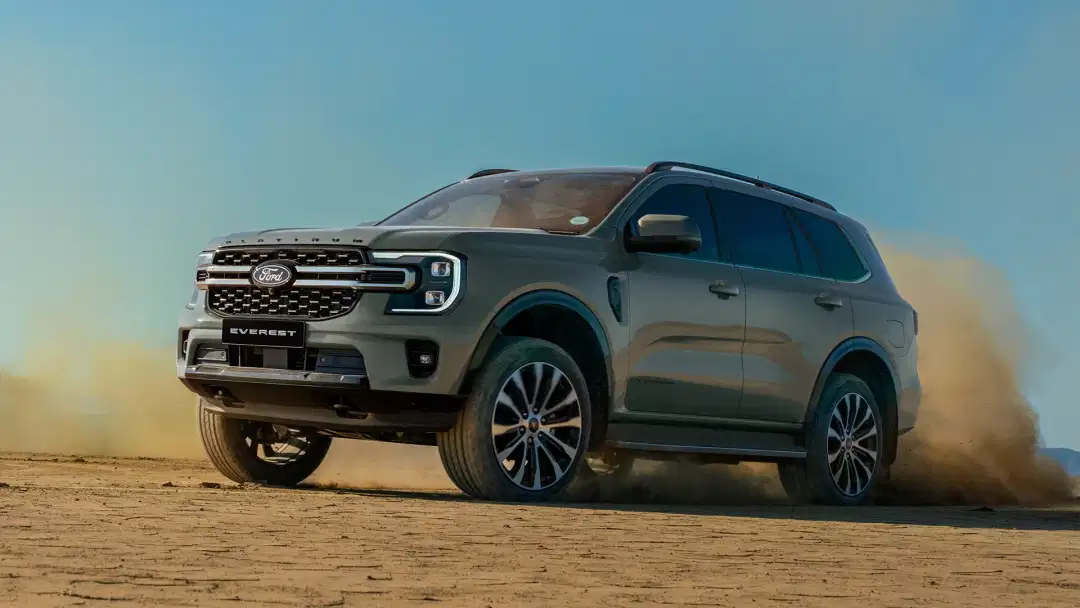
Ford EcoSport 1.5TDCi Ambiente (2020) Review


— let down by the Ambiente’s basic trim and the 5-speed’s droning on the highway, but redeemed by real-world diesel economy, actual ground clearance, and a dealer network that still answers the phone
Introduction
Let’s be honest: if you’re searching for a used compact crossover under R200k that sips diesel and shrugs off potholes, the Ford EcoSport 1.5 TDCi Ambiente still deserves a look - but only if you’re ready to live with a no-frills cabin and a 5-speed manual that drones at 120 km/h. That’s the reality. So, is this budget Ford still worth your cash in 206? With the EcoSport discontinued and the now-discontinued Puma at nearly double its old price, the second-hand TDCi Ambiente lands in a curious but tempting spot. Most EcoSports you’ll see at used dealers in South Africa are the 2017–2020 facelift cars - and that’s the batch that counts here.
Key takeaway: The 1.5 TDCi Ambiente is a logical pick for rural drivers who value low diesel consumption and genuine ground clearance - not for city buyers expecting a modern touchscreen or quiet cruising.
Design & Exterior
The facelifted EcoSport from 2017 onward fixed the awkwardness of the original, thanks to a chunkier grille and sleeker lights. Now it’s less “Fiesta on stilts”, more mini-SUV. There’s an honesty about its stance - narrow, tall, and not shy about its age.
Ambiente TDCi models stand out. Steel wheels with plastic covers, plain body-coloured handles, black bumper inserts. That full-size spare on the tailgate - cover and all-splits opinion. I’ll say it: it gives the EcoSport a proper attitude versus the vanilla Sonet or Magnite lined up at the parking lot.
Where it sits in the segment
Stacked against Indian-built newcomers, the EcoSport sits higher and feels a bit more upright. Yes, it’s an older shell - because it is - but you get 200 mm of real clearance. That’s not a brochure number. Gravel, or rolling a curb, won’t rattle your nerves, unlike a Starlet Cross or Fronx, which will scrape every time.
Cabin & Practicality
Here’s where Ambiente splits the room. The layout is logical, you sit high, and - thank goodness - there are actual buttons for the aircon. No touchscreen menu nonsense. Try poking at a screen with gloves on a freezing morning. I wouldn’t.
What you don't get
- No SYNC touchscreen - just a basic Bluetooth/USB radio
- No Apple CarPlay or Android Auto
- No cruise control
- Hard plastic steering wheel
- Manual air-con, no auto lights or wipers
- Steel wheels only
What you do get
- ESC, ABS with EBD, and traction control are standard
- Front, side and passenger airbags
- Rear PDC
- ISOFIX points for the outer rear seats
- All-round electric windows and remote central locking
Ford EcoSport boot space and packaging
Boot space? You’ve got about 333 litres with the rear bench up, 705 litres folded - that’s average for B-segment crossovers. But the side-hinged tailgate is a pain in tight parking. It opens the wrong way for SA parking bays, so you’ll shuffle forward to get the boot open. On gravel or at a campsite, it doesn’t matter. Loading a dog or a pair of prams? Possible, but you’ll need to plan your packing.
Two adults fit fine in the rear; three is tight unless they’re kids. Plastics are hard and thin, and you’ll notice some buzzing at 120 km/h on the freeway. I remember an EcoSport I sampled - the dash did a samba every time we hit an expansion joint…
On the Road
Output is 74 kW and 205 Nm. On paper, at least, that sounds average next to the 1.0 turbo-petrols floating around now. But that diesel torque lands early, so you get a reasonable shove from 80 km/h in fourth. Not quick, but far from limp.
The gearbox question
Heads up: our TDCi got a 5-speed, not the 6-speed used elsewhere. Fifth is short, so you’re sitting at 2 500 rpm at 120 km/h, on the highway - not ideal for those long runs to the coast. It’s noisy, and you’ll reach for a sixth that isn’t there.
Ride and handling
Under the skin, it’s basically a Fiesta, so the steering is unexpectedly direct for a tall, budget crossover. The Kiger and Sonet are lazier. But the torsion-beam rear makes the ride jittery over patched-up tar. Cruising smooths it out, but if you’re used to something softer, you’ll notice the difference.
Real-world economy
On a Centurion–Parys–Centurion loop, mostly highway, I averaged 5.1 L/100 km. In town, expect 6.3 L/100 km. The 52-litre tank means a real range north of 900 km if you don’t hoon it - and that’s the point of this diesel. A long drive? No stress.
Data & Comparison
Ford EcoSport price in South Africa and ownership math
EcoSport prices topped out at R311 000–R417 000 new. Today, a solid 2018–2020 TDCi Ambiente fetches R170 000–R195 000. Five years on the road? Plan on R230 000 in total ownership (fuel, tyres, servicing, everything in).
Service plan? Ford gave the EcoSport a 4-year/60 000 km plan. Most 2018–2020 cars are out of plan, so budget for a cambelt and DPF clean or replacement. Ignore that, and you’ll see the DPF light halfway between Middelburg and Nelspruit.
Spec callout
- Power vs segment: 74 kW - about 28.6% down on the diesel small SUV segment median of 140 kW, but the diesel torque covers that up in daily driving.
- Drive layout: Front-wheel drive only for the TDCi
- Doors: 5, but remember the side-hinged boot
Ford EcoSport vs the rivals: shoppers actually cross-list
Here’s how the EcoSport stacks up against what you’ll actually cross-shop at this price:
| Model | Power | Fuel | Avg used price | Notes |
|---|---|---|---|---|
| Ford EcoSport 1.5 TDCi Ambiente | 74 kW | Diesel | ~R179 900 | FWD, 5-speed manual |
| Ford EcoSport 1.5 EcoBlue (2019–2020) | 89 kW | Diesel | ~R179 900 | Newer engine, higher trim |
| Mitsubishi Pajero 3.2 Di-DC 3-door (2007–2009) | 123kW | Diesel | ~R179 900 | True 4x4, higher running costs |
| VW Tiguan 2.0 TDI 4MOTION (2007–2009) | 104kW | Diesel | ~R179 500 | AWD, older, DSG risk |
The real rival? Its sibling - for the same money, you can get a 1.5 EcoBlue with 89kW and more kit. Looking at newer budget crossovers, the Ford EcoSport vs the competition is with the Kia Sonet, Nissan Magnite, Renault Kiger, Hyundai Venue, Toyota Starlet Cross, and Chery Tiggo 4 Pro. Most are petrol, most have proper touchscreens, but none match the EcoSport diesel’s range.
Segment trend
Interest in this segment refuses to die: June–November 2025 data shows SUVs index at 73–78, crossovers in the mid-30s. Demand for high-riding, diesel-efficient, affordable SUVs isn’t going anywhere in South Africa.
Editorial Focus
Budget Crossover, Still Worth It?
The straight answer? Yes, but only for certain buyers. The Ford EcoSport 1.5TDCi Ambiente makes sense if you need diesel range, real ground clearance, and you live somewhere you’ll use both. If you drive in gravel, 200 mm of clearance and a 900 km tank are assets that a Magnite turbo just can’t offer.
The flipside? A Magnite turbo started at R269 800 new, the Kiger at R204 900. Those fresher rivals have warranties, touchscreens with CarPlay, and usually cost less used. Plus, you dodge diesel-specific costs: DPF, EGR, and injectors. That matters when your EcoSport ticks past five years.
There’s also the price reality: you can get the newer, stronger 89kW EcoBlue for the same money. Unless your TDCi Ambiente is a solid 15–20% cheaper than a comparable EcoBlue, it’s not the right EcoSport to buy. The platform remains solid - but this trim only makes sense at a bargain.
People Also Ask
What are the common problems with 2014 Ford EcoSport models?
For common problems with 2014 Ford EcoSport units, watch for PowerShift dual-clutch issues (petrol auto), water leaks at the doors, early SYNC bugs, and clutch wear on the diesel manual. Pre-facelift cars also rode harder and were noisier than the later update.
What are the 2021 Ford EcoSport's common problems?
Top 2021 Ford EcoSport common problems: SYNC 3 freezes (dealers can reset), turbo actuator trouble on some diesels, suspension bush wear by 60 000 km, and air-con condenser failures. Facelifted Romanian-built petrols are usually better put together than older Indian-built units.
How is the Ford EcoSport's reliability overall?
Ford EcoSport reliability is average - not a disaster, not bulletproof. The 1.5 TDCi is tough (shared with the Fiesta diesel) and can run past 250 000 km if serviced. Weak spots: electrics, infotainment gremlins, and some trim rattles. Stick to full dealer history, and you should be fine.
What's the Ford EcoSport service plan situation in South Africa?
Originally, the Ford EcoSport service plan in South Africa covered 4 years or 60 000 km. Most 2018–2020 Ambientes are out of plan now, so you’ll need to budget for major services. Ford’s dealer network still covers more small towns than Renault, Nissan, or Chery - quietly important if you’re outside the big metros.
Is the EcoSport boot big enough for a family?
If you’ve got a couple of kids, yes. 333 litres with the seats up, 705 litres folded - about even with a Sonet or Magnite. The side-hinged tailgate is the compromise: easy to load bulky stuff, but in tight parking, you’ll battle with it. Two prams? If you pack smart. Three - that’s a squeeze.
Should I buy the EcoSport or a newer Indian-built rival?
If diesel mileage, touring range, and clearance matter, the EcoSport TDCi is still the one to have. If you want a touchscreen, a new safety kit, a warranty, and a lower buy-in, take the Magnite, Sonet, or Starlet Cross. Buy for your real-world needs, not because of the badge.
Verdict
Who should buy it
The TDCi Ambiente is meant for drivers clocking over 25 000 km a year, especially if those kilometres are on open road or gravel. Find one at least 15% cheaper than an EcoBlue, and it’s a smart buy. Rural drivers, reps doing cross-provincial runs, anyone needing a tough tool - this is for you.
Who should skip it
City commuters doing 12 000 km a year? Walk away. The diesel’s extra costs, the old-school radio, and that awkward boot will annoy you. Rather get an EcoBlue or a newer Indian-built rival.
Rating
6.5 / 10 - let down by the Ambiente’s bare-bones trim and the 5-speed’s droning at speed, but saved by real-world diesel economy, genuine ground clearance, and a vast dealer network. It’s what the EcoSport should have been from the start: honest, affordable, and up for a tough South African commute.
Summary
The TDCi Ambiente is for drivers clocking over 25 000 km a year, especially if those kilometres are on the open road or gravel. If you find one at least 15% cheaper than an EcoBlue, it’s a smart buy. Rural drivers, reps doing cross-provincial runs, anyone who needs a hard-wearing tool — this one’s for you.
Ratings
Pros
- ✓The TDCi Ambiente is for drivers clocking over 25 000 km a year, especially if those kilometres are on the open road or gravel.
- ✓If you find one at least 15% cheaper than an EcoBlue, it’s a smart buy.
- ✓Rural drivers, reps doing cross-provincial runs, anyone who needs a hard-wearing tool — this one’s for you.
Cons
- ✗If you’re a city commuter doing 12 000 km a year, don’t bother.
- ✗The diesel extra costs, the old-school radio, and that awkward boot will drive you mad.
- ✗Rather get an EcoBlue or one of the new Indian-built rivals.