Ford Fiesta 5-door 1.4 Ambiente (2016) Review

Class-leading chassis, honest mechanicals and a sparse interior. It’s the cheap hatch I’d suggest to a friend who actually enjoys driving, and that’s the point.
Introduction
Right, so if you want the sweetest driving experience for the money, the 2016 Ford Fiesta 1.4 Ambiente still sits at the top of the cheap hatch pile in SA. You get a sharp chassis, but accept a stripped-out spec and fewer Ford dealers than you’ll find for VW or Toyota. Skip it if you demand airbags galore, a family-friendly boot, or bulletproof resale. This review is for first-time buyers, students, or anyone cross-shopping a Polo Vivo or i20 in 2025. The Mk7 (2013–2017) is still the most fun you’ll have below R150k, and that’s the point.
Key takeaway: Want the best-handling hatch under R150k? This is it. Just know you’re sacrificing features, badge kudos and resale for that steering.
Design & Exterior
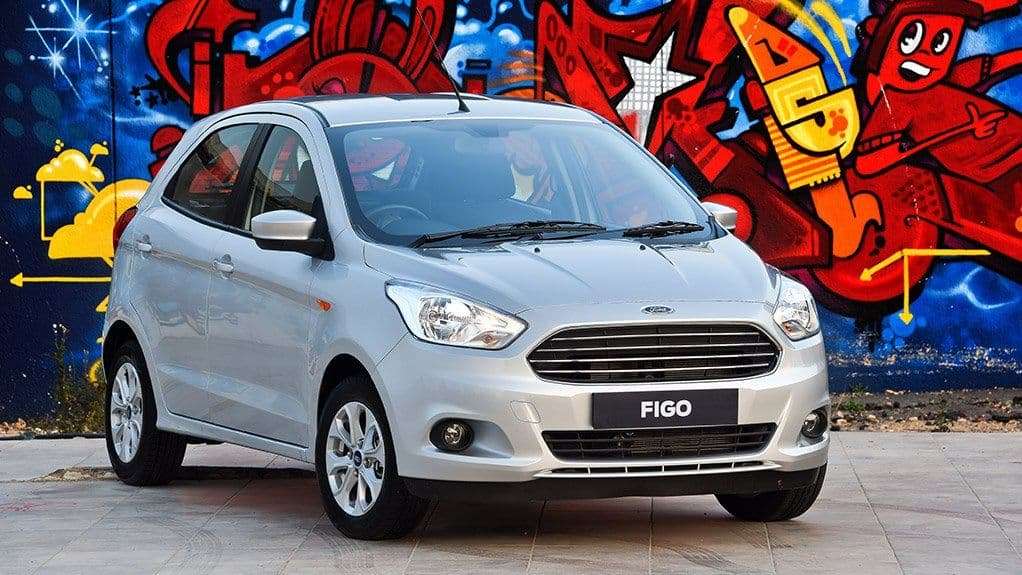
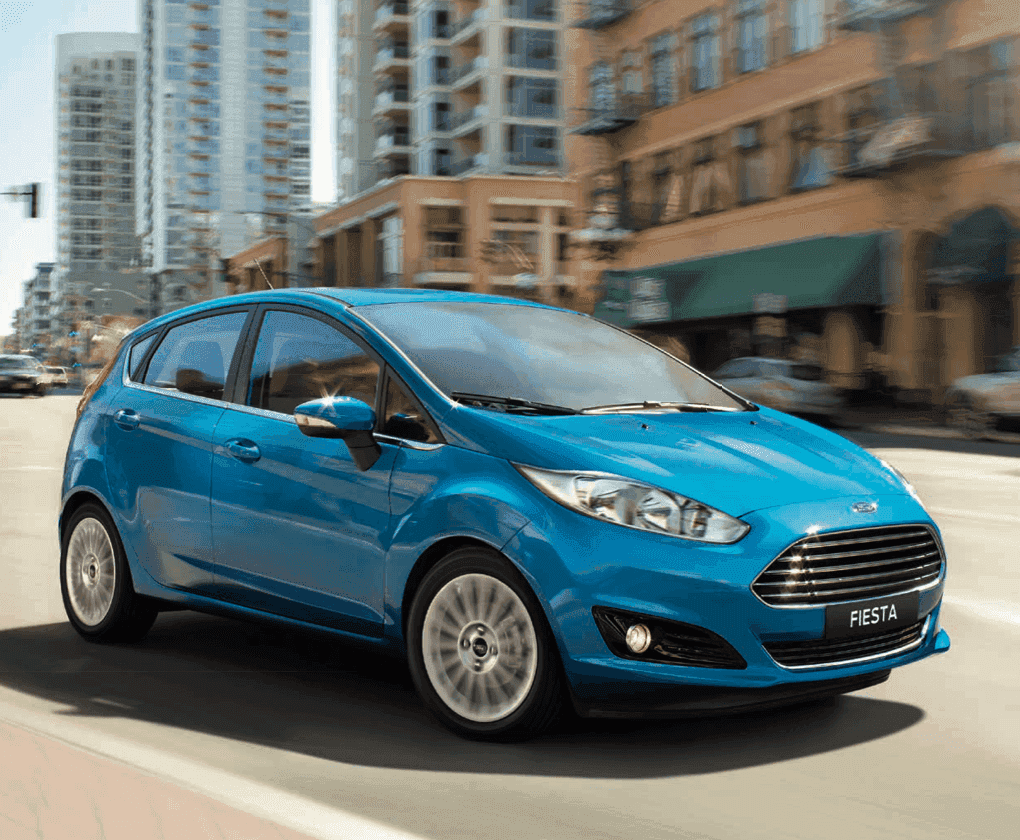
A decade on, the facelifted Mk7 Fiesta still looks sharp. That big-mouth grille, the swept-back headlights, and those tight rear haunches give it a presence the Polo Vivo frankly lacks. At 3 950 mm long and 1 470 mm high, it’s made for slotted parking in the Cape Town CBD. The 1 973 mm width (mirrors out) could trip you up if your complex has tight bays – ask me how I know after a squeaky reverse in a Sandton underground.
The Ambiente giveaways
Ambiente models announce themselves at a glance: steelies with plastic caps, basic mirrors, halogen lamps, and no fog lights or roof rails. No chrome, no show-off badge on the boot. Honest and unpretentious – honestly, I like that.
Ground clearance and stance
Ground clearance sits at about 140 mm unladen. That’s fine for city bumps, but on gravel it’s borderline. I once took a Fiesta like this over a district road with two up and managed to snag the front lip on a particularly nasty berm. Plan your route if you’re heading off the N3 and onto rural tracks.
Cabin & Practicality
Ford’s 2013 update cleaned up the Fiesta’s cabin, binning the button overload. On Ambiente, it’s more about what’s missing than what’s included, so check carefully.
What does a base spec actually mean
Ambiente spec is infamous for what it leaves out. Don’t assume anything – check the car’s actual kit. Here’s what to look for on a 2016 model:
- Does it have aircon, and does it blow cold? (Not all do!)
- Is there a factory or aftermarket radio?
- Bluetooth or at least USB input?
- Rear windows: electric or manual?
- Central locking remote working on all doors?
- Alarm and immobiliser intact for insurance?
Space and Ford Fiesta boot space
Boot space is 276 litres seats-up, about 960 litres folded. That’s decent for a B-segment hatch, but a Polo edges it, and the Mazda2’s cabin feels more open. Rear legroom is tight for anyone over 1.8 m, and fitting three adults across is a fantasy. If you pack smart, a weekend’s luggage for two will fit, but don’t expect to load a pram and a week’s groceries without a squeeze.
Materials and ergonomics
Hard plastics everywhere, but they’re textured and don’t feel cheap. Driving position is spot-on, and the steering wheel sits just where you want it – not always a given with rivals. Physical knobs for aircon (where fitted) and lights are a relief after battling touchscreens in newer crossovers.
On the Road
This is where the Fiesta comes alive. Even the lowly 1.4 Ambiente gets the suspension and steering that made the Mk7 a global favourite.
The 1.4 engine character
Under the bonnet: a naturally aspirated 1.4-litre petrol, good for 71 kW and 128 Nm, sent to the front via a five-speed manual. On paper at least, it’s not a powerhouse. Out on the N3, especially on the climb past Pietermaritzburg with four up, you’ll be working third gear and patience. Below 3 000 rpm, it feels lazy, but wind it past 4 000, and there’s some eager, if noisy, enthusiasm. You’re not going to win any traffic-light dashes, but it’s honest, and that matters.
Steering, ride and brakes
Steering is the highlight. Fast off-centre, well weighted, and giving real feedback – nothing else this cheap comes close. Ride borders on firm but never jars, even over the battered tar in older Joburg neighbourhoods. Brakes are progressive and predictable. In traffic on the M1, the clutch is light enough that your left leg won’t hate you by the end of the week.
Real-world fuel returns
Official consumption is 5.7 L/100 km. Gentle driving gets you close, but my week mixing city commutes and a Gauteng-to-Harrismith run saw 6.4 L/100 km indicated. With its 42-litre tank, you’re realistically looking at 600 km between fills. Not bad – not brilliant either, but at least it’s honest about it.
Data & Comparison
Specs at a glance
- Engine: 1.4-litre naturally aspirated petrol
- Power: 71 kW
- Torque: 128 N·m
- Gearbox: 5-speed manual, front-wheel drive
- Claimed combined consumption: 5.7 L/100 km
- Length / height / width: 3 950 / 1 470 / 1 973 mm
- Doors/seats: 5 / 5
- Production years: 2013 to 2017
How it stacks up against rivals
| Model (2016, used) | Power (kW) | Claimed L/100 km | Boot (L) | Length (mm) |
|---|---|---|---|---|
| Ford Fiesta 1.4 Ambiente | 71 | 5.7 | 276 | 3 950 |
| VW Polo Vivo 1.4 Trendline | 55 | 6.4 | 280 | 3 916 |
| Hyundai i20 1.4 Motion | 74 | 6.4 | 295 | 4 035 |
| Mazda2 1.5 Active | 82 | 5.2 | 280 | 4 060 |
Used Ford Fiesta price in South Africa
Late 2025 pricing for a clean 2016 Fiesta 1.4 Ambiente lands between R110 000 and R145 000, depending on mileage, service records, and whether aircon and radio are present. That undercuts a similar Polo Vivo by R15 000 to R25 000. Price is, honestly, the Fiesta’s ace in the used market.
Ownership cost reality
Five years in, expect to spend around R369 650 on fuel, servicing, tyres, insurance and the rest. That’s competitive for a B-segment hatch. But every 2016 Fiesta’s original 4-year/120 000 km warranty and 4-year/60 000 km service plan have long expired, so budget for out-of-warranty repairs. The upside? The simple engine and spares from shops like Goldwagen keep running costs in check.
Three-year residual
Residual values after three years? Not really relevant for a car this old – depreciation has mostly run its course. Now, it’s about finding a well-kept car with a full service history. Badge doesn’t matter much anymore.
Safety rating
ANCAP · tested 2010
★★★★★ 5/5 adult occupant
Australian-market RHD rating — indicative for SA only where the SA derivative matches the tested safety spec (airbags/ESC/AEB). Official factsheet.
Verdict
The 2016 Ford Fiesta 1.4 Ambiente is a simple proposition: buy it if you want a genuinely fun small hatch for under R150k and you’re willing to double-check the spec before paying. Skip if you need more airbags, a bigger boot or future-proof resale. No new Fiestas are coming to SA – Ford shut production in 2023 – so this is your only shot. If you can swing a Trend or Titanium with more kit for similar cash, do it. Otherwise, this is still the enthusiast’s budget commuter.
Summary
This is the used-buyer’s guide to the 2016 Ford Fiesta 5-door 1.4 Ambiente, written for South Africans hunting value under R150k. I cover how it feels on real tar, what it costs to run, the headaches you want to avoid, and why it still matters against the Polo Vivo, Hyundai i20 and Mazda2 in the bar