Ford Figo hatch 1.5 Trend (2021) Review

A genuinely likeable, keenly priced used hatchhampered by its thin safety kit and a badge that’s been retired. Still, if you pack smart and buy with your eyes open, there’s value here…
Introduction
Right, so you want a no-nonsense hatchback that won’t eat your wallet alive. The Ford Figo 1.5 Trend is still one of the cleverest picks if you’re shopping used, even if the showroom floors are long dry. Every Figo you’ll see at a Ford dealer is now pre-owned, and 2022 is the newest you’ll find. That matters because you can’t just walk into a dealer and order a fresh one. It’s all about what you’re getting for your money now, and whether this India-built, Fiesta-based hatch is the used bargain it looks like on paper.
Key takeaway: The 2021 Figo 1.5 Trend nails the basics – honest drive, simple spec, and a price you can argue down. But with no stability control or ISOFIX, and a badge that’s been dropped, you need to be picky and make every rand count.
Design & Exterior
Sub-B proportions, still working
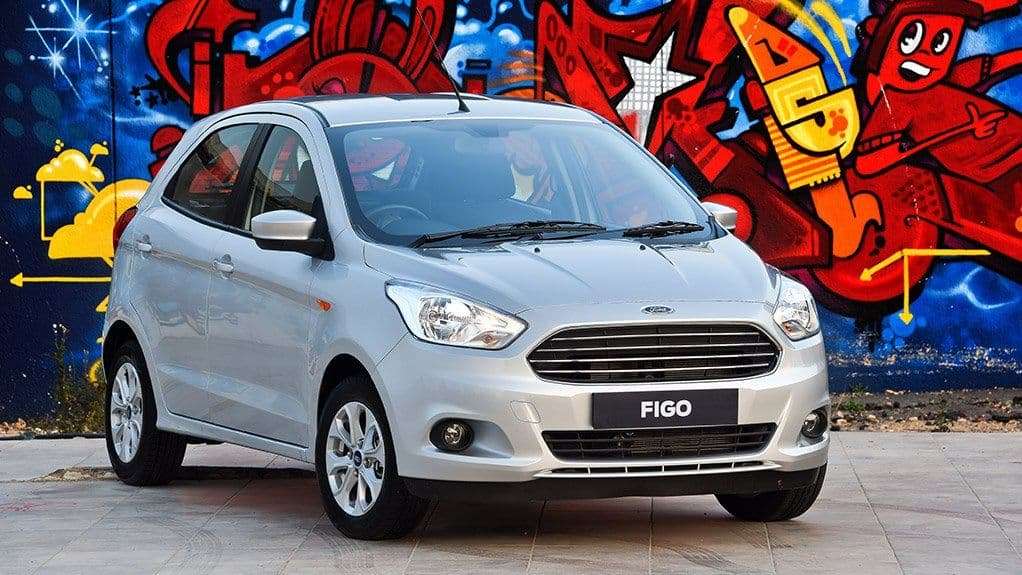
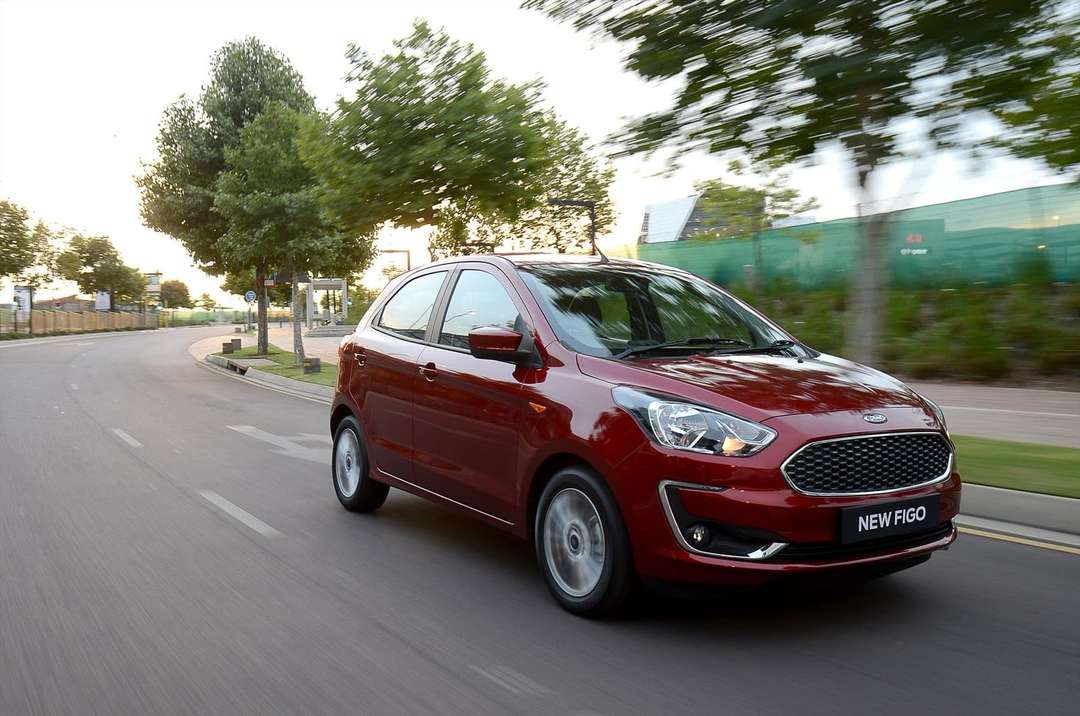
Measured at 3 886 mm long and 1 695 mm wide, the Figo squeezes into tight parking spots with a sigh of relief. It’s Polo Vivo’s little cousin, and that’s the point – on paper at least, it was always meant to be the budget sibling. The 2018 facelift sharpened the nose, gave it the Ford family grille and lights that don’t scream “old” even today. Trend spec brings 14-inch alloys (thankfully not the Ambiente’s hubcaps), making for cheap tyres at any Tiger Wheel & Tyre or Supa Quick – practical if this is your city runabout or student ride.
Budget, no shame
Figo buyers aren’t searching for a wow factor. No fake vents, no shouty creases, just honest lines and a stance that’s pure budget hatch. Ground clearance is 174 mm, which means you’ll clear Yeoville’s brutal speed bumps and the odd gravel road in Mpumalanga, but no one’s confusing this for a crossover. It’s honest about its place in the world.
Cabin & Practicality
Materials and controls
Hard plastics everywhere, and you’ll feel it. No soft-touch anything, no faux stitching, and not a piano-black panel in sight – a win if you hate dust and fingerprints. SYNC 3 infotainment on the Trend means you get actual physical climate knobs (thank you, Ford), plus a phone cubby that works for an iPhone SE, but forget anything bigger. Controls are straightforward – physical buttons for everything that matters, which honestly makes me wish more new cars took this approach. No fiddling, just press and go.
Boot, seats, and the missing anchor
Here’s a letdown: Ford Figo boot space is only 256 litres. Polo Vivo beats it at 280 L, and the Starlet is way ahead at 345 L. It’s passable for a single person’s Spar haul, but get a family of four packing for a coastal trip down the N3, and you’ll be playing luggage Tetris. You might get away with it if you pack smart, but expect to overload the parcel shelf.
- Seats five, but the rear bench is tight for three adults – two fit fine, three kids at a push.
- No ISOFIX anchor. That’s a dealbreaker for young families. If you need child seats, skip this entirely.
- Lower trims don’t have driver-seat height adjustment, so tall folks end up perched higher than they’d like.
- Front USB and 12V, but nothing for the back row. Expect complaints on road trips.
On the Road
Three-cylinder, all heart
Under the bonnet – a 1.5L naturally aspirated triple, 88 kW and 150 Nm, paired to a five-speed manual. There’s that signature three-pot thrum at idle, not rough, just offbeat. It smooths out with revs, and you can actually use the top end thanks to the gearing. Claimed combined fuel use is 5.7 L/100 km. My best? 6.4 L/100 km on a steady 120 km/h cruise from Joburg to Harrismith, and 8.1 L/100 km in heavy Sandton traffic. Plan for 7.0 L/100 km in mixed use – honest, not just brochure numbers. Once, I coasted through the N1 toll at 110 km/h, windows down, and the engine never felt strained – a real-world plus.
Chassis, steering, and Gauteng altitude
Chassis tuning comes straight from the old Fiesta, which was always the driver’s hatch in this segment. Steering is light for parking and firms up nicely at speed. On the road, it’ll hold a line through corners and never feel twitchy. Push it, and it’ll start to understeer, but always safely. Not a hot hatch, and never trying to be.
One big bonus: at Highveld altitude, the 1.5L naturally aspirated engine copes better than the turbo rivals. No turbo lag, and you don’t feel that drop-off you get in a Polo TSI or similar. Sure, hit a steep N1 on-ramp and fourth gear starts to run out of puff, but you’re not left cursing the lack of boost. That’s the value of a bigger engine with no turbo in our market.
Data & Comparison
Key numbers
| Spec | Ford Figo 1.5 Trend | VW Polo Vivo 1.4 | Toyota Starlet 1.5 |
|---|---|---|---|
| Power | 88 kW | 55 kW | Approx 77 kW |
| Torque | 150 Nm | 132 Nm | Approx 138 Nm |
| Boot | 256 L | 280 L | 345 L |
| Gearbox (tested) | 5-speed manual | 5-speed manual | 5-speed manual |
| Stability control | Not standard | Not standard | Standard |
Ownership costs in the real world
Over five years and 100 000 km, you’re looking at about R369 650 for fuel, servicing, tyres, and depreciation. That’s classic budget-hatch turf if you get a decent deal up front. Ford Figo price in South Africa on the used market varies wildly, but you should be paying less than a comparable Polo Vivo or Starlet for similar condition and mileage.
- Engine: 1.5L Ti-VCT, 88 kW at 6 300 r/min, 150 Nm at 4 250 r/min.
- Claimed consumption: 5.7 L/100 km combined.
- Dimensions: 3 886 mm long, 1 695 mm wide, 1 525 mm tall.
- Drivetrain: FWD, 5-speed manual.
- Seats: 5, 5 doors.
Discontinued badge, real cost
Ford canned the Figo and Fiesta in SA during 2022, and with Ford India out of the game, used prices bounce all over – sometimes dealers are desperate to move them, sometimes they’re weirdly firm. Same thing with Fiesta. Ford Fiesta parts in South Africa are already getting tricky for older cars, and that will catch up with Figo eventually, but because so much is shared, the specialist workshops (Edenvale, Bellville, etc.) keep them on the road. Just don’t expect trim pieces to be easy to find.
Service plans, and what to check
Facelifted Figos (2018-on) had a 4-year/60 000 km service plan from new – decent for this class, but nearly all are expired or close to it by now. Budget for indie maintenance. Here’s what to check, based on Ford Figo 2019 common problems and regular owner gripes:
- Test the air-con in traffic, not just on the open road. It needs to blow cold at idle, or you’re looking at compressor issues.
- Hot-start hesitation or rough idle – usually injectors or a wayward sensor. Common on higher mileage cars.
- Clutch take-up on manuals. If the bite point is sky-high, the clutch is on its last legs.
- Listen for dash and parcel shelf rattles. It’s a budget cabin – expect some, but avoid the worst offenders.
- Watch for inside-edge wear on the 14-inch tyres. That’s usually alignment, sometimes more.
Original Figo 1.4s had notorious timing belt and electrical gremlins. This second-gen mostly dodges those, but you still get the odd AC or infotainment glitch and that hot-start stumble. The facelifted 2017–2020 cars (like a 2021 Trend) are the most reliable of the lot. Ford Figo service plan in South Africa is a non-factor on most used examples by now – so plan for DIY or indie garages.
Verdict
This is what the Ford Figo should have been from the start: light, eager, simple, and honest about its mission. It’s no longer the go-to family hatch – safety kit is thin, and the badge is gone. Best for solo commuters, students, or as a second car. If you need family features like ISOFIX and modern safety, look elsewhere. No new model is coming, so be picky: full service history, working AC, no starting gripes, and a price that’s realistic for a discontinued badge. If you buy smart, there’s still proper value here.
Summary
A real-world South African owner’s take on the Ford Figo 1.5 Ti-VCT Trend 5DR (Figo II, 2018-2022). Here’s what you need to know about its drive, cabin, common faults, what it’s like to maintain locally, and if it’s still a smart buy now that you can’t get a new one.