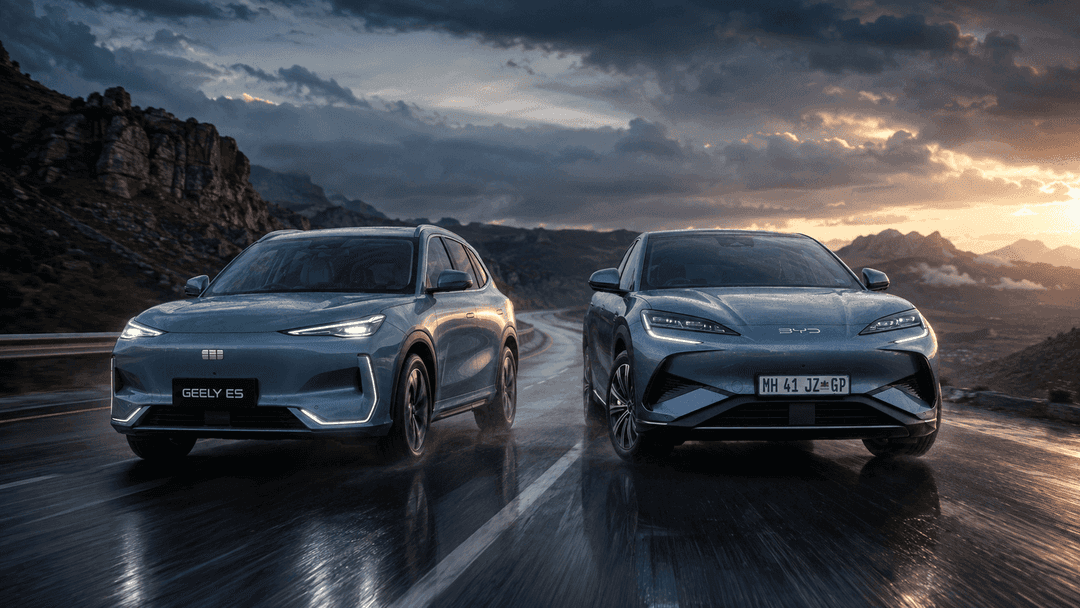
Geely Galaxy E5 Geely E5 Apex (2026) Review

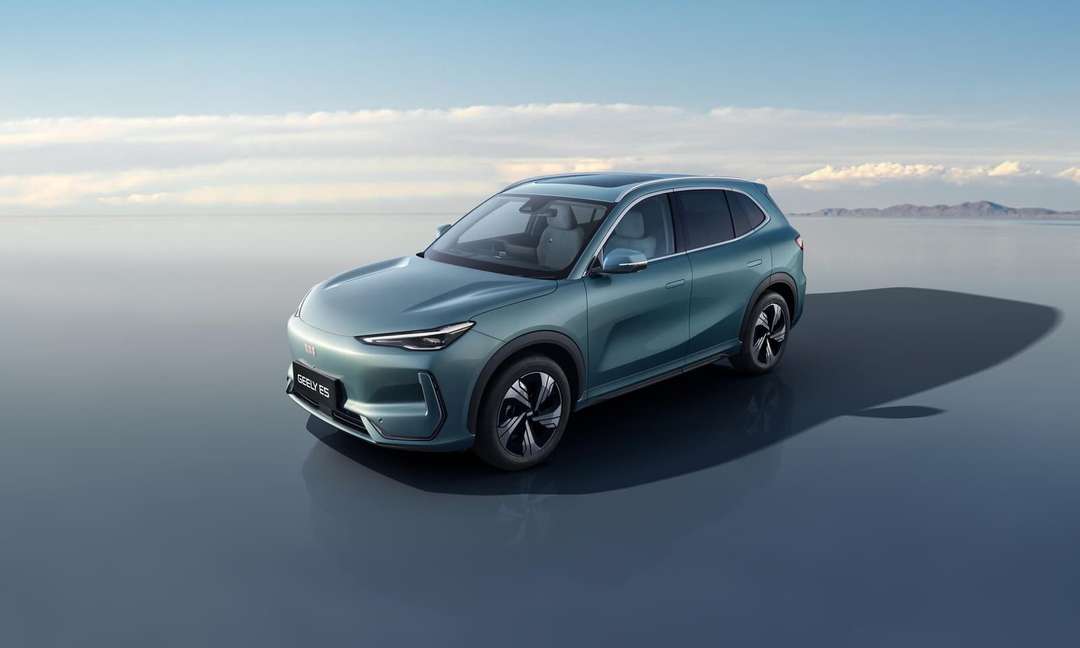
A sharply-priced, well-packaged electric SUV let down only by fiddly software and a still-growing dealer network, and that’s the point where value wins out.
Introduction
Right, so the Geely E5 Apex Plus is your best bet if you’re after a properly spacious electric family SUV and aren’t fussed about the fact that there’s not a dealer on every corner outside the big cities. This is Geely’s 2026 flagship, with the fatter 68.39 kWh battery that landed in May 2026. Geely’s local strategy is bold, and the Apex Plus is the trim that could see them challenging BYD for serious market share - or staying on the sidelines if buyers don’t bite. I spent a week testing it to separate the marketing from the metal.
Key takeaway: The E5 Apex Plus offers the most car per rand for any EV in South Africa right now, provided your closest Geely isn’t 300 km away.
Design & Exterior
Sized like a Tucson, priced like a Tiggo
At 4 615 mm long, 1 901 mm wide and 1 670 mm tall, with a 2 750 mm wheelbase, the E5 sits right in the C-segment SUV sweet spot. Think Hyundai Tucson size for less money than the Chery Tiggo 7 Pro Max EV. In person? It looks a touch larger, helped by a tall glasshouse and unfussy surfacing. No fake drama here.
Detailing that doesn't scream cheap
Flush handles, slim LED bars front and rear, and 18-inch alloys add up to a look that’s more understated than the usual EV fare. No gimmicky aero wheels. No plastic add-ons chasing fake sportiness. It feels like someone at Geely finally told a designer to just keep it clean, and that matters in a segment stuffed with try-hard shapes.
Cabin & Practicality
Materials and controls
Step inside and you get a 15.4-inch central touchscreen plus a 10.2-inch digital driver cluster. Ignore the “GeeLuxe” branding - marketing fluff - but the materials are mostly soft and the dash doesn’t feel bargain-bin. Stitched door cards, ventilated seats, and a squircle steering wheel that split the household: I got used to it after a few days, but my wife never warmed up to it, even after her second drive.
Physical buttons? You’ll hunt for them. Climate’s mostly buried in the screen, so on a baking hot Randburg afternoon, you’ll be prodding menus before the aircon wakes up. The voice assistant is serviceable if you stick to clear, English instructions. My attempt at a Zulu accent? No luck.
Space and storage
- Seats five, with rear legroom that genuinely fits two adults behind a tall driver - I checked, with my 1.83m mate along for a ride.
- Snack drawer under the passenger seat. Sounds silly, but once you’ve hidden Simba chips and charging cables there, you’ll miss them in other cars.
- Plenty of cubbies and a deep centre console. If you pack smart, this is a quietly practical cabin.
- Boot space isn’t record-breaking, but big enough for a week’s groceries or a pram and a few bags. Geely’s given more space to rear passengers than to outright luggage.
- ISOFIX on the outer rear seats, with tethers where you actually need them.
On the Road
Powertrain and pace
Under the skin is a 68.39 kWh battery and a 218 hp motor driving the front wheels, delivering a claimed 0-100 km/h time of 6.9 seconds. At 1 730 kg, it’s no featherweight, but you only really notice that in tight corners. On the N1 between Joburg and Pretoria, roll-on acceleration is fuss-free. That’s important because, for most EV buyers here, merging onto the highway is as sporty as things get.
Ride, steering and the FWD question
Front-wheel drive, big battery, and a soft suspension make for a unique combo in this price band. Give it full throttle on damp tar, and you’ll feel a bit of torque steer before the electronics step in. On battered city roads in Linden and those ugly concrete slabs on the R21, the suspension’s softness is a win - it soaks up bumps that would have a Volvo EX30 rattling your fillings.
The ADAS problem
Lane-keep assist is too eager, and switching it off means wading through menus every time you start up. Three days in, I’d memorised the drill: start, swipe, tap twice, finally drive. Geely needs to fix this with an OTA update. Given how Chinese EVs have been saved by software patches before, I’d bet on it happening within a year.
Range and charging in the real world
Geely doesn’t quote a WLTP figure for the big-battery Apex Plus here (the smaller Aspire claims 430 km, standard Apex 410 km). After a week of highway runs to Hartbeespoort and the usual school-run crawl, I averaged 17.8 kWh/100 km, which works out to about 380 km of real-world range. That’s 88% of the smaller battery’s claim on paper at least and totally believable for Gauteng’s altitude and our typical speeds.
DC fast charging tops out at 160 kW. Plugged into a GridCars 150 kW charger, I went from 30 to 80% in just under 22 minutes. Home charging at 11 kW overnight with the supplied wallbox is painless if you’re not fighting load-shedding schedules.
Data & Comparison
The Geely E5 review numbers that matter
| Spec | E5 Apex Plus | BYD Atto 3 Extended | Volvo EX30 Single Motor ER |
|---|---|---|---|
| Battery (usable) | 68.39 kWh | 60.48 kWh | 64 kWh |
| 0-100 km/h | 6.9 sec | 7.3 sec | 5.3 sec |
| Length | 4 615 mm | 4 455 mm | 4 233 mm |
| Wheelbase | 2 750 mm | 2 720 mm | 2 650 mm |
| Drive | Front Wheel Drive | Front Wheel Drive | Rear Wheel Drive |
Ownership: what it actually costs
- Five-year running costs: around R230 000 (electricity, tyres, routine service) - less than what you’d spend on petrol alone for a typical C-SUV.
- 8-year / 200 000 km battery warranty, same as BYD, across the E5 range.
- Home wallbox included, plus R10 000 public charging credit on early cars. That’s a big carrot for first-time EV buyers in SA.
- No established 3-year resale values yet - a genuine concern if you turn cars over quickly.
Geely E5 fuel consumption in EV terms
As a BEV, the E5’s consumption is measured in kWh/100 km. My real-world 17.8 kWh/100 km average, at Eskom’s R3.20/kWh, works out to R57 per 100 km. Compare that to a 2.0-litre petrol SUV at 8.5 L/100 km and R23/L, which costs R196 for the same trip. That’s the entire EV value pitch boiled down to one rand figure.
Market context
SUVs have dominated local search interest, regularly above 73 points since mid-2025. Pure-electric models hover between 58 and 62. In plain English: there’s a real appetite for an EV SUV that doesn’t ask Volvo money. The E5 slots perfectly into that gap.
Verdict
The Geely E5 Apex Plus is the electric SUV that finally makes affordable EVs in South Africa feel like a step forward, rather than a series of trade-offs. You get real C-SUV space, a big 68.39 kWh battery, proper 160 kW DC charging, and a 6.9-second sprint to 100. The cabin isn’t cheap, either. Yes, the ADAS is annoying and dealer coverage is patchy. Residuals? Still a mystery. But if you charge at home and live within a reasonable distance of a Geely, none of those is deal-breakers.
Buy one if you’re a Gauteng or Cape Town family after your first EV and the European stuff is out of reach. Give it a miss if you’re constantly on gravel or live far from a major city - a minor issue could mean a long tow. If you’re holding out for rear-wheel drive or smarter ADAS, you might want to wait for the facelift, because it’s what the E5 should have been from the start.
Summary
Here’s the full lowdown on the 2026 Geely Galaxy E5 Apex Plus 68.39 kWh, written for South Africans who need real-world range figures, charging reality checks, cabin material honesty, and a straight answer about how the Apex Plus compares to the BYD Atto 3 and the rest of the wallet-friendly EV bunc