GWM P300 (2026): Big Value, But What About Resale?

A properly competitive bakkie with genuine value and manageable flaws. Resale, corrugated-gravel behaviour and dealer depth prevent a higher score, not any fatal shortcoming.
Introduction
Look, the GWM P300 review hinges on one awkward question: does the roughly R150k saving over a Hilux or Ranger survive when you sell? Only if you keep the bakkie long enough. Trade every three years and the numbers can turn against you; hold onto it well beyond the finance term and the P300 starts making a lot more sense. As of the 2026 model year, GWM has climbed to fourth in the segment, a serious result for a brand that barely existed here a decade ago. The range stretches from a R239,900 workhorse to a R729,950 flagship. That’s a huge spread.
Key takeaway: The P300 offers proper value for long-term owners, but frequent traders risk losing the initial saving through steeper depreciation than a Hilux.
Design & Exterior
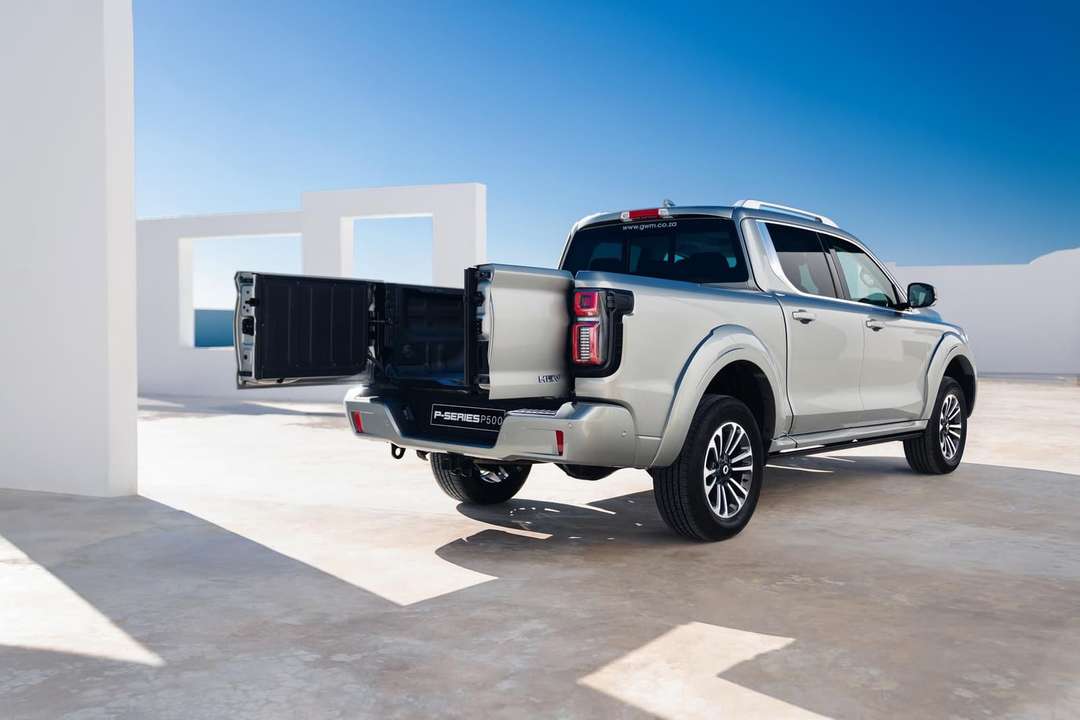
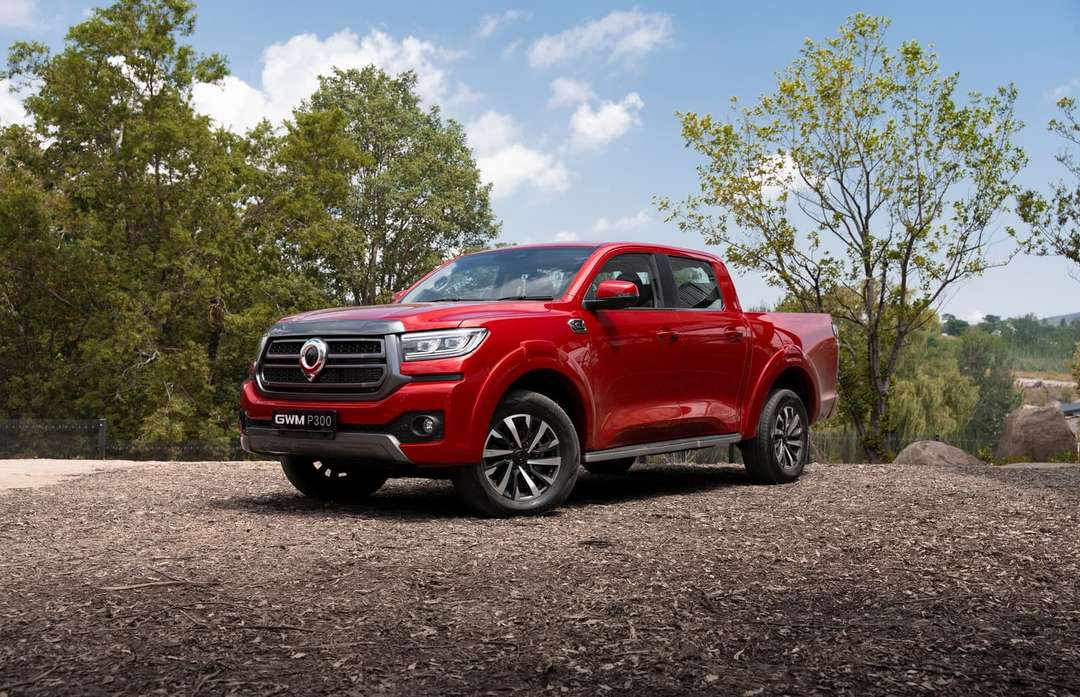
GWM has cleaned up the P300 nicely. There’s less shiny chrome than on the earlier P-Series, while the squarer nose looks suitably imposing beside a Ranger outside Builders Warehouse. Subtle it isn’t. For many bakkie buyers, that’s exactly right.
Where it sits in the segment
Ground clearance is 232mm, enough for meaningful dirt-road and site work rather than a token gravel excursion. Double-cab models have genuine road presence, while the SX single cab stays appropriately plain for fleet use. From ten paces, nothing looks bargain-basement. That matters, because a bakkie must look credible at the office, school gate and building site.
The 2026 range at a glance
| Derivative | Role | Buyer it targets |
|---|---|---|
| SX 2.0TD single cab | Hard-working base model | Fleet buyers and cost-per-km operators |
| 2.4TD LS double cab | Mainstream mid-tier choice | First-time bakkie owners |
| 2.4TD LT 4x4 | Leisure-focused all-rounder | Weekend buyers with heavy towing needs |
| LTD 4x4 (R699,900) | Range flagship | Lifestyle buyers wanting maximum equipment |
Cabin & Practicality
Inside, the value argument gets stronger. Upper trims bring heated and ventilated seats, a sunroof and a damped tailgate that won’t hammer your shins. Material quality is good rather than plush, falling short of Ranger or Navara standards in a few obvious places. Still, the price provides context. Proper physical controls also remain beside the touchscreen, which deserves praise.
Space and load
- Seats: Five, with enough rear legroom to keep adults comfortable on a long N3 run.
- Fuel tank: 78 litres, providing useful range between rural filling stations.
- Braked tow rating: Up to 3.5 tonnes on the 2.4TD 4x4, addressing the older 2.0TD's biggest weakness.
The ergonomics reality
Most controls sit where you expect, and both displays remain clear in harsh Highveld sunlight. Some frequently used functions, however, are buried too deeply in the menus. GWM’s willingness to issue OTA updates could fix that, as software tweaks can often rescue an initially frustrating interface. I once spent nearly a minute parked beside the R21 trying to find one basic setting. That shouldn’t happen in a bakkie you’ll use every day.
On the Road
Paired with the nine-speed automatic, the 2.4TD is the range’s headline drivetrain. It cruises quietly on tar, with little diesel clatter entering the cabin at N1 speeds. Our estimated 0-100 km/h run took 11.5 seconds, so it feels adequate rather than urgent. Properly relaxed. Still, there are a few rough edges that deserve attention.
The 9AT and low-speed surge
Closely related Cannon models have shown a low-speed transmission surge, felt as a pause followed by an abrupt shove while pulling away or braking under load. It’s irritating rather than disastrous. Test it in genuine stop-start traffic before signing, preferably with some weight in the bin.
Gravel and corrugations
Here, the brochure and the road disagree. Tar-road composure is good, but the empty leaf-sprung rear axle can skip across corrugated gravel and step sideways over mid-corner ripples. Sharp bumps also expose limited front suspension travel. Add a canopy or some modest bed weight and it settles considerably. Loaded, it behaves. Empty on a corrugated Karoo road, it fidgets and demands slower hands.
Data & Comparison
Right, so let’s discuss money. The GWM P300 price South Africa argument begins with a substantial discount, and every ownership calculation flows from there.
Used price by model year
Our RDS listing data covers 161 recent P-Series adverts. The depreciation curve looks like this:
| Model year | Median asking price | Price range |
|---|---|---|
| 2021 | R339,900 | R229,000 - R429,000 |
| 2022 | R358,650 | R239,900 - R429,995 |
| 2023 | R399,500 | R309,900 - R489,900 |
| 2024 | R439,900 | R319,800 - R589,900 |
| 2025 | R517,200 | R399,500 - R729,950 |
| 2026 | R445,925 | R399,800 - R489,950 |
The resale question, answered
Three-year P-Series depreciation sits near 30%, broadly matching the Nissan Navara and landing marginally ahead of the Ford Ranger. There’s one problem. A Hilux loses just under 20% across the same period.
- P-Series 3-year depreciation: Around 30%.
- Hilux 3-year depreciation: Just under 20%.
- Typical used P300/P-Series entry point: From R239,900 in current listings.
Because the P300 begins at a far lower purchase price, steeper percentage depreciation doesn’t automatically erase the full saving in Rand terms. Ownership length decides the outcome. Keep it long enough, and some of that initial discount survives, which is the key to understanding GWM P300 resale value.
P300 vs Hilux on the numbers
| Spec | GWM P300 2.4TD | Toyota Hilux 2.8 | Ford Ranger |
|---|---|---|---|
| Real-world economy | 9.4-9.7 L/100km | ~8.5 L/100km | ~9.0 L/100km |
| 3-year depreciation | ~30% | ~20% | ~30% |
| New price positioning | Undercuts by ~R150k | Segment benchmark | Premium |
| Braked tow | 3.5 t | 3.5 t | 3.5 t |
Against the GWM P300 vs Hilux, Toyota takes retained value and dealer coverage. GWM answers with more equipment and considerably less cash required up front.
Fuel and ownership
GWM claims 7.2 L/100km, but real-world use lands closer to 9.4–9.7 L/100km, with our listing data anchoring the combined figure at 9.4. One mixed tar-and-gravel route returned 9.6 L/100km on the trip computer. Budget around those numbers rather than the brochure claim when calculating GWM P300 fuel consumption. Our modelling puts five-year running costs at roughly R230,000, while the three-year residual-value anchor sits around R403,000 for a well-kept newer example.
Editorial Focus
Safety, stated precisely
Related GWM Cannon/Ute models hold a 5-star ANCAP rating (tested 2021, valid to Dec 2027). For South Africa, that strictly matches only the 7-airbag P300 LTD. The 6-airbag LS and LT omit the tested centre airbag that contributed to the adult-occupant result, while single cabs and carried-over 2.0TD derivatives remain unrated. Don’t assume one star rating covers every derivative. These are important GWM P300 problems hidden in the fine print, so ask the dealer for derivative-specific confirmation.
Safety rating
ANCAP · tested 2021
★★★★★ 5/5 adult occupant
★★★★★ 5/5 child occupant
Matches tested spec: P300 LTD 4x4 double cab only (7 airbags incl. front-centre). Official factsheet.
Verdict
GWM’s P300 is a credible, generously equipped bakkie whose value case works if you understand the resale risk and accept its gravel-road manners. On kit, refinement and towing ability, it’s what the P-Series should have been from the start.
- Buy it - fleet operators: The SX 2.0TD single cab’s low cost per kilometre makes percentage depreciation less important. Buy new, put it to work and keep it for years.
- Shortlist it - first-time bakkie buyers: The 2.4TD LS offers the strongest kit-per-Rand balance. Keep it beyond the finance term, though, or depreciation will hurt.
- Consider something else - tow-heavy leisure buyers: The 3.5-tonne rating appeals, but test the empty-bin gravel ride properly and check dealer support along your regular routes.
- Avoid - resale-obsessed traders: Swapping every three years lets the steeper depreciation curve consume the saving. At equal money, a clean used Hilux or Ranger should retain value better.
Wait scenario: If tested safety equipment is non-negotiable, wait for confirmed local specifications matching the 7-airbag LTD. Don’t assume the LS/LT provides identical protection.
Summary
Here’s the buying case for the 2026 GWM P300 and broader P-Series range in South Africa. We cover the 2.4TD/9AT drivetrain, gravel-road behaviour, actual fuel use, depreciation against the Hilux and Ranger, and which derivative suits fleet, leisure, first-time and resale-conscious buyers.
Ratings
Pros
- ✓The SX 2.0TD single cab’s low cost per kilometre makes percentage depreciation less important.
- ✓Buy new, put it to work and keep it for years.
Cons
- ✗Swapping every three years lets the steeper depreciation curve consume the saving.
- ✗At equal money, a clean used Hilux or Ranger should retain value better.