GWM Tank 300 2.0T HEV Ultra (2026) Review
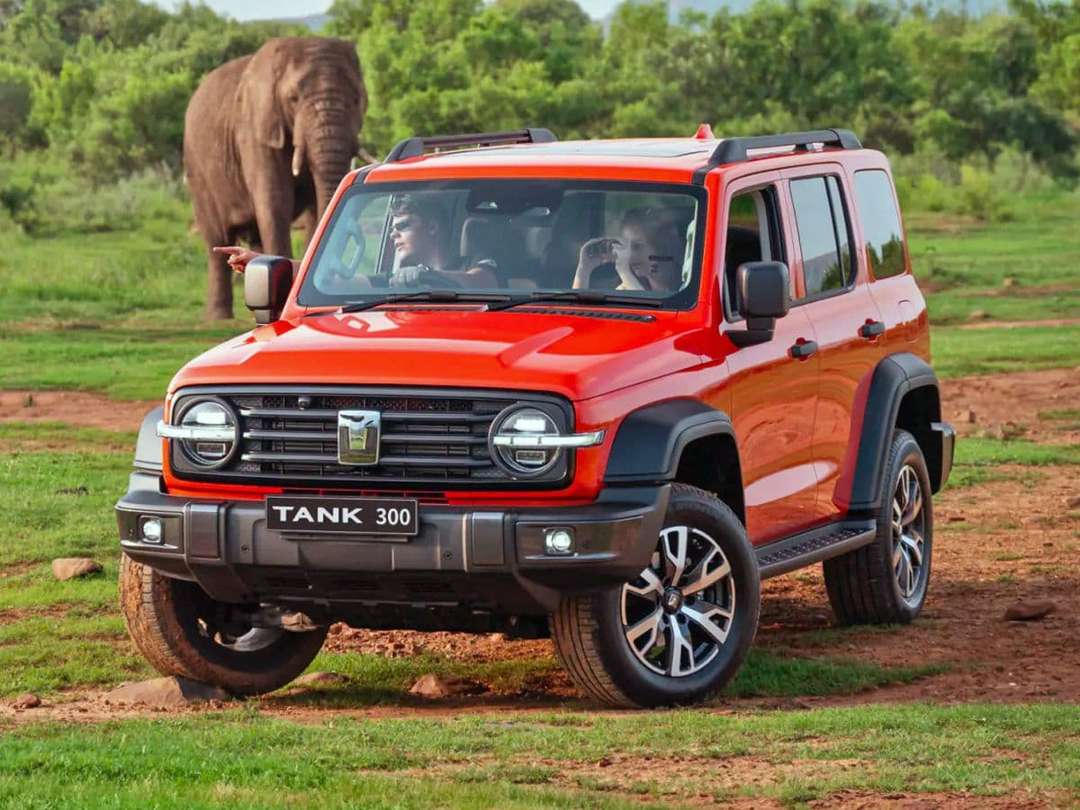
A capable, generously equipped hybrid off-roader undermined by real-world thirst and soft residuals, then partly redeemed by value, torque and excellent ownership cover.
Introduction
The verdict is actually quite simple. If you want a retro-styled 4x4 that's packed with tech, genuinely capable off-road and comfortable enough for the daily commute, the Tank 300 HEV Ultra is easy to recommend. But if your priorities are long-distance touring, low running costs and strong resale value, there are better options. Features like the tank turn, transparent-chassis cameras and bold styling give it plenty of character, while the ladder-frame chassis and punchy hybrid drivetrain back up the looks with real capability. At Fortuner money, though, GWM has priced it confidently. Whether buyers are ready to take that leap is another question.
Key takeaway: The Tank 300 HEV has proper off-road hardware, generous equipment and bags of character, but you’re buying torque and presence rather than hybrid economy.
Design & Exterior
Round headlights, a boxy silhouette, exposed hinges and a tailgate-mounted spare wheel leave little to the imagination. The Tank 300 wears its retro inspiration proudly. More importantly, though, its upright proportions, short overhangs and proper off-road stance aren't just for show. They make just as much sense tackling a rocky trail or Karoo gravel road as they do parked outside your favourite coffee spot.
Presence over subtlety
Boxy and proud of it. The slab sides and upright stance give the Tank 300 plenty of presence, but they're not just there for Instagram. They also make it easier to place on a narrow trail, with a clear view of where each corner sits. The trade-off comes on the open road, where that bluff front punches a bigger hole through the air, affecting refinement and fuel consumption.
Where it sits in the segment
Against the familiar Fortuner, Ranger-based Everest and Prado, the Tank 300 is easily the visual rebel of the bunch. With 224 mm of ground clearance, the tough-guy attitude isn’t just for show either. Straight out of the showroom, it looks ready for gravel roads, deep ruts and the occasional overly ambitious line through a rocky section.
Cabin & Practicality
GWM hasn't held back inside. You get dual 12.3-inch displays, wireless Apple CarPlay and Android Auto, massaging leather seats, a 360-degree camera and 64-colour ambient lighting. At this price, very few rivals offer this much kit as standard.
Materials and controls
Material quality feels far removed from older assumptions about the badge. Soft-touch trim, knurled dials and a convincing door thunk all help. Too many functions still live inside the touchscreen, including drivetrain and regenerative-braking adjustments, and there’s no physical EV/HEV toggle. On corrugated Sani Pass-style gravel, a solid button beats prodding through menus while the cabin shakes around you.
Space and seating
Practicality carries one large warning label. The Tank 300 is a five-seater only, while the Fortuner, Everest and Prado offer seven. Our tape measure showed 1,040mm between the rear wheel-arch trims and 830mm of load-floor length with the seats upright. That’s useful for four people who pack smart, but car-pool duty exposes the limitation immediately.
- Seats: 5 (rivals typically offer 7)
- Ground clearance: 224mm
- Fuel tank: 80 litres
- Door-mounted full-size spare frees up underbody space
On the Road
Power comes from a 2.0-litre turbo-petrol engine, a small 1.8kWh battery and an electric motor, driving all four wheels. There’s no alternative battery size locally and no DC charging capability because this is a self-charging hybrid, not a plug-in. Power cuts won’t interrupt ownership, but neither can cheap home charging cut your petrol bill. Peak torque is a substantial 648Nm. You feel every bit of it.
The hybrid on gravel
Loose gravel is where the hybrid system really starts to make sense. The instant torque and smooth throttle response make it easy to crawl over tricky terrain without upsetting the car's balance or breaking traction. Unlike some turbo-petrol 4x4s that can feel a little abrupt at low speeds, the Tank 300 delivers its power in a controlled, predictable way. For technical off-road driving, that's a genuine advantage.
Ride and refinement
On tar, the Tank 300 drives much like you'd expect from a ladder-frame SUV. It's comfortable and relaxed at highway speeds, but push on through quicker bends, and there's a fair bit of body roll. The nine-speed hybrid automatic also has a habit of shuffling through gears when you ask for a quick overtake. At 120 km/h, I measured 69 dB inside the cabin using a phone app, with most of the wind noise coming from around the mirrors. One small disappointment? The steering-wheel paddles only change gears instead of letting you adjust regenerative braking.
Data & Comparison
Pricing starts with the 2026 GWM Tank 300 2.0T HEV Ultra at R694,994. Broader Tank 300 stock in RDS listings spans R549,900 to R989,900 across 35 units sampled, reflecting substantial variation in trim and model year.
Key specs
- Torque: 648Nm
- Engine: 1,998cc turbo-petrol hybrid
- Battery: 1.8kWh
- Official fuel economy: 8.4 L/100km
- CO2: 196 g/km
- Ground clearance: 224mm
- Estimated 5-year total cost of ownership: R230,000
The consumption reality
Reality is less flattering than the brochure. Independent testing recorded roughly 11.3 L/100km in gentle open-road South African conditions, well above the official 8.4 L/100km claim. The blunt body and highway drag shoulder much of the blame. Buyers expecting diesel-like frugality will be disappointed, particularly once N3 tolls and an 80-litre fill are added to a family trip.
How it stacks up
| Model | Price (from) | Torque | Seats | Official economy |
|---|---|---|---|---|
| GWM Tank 300 2.0T HEV Ultra | R694,994 | 648Nm | 5 | 8.4 L/100km |
| Toyota Fortuner (48V) | ~R790,000 | 500Nm | 7 | ~7.6 L/100km |
| Ford Everest | ~R850,000 | ~500Nm | 7 | ~7.5 L/100km |
On paper at least, the Tank undercuts the electrified Fortuner by roughly R100,000 and comfortably out-muscles it. Whether that saving survives depreciation and extra fuel is the harder question.
Editorial Focus
Right, so let’s deal with the party tricks. Press the tank-turn button and the system locks the inside rear wheel, helping the SUV pivot more tightly on loose ground. It’s not for tar, and you won’t use it daily, but a narrow trail or awkward gravel switchback can make it worthwhile.
Surround-view cameras create the transparent-chassis display, effectively showing the terrain beneath the front of the car. Sounds silly. I used it once to place the left-front tyre beside a sharp rock hidden below the bonnet line, and it saved a passenger from climbing out to guide me. Properly useful.
Now add crawl control, three drive modes, diff locks, a 220V plug and massaging seats. The specification reads like someone raided every options cupboard at GWM headquarters, yet most of the off-road equipment serves a real purpose.
Measured against the brochure promise, the hybrid system’s biggest strength isn’t economy. Instant torque helps on gravel, while the 224mm clearance and locking hardware support serious trail work. Yet that ~11 L/100km real-world thirst and soft residuals remain difficult to ignore. Early SA data suggests the Tank retains far less value over three years than a Fortuner’s 75-85%.
Set against the Fortuner, the Tank wins on purchase price, torque and cabin toys. Toyota counters with seven seats, stronger resale, established reliability and dealer support deep into rural South Africa. Urban-adventure buyers can make a sound case for the GWM. Remote overlanders towing across the country should still favour the Hilux-based Fortuner, and that’s the point.
Safety rating
ANCAP · tested 2022
★★★★★ 5/5 adult occupant
Australian-market RHD rating — indicative for SA only where the SA derivative matches the tested safety spec (airbags/ESC/AEB). Official factsheet.
Verdict
GWM’s Tank 300 HEV Ultra is a likeable, characterful 4x4 with real trail ability and enough equipment to embarrass dearer rivals. Buy it if you want presence, 648Nm and strong warranty cover for under R700k. Walk away if economy, resale or seven seats head your priority list, because the Fortuner still owns those arguments.
Wait scenario: GWM has already added a diesel, while overseas markets get a plug-in PHEV variant with meaningful EV range and external charging. Anyone prioritising frugality should consider the diesel or wait for a properly proven plug-in rather than committing to this thirsty self-charging HEV.
Summary
South African buyers get a well-equipped, genuinely capable 2026 GWM Tank 300 2.0T HEV Ultra, but real-world thirst, five-seat packaging and uncertain resale weaken its overlanding case.