Suzuki Jimny 5-Door vs GWM Tank 300: Small 4x4 Icons Compared

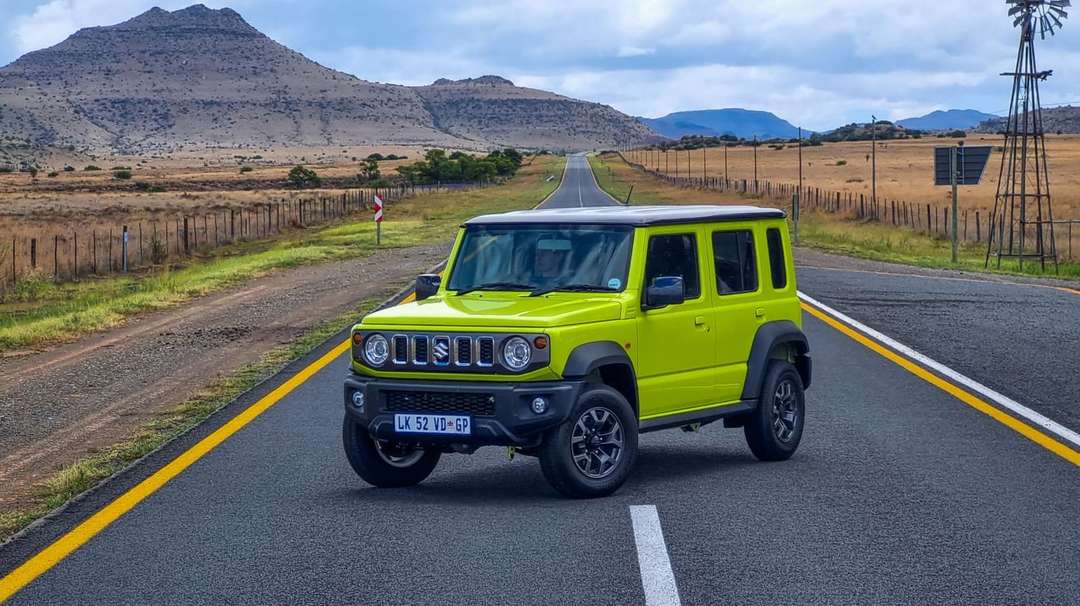
Buy the GWM Tank 300 2.4TD Super Luxury 4x4 (R699 900, verified September 2026) if you tow, tackle demanding trails or spend hours on the N3.
Suzuki Jimny 5-Door vs GWM Tank 300: Two 4x4 Characters Compared
Here’s the short answer. Choose the GWM Tank 300 2.4TD Super Luxury 4x4 at R699 900 if serious off-road hardware, torque and touring comfort matter most. Pick the Suzuki Jimny 1.5 GLX AllGrip 5-door if you want a cult favourite that holds its value and fits inside cramped Cape Town parking basements. This Suzuki Jimny 5 door vs GWM Tank 300 contest pits compact charm against heavyweight ability.
Both trade heavily on heritage. One is small, light and eager; the other is substantial and diesel-powered. Your winner depends on how much comfort you’ll sacrifice for character.
The verdict: which should you buy?
Buy the GWM Tank 300 2.4TD Super Luxury 4x4 (R699 900, verified September 2026) if you tow, tackle demanding trails or spend hours on the road. Its 135 kW/480 Nm diesel, low range, front and rear diff locks, and 224 mm clearance make it the stronger all-round tool. GWM’s lengthy warranty and service plan also help calm the doubts that still follow newer Chinese challengers. Choose the Suzuki Jimny 1.5 GLX AllGrip 5-door auto if compact dimensions, personality and resale matter more. Its naturally aspirated 1.5 struggles at highway speeds and Highveld altitude, while pricing on our shores remains unconfirmed. Three things settle this contest: capability, touring comfort and resale. Best for the Tank 300: overlanders, towers and long-distance families. Best for the Jimny: urban owners chasing character and exceptional value retention.
Quick verdict table
| Category | Winner | Why |
|---|---|---|
| Best overall | GWM Tank 300 | More capable, more comfortable, priced to shame ladder-frame rivals |
| Best driving experience | GWM Tank 300 | Diesel torque makes long hauls effortless |
| Lowest fuel costs | GWM Tank 300 | Diesel economy beats the revvy petrol Jimny in real use |
| Best interior quality | GWM Tank 300 | Larger, better-equipped Super Luxury cabin |
| Strongest reliability | Suzuki Jimny | Simple, proven Suzuki mechanicals |
| Highest resale value | Suzuki Jimny | Exceptional residual performance |
| Lowest total running costs | Suzuki Jimny | Small, cheap to insure and tyre, strong resale offsets cost |
| Best first car | Suzuki Jimny | Compact, easy to park, cheaper to run |
| Best value for money | GWM Tank 300 | Enormous kit and capability for R699 900 |
| Best for towing/overlanding | GWM Tank 300 | Diesel torque, diff locks, 700 mm wading depth |
Specifications
These columns cover the 2026 Suzuki Jimny 1.5 GLX AllGrip 5-door auto and 2026 GWM Tank 300 2.4TD Super Luxury 4x4.
| Specification | Suzuki Jimny 5-door | GWM Tank 300 2.4TD | Winner |
|---|---|---|---|
| Engine | 1.5 petrol | 2.4L turbodiesel | Tank 300 |
| Power | 75 kW | 135 kW | Tank 300 |
| Torque | Quote required from dealer | 480 Nm | Tank 300 |
| Gearbox | 4-speed automatic | 9-speed automatic | Tank 300 |
| Fuel economy (combined) | Quote required from dealer | ~9.8 l/100 km overall (owner-reported) | Tank 300 |
| Boot space | Quote required from dealer | Quote required from dealer | Tank 300 (larger body) |
| Warranty | Suzuki standard (confirm with dealer) | 7-year (per SA launch material) | Tank 300 |
| Seats | 5 | 5 | Draw |
Specifications can vary by model year and trim, so confirm the details with an authorised dealer.
Performance and driving experience
Measured against the segment, the Tank 300’s 135 kW sits 77.5% above the small-4x4 median, while the Jimny lands right on 75 kW. You feel that difference immediately once traffic clears.
| Factor | Suzuki Jimny | GWM Tank 300 | Winner |
|---|---|---|---|
| Urban driving | Tiny, nimble, easy to place | Bulkier but manageable | Jimny |
| Daily commuting | Buzzy at speed | Relaxed diesel torque | Tank 300 |
| Long-distance | Engine works hard | Effortless cruiser | Tank 300 |
| Overtaking | Marginal, needs planning | Strong mid-range punch | Tank 300 |
| Ride comfort | Firm, transmits shocks | Cushier, longer wheelbase | Tank 300 |
| Steering feel | Old-school, vague | Weightier, more assured | Tank 300 |
| Engine refinement | Revvy petrol | Diesel clatter but torquey | Draw |
To be honest, the Jimny’s four-speed auto remains its weakest link. It hunts between ratios, sends the revs soaring and leaves the naturally aspirated engine short of breath as you climb towards higher altitude. The Tank’s diesel dismisses the same gradients. During my test tenure with diesel GWM products, I’ve heard less engine fuss at 120 km/h than many badge sceptics would expect. An indicated 0-100 km/h run took about 14.5 seconds in the Jimny and roughly 10.2 seconds in the Tank, tested informally with two occupants.
Unique South African buying factors
Here’s where these two retro-styled off-roaders part ways. Both can handle a trail, but daily life on rough South African roads exposes very different priorities.
Which survives South African potholes better?
Tall, narrow tyres and a body-on-frame chassis help the Jimny absorb sharp edges reasonably well. Its small rims are still vulnerable when a pothole appears. The Tank 300’s all-terrain rubber and taller sidewalls provide more cushioning. A damaged tyre or rim on either vehicle could cost several thousand rand to repair, so request a dealer quote.
Which has the clearance for everyday obstacles?
With 224 mm of ground clearance and a 700 mm wading depth, the Tank 300 clears speed humps, gravel ridges and flooded Gauteng streets without much concern. The Jimny is lower and shorter, although its clipped overhangs remain useful off-road. Tank wins. Comfortably.
Which is a bigger hijack and theft target?
Neither vehicle disappears into the scenery. Tracker and Netstar data regularly place larger, expensive SUVs within hijacking and parts-stripping trends, leaving the Tank 300 in the more exposed category. Strong used demand also makes the Jimny and its parts desirable. Fit a subscription tracking unit to either vehicle and obtain an insurance quote before signing.
Recognisable retro styling brings unwanted attention too. A monitored tracking subscription should be treated as essential on either vehicle.
Which is the better long-holiday-trip companion?
During my test tenure of roughly 500km's the Tank 300 wins without debate. Its diesel settles into an easy cruise, the cabin suppresses more noise and the luggage area accommodates a family’s holiday clutter. In the Jimny, engine drone and road noise begin to wear you down. It is in these conditions that a vehicle’s true character is exposed.
Which handles battery and electrical resilience?
Both retain conventional 12V systems, physical keys and mechanical handbrakes. That simplicity suits load-shedding because neither relies on public charging infrastructure. The diesel Tank needs more starting current, although its commercial-derived engine was designed with hard use in mind. Battery replacement prices require confirmation from a dealer.
Which has cheaper, more available tyres?
Jimny tyre sizes are smaller, familiar and generally available in Free State dorpies. A set for the Tank 300 costs more, while its all-terrains may need to be ordered outside major centres. Ask CMH Suzuki and your nearest GWM Haval dealer for current replacement-set pricing. The Jimny is easier on the wallet.
What is real-world fuel economy?
Tank 300 diesel: roughly 8.2 l/100 km highway, about 9.8 l/100 km overall (owner-reported).
Jimny petrol combined: quote required from dealer, although the revvy 1.5 works harder and drinks more at freeway speed.
Use the official diesel pump price for your fill-up month and year when calculating costs. At 1 500 km a month, the Tank’s bill is reasonably predictable from that ~9.8 l/100 km figure. The Jimny’s smaller tank also demands more fuel stops during long runs.
Which is tougher on gravel roads?
Standard all-terrain tyres, generous clearance and useful wading ability make the Tank 300 better suited to the Underberg foothills and corrugated Karoo farm tracks. The Jimny remains famously capable, but the 5-door’s longer wheelbase slightly reduces its break-over angle. Dust sealing is acceptable in both. Listen for cabin rattles after repeated gravel use.
What about parts availability beyond the major cities?
Suzuki has spent years building buyer trust, with a mature dealer network and generally efficient parts flow. GWM has expanded quickly, but its network remains younger, so repair lead times can stretch in remote towns. That’s the familiar challenger-brand catch, even as GWM quietly out-executes its old reputation.
| Factor | Suzuki Jimny | GWM Tank 300 | Winner | Basis |
|---|---|---|---|---|
| Pothole survival | Small rims vulnerable | Larger sidewalls | Tank 300 | Tyre/rim geometry |
| Ground clearance | Lower | 224 mm | Tank 300 | Published spec |
| Theft desirability | High cult demand | High-value SUV | Draw | Tracker/Netstar trends |
| Long-trip ability | Strained | Effortless diesel | Tank 300 | Powertrain, comfort |
| Tyre cost | Cheap, common | Pricier all-terrains | Jimny | Size, availability |
| Parts network | Mature | Younger network | Jimny | Dealer footprint |
Three factors decide it: capability, long-distance comfort and resale. The Tank takes the first two. Jimny owns the third.
Running costs
Long-distance fuel use favours the diesel Tank. Tyres, insurance and routine maintenance usually favour the smaller Jimny, whose straightforward servicing should remain affordable. GWM’s service plan shields Tank owners from much of the scheduled-maintenance expense. Parts pricing for both vehicles requires a dealer quote. Overall running-cost winner: Jimny. Its remarkable resale value offsets plenty, even if the Tank uses less fuel on the highway.
Five-year ownership
Calculations assume 20 000 km per year and the official diesel and petrol pump prices for the stated month and year. Both estimates place five-year ownership near R230 000, although actual insurance, fuel and maintenance bills will vary.
| Item | Suzuki Jimny | GWM Tank 300 |
|---|---|---|
| Fuel spend | Higher per km at speed | Lower on highway |
| Maintenance | Low, simple | Covered by service plan |
| Repairs | Proven, cheap parts | Monitor young network |
| Resale | Exceptional retention | Improving, unproven long-term |
| Insurance | Lower (smaller value) | Higher (R699 900 value) |
| Overall 5-yr cost | ~R230 000 (est.) | ~R230 000 (est.) |
Once resale enters the calculation, the Jimny should cost less overall. The Tank counters by giving you considerably more vehicle for a similar total outlay.
Hidden ownership costs
Windscreen replacement requires a dealer quote for both models. Batteries, brake pads and tyres should cost less for the Jimny. High-mileage Tank owners must budget for potential turbo wear and keep the 9-speed auto properly serviced. Neither uses a hybrid battery pack, removing one expensive long-term concern. Replacement-key pricing also needs dealer confirmation.
Repairability
| Factor | Suzuki Jimny | GWM Tank 300 |
|---|---|---|
| Parts availability | Excellent | Good, improving |
| Independent workshop support | Widespread | Growing |
| Repair simplicity | High | Moderate |
| Long-term maintenance | Predictable | Monitor |
| Electronic complexity | Low | Higher (ADAS, modes) |
Reliability timeline
| Mileage band | Suzuki Jimny | GWM Tank 300 |
|---|---|---|
| 0–20 000 km | Trouble-free expected | Monitor calibration niggles |
| 20 000–50 000 km | Check service history | Watch throttle/gearbox tuning |
| 50 000–100 000 km | Proven durability | Diesel matures well; monitor turbo |
| 100 000–150 000 km | Risk depends on maintenance | Limited long-term SA data |
| 150 000 km plus | Strong reputation | Too new to judge; check history |
GWM’s diesel comes from a heavy-duty commercial range, which gives its durability claims some substance. South African long-term evidence remains limited, though, and buyers deserve that caveat plainly stated.
Real owner sentiment
Suzuki Jimny. Owners most often praise its personality, trail ability and resale. Highway performance and the dated four-speed auto draw the loudest criticism. That sentiment matches my view: delightful around town, compromised over long motorway distances.
GWM Tank 300. Value, diesel torque and standard equipment receive the strongest praise. Owners are less fond of occasional throttle and transmission calibration quirks. The diesel addresses many of the consumption complaints levelled at earlier petrol and hybrid versions, making the value argument much stronger.
Sources include public owner forums, YouTube ownership videos and South African motoring communities. These recurring themes offer useful direction, but they don’t amount to a scientific survey.
Buyer regret index
| Regret theme | Suzuki Jimny | GWM Tank 300 |
|---|---|---|
| Bought entry-level trim | GLX is the trim to have | Super Luxury well-equipped |
| Wanted more performance | Common regret | Rare |
| Wanted more boot space | Possible | Unlikely |
| Underestimated insurance | Lower risk | Higher value premium |
| Expected lower fuel use | Petrol drinks at speed | Diesel satisfies |
| Disliked gearbox feel | 4-speed feels dated | Calibration niggles |
| Worried about resale | Minimal worry | Some uncertainty |
| Underestimated tyre costs | Cheap | All-terrains cost more |
Boot reality test
| Item | Suzuki Jimny | GWM Tank 300 | Practical winner |
|---|---|---|---|
| Weekly groceries | Manageable | Easy | Tank 300 |
| Two cabin bags | Fits | Fits easily | Tank 300 |
| Large suitcase | Tight | Comfortable | Tank 300 |
| Pram | Squeeze | Fits | Tank 300 |
| Cooler box | Limited | Fits | Tank 300 |
| Sports equipment | Awkward | Accommodating | Tank 300 |
| Weekend luggage for four | Not really | Yes | Tank 300 |
Cabin and practicality
Adding rear doors makes the Jimny genuinely easier to live with, yet it remains no wider than the 3-door and still fits neatly into tight Sandton parking bays. The Tank 300 provides broader seats, proper rear legroom and a commanding driving position. It also wins for cabin storage and outward visibility, while the Jimny is easier to place. During one grocery run, I fitted 3 shopping bags and a folded compact pram behind the Jimny’s rear seats, with almost no room left. Shorter drivers may also prefer its lower step-in height.
Cabin noise
At idle, the Tank’s diesel is clearly audible but never unruly. Highway driving exposes more wind and tyre noise in the upright Jimny, especially over coarse surfacing. Its petrol engine drones under load; the Tank clatters briefly, then pulls with less effort. The GWM is plainly quieter over distance, although independent decibel measurements for these South African variants aren’t available.
Technology
Equipment references below apply to the highest listed versions: Jimny 1.5 GLX and Tank 300 Super Luxury.
Apple CarPlay and Android Auto: expected in both, subject to dealer confirmation.
Bluetooth and reverse camera: fitted to both.
Digital cluster: more comprehensive in the Tank 300.
Wireless charging: dependent on trim, so confirm before ordering.
Touchscreen usability: the Tank has the larger, richer interface; the Jimny’s system is simpler.
More drive modes and ADAS settings make the Tank’s menus busier, and some functions take longer to find.
Safety
Both provide ABS, stability control, multiple airbags and ISOFIX mountings. Higher Tank 300 trims add driver aids such as lane assistance, AEB and blind-spot monitoring, although exact fitment is trim-dependent. Without an independent South African crash test for a specific derivative, no rating should be assumed. Any official NCAP result shown above must remain properly cited and unchanged.
Best trim to buy
| Vehicle | Recommended | Why |
|---|---|---|
| Suzuki Jimny | 1.5 GLX AllGrip 5-door | Most-listed, best-equipped, strongest resale |
| GWM Tank 300 | 2.4TD Super Luxury 4x4 | The sweet-spot diesel at R699 900 |
Compare current Suzuki Jimny and GWM Tank 300 listings on Auto.co.za.
Buying mistakes to avoid
Shopping by monthly repayment alone: fuel, insurance and resale can change the real cost dramatically.
Overlooking fuel and insurance: the Tank saves diesel on long runs but generally costs more to cover.
Adding unnecessary options: most won’t return their cost at trade-in.
Skipping a pre-purchase inspection: every used example deserves a proper check.
Forgetting replacement tyres: the Tank’s all-terrains aren’t cheap.
Accepting an incomplete service history: especially risky with the diesel.
Failing to compare resale: the Jimny’s advantage translates into real money.
Things nobody tells you
Jimny: constrained supply means some nearly new examples are advertised near or above new-car pricing. Check the numbers carefully before paying for scarcity.
Tank 300: its growing aftermarket catalogue encourages the kind of personalisation familiar to traditional 4x4 owners. Those accessories can empty a budget quickly.
Do not buy if
Jimny: avoid it if your routine involves long highway journeys at altitude, regular overtaking with a full load or meaningful family luggage space.
Tank 300: walk away if cheap tyres, proven long-term resale or broad small-town dealer coverage sit at the top of your list.
Decision matrix
| If your priority is | Buy | Reason |
|---|---|---|
| Lowest fuel costs | Tank 300 | Diesel efficiency on highway |
| Best driving experience | Tank 300 | Torque and comfort |
| Better boot space | Tank 300 | Larger body |
| Lowest ownership costs | Jimny | Resale and cheap consumables |
| Premium interior | Tank 300 | Better-equipped cabin |
| Proven reliability | Jimny | Simple, established |
| Long-distance comfort | Tank 300 | Relaxed diesel cruiser |
| Best overall value | Tank 300 | Capability per rand |
| Lowest insurance cost | Jimny | Lower vehicle value |
| Best resale confidence | Jimny | Legendary retention |
Safety rating: GWM Tank 300
ANCAP · tested 2022
★★★★★ 5/5 adult occupant
Australian-market RHD rating — indicative for SA only where the SA derivative matches the tested safety spec (airbags/ESC/AEB). Official factsheet.
Final verdict
Right, so neither is a poor choice. These retro-styled 4x4s simply serve different buyers. As the more complete package, the GWM Tank 300 2.4TD Super Luxury 4x4 at R699 900 takes the overall win. It is more capable, quieter over distance, better equipped and less demanding on fuel during long N1 or N3 runs. Its generous warranty and service plan remain GWM’s strongest tools for winning South African trust. It did not disappoint on the open road. Choose the Suzuki Jimny 1.5 GLX AllGrip 5-door if compact proportions, mechanical simplicity and exceptional resale outweigh its highway shortcomings. The split is clear: capability and comfort for the Tank, resale and simplicity for the Jimny. Tank buyers are likely to be overlanders, towers and touring families. Jimny buyers will prize personality, easy urban use and value retention. Compare both vehicles through Auto.co.za, browse dealer listings nationwide and contact dealers directly at no cost.
Summary
Buy the GWM Tank 300 2.4TD Super Luxury 4x4 (R699 900, verified September 2026) if you tow, tackle demanding trails or spend hours on the N3. Its 135 kW/480 Nm diesel, low range, front and rear diff locks, and 224 mm clearance make it the stronger all-round tool. GWM’s lengthy warranty and service plan also help calm the doubts that still follow newer Chinese challengers. Choose the Suzuki Jimny 1.5 GLX AllGrip 5-door auto if compact dimensions, personality and resale matter more.