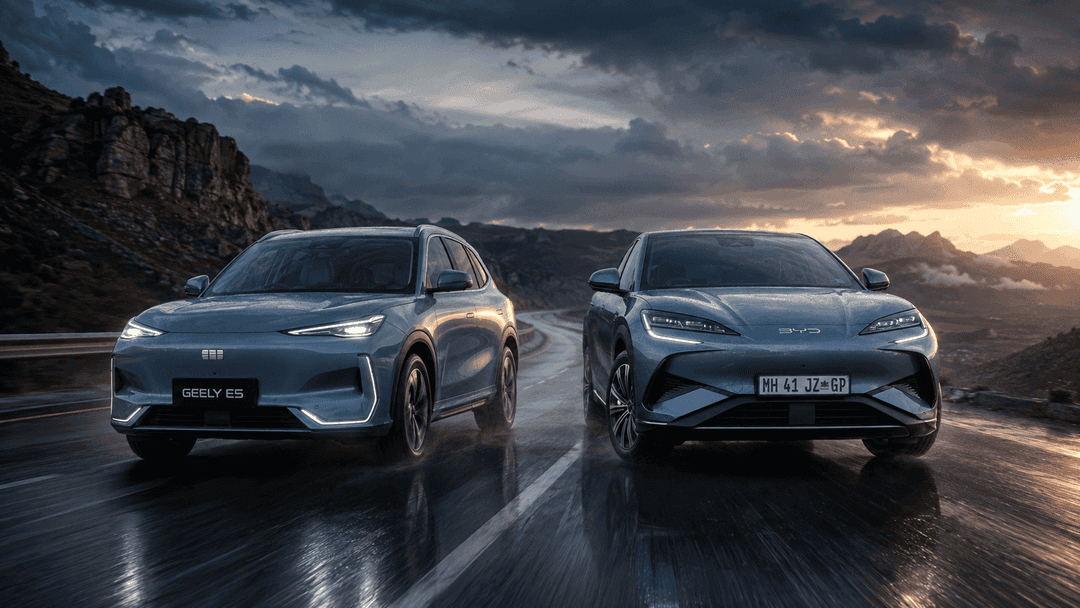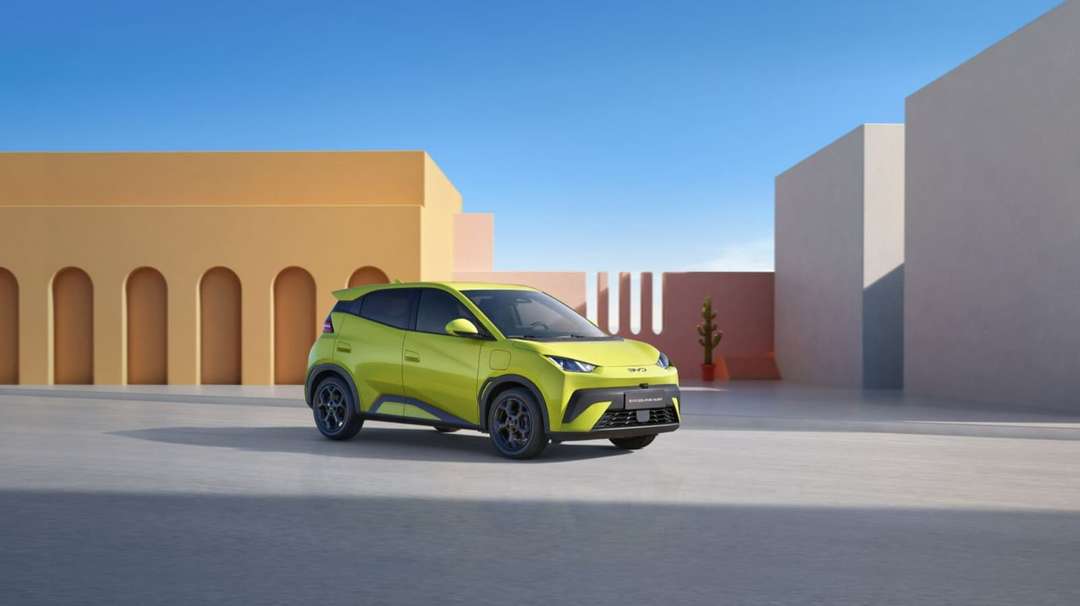
Hybrid & PHEV Bakkies in South Africa (2026): Compared

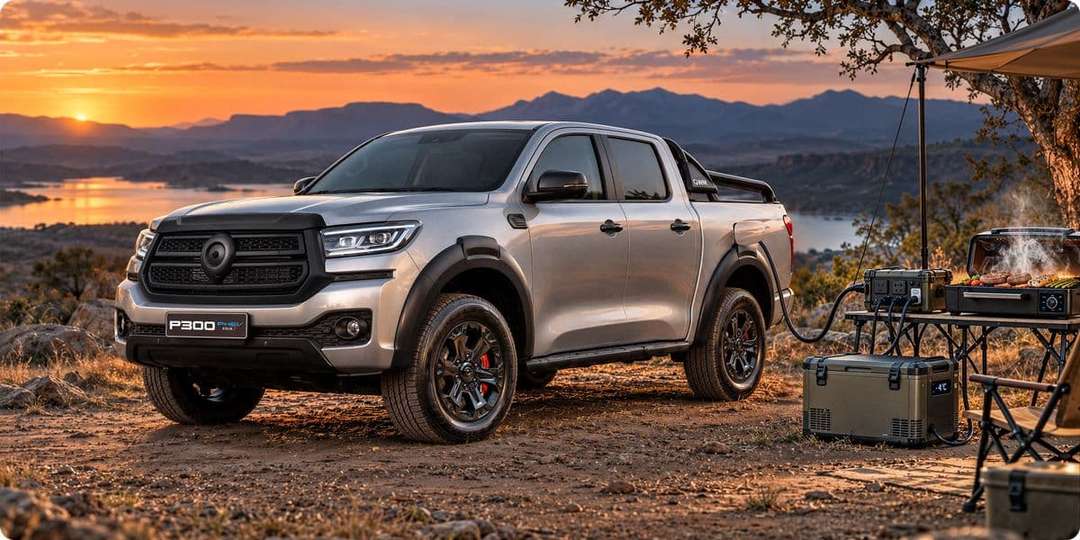
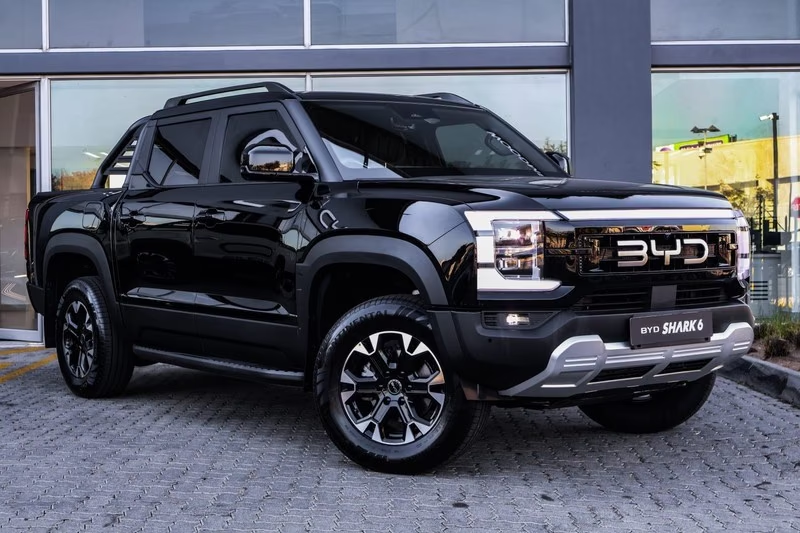
Buy the BYD Shark 6 Premium (around R989,900 at the time of writing) if you have a home plug, a short commute and want low daily energy costs, plus vehicle-to-load power for camping or load-shedding.
Hybrid & PHEV Bakkies in South Africa (2026): Compared
Want lower fuel bills and backup power during load-shedding? Pick the BYD Shark 6 Premium. For heavy towing and quick refuelling, the GWM P300 Hi4-T and its 3,500 kg braked rating make more sense. GWM’s self-charging P500 HEV sits between them, offering comfort without a plug.
Here’s South Africa’s first proper new-energy bakkie comparison: one self-charging hybrid and two plug-in models, including a seriously powerful plug-in hybrid bakkie. All cost close to R1 million, so usage matters more than brochure claims.
The verdict: which should you buy?
Buy the BYD Shark 6 Premium (around R989,900 at the time of writing) if you can charge at home and want V2L power. Its 435 kW combined output leads this group. Choose the GWM P300 2.0T Hi4-T PHEV (around R914,900) if towing matters most. Its 310 kW/750 Nm output and 3,500 kg braked rating make it the strongest hauler here. Pick the GWM P500 2.0T HEV 4x4 for hybrid assistance, a plush cabin and no charging routine. Charging access, towing needs and first-generation risk will decide it.
Quick verdict table
| Category | Winner | Why |
|---|---|---|
| Best overall | GWM P300 Hi4-T | Best balance of price, towing and plug-in efficiency |
| Best driving experience | BYD Shark 6 | 435 kW, instant dual-motor torque, car-like refinement |
| Lowest fuel costs | BYD Shark 6 | Daily electric running if charged nightly |
| Best interior quality | GWM P500 | Massaging seats, HUD, panoramic roof as standard |
| Strongest reliability | Undecided, data limited | All first-generation electrified; none has long SA history yet |
| Highest resale value | Too early to call | No credible residual data for first-gen electrified bakkies |
| Lowest total running costs | BYD Shark 6 | Lowest energy cost if charged, strong warranty |
| Best first car | None | All are large, expensive bakkies, unsuitable as a first car |
| Best value for money | GWM P300 Hi4-T | Lowest price, highest torque, 3,500 kg tow rating |
| Best towing | GWM P300 Hi4-T | 3,500 kg braked versus 2,500 kg for the Shark 6 |
| Best load-shedding tool | BYD Shark 6 | Large battery and V2L output run tools or a home circuit |
Specifications: hybrid bakkies South Africa compared
Columns refer to: BYD Shark 6 Premium AWD 1.5T PHEV (2026); GWM P500 D-Cab 2.0T HEV 9HAT 4x4 Ultra Luxury (2025); GWM P300 2.0T Hi4-T PHEV 4x4 (2026). Shark 6 figures cover the Premium, while P300 data comes from the launch brief.
| Specification | BYD Shark 6 | GWM P500 HEV | GWM P300 Hi4-T | Winner |
|---|---|---|---|---|
| Engine | 1.5L turbo petrol + dual electric motors (PHEV) | 2.0L turbo petrol + 1 motor (HEV) | 2.0L turbo petrol + motor (PHEV) | Shark 6 (most motors) |
| Power (combined) | 435 kW (claimed) | 342 kW (claimed) | 310 kW (claimed, per brief) | Shark 6 |
| Torque (combined) | Quote required from dealer | Quote required from dealer | 750 Nm (per brief) | P300 Hi4-T |
| Gearbox | Single-speed e-CVT style | 9-speed auto | Automatic (brief) | P500 (conventional feel) |
| Braked towing | 2,500 kg | Quote required from dealer | 3,500 kg (per brief) | P300 Hi4-T |
| Claimed electric range | Manufacturer claim, confirm with dealer (WLTP ~85 km, unconfirmed) | 0 km (self-charging, no plug) | NEDC figure, confirm with dealer (unconfirmed) | Shark 6 |
| Price (at time of writing) | ~R989,900 | Quote required from dealer | ~R914,900 | P300 Hi4-T |
| Seats | 5 | 5 | 5 | Tie |
Specifications vary by model year and trim. Confirm them with an authorised dealer. Combined-cycle and NEDC/WLTP figures are manufacturer claims, not independent measurements.
Points table: how they score
| Category (/10) | BYD Shark 6 | GWM P500 | GWM P300 Hi4-T |
|---|---|---|---|
| Drivetrain and efficiency | 9 | 6 | 8 |
| Towing and capability | 6 | 7 | 9 |
| Charging and V2L practicality | 9 | 4 | 7 |
| Ownership risk | 6 | 7 | 6 |
| Value | 7 | 7 | 9 |
| Total /50 | 37 | 31 | 39 |
Performance and driving experience
| Trait | Shark 6 | P500 HEV | P300 Hi4-T | Winner |
|---|---|---|---|---|
| Urban driving | Silent EV mode | Smooth part-electric | EV mode if charged | Shark 6 |
| Overtaking | Instant dual-motor shove | Brisk but gearbox hunts | Big torque reserve | Shark 6 |
| Ride comfort | Settled, heavy | Supple, plush | Firm, laden-biased | P500 |
| Long-distance | Series-hybrid once flat | Needs petrol to work hard | Parallel power holds up | P300 Hi4-T |
Journalist assessment
Shark 6 feels quickest. Its 27.2% power advantage over the segment median becomes obvious on an N1 on-ramp, where ordinary diesel double cabs simply can’t respond as sharply.
Comfort belongs to the P500. A 0 to 100 km/h run in the low-8-second range is properly quick for a 2.58-tonne bakkie, although its nine-speed auto holds tall gears uphill and the 2.0-litre petrol engine gets vocal. P300 Hi4-T is the hauler, retaining useful shove at low battery charge with a trailer attached.
Unique South African buying factors
Electrified bakkies either prove themselves here or expose their compromises. I once drove a loaded double cab up Van Reenen’s Pass and heard its petrol engine strain as altitude took hold. Thin air doesn’t forgive weak drivetrains.
Which survives South African potholes better?
All three use heavy-duty underpinnings with useful suspension travel, helping on the battered R573 Moloto. Large rims remain vulnerable because lower-profile tyres provide less cushioning. Repair pricing is Quote required from dealer, but an alloy for a near-R1m bakkie won’t be cheap.
Which has the ground clearance for everyday obstacles?
Exact clearance in millimetres is Quote required from dealer, though all three offer credible off-road geometry. P300 Hi4-T has proper 2H/4H/4L hardware. Shark 6’s dual-motor packaging slightly compromises bed and wheelbase space, which matters with long loads. Normal ramps and speed humps won’t bother them.
Which is a bigger hijack and theft target?
Double cabs remain prominent in South African theft and hijacking data from Tracker and SAPS. Keyless relay theft is the immediate concern. Confirm factory tracking and relay protection, then request an insurance quote before signing. Electrified parts also have a thin aftermarket supply.
Which is better for the long holiday trip?
On the N3 to Durban, Shark 6 claims roughly 700 km from a full tank and charge. That seems plausible, but passengers, luggage and air conditioning will test it. P500 HEV offers the simplest refuelling routine. P300 Hi4-T’s parallel system keeps pulling at Highveld altitude, where turbocharging and electric assistance both help.
What about battery and electrical resilience?
Battery durability under hard use remains unknown. Shark 6 uses an LFP Blade pack, while its V2L output can power tools or support a home circuit during load-shedding. P500 is a self-charging HEV, so there’s no plug-in saving and limited V2L ability. Replacement battery pricing is Quote required from dealer.
Which has cheaper tyres and better availability?
Large alloys bring expensive tyres, and matching stock may be scarce outside major centres. A replacement-set cost is Quote required from dealer. Check for a full-size spare too, since PHEV battery packaging can occupy that space.
What is the real-world fuel economy?
Shark’s 2.0 L/100 km claim needs frequent charging and mostly electric trips. Petrol-heavy driving pushes consumption closer to 9.6 L/100 km. Monthly costs depend on the official fuel price for the month of writing, stated here as unconfirmed. Load, speed and air conditioning will worsen consumption.
How do they handle gravel roads?
Watch stone-chip protection, dust sealing and cabin rattles. P500 feels composed on loose surfaces. P300’s frame-rail battery mounting protects bed space, although underbody exposure needs checking before rough Sani Pass gravel. Ask the dealer what protection is fitted.
Insurance and theft-statistics reality
Premiums and excesses depend on the driver and insurer. Batteries, motors and inverter hardware raise repair exposure, so get written figures before committing.
Parts availability beyond the major cities
GWM’s broader South African dealer network helps P500 and P300 owners in centres such as Upington or Mthatha. BYD’s network remains young, and specialist parts could cause longer delays. Buyers outside the metros should take that seriously.
Three factors decide this comparison: home charging, a possible 3,500 kg towing requirement and your appetite for first-generation risk. Answer honestly. The right bakkie soon becomes clear.
| Factor | Shark 6 | P500 HEV | P300 Hi4-T | Winner | Basis |
|---|---|---|---|---|---|
| Pothole survival | Heavy, large rims | Supple, large rims | Firm, large rims | P500 | Ride tuning |
| Towing | 2,500 kg | Quote required | 3,500 kg | P300 | Spec |
| V2L / load-shedding | Large battery + V2L | Limited | Plug-in + V2L | Shark 6 | Architecture |
| Altitude performance | Electric assist | Turbo recovers | Turbo + motor | P300 | Parallel hybrid |
| Parts network | Young | Wider GWM network | Wider GWM network | P500 / P300 | Dealer footprint |
Running costs: PHEV bakkie South Africa arithmetic
Plug-in ownership works only if you charge. Shark 6 and P300 Hi4-T accept overnight single-phase AC charging, with Shark topping up at around 7 kW. Regular home charging replaces expensive urban petrol kilometres with electricity. P500 can’t plug in and merely uses petrol more intelligently than a conventional bakkie.
GWM’s larger network should help with servicing and parts. Exact service-plan and tyre costs are Quote required from dealer. For a commuting owner with home charging, the BYD Shark 6 wins on energy cost. Tow often or stop charging, and its advantage shrinks.
Five-year ownership
Assumed 20,000 km per year. Fuel price: use the current official pump price for the month of writing (stated as unconfirmed here). The supplied five-year total cost of ownership estimate is R230,000 for each vehicle, presented as a directional trade estimate rather than a live quote.
| Item | Shark 6 | P500 | P300 Hi4-T |
|---|---|---|---|
| Fuel/energy spend | Lowest if charged | Highest (petrol only) | Low if charged |
| Maintenance | Quote required | Quote required | Quote required |
| Repairs | Network risk | Wider network | Wider network |
| Resale | Too early to call | Too early to call | Too early to call |
| Insurance | Quote-based | Quote-based | Quote-based |
| 5-year TCO (estimate) | ~R230,000 | ~R230,000 | ~R230,000 |
Shark 6 should cost least across five years only with regular charging. Ignore its plug and P300 Hi4-T’s lower purchase price becomes more persuasive.
Hidden ownership costs
Windscreen, battery, brake pad, tyre and replacement-key costs are Quote required from dealer. Major risks include the high-voltage battery, inverter, motors and turbocharged petrol engine. ADAS-equipped windscreens may also need paid camera and sensor recalibration after replacement.
Repairability
| Factor | Shark 6 | P500 | P300 Hi4-T |
|---|---|---|---|
| Parts availability | Young network | Wider GWM | Wider GWM |
| Independent workshop support | Limited | Growing | Growing |
| Repair simplicity | Complex dual-motor | Conventional-ish | Parallel hybrid |
| Long-term maintenance | Unknown | Unknown | Unknown |
| Electronic complexity | High | High | High |
Reliability timeline
| Mileage band | What to monitor |
|---|---|
| 0 to 20,000 km | Software glitches, early recalls. OTA updates may fix usability issues. |
| 20,000 to 50,000 km | Check service history. Monitor hybrid system warnings. |
| 50,000 to 100,000 km | Battery health, turbo condition. Risk depends on maintenance. |
| 100,000 to 150,000 km | Limited SA data for all three. Monitor battery degradation. |
| 150,000 km plus | No credible long-term data yet for first-gen electrified bakkies. |
None has established a long South African reliability record. Treat confident predictions cautiously.
Real owner sentiment
This summary draws on public owner discussions, reviews and automotive communities.
Shark 6: praised for quiet EV driving and V2L, criticised for charging-dependent economy and limited dealer coverage. P500 HEV: liked for luxury equipment, but criticised for gearbox hesitation and heavy fuel use under load. P300 Hi4-T: praised for torque and towing, with concern around its undisclosed payload and newness.
My view? Those themes support the verdict. Shark wins on technology if charged regularly, while P300 leads on capability and value. This is directional sentiment, not a scientific survey.
Buyer regret index
| Regret theme | Shark 6 | P500 | P300 Hi4-T |
|---|---|---|---|
| Bought entry trim | Low (one spec) | Low | Low (single derivative) |
| Wanted more performance | Very low | Low | Low |
| Wanted more boot/bed | Possible (packaging) | Low | Low |
| Underestimated insurance | High risk | High risk | High risk |
| Expected lower fuel use | High if not charged | Medium | Medium if not charged |
| Disliked gearbox | Low | Medium | Low |
| Worried about resale | High (unknown) | High | High |
| Underestimated tyre costs | Medium | Medium | Medium |
Boot reality test
| Item | Shark 6 | P500 | P300 Hi4-T | Practical winner |
|---|---|---|---|---|
| Weekly groceries | Easy | Easy | Easy | Tie |
| Two cabin bags | Easy | Easy | Easy | Tie |
| Large suitcase | Easy | Easy | Easy | Tie |
| Pram | Easy | Easy | Easy | Tie |
| Cooler box | Easy | Easy | Easy | Tie |
| Sports equipment | Shorter bed | Full bed | Full bed (frame battery) | P500/P300 |
| Weekend luggage for four | Easy | Easy | Easy | Tie |
If you pack smart, all three can manage a family weekend. Shark’s dual-motor layout slightly reduces usable bed length, which matters with ladders, boards or other long cargo.
Cabin and practicality
Front-seat comfort is good across the group. P500 stands out with massaging, heated and ventilated seats, a head-up display and panoramic sunroof as standard, unusual kit below R1m. Rear space is generous. Materials feel convincing higher up, with harder plastics placed where work-bakkie scuffs are likely.
Cabin noise
Shark and P300 can idle in silent EV mode. Lovely. Ask for full performance and each petrol engine becomes vocal, particularly P500’s 2.0-litre uphill. Road and wind noise are reasonable for the class, although no independent decibel data is supplied.
Technology
Each column represents the sole trim or flagship derivative. Expect Apple CarPlay, Android Auto, Bluetooth, a reversing camera, digital instruments and a large touchscreen. Wireless charging is confirmed on P500 through its rear wireless pad. Too many basic controls sit inside touchscreen menus, but OTA software updates could correct early usability flaws. Confirm trim-specific equipment with the dealer.
Safety
ABS, stability control, multiple airbags and ISOFIX should be standard, while flagship derivatives add lane assistance and AEB. Confirm the exact list. No independent Global NCAP result specific to these electrified variants is supplied, so assigning a star rating would be misleading.
Best trim to buy
| Vehicle | Recommended | Why |
|---|---|---|
| BYD Shark 6 | Premium (as tested, 2026) | Single well-equipped PHEV spec |
| GWM P500 | Ultra Luxury HEV | Full feature set; diesel sibling is cheaper if you skip hybrid |
| GWM P300 Hi4-T | Pioneer Hi4-T (single derivative) | Fully loaded, highest torque, 3,500 kg tow |
Compare current BYD Shark 6, GWM P500 and GWM P300 Hi4-T listings on Auto.co.za.
Buying mistakes to avoid
- Choosing by monthly repayment while ignoring insurance and energy costs.
- Ignoring charging reality. A PHEV bakkie South Africa buyers never plug in becomes a thirsty petrol vehicle.
- Skipping a pre-purchase inspection on a first-generation electrified model.
- Underestimating tyre and alloy costs on near-R1m bakkies.
- Failing to check service history and dealer proximity outside major metros.
- Assuming strong resale values before the market has established them.
Things nobody tells you
Shark 6: its V2L outlet turns the bakkie into a mobile generator during load-shedding. In South Africa, that’s genuinely useful.
P500: the diesel sibling costs considerably less, so calculate whether the hybrid premium can repay itself.
P300 Hi4-T: GWM doesn’t disclose a payload figure. Fleet and working buyers should request it in writing.
Do not buy if
Shark 6: don’t buy one without home charging, or if you tow above 2,500 kg.
P500: avoid it if you expect plug-in savings. It can’t be charged externally.
P300 Hi4-T: walk away if you need a confirmed payload now or demand a proven long-term reliability record.
Decision matrix
| If your priority is | Buy | Reason |
|---|---|---|
| Lowest fuel costs | BYD Shark 6 | Electric urban running if charged |
| Best driving experience | BYD Shark 6 | 435 kW, instant torque |
| Better boot/bed space | GWM P500 / P300 | Longer usable bed |
| Lowest ownership costs | GWM P300 Hi4-T | Lowest price plus plug-in savings |
| Premium interior | GWM P500 | Massaging seats, HUD, panoramic roof |
| Proven reliability | None (buy diesel) | No long-term SA data for these |
| Long-distance comfort | GWM P500 | Supple ride, no charging needed |
| Best overall value | GWM P300 Hi4-T | Price, torque, 3,500 kg tow |
| Lowest insurance cost | Quote required | All quote-based |
| Best resale confidence | None (buy diesel) | Residuals unknown |
Final verdict
Right, so the GWM P300 Hi4-T wins this comparison on points, 39 to 37 to 31. At around R914,900, it’s the cheapest here, tows 3,500 kg braked and produces 750 Nm combined, yet still plugs in for cheaper urban travel. It’s what the electrified bakkie should have been from the start. BYD Shark 6 remains the smarter home-charging family choice, with 435 kW and V2L power for load-shedding. GWM P500 HEV suits the comfort-focused buyer who won’t use a charger. Battery longevity, resale and long-term reliability remain uncertain across all three, while the Hilux and the Ranger still offer more familiar ownership. Compare nationwide dealer listings on Auto.co.za before deciding.
Summary
Buy the BYD Shark 6 Premium (around R989,900 at the time of writing) if you have a home plug, a short commute and want low daily energy costs, plus vehicle-to-load power for camping or load-shedding. Its 435 kW combined output leads this group. Choose the GWM P300 2.0T Hi4-T PHEV (around R914,900) if towing comes first. Its 310 kW/750 Nm combined output and 3,500 kg braked rating make it the strongest hauler here, while plug-in capability still allows cheap urban running.