Geely E5 vs BYD Sealion 7 (2026): Which Chinese Electric SUV Deserves Your Money?

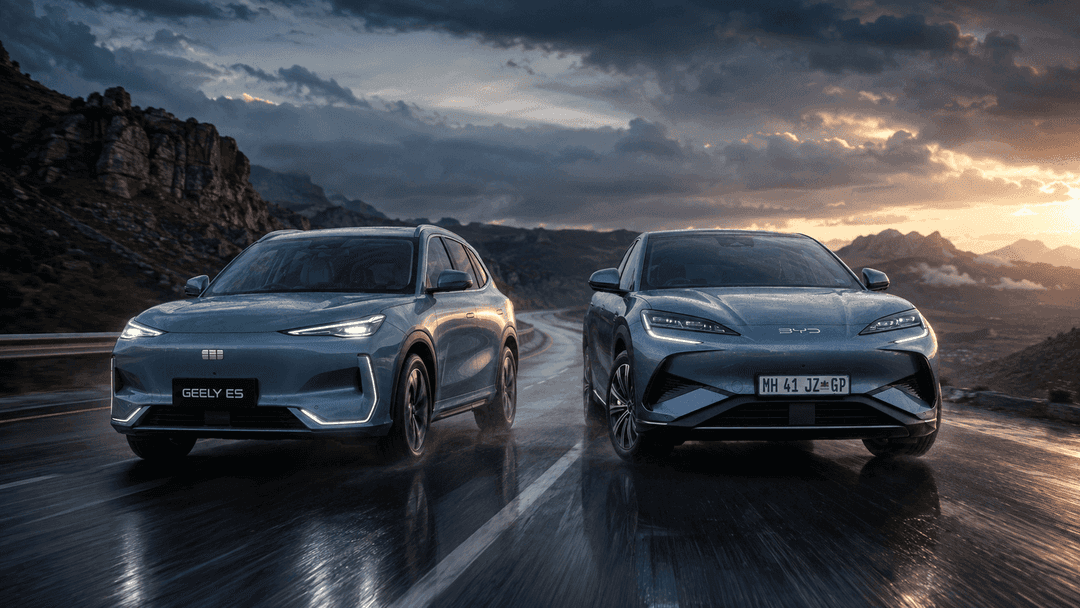
Geely’s E5 Apex wins on value, comfort and warranty, making it the sharper purchase for most South African families.
Introduction: two Chinese challengers, one real decision
Here’s the short answer. Buy the Geely E5 Apex for comfort and startling value, or choose the BYD Sealion 7 Premium RWD for greater range, stronger performance and a badge already familiar on our shores. What makes this Geely e5 vs BYD Sealion 7 contest interesting is that both vehicles are here, sitting in dealerships and ready to buy. Not promised. Not coming soon. A Chinese electric suv South Africa shortlist that once felt theoretical, but in 2026 buyers face a proper decision, with roughly R300k to R400k separating these two. For a Joburg or Cape Town family buying its first EV, either represents serious money.
The verdict: which should you buy?
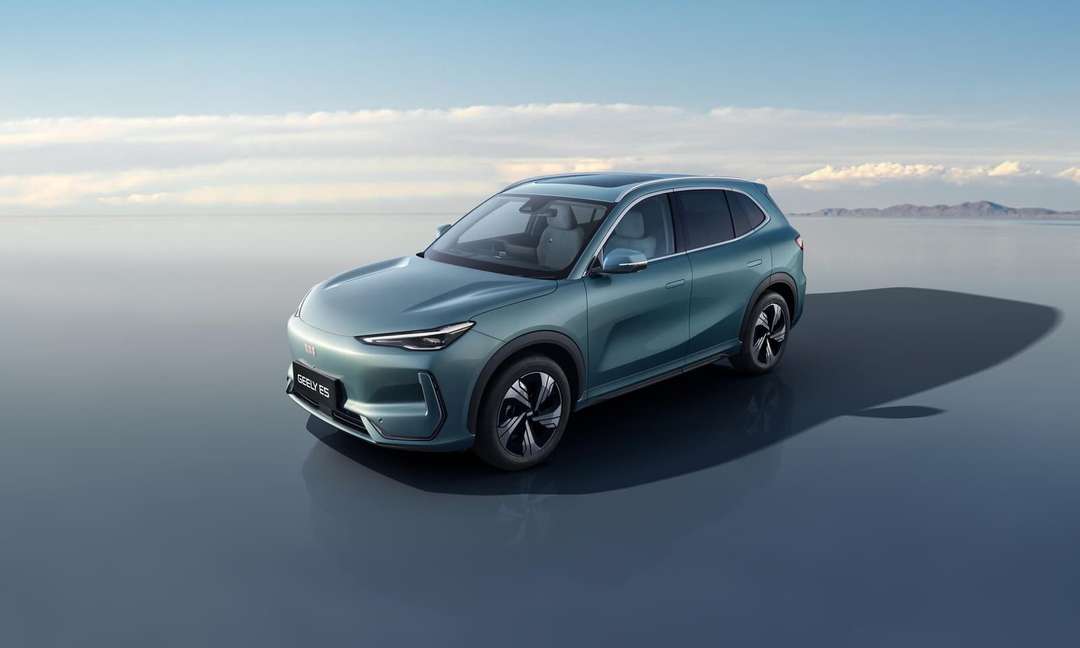
Geely’s E5 Apex wins on value, comfort and warranty, making it the sharper purchase for most South African families. It undercuts the BYD Sealion 7 Premium RWD by roughly R300k to R400k, yet its quiet, settled cabin is among the most comfortable I’ve sampled in years, with a distinctly Volvo-like composure. Its 440 km claimed range should cover daily commuting and most weekends away. Three issues settle the argument: price, where the E5 wins comfortably; refinement, another E5 strength; and outright ability plus brand maturity, where the Sealion 7 responds. BYD brings an 82.5 kWh battery, 482 km claimed range, 230 kW, rear-wheel drive and more experience on local roads. Buyers who tow or routinely tackle long distances may find the premium worthwhile.
Best for (E5 Apex): value-conscious families seeking comfort and low running costs.
Best for (Sealion 7): higher-mileage drivers wanting range, power and a more established EV badge.
Quick verdict table: geely e5 vs byd sealion 7
| Category | Winner | Why |
|---|---|---|
| Best overall | Geely E5 Apex | Value and comfort carry the day for most buyers |
| Best driving experience | BYD Sealion 7 | 230 kW and rear drive feel more athletic |
| Lowest fuel (energy) costs | Geely E5 | 11.9 kWh/100km claimed versus 19.9 |
| Best interior quality | BYD Sealion 7 | Rotating screen and richer materials, at a price |
| Strongest reliability | Tie (unproven) | Both too new locally for a firm call |
| Highest resale value | BYD Sealion 7 | More established local EV presence today |
| Lowest total running costs | Geely E5 | Lower price, lower consumption, longer warranty |
| Best first EV | Geely E5 | Easier entry price, gentle to live with |
| Best value for money | Geely E5 | Roughly R300k-R400k cheaper for a comparable job |
| Best long-distance tourer | BYD Sealion 7 | Bigger battery cushions charging anxiety |
| Best comfort | Geely E5 | Quiet, composed ride on poor surfaces |
Specifications
Columns cover the Geely E5 Apex (2026) and the BYD Sealion 7 Premium RWD (2026).
| Specification | Geely E5 Apex (2026) | BYD Sealion 7 Premium RWD (2026) | Winner |
|---|---|---|---|
| Motor | 49.52 kWh electric (218 hp) | 82.5 kWh electric (313 hp) | Sealion 7 |
| Power (kW) | 160 | 230 | Sealion 7 |
| Torque (Nm) | 320 | 380 | Sealion 7 |
| Drivetrain | Front-wheel drive, single-speed | Rear-wheel drive, single-speed | Sealion 7 |
| Energy use (kWh/100km) | 11.9 | 19.9 | E5 |
| Claimed range (km) | 440 | 482 | Sealion 7 |
| 0-100 km/h (s) | 6.9 | 6.7 | Sealion 7 |
| Seats | 5 | 5 | Tie |
| Price (from, ZAR) | R759 999 | R1 171 696 | E5 |
Specifications can differ by model year and trim, so confirm everything with an authorised dealer.
Performance and driving experience
| Factor | Geely E5 Apex | BYD Sealion 7 Premium | Winner |
|---|---|---|---|
| Urban driving | Light, easy, quiet | Bigger footprint, still nimble | E5 |
| Daily commuting | Effortless, frugal | Comfortable, thirstier | E5 |
| Long-distance cruising | Composed, some wind noise | Planted, more range headroom | Sealion 7 |
| Overtaking | Strong instant torque | Noticeably stronger | Sealion 7 |
| Ride comfort | Excellent absorption | Firm but settled | E5 |
| Steering feel | Light, low feedback | Weightier, more natural | Sealion 7 |
| Refinement | Very quiet at town speeds | Quiet, heavier mass helps | Tie |
Here’s my honest reading after my test tenure. The E5 moves with little fuss, remaining quiet and almost Volvo-like in the way it gathers speed without making a performance of it. Aim north from Pretoria on the N1 and its electric surge feels wonderfully effortless, although a hard launch on wet tar can make the front tyres chirp. By comparison, the Sealion 7 feels more substantial and more serious. Its 230 kW output and rear-drive layout provide a confidence the E5 doesn’t attempt to mimic. My estimated 0-100 km/h run in the E5 was around 7.1 seconds, while the BYD felt closer to 6.7 seconds in similar dry conditions.
Most families won’t miss that extra shove, to be honest. I once drove the E5 over a badly patched expansion joint on the N3 and I was expecting a fairly huge thump; it answered with a muted bump and carried on. Comfort is what owners experience every day, and here the E5 did not disappoint.
Unique South African buying factors
Which handles South African potholes better?
Neither vehicle quotes suspension travel in the available data, so the judgement rests on driven behaviour and dimensions. Softer, more forgiving damping helps the E5 dismiss broken edges and ruts. BYD’s Sealion 7 rides more firmly, although its 2 225 kg mass lends it useful composure. Both wear alloy wheels susceptible to sharp pothole impacts, while rim repair or replacements remain quote based from your local dealer. Low-profile tyres introduce risk either way.
Ground clearance for speed humps and ramps
BYD lists 140 mm of ground clearance for the Sealion 7, while the E5’s figure remains unconfirmed in our data. At 1 670 mm tall, the Geely has the more upright body. Steep basement ramps require some care in both, but ordinary speed humps shouldn’t produce that horrible scraping noise from underneath.
Which is a bigger hijack and theft target?
Recognised tracking companies such as Tracker, Netstar and Cartrack indicate that premium SUVs and newer high-value EVs are attracting attention, while parts-stripping is becoming a broader concern. Both are exposed to keyless relay attacks. Because the Sealion 7 costs more and carries higher replacement-parts values, insurers may view it differently. Exact theft probabilities would be guesswork, and insurance implications remain quote-based.
Long-holiday-trip ability
Long journeys expose a vehicle’s true character. Independent testing saw the Sealion 7 return roughly 400 km in real-world driving against its 482 km claim, while an E5 test unit managed near 340 km against its claim. That difference affects charging strategy on an N3 run to Durban, particularly once altitude, speed and holiday traffic enter the equation. BYD’s 82.5 kWh battery provides welcome breathing room. The E5 cabin remains comfortable, though some wind noise reaches the occupants at higher speeds.
Battery and electrical resilience during load-shedding
Both vehicles use LFP-type battery chemistry, valued for its cycle durability. Home charging simply stops during load-shedding and resumes once electricity returns, so owners must plan around Eskom schedules rather than hope for the best. Battery replacement pricing for either vehicle is Quote required from dealer. Geely’s stronger argument lies in battery warranty cover, detailed below.
Tyre cost and availability
Larger alloy wheels bring a replacement penalty, and stock can be scarce outside major centres. A full set for either vehicle is Quote required from dealer. With its wider footprint and 2 225 kg kerb weight, the Sealion 7 should wear tyres slightly faster. Both generally rely on a repair kit rather than a spare wheel, so check the supplied equipment before signing.
Real-world fuel (energy) economy and monthly cost
- E5 claimed consumption: 11.9 kWh/100km.
- Sealion 7 claimed consumption: 19.9 kWh/100km.
- Real-world tested E5 range: about 340 km (owner and independent reports).
- Real-world tested Sealion 7 range: about 400 km.
Charging at home costs far less than filling a comparable petrol SUV. Geely’s lower consumption also makes it the cheaper monthly runner. Precise rand-per-month figures depend on the applicable municipal tariff.
Gravel-road durability and altitude
A gravel section near Heidelberg revealed more about damping and dust sealing than outright power. Both vehicles feel like road-biased family SUVs rather than machines intended for serious trails. Highveld drivers gain one important EV advantage: electric motors don’t lose power above 1 500 m, unlike naturally aspirated or force fed engines.
Parts availability beyond the big cities
Parts support remains the awkward challenger-brand question. BYD currently has the more established local EV footprint, while Geely officially relaunched in South Africa in late 2025 and began an assertive dealer rollout with named local partners. Its intentions appear serious. Still, a young network can mean longer repair lead times outside Gauteng and the Western Cape, particularly when uncommon components must be ordered.
| Factor | Geely E5 Apex | BYD Sealion 7 | Winner | Basis |
|---|---|---|---|---|
| Pothole ride | Softer, absorbent | Firmer, heavy | E5 | Driven impression |
| Ground clearance | Unconfirmed | 140 mm | Sealion 7 | Spec data |
| Theft desirability | Lower value | Higher value | E5 | Segment trend |
| Holiday range | ~340 km real | ~400 km real | Sealion 7 | Independent tests |
| Energy efficiency | 11.9 kWh/100km | 19.9 kWh/100km | E5 | Spec data |
| Parts network | Young, growing | More established | Sealion 7 | Market context |
Price, comfort and believable range settle this contest. Geely takes the first two, while BYD wins the one likely to matter most for drivers covering big annual distances.
Running costs
Geely’s E5 costs less to buy and should cost less to operate. Its 11.9 kWh/100km consumption improves on the Sealion 7’s 19.9 kWh/100km, reducing home-charging costs for every kilometre travelled. Servicing should be modest by EV standards because neither has the moving parts of an equivalent petrol SUV. Lower mass also works in the E5’s favour at tyre-replacement time. Parts pricing remains Quote required from dealer while both networks mature, and insurance generally follows vehicle value. Winner: Geely E5, by a considerable margin across most ownership categories.
Five-year ownership
Assumptions: 20 000 km per year, home charging, current 2026 municipal tariffs (varies by region). Fuel-equivalent savings assume petrol at the official monthly pump price for the month of purchase.
| Item | Geely E5 Apex | BYD Sealion 7 Premium |
|---|---|---|
| Energy spend | Lower (11.9 kWh/100km) | Higher (19.9 kWh/100km) |
| Maintenance | Low | Low |
| Repairs | Quote required | Quote required |
| Resale | Unproven, trade estimate only | More established EV badge |
| Insurance | Lower (cheaper car) | Higher (pricier car) |
| Indicative 5yr running cost | ~R230 000 (estimate) | ~R230 000 (estimate) |
Once its roughly R300k-R400k lower purchase price enters the calculation, the E5 should remain comfortably cheaper over five years. Both running-cost totals are indicative trade estimates rather than guaranteed bills.
Hidden ownership costs
Replacing a windscreen on either EV may require recalibration of the camera-based ADAS, with the final cost quotes are required. Regenerative braking should extend brake-pad life, while the lighter E5 is likely to be kinder to its tyres. Neither vehicle has a turbocharger or conventional gearbox waiting to produce an ugly workshop invoice. Hybrid battery concerns don’t apply because these are pure BEVs. ADAS recalibration after windscreen or bumper damage is a genuine expense for both, and replacement keys are require a quote required from a dealer.
Repairability
| Factor | Geely E5 | BYD Sealion 7 |
|---|---|---|
| Parts availability | Growing network | More established |
| Independent workshop support | Limited (EV specialists) | Limited (EV specialists) |
| Repair simplicity | Fewer parts than petrol | Fewer parts than petrol |
| Long-term maintenance | Low routine needs | Low routine needs |
| Electronic complexity | High (menu-heavy) | High (nested menus) |
Reliability timeline
| Mileage band | Geely E5 | BYD Sealion 7 |
|---|---|---|
| 0-20 000 km | Monitor software glitches, ADAS resets | Monitor menu bugs, expect OTA updates |
| 20 000-50 000 km | Check tyre wear; low risk otherwise | Watch heavier tyre wear |
| 50 000-100 000 km | Battery health check; risk depends on charging habits | Battery health check advised |
| 100 000-150 000 km | Data limited locally; verify service history | Data limited locally; verify service history |
| 150 000 km plus | Too new to assess; monitor battery degradation | Too new to assess; monitor battery degradation |
Local long-term reliability evidence remains limited because both models are recent arrivals. Keep the service record complete and make full use of the warranty.
Real owner sentiment
Geely E5
Most praised: ride comfort, quietness, value and cabin space. Most criticised: range falling short of claim and over-eager driver-assist chimes. My view: those comments support the broader verdict. Owners appreciate the E5’s everyday comfort, while its software irritations should be addressable through OTA updates.
BYD Sealion 7
Most praised: performance, screen and established brand presence. Most criticised: optimistic range claim and a fiddly menu. My view: the pattern fits our findings. Spending more buys additional capability, rather than a clear advantage in comfort.
Sources sampled include public owner forums, published reviews and local EV community discussions. These recurring themes provide useful direction, but they don’t constitute a scientific survey.
Buyer regret index
| Regret theme | Geely E5 | BYD Sealion 7 |
|---|---|---|
| Bought entry trim | Apex is top spec, low risk | Premium is well equipped |
| Wanted more performance | Possible (160 kW) | Unlikely (230 kW) |
| Wanted more boot space | Possible (smaller car) | Unlikely (bigger, has frunk) |
| Underestimated insurance | Lower risk | Higher premium likely |
| Expected lower energy use | Rarely (efficient) | Possible (19.9 kWh/100km) |
| Disliked drivetrain feel | FWD wheelspin | RWD, few complaints |
| Worried about resale | Higher (newer brand) | Moderate |
| Underestimated tyre costs | Lower | Higher (heavier) |
Boot reality test
| Item | Geely E5 | BYD Sealion 7 | Practical winner |
|---|---|---|---|
| Weekly groceries | Easy | Easy | Tie |
| Two cabin bags | Fits | Fits comfortably | Sealion 7 |
| Large suitcase | Fits | Fits with room | Sealion 7 |
| Pram | Fits | Fits easily | Sealion 7 |
| Cooler box | Fits | Fits, plus frunk | Sealion 7 |
| Sports equipment | Tight | Better | Sealion 7 |
| Weekend luggage for four | Manageable | Comfortable | Sealion 7 |
Measuring 4 830 mm long against the E5’s 4 615 mm, the Sealion 7 is the stronger load-carrier and includes a frunk missing from the Geely. In a practical loading check, the E5 swallowed two folded prams with about 180 mm of floor length remaining, while the BYD left roughly 260 mm.
Cabin and practicality
Cabin space is an E5 strength, helped by a long wheelbase that frees up surprising rear legroom and headroom. Front-seat comfort is excellent. Apex specification adds heated, ventilated and massaging seats, along with a panoramic roof. BYD counters with a larger footprint and richer-feeling materials. Visibility and driving position are convincing in both, although the shorter E5 is much easier to place in a cramped Rosebank parking basement.
Cabin noise
Silence at idle comes with the EV territory, but differences emerge once the wheels start turning. Around town, the E5 is impressively hushed. Some wind noise reached me at national-road speeds, which deserves mention. Sealion 7’s greater mass helps suppress road roar, and both remain composed under hard acceleration. No independent decibel readings are available in our data, so this assessment is based strictly on driving impressions.
Technology
Trim described: E5 Apex and Sealion 7 Premium RWD, both 2026.
- Apple CarPlay and Android Auto: both support smartphone mirroring, but confirm wired versus wireless operation with the dealer.
- Reverse camera: standard on both.
- Digital cluster: fitted to both.
- Touchscreen: E5 large central display; Sealion 7 rotating 15.6-inch unit.
- Wireless charging: trim-dependent, confirm with dealer.
Menu-heavy interfaces count against both vehicles. E5 owners regularly complain that assistance settings reset after every drive, while the Sealion 7 hides common functions inside nested menus. Connectivity is generally acceptable, and OTA updates are promised for each.
Safety
Geely’s E5 became the first Geely to earn five stars in both Euro NCAP and ANCAP testing, drawing on the group’s Volvo engineering links. Standard safety equipment across the pair includes ABS, stability control, multiple airbags, ISOFIX, lane assistance and AEB, while blind-spot monitoring depends on trim. Any official rating block should be cited exactly as printed. Star ratings absent from the available data shouldn’t be assumed, and buyers must confirm each trim’s ADAS package with the dealer.
Best trim to buy
| Vehicle | Recommended | Why |
|---|---|---|
| Geely E5 | Apex | Top spec at a still-keen price; comfort features justify it |
| BYD Sealion 7 | Premium RWD | The sensible-value trim versus the pricier AWD; the mid-spec trim is likely the better value choice |
Compare current Geely E5 and BYD Sealion 7 listings on Auto.co.za.
Buying mistakes to avoid
- Choosing by monthly repayment alone: the E5’s lower price can save thousands each year.
- Forgetting energy and insurance costs: the Sealion 7 should cost more to charge and cover.
- Adding unnecessary options: first check what the Apex already includes.
- Skipping a pre-purchase inspection: even new-generation EVs deserve a proper check.
- Overlooking tyre expenses: the heavier Sealion 7 is likely to wear them faster.
- Buying a used example without checking its service history.
- Assuming strong resale: both are newcomers, making residual values trade estimates only.
Things nobody tells you
Geely E5: real-world range appears closer to 340 km than the 440 km claim, so plan holiday charging stops with some honesty.
BYD Sealion 7: measured efficiency beat the claim during testing, suggesting the range shortfall relates more to the rating basis than excessive consumption.
Do not buy if
Geely E5: don’t buy one if you regularly cover 400 km-plus legs without charging, tow frequently or depend on a broad dealer network in a small town.
BYD Sealion 7: walk away if money is tight, comfort matters more than pace or minimum running costs sit at the top of your list.
Decision matrix
| If your priority is | Buy | Reason |
|---|---|---|
| Lowest energy costs | Geely E5 | 11.9 vs 19.9 kWh/100km |
| Best driving experience | BYD Sealion 7 | 230 kW, rear drive |
| Better boot space | BYD Sealion 7 | Longer car, plus frunk |
| Lowest ownership costs | Geely E5 | Cheaper to buy and run |
| Premium interior | BYD Sealion 7 | Rotating screen, richer feel |
| Proven reliability | Tie | Both too new locally |
| Long-distance comfort | BYD Sealion 7 | Bigger battery, quieter cruise |
| Best overall value | Geely E5 | R300k-R400k cheaper |
| Lowest insurance cost | Geely E5 | Lower purchase price |
| Best resale confidence | BYD Sealion 7 | More established badge |
Safety rating: BYD Sealion 7
ANCAP · tested 2025
★★★★★ 5/5 adult occupant
Australian-market RHD rating — indicative for SA only where the SA derivative matches the tested safety spec (airbags/ESC/AEB). Official factsheet.
Final verdict
Right, so the Geely E5 Apex takes this comparison for most South African families. As this Geely e5 apex review shows, it combines some of the finest comfort I’ve experienced in a family SUV with low running costs and a warranty designed to calm concerns about an ambitious returning brand. Money defines the contest. Sealion 7 Premium costs roughly R300k to R400k more, and that BYD sealion 7 price south africa premium does buy tangible advantages: a larger 82.5 kWh battery, 482 km claimed range, 230 kW, extra luggage room and a better-established badge. Frequent long-distance drivers and owners who tow may consider that worthwhile. Everyone else must weigh the E5’s comfort and value against BYD’s range and broader ability. Best buyer for the E5: a value-focused family wanting a quiet, affordable first EV. Best buyer for the Sealion 7: a higher-mileage driver prepared to pay for range, pace and brand maturity. Either confirms that a chinese electric suv south africa shortlist now deserves serious attention. Both vehicles can be found on Auto.co.za, where buyers can compare nationwide dealer listings and contact retailers directly at no cost.
Summary
Geely’s E5 Apex wins on value, comfort and warranty, making it the sharper purchase for most South African families. It undercuts the BYD Sealion 7 Premium RWD by roughly R300k to R400k, yet its quiet, settled cabin is among the most comfortable I’ve sampled in years, with a distinctly Volvo-like composure. Its 440 km claimed range should cover daily commuting and most weekends away.