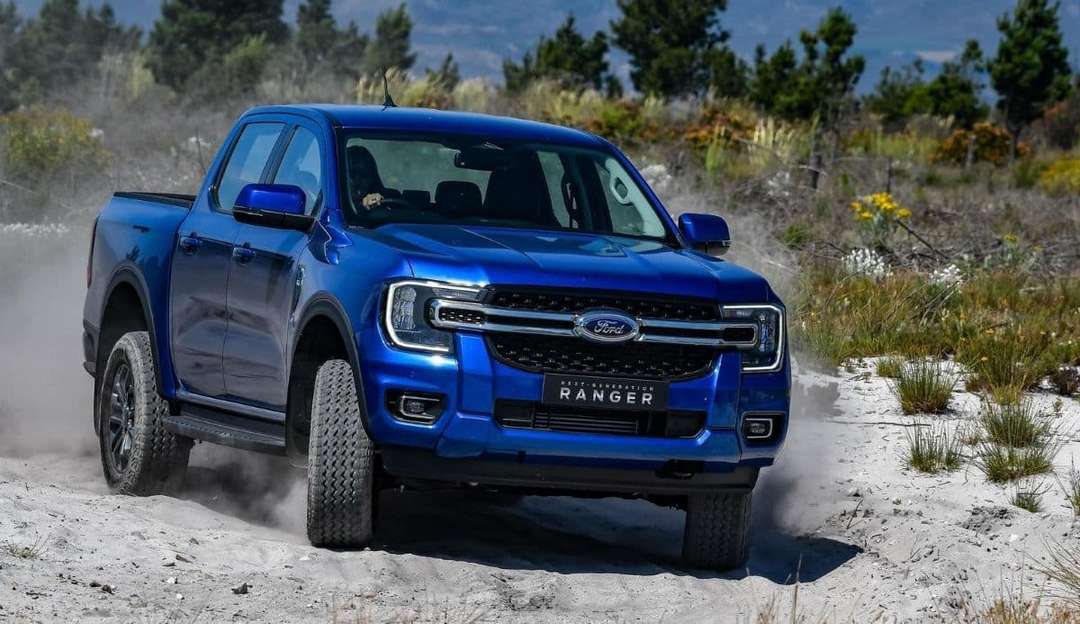
Ford Everest vs Toyota Fortuner (2026)
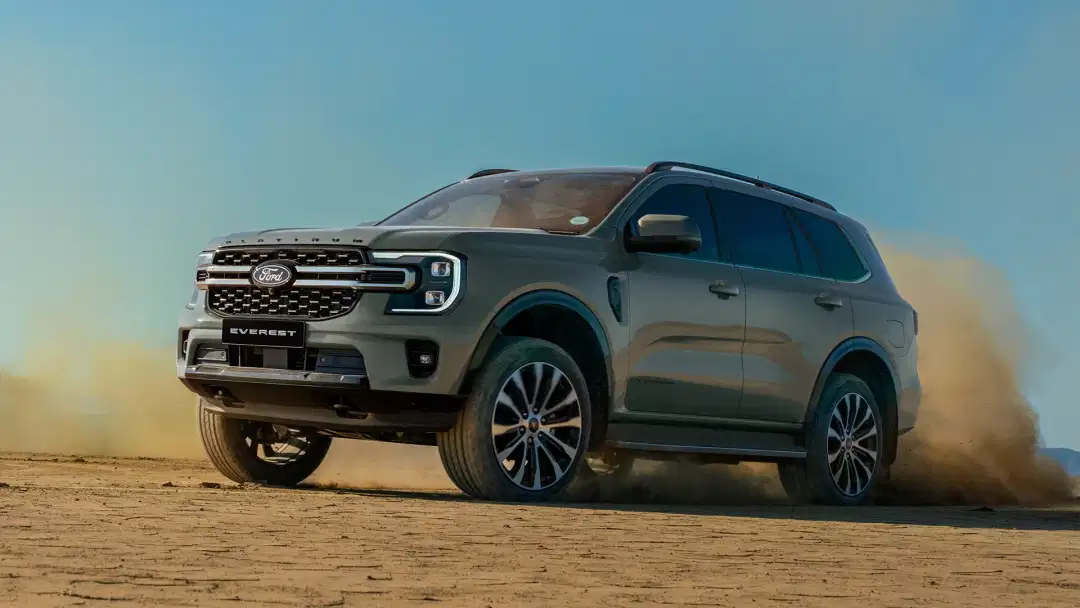
Which 4x4 SUV Is the Better Buy in South Africa?
If there's one SUV comparison South Africans never seem to get tired of, it's this: Ford Everest or Toyota Fortuner? Spend around R800,000, and chances are these two will be at the top of your shortlist.
Having driven both extensively, I think the Everest is the better vehicle. It's more refined, more comfortable, feels more modern inside, and its engine and driving dynamics give it the edge whether you're commuting during the week or heading off on a long road trip.
But the Fortuner has built its reputation for a reason. Its resale value is among the strongest in the segment, its reliability record is well established, and it's the SUV many buyers still trust to rack up hundreds of thousands of kilometres without complaint.
So, which one should you buy? That depends on what you value most. If you want the better driving experience and a more premium-feeling SUV, the Everest gets my vote. If long-term durability, bulletproof resale and proven dependability are at the top of your list, it's hard to argue against the Fortuner.
The verdict: which should you buy?
If I were spending my own money today, the Everest would be my first stop. It's the more modern SUV of the two. The cabin feels properly upmarket, the infotainment system is leagues ahead, and the 10-speed automatic is one of the best gearboxes in the segment. Opt for the Bi-Turbo or V6, and you've got effortless performance for overtaking, towing or simply making long-distance driving feel less like hard work.
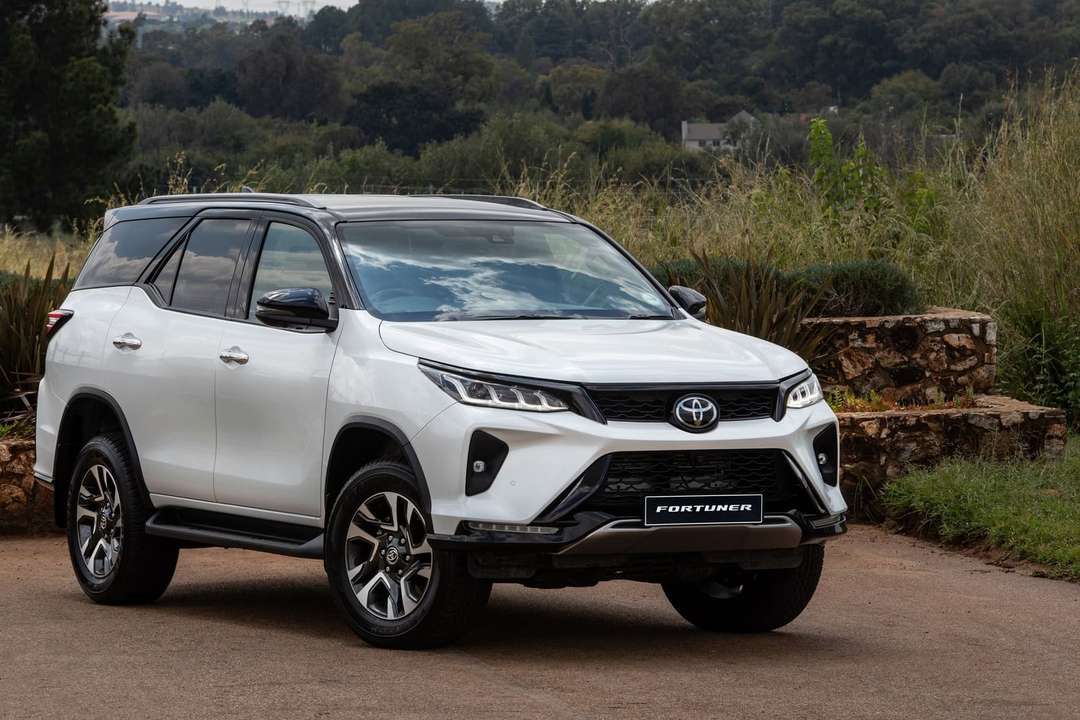
That doesn't mean the Fortuner has been left behind. Far from it. If you're the type of buyer who thinks five or ten years ahead, Toyota still makes an incredibly strong case. Its dealer network reaches places where many rivals don't, servicing is predictable, and resale remains almost unmatched. The 2.8 GD-6 has also earned a reputation for being one of those engines that just keeps going if you look after it.
For me, this comparison comes down to three things: resale value, ownership costs and where you'll spend most of your time driving.
If you want the SUV that feels more refined every single day, has the better interior and is simply nicer to live with, the Everest is the one I'd recommend. It's also the better choice if you regularly tow or spend hours on the highway.
If your priorities are long-term ownership, travelling through rural South Africa or buying something you know will hold its value exceptionally well, the Fortuner is still incredibly difficult to beat. It's the safe choice, and for many South Africans, that's exactly why they keep coming back to it.
Neither is a bad buy. The Everest wins with refinement, technology and overall driving experience. The Fortuner counters with proven durability, unbeatable resale and the kind of dependability that has made it a household name. Which one ends up in your driveway depends on what matters more to you once the honeymoon period is over.
Quick verdict table: Ford Everest vs Toyota Fortuner
| Category | Winner | Why |
|---|---|---|
| Best overall | Draw, intent decides | Everest for driving, Fortuner for ownership certainty |
| Best driving experience | Ford Everest | Smoother 10-speed auto, more power, quieter cabin |
| Lowest fuel costs | Close, edge Fortuner | 2.8 GD-6 real-world economy is well proven, unconfirmed margin |
| Best interior quality | Ford Everest | Larger portrait touchscreen, more modern layout |
| Strongest reliability reputation | Toyota Fortuner | Long local track record, simple mechanicals |
| Highest resale value | Toyota Fortuner | Trade estimate favours Toyota, see resale section |
| Lowest total running costs | Toyota Fortuner | Parts pricing and network breadth |
| Best first car | Neither ideal | Both large, thirsty and costly to insure for a first-timer |
| Best value for money | Toyota Fortuner | Resale plus running-cost certainty |
| Best for towing | Ford Everest | V6 in particular, both rated to tow heavy |
| Best rural ownership | Toyota Fortuner | Deeper small-town dealer and parts reach |
Specifications: Ford Everest vs Toyota Fortuner (2026)
Specs below match the Ford Everest 2.0 Bi-Turbo 4x4 automatic and Toyota Fortuner 2.8 GD-6 4x4 automatic, both for the current 2026 model year. Always confirm details with your dealer-these can shift between model years and trim levels.
| Specification | Ford Everest 2.0 Bi-Turbo 4x4 | Toyota Fortuner 2.8 GD-6 4x4 | Winner |
|---|---|---|---|
| Engine | 2.0d Bi-Turbo diesel | 2.8d GD-6 diesel | Preference |
| Power | 154 kW | 150 kW | Everest, marginal |
| Torque | 500 Nm | 500 Nm | Draw |
| Gearbox | 10-speed automatic (per MCP) | 6-speed automatic (per MCP) | Everest |
| Drive | All-wheel drive (4x4) | All-wheel drive (4x4) | Draw |
| Fuel economy (combined) | Quote required, approx 7 to 8 l/100 km claimed | Quote required, approx 7.6 l/100 km claimed | Unconfirmed |
| Boot space | Quote required, 3 rows down large | Quote required, 3 rows down large | Everest, marginal |
| Warranty | Quote required from dealer | Quote required from dealer | Unconfirmed |
| Seats | 7 | 7 | Draw |
Performance and driving experience
| Trait | Ford Everest | Toyota Fortuner |
|---|---|---|
| Urban driving | Light steering, easy 10-speed shifts | Firmer, slightly busier low-speed ride |
| Daily commuting | Quiet, relaxed, modern feel | Comfortable, familiar, dependable |
| Long-distance driving | Strong cruiser, low cabin noise | Composed, proven over big distances |
| Overtaking | Stronger, especially V6 | Adequate, works the gears more |
| Ride comfort | Supple, well damped | Firm but durable |
| Steering feel | Precise, car-like | Truck-like but honest |
The difference between these two becomes obvious the moment you spend time behind the wheel.
The Everest is the more refined SUV. It's quieter at highway speeds, rides with greater composure and the 10-speed automatic always seems to know exactly which gear to be in. Whether you're overtaking on the N3 or towing a trailer up a long incline, it delivers its performance with very little effort. The V6, in particular, makes light work of situations that would have you planning an overtake in most other SUVs.
The Fortuner isn't slow, but it feels more workmanlike. Its six-speed automatic has fewer ratios to play with, so it needs to kick down more aggressively when you ask for full power. It gets the job done, but it never feels quite as effortless as the Everest.
That's only half the story, though.
The Fortuner has earned its reputation because it's built to handle South African conditions. The steering is heavier, the suspension is firmer, and while it doesn't have the same polished feel as the Everest on smooth tar, it inspires confidence when the road starts falling apart. Gravel roads, broken tar and endless potholes don't seem to faze it. It has that reassuring toughness that makes you feel like it'll happily keep going long after the road has given up.
If most of your driving is on tar, especially long-distance highway trips, I'd take the Everest every time. It's simply the more comfortable and refined place to spend hours behind the wheel.
But if your weekends regularly involve gravel roads, game reserves or remote parts of the country where durability matters more than outright comfort, the Fortuner reminds you why it's become such a favourite with South African families. It may not feel as sophisticated, but when the going gets tough, it feels right at home.
The unique South African buying factors that actually decide it
Specs only tell half the story. Real buyers ask questions that spec sheets skip. Here’s where the Everest and Fortuner showdown is won or lost-everyday, practical stuff, as buyers actually phrase it.
| Factor | Ford Everest | Toyota Fortuner | Winner | Basis of assessment |
|---|---|---|---|---|
| Which survives potholes better? | Long-travel suspension, larger alloys on higher trims raise rim risk | Robust setup, smaller wheels on lower trims reduce rim risk | Fortuner, marginal | Ladder-frame design both, tyre profile logic |
| Ground clearance for ramps and humps? | Approx 226 mm (unconfirmed) | Approx 216 to 279 mm depending on trim (unconfirmed) | Depends on trim | Manufacturer-style figures, confirm with dealer |
| Which is the bigger theft target? | Segment trend, popular bakkie-derived SUV | Segment trend, high-demand model, parts value | Both high, quote-based | Tracker, Netstar, Cartrack and SAPS segment trend |
| Better on a 500 km family holiday? | Quieter, more modern cabin | Proven long-hauler, strong resale peace of mind | Everest, marginal | Refinement and cabin noise |
| Battery and electrical resilience? | More electronics to manage | Simpler electrical reputation | Fortuner | Owner-theme durability reputation |
| Tyre cost and availability? | Common ladder-frame SUV sizes | Very widely stocked sizes | Fortuner, marginal | Small-town availability |
| Real-world fuel economy? | Approx 8 to 9.5 l/100 km loaded (owner-reported, unconfirmed) | Approx 8.5 to 9.5 l/100 km loaded (owner-reported, unconfirmed) | Close, edge Fortuner | Owner-reported themes |
| Gravel-road durability? | Well built, modern | Legendary local durability | Fortuner | Recurring owner themes |
| Insurance and repair cost? | Quote required from dealer | Quote required from dealer | Unconfirmed | Quote-based only |
| Parts beyond the big centres? | Good, growing network | Widest reach in the country | Fortuner | Dealer footprint |
Three real-world issues decide this race. Dealer and parts access comes first. If you live out in the sticks or travel deep into rural or gravel territory, Fortuner’s network makes life simple, and it’s the single biggest reason some buyers never even test-drive an Everest. Resale is next-scroll down for the numbers. Then there’s refinement, where Everest genuinely feels a class up, especially on long hauls with the family.
Potholes and gravel? Both Everest and Fortuner are ladder-frame workhorses, built to take a beating. The catch is wheel size: bigger alloys mean thinner tyres and a higher chance of a bent rim on rough roads. If you drive bad roads often, pick the smaller wheels, no matter which badge you prefer.
At altitude-say, on the Highveld-neither engine gasps for breath. Both are turbo diesels, so you won’t feel the power loss that kills naturally aspirated rivals. Load them up and head for Lesotho? The Everest V6, though, keeps something in reserve when the road points up.
Running costs
| Cost area | Ford Everest | Toyota Fortuner | Winner |
|---|---|---|---|
| Fuel | Similar diesel consumption | Similar diesel consumption | Close, edge Fortuner |
| Servicing | Quote required from dealer | Quote required from dealer | Unconfirmed |
| Insurance | Quote required from broker | Quote required from broker | Unconfirmed |
| Tyres | Common sizes | Very widely stocked | Fortuner, marginal |
| Parts | Good availability | Widest availability | Fortuner |
If you want the most predictable running costs, Fortuner is the safer bet. It’s not that one is dramatically cheaper at the pumps or in the service bay-quotes will swing with your usage and region. But Toyota’s spares network and sensible pricing mean you’re far less likely to get stranded waiting for a part or fleeced for a basic service. That peace of mind is valuable over five years, especially if you’re playing the long game.
Five-year ownership
Assumptions: 20,000 km a year, diesel at the current national pump price (state the exact month and rand figure at the time you buy, unconfirmed here). All rand figures below are relative guidance, not quotes.
| Item | Ford Everest | Toyota Fortuner |
|---|---|---|
| Fuel spend | High, diesel | High, diesel, marginally lower |
| Maintenance | Quote required | Quote required |
| Repairs | Low if serviced correctly | Low, strong reputation |
| Resale | Strong | Stronger |
| Insurance | Quote required | Quote required |
| Overall cost | Slightly higher | Slightly lower |
Own either for five years and Fortuner edges ahead on cost, mostly thanks to resale and the confidence that comes with its parts pricing. Sure, Everest claws back ground on comfort and the general sense of modernity, and for plenty of families, that’s worth a small premium. But if you’re counting every rand and hate surprises, Toyota’s the simpler choice.
Resale value: what the trade guide suggests
Resale value is where the Fortuner shows its true colours. The trade guide numbers confirm the street reputation. Here’s the real-world comparison: a 2023 Everest 2.0D Bi-Turbo 4WD with 60,000 km gets a trade estimate of about R492,000, while a 2023 Fortuner 2.8 GD-6 4x4 at the same mileage sits around R369,700. Read that carefully. The Ford has a higher trade value because it started pricier when new, so you need to compare how much value each car lost as a percentage, rather than just staring at the raw rand numbers.