Best Bakkies Under R800k in South Africa (2026): Top 5

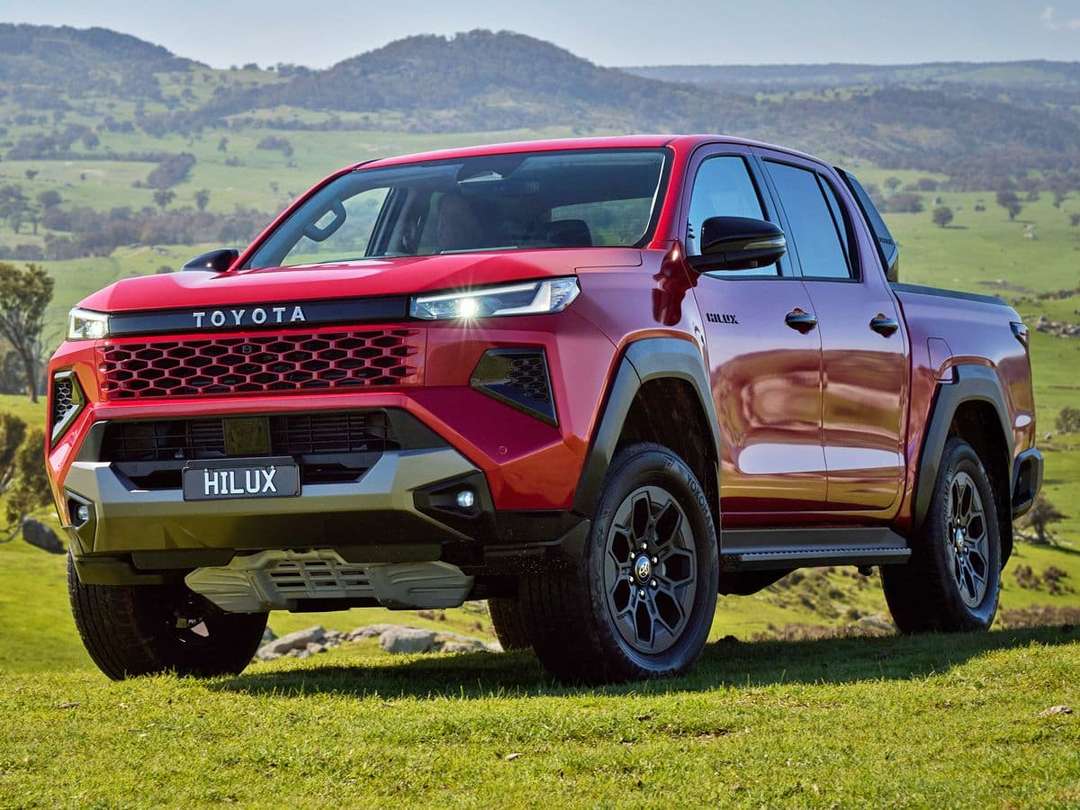
Spend R800k and I’d buy the Toyota Hilux 2.8 GD-6 Raider 4x4 (2025).
Best Double-Cab Bakkies Under R800,000 in South Africa: Five Serious Contenders Compared
South Africans have always had a particular affection for bakkies, and understandably so. Whether used for commercial purposes, family transportation or the occasional weekend adventure, these vehicles have become an integral part of our motoring landscape. However, purchasing a double cab has become a rather expensive exercise, particularly when looking at some of the more established manufacturers.
With a budget of R800,000, there are several interesting options worth considering, although the decision is no longer as straightforward as choosing between a Toyota Hilux and Ford Ranger. Manufacturers such as GWM and JAC have entered the conversation with products offering impressive equipment levels, modern interiors and competitive mechanical specifications, often at considerably lower prices.
Naturally, there is more to purchasing a bakkie than simply comparing prices and the size of infotainment displays. Reliability, resale value, dealer support and the overall ownership experience remain important considerations, particularly in South Africa, where these vehicles are frequently expected to perform several different duties.
For this comparison, we're looking at five interesting propositions: the Toyota Hilux 2.8 GD-6 Raider, Ford Ranger 2.0 BiTurbo XLT, Mitsubishi Triton GLS, GWM P300 LT and JAC T9 Super Lux.
The question is whether the established favourites still justify their pricing or whether the newer challengers have closed the gap sufficiently to deserve serious consideration.
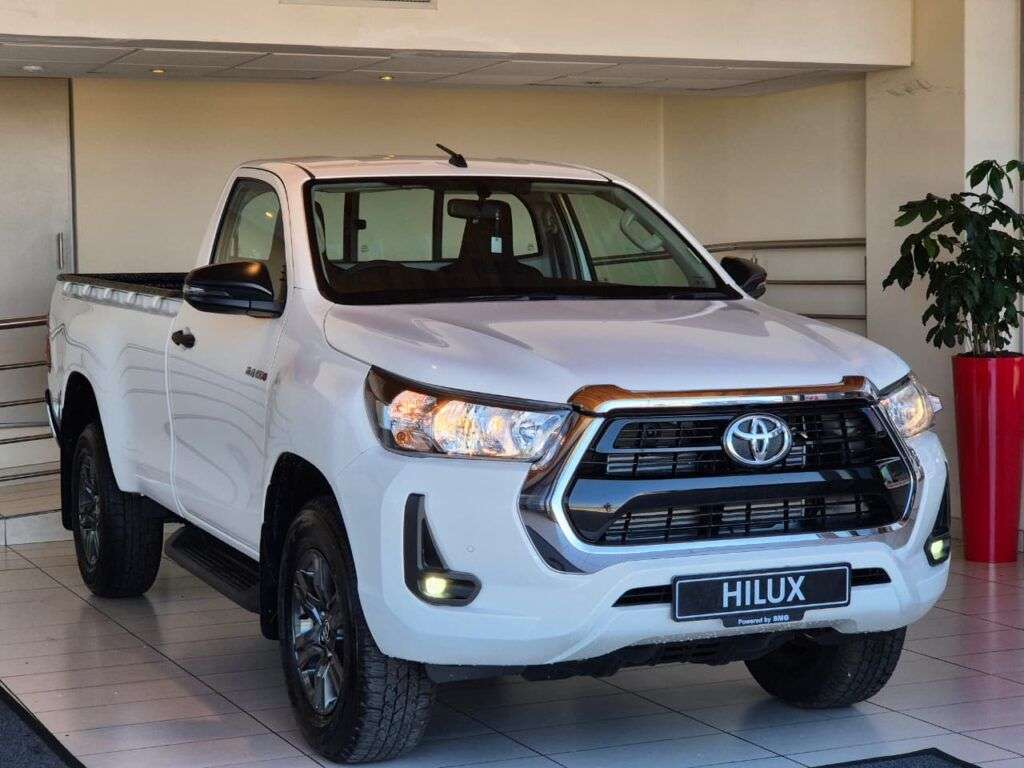
Toyota Hilux Raider – The Familiar Favourite
There is a reason the Toyota Hilux continues to feature prominently in conversations around double-cab bakkies. The nameplate has developed an established reputation in South Africa, supported by decades of local familiarity and an extensive dealer network.
However, reputation alone shouldn't necessarily determine a purchasing decision, particularly when the competition has become considerably more sophisticated.
The 2.8-litre GD-6 turbodiesel remains one of the Hilux's strongest attributes. In automatic configuration, this engine produces 150 kW and 500 Nm, providing the kind of torque delivery that makes sense in a vehicle designed to accommodate passengers, cargo and towing duties.
The Hilux has traditionally approached the double-cab formula with functionality at its centre. While more recent competitors have placed considerable emphasis on elaborate interior designs and technology, Toyota has maintained a relatively straightforward approach to its controls and cabin layout.
And perhaps that is part of its appeal.
There is something reassuring about a vehicle that doesn't unnecessarily complicate everyday functions, particularly when it is being used in demanding environments.
That said, there are areas where the Hilux's age becomes apparent. Depending on the derivative, the interior doesn't necessarily have the visual sophistication of some newer competitors, while the overall technology experience can feel relatively conservative.
Nevertheless, purchasing a Hilux is about considerably more than its standard equipment. The availability of replacement parts, established servicing infrastructure and depth of the used-vehicle market all contribute to its appeal.
Of course, strong historical resale performance doesn't guarantee what an individual vehicle will be worth several years down the line, but it does provide prospective buyers with a more established market against which to make their calculations.
For those who prioritise familiarity, a mature support network and conventional bakkie capability, the Hilux remains an important benchmark.
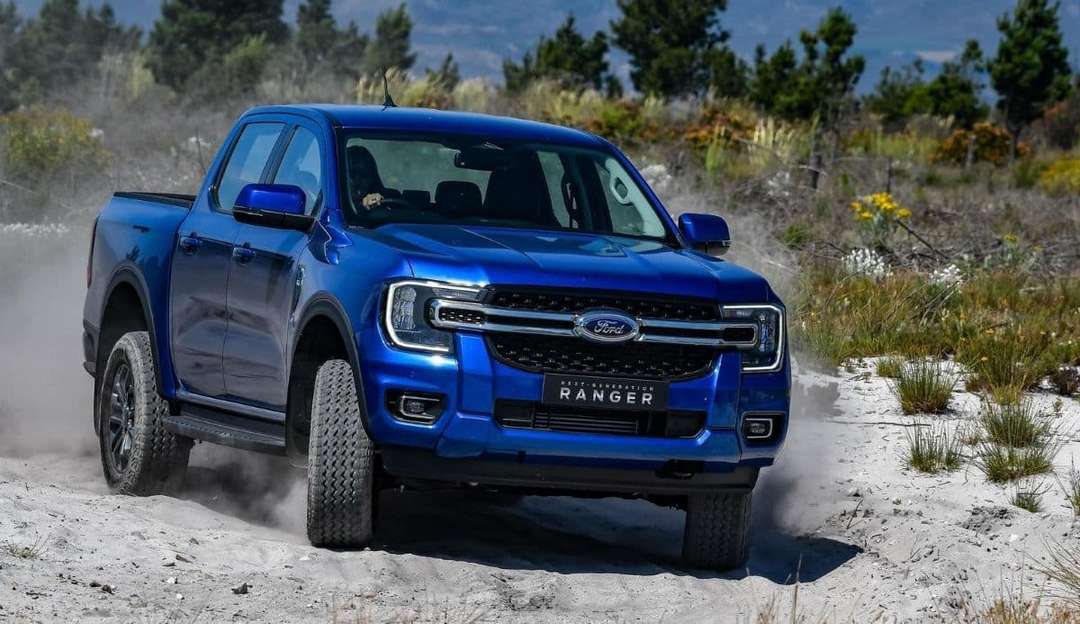
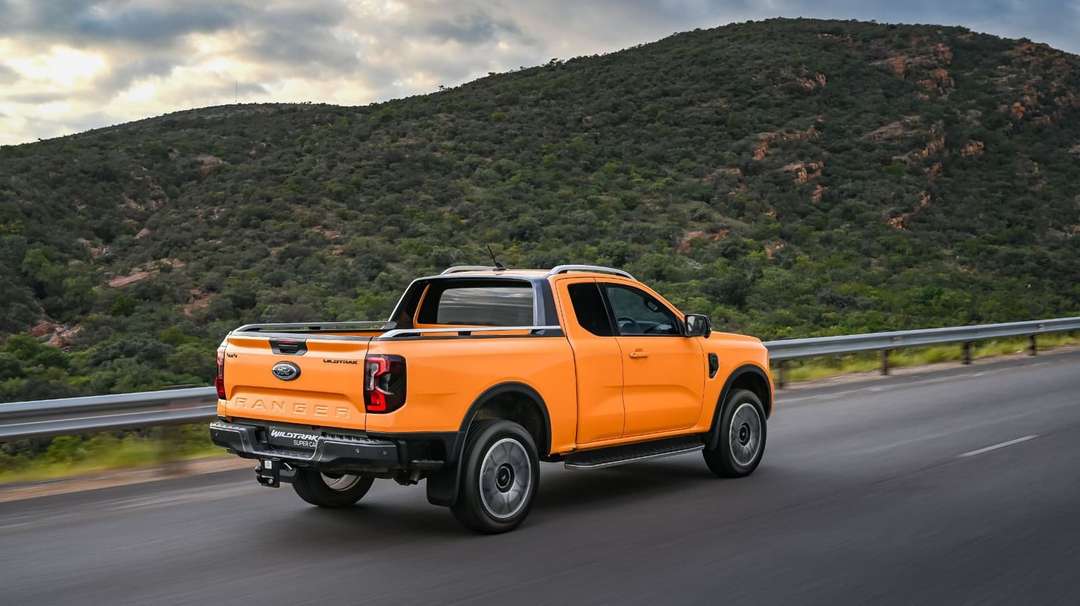
Ford Ranger XLT – A More Refined Approach
The Ford Ranger has evolved considerably over the years, and perhaps one of its strongest attributes is how effectively it combines traditional bakkie functionality with the refinement expected from a modern passenger vehicle.
In many respects, the Ranger has played an important role in changing consumer expectations of what a double cab should feel like from behind the steering wheel.
The 2.0-litre BiTurbo XLT 4x4 is a particularly interesting proposition. Producing 154 kW and 500 Nm, it is paired with a ten-speed automatic transmission, an arrangement designed to provide a broad spread of usable performance.
What makes this combination appealing is its flexibility. With several ratios available, the transmission can select an appropriate gear for different driving conditions, whether negotiating urban traffic or travelling at highway speeds.
Naturally, a ten-speed automatic transmission isn't automatically superior simply because it offers more gears. Calibration and its interaction with the engine remain important factors in determining the overall driving experience.
The Ranger also makes a compelling argument from an interior perspective. Its contemporary dashboard design, integrated technology and overall presentation contribute to a cabin that feels more aligned with a modern SUV than a traditional workhorse.
For customers who spend substantial amounts of time travelling between cities, this could be an important consideration.
However, additional mechanical and electronic complexity introduces its own ownership considerations. Maintaining the vehicle according to the manufacturer's prescribed schedule becomes especially important, while repair costs outside warranty coverage deserve attention.
Nevertheless, for somebody seeking a double cab that places considerable emphasis on road manners, comfort and technology without abandoning traditional utility, the Ranger XLT makes a convincing case for itself.
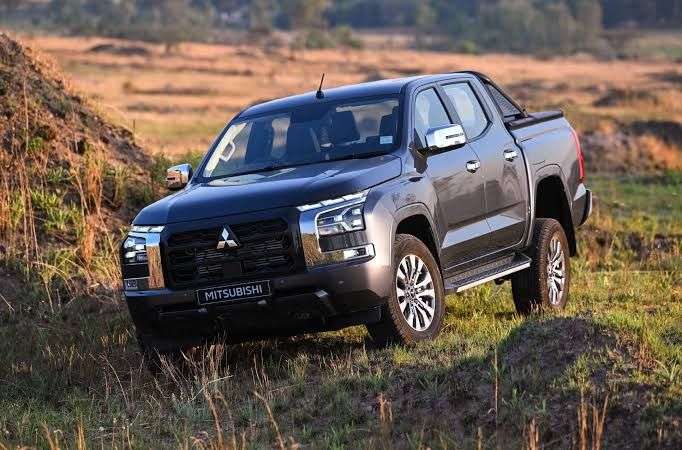
Mitsubishi Triton GLS – The Underrated Alternative
Mitsubishi is certainly no stranger to the bakkie segment, although the Triton has perhaps not enjoyed quite the same level of mainstream attention as the Toyota Hilux and Ford Ranger in South Africa.
That doesn't necessarily mean it should be overlooked.
The latest-generation Triton adopts a considerably bolder exterior design than its predecessor, with a more imposing front end and stronger proportions that contribute to a contemporary appearance.
The GLS derivative uses a 2.4-litre turbodiesel producing 135 kW and 430 Nm, with the automatic version paired to a six-speed transmission.
Those figures are competitive within this particular comparison, although the Triton's appeal extends beyond its powertrain.
One of its strongest mechanical attributes is Mitsubishi's Super Select 4WD-II system, offered on the GLS 4x4 derivative considered here. Together with a rear differential lock, the system provides additional versatility when traction becomes limited.
For somebody who regularly travels on gravel roads or ventures beyond conventional tarred routes, the four-wheel-drive system deserves particular attention.
Of course, off-road capability is about more than simply having an impressive drivetrain. Ground clearance, tyre selection, suspension behaviour and driver experience all play significant roles.
Inside, the Triton takes a relatively sensible approach to design. While it doesn't necessarily attempt to match the visual extravagance of some newer Chinese competitors, its layout places an emphasis on functionality and ease of use.
What I find particularly interesting about the Triton is that it presents an established alternative without necessarily demanding the same degree of brand loyalty associated with the segment's two most recognisable nameplates.
For buyers who value genuine four-wheel-drive hardware and a familiar turbodiesel configuration, the Triton GLS deserves a place on the shortlist.
GWM P300 – Challenging the Established Order
GWM has made considerable progress within the South African market, and the P300 is perhaps one of the clearest indications of how far the manufacturer has come.
There was a time when Chinese bakkies were predominantly associated with affordability, often requiring consumers to accept substantial compromises in refinement, build quality and general presentation.
However, the landscape has changed.
The P300 represents a considerably more mature offering, combining a modern design with an impressive equipment list and a powertrain that makes it a genuine competitor in this segment.
Under the bonnet sits a 2.4-litre turbodiesel engine producing 135 kW and 480 Nm, paired with a nine-speed automatic transmission. In the LT 4x4 derivative, it also offers a quoted braked towing capacity of 3,500 kg.
Although those figures don't necessarily make it the most powerful bakkie in this comparison, they are certainly respectable, especially considering the P300's pricing.
The interior is another area where GWM has made a considerable impression. The dashboard adopts a contemporary design, with digital instrumentation, a large infotainment display and an emphasis on features typically associated with more expensive vehicles.
However, as I have mentioned in previous reviews, the increasing reliance on touchscreen functionality isn't always an improvement over conventional controls. Certain functions are simply easier to operate through physical buttons, particularly while driving.
Nevertheless, the P300's strongest argument is the amount of vehicle being offered for the money.
At its previously announced price of R649,900 for the LT 4x4, it presented a substantial saving compared with many established double-cab alternatives.
Of course, pricing alone shouldn't determine the purchase. GWM's advertised seven-year/200,000 km warranty and seven-year/75,000 km service plan also contribute to the ownership proposition, although current terms should be confirmed with the manufacturer.
For somebody prepared to consider an alternative to the more traditional manufacturers, the P300 makes a particularly interesting argument.
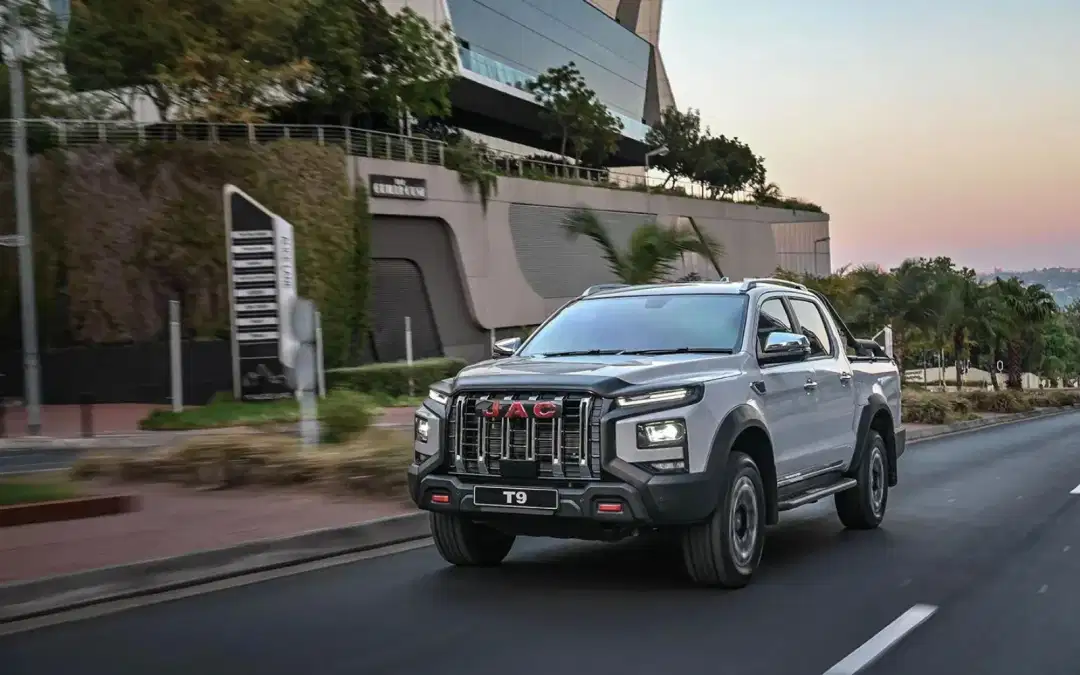
JAC T9 – An Interesting Proposition With Plenty to Offer
JAC is another manufacturer that has been steadily establishing itself within the South African market, and the T9 represents a noticeable progression in its passenger-focused bakkie offering.
The first thing that stands out is its design.
The T9 has a commanding presence, with a large grille, substantial proportions and a contemporary appearance that allows it to stand confidently alongside more established competitors.
Inside, there is a deliberate attempt to create an environment that feels more like a modern SUV than a conventional working vehicle.
The dashboard features a prominent infotainment display, digital instrumentation and various convenience features that contribute to a relatively sophisticated presentation.
Mechanically, the T9 Super Lux uses a 2.0-litre turbodiesel engine producing 125 kW, paired with an eight-speed automatic transmission. Published torque figures have varied between 410 Nm and 444 Nm, making it important to confirm the specification of the particular derivative being considered.
Naturally, the smaller engine raises questions about performance under load, particularly when compared with some of its larger-capacity rivals.
However, engine displacement alone doesn't necessarily determine how effectively a vehicle performs. Gearbox calibration, torque delivery, vehicle mass and gearing all influence its response.
The T9 also offers four-wheel-drive hardware, with low-range capability and a rear differential lock on the relevant 4x4 derivatives, which strengthens its argument for customers requiring more than a lifestyle vehicle.
The more important considerations centre around the ownership experience.
JAC has been expanding its presence, but consumers travelling regularly beyond metropolitan areas should establish the availability of authorised servicing facilities and replacement parts before committing to a purchase.
That being said, the T9 presents a convincing alternative for somebody interested in a modern double cab with generous equipment and a competitive purchase price.
It is another example of how much the segment has changed and why some of the more established manufacturers can no longer rely exclusively on their reputations.
Performance and Everyday Usability
An important consideration when evaluating these vehicles is that their intended purposes overlap considerably.
Although all five are double-cab bakkies, their respective manufacturers have approached the segment from slightly different perspectives.
The Toyota Hilux continues to emphasise familiarity and conventional mechanical capability, while the Ford Ranger places considerable importance on refinement and the overall driving experience.
Mitsubishi's Triton makes a strong case for itself through its four-wheel-drive hardware, particularly for consumers who regularly venture beyond conventional roads.
The GWM P300 and JAC T9, meanwhile, place considerable emphasis on providing technology and equipment at more competitive prices.
However, the performance characteristics of a bakkie can change substantially depending on how it is being used.
A vehicle that feels responsive when travelling with one occupant and an empty load bed may behave differently when carrying five passengers, luggage and a trailer.
For that reason, power and torque figures should be considered alongside the vehicle's overall mass, transmission calibration and intended duties.
The Ranger's 154 kW output gives it a modest advantage over the 150 kW Hilux automatic, while both produce 500 Nm. The GWM and Mitsubishi deliver 135 kW, with the JAC Super Lux quoted at 125 kW.
Nevertheless, outright performance shouldn't be the only consideration.
Ride comfort, cabin insulation, steering response and transmission behaviour all contribute to how pleasant a vehicle is to operate, especially when covering substantial distances.
Interior and Technology
The improvement in cabin quality across the double-cab segment has been particularly interesting to observe.
Modern bakkies are increasingly expected to serve as family vehicles, with consumers demanding levels of comfort and convenience previously associated with passenger SUVs.
This is particularly apparent in the Ford Ranger, GWM P300 and JAC T9.
The Ranger offers a contemporary dashboard and a strong emphasis on connectivity and driver convenience. The GWM P300 provides an equally modern presentation, with its equipment offering playing an important role in its value proposition.
JAC has adopted a similar approach, incorporating features that contribute to a more premium cabin experience.
Toyota and Mitsubishi, on the other hand, adopt relatively conventional interior layouts, although this isn't necessarily a disadvantage.
Sometimes the most sophisticated interior isn't the one with the largest screen, but rather the one that allows the driver to operate essential functions without unnecessary distraction.
Rear passenger accommodation is another area that should not be overlooked.
Many double cabs are now purchased primarily as family vehicles, making rear legroom, seat comfort, storage compartments and child-seat compatibility particularly important.
Ultimately, technology should improve usability rather than simply contribute to an impressive equipment list.
Off-Road Capability and Practicality
South Africa offers a particularly demanding environment for bakkies, with driving conditions ranging from metropolitan traffic to gravel roads, poorly maintained secondary routes and more technical off-road terrain.
Naturally, not everybody purchasing a four-wheel-drive double cab intends to tackle challenging trails.
However, the availability of low-range gearing, differential locks and suitable ground clearance can make a substantial difference when driving conditions deteriorate.
The Mitsubishi Triton GLS 4x4 is particularly interesting because of its Super Select 4WD-II system and rear differential lock.
The GWM P300 LT 4x4 offers a competitive towing specification, while the more specialised LTD derivative adds equipment intended to improve its suitability for off-road applications.
The JAC T9 also includes low-range capability in its four-wheel-drive derivatives.
Toyota and Ford, meanwhile, have extensive histories within the local bakkie market, with established aftermarket support for customers who regularly use their vehicles for touring and recreational purposes.
However, selecting a vehicle for off-road use requires more than comparing the number of available driving modes.
Tyre selection, suspension articulation, underbody protection and the driver's ability to understand the terrain remain equally important.
For consumers planning substantial off-road travel, I would place particular emphasis on the availability of appropriate tyres, recovery equipment and servicing support in more remote areas.
Ownership, Reliability and Resale Value
This is perhaps where the purchasing decision becomes considerably more complicated.
South Africans are understandably cautious when it comes to spending close to R800,000 on a vehicle, particularly one expected to remain in the family or business for several years.
Although purchase price is important, the overall ownership experience can have a substantial influence on whether a vehicle ultimately represents good value.
Toyota and Ford benefit from established dealer networks, familiar products and mature used-vehicle markets. Mitsubishi also has a longstanding presence in South Africa, although consumers should still consider the availability of support within their particular region.
GWM and JAC continue to develop their respective dealer networks, with warranty and service-plan offerings forming an important part of their appeal.
However, a lengthy warranty doesn't automatically translate into inexpensive or convenient ownership.
Customers should establish whether the nearest authorised workshop can accommodate their servicing requirements and whether replacement components are readily available.
Resale value is another important consideration.
Although vehicles such as the Hilux and Ranger have established used-vehicle markets, it would be misleading to suggest that either will automatically retain a specific percentage of its purchase price.
Depreciation depends on numerous factors, including mileage, condition, maintenance history, market demand and the availability of newer models.
Similarly, the long-term resale performance of newer entrants should not be assumed without sufficient market evidence.
For that reason, buyers would be well advised to obtain indicative trade-in valuations and compare ownership costs before making a final decision.
Fuel Consumption and Running Costs
Fuel consumption remains an important consideration, particularly for customers who regularly cover substantial distances.
Although diesel engines continue to dominate this particular comparison, differences in engine capacity, vehicle mass, gearing and driving conditions can influence actual consumption.
Manufacturer figures provide a useful point of reference, but they should not necessarily be treated as an indication of what every owner will achieve.
Urban traffic, frequent short journeys, towing and additional vehicle accessories can all affect efficiency.
There are also maintenance considerations associated with modern turbodiesel engines, particularly where vehicles are used predominantly for short-distance commuting.
Adhering to prescribed servicing intervals and using the correct fluids remains important.
Tyre replacement costs should also feature in the ownership calculation, especially where vehicles are fitted with larger alloy wheels and more specialised tyres.
Likewise, insurance premiums can vary considerably depending on the individual driver, location, security requirements and vehicle specification.
Ultimately, consumers should look beyond the monthly finance instalment and calculate the total cost of operating the vehicle over their intended ownership period.
Pricing and Value for Money
The R800,000 threshold creates an interesting comparison because it brings together vehicles that compete on considerably different terms.
The Toyota Hilux and Ford Ranger place substantial emphasis on their established market positions, product familiarity and support infrastructure.
The Mitsubishi Triton provides an alternative for consumers who value four-wheel-drive capability and a more conventional approach.
GWM and JAC, meanwhile, challenge the traditional pricing structure by offering comparatively generous equipment levels for less money.
For context, the GWM P300 LT 4x4 was previously advertised at R649,900, while the JAC T9 Super Lux 4x4 has been listed at approximately R659,900. These figures serve as reference prices rather than confirmed current retail quotations.
That difference in purchase price could be significant for somebody who would rather allocate additional money towards accessories, insurance or other financial priorities.
However, the value equation changes when depreciation, servicing, fuel consumption and financing costs are considered.
The vehicle with the lowest purchase price isn't necessarily the most economical choice over five years.
Equally, paying a substantial premium for an established badge doesn't automatically guarantee the best ownership outcome.
The most sensible purchase will ultimately depend on how the vehicle is used and how long the owner intends to keep it.
Final Verdict
Having considered these five vehicles, what becomes particularly apparent is how competitive the South African double-cab market has become.
The Toyota Hilux remains my preferred choice for somebody who places considerable importance on an established ownership ecosystem, familiar mechanical capability and a mature second-hand market.
It may not offer the most contemporary interior in this comparison, but its broader ownership proposition remains a significant consideration.
The Ford Ranger would be my choice for somebody who places greater emphasis on refinement, technology and the overall driving experience. Its combination of a capable turbodiesel engine and ten-speed automatic transmission makes it a particularly appealing proposition for everyday use.
Mitsubishi's Triton deserves more attention than it perhaps receives, particularly among customers who value its four-wheel-drive hardware and conventional mechanical configuration.
However, the GWM P300 is arguably the most interesting vehicle here from a value perspective.
The combination of its 2.4-litre turbodiesel engine, contemporary interior, generous warranty and competitive pricing creates a compelling argument for consumers willing to consider alternatives to the established manufacturers.
The JAC T9 follows a similar philosophy, offering considerable equipment and a modern cabin, although prospective buyers should evaluate its drivetrain and local support arrangements according to their individual requirements.
Ultimately, I don't believe there is one bakkie that will satisfy every buyer.
If long-term familiarity and an established support network are your priorities, the Hilux remains a convincing proposition. If refinement and technology matter more, the Ranger deserves serious consideration.
However, for consumers whose decisions are influenced primarily by equipment and purchase price, dismissing the GWM P300 or JAC T9 simply because of their badges would be rather shortsighted.
And perhaps that is the most important development in this segment.
The established manufacturers are no longer competing exclusively against one another. They are facing increasingly credible alternatives that are forcing consumers to reconsider what constitutes genuine value for money.
And ultimately, that is a positive development for the South African consumer.
Summary
Spend R800k and I’d buy the Toyota Hilux 2.8 GD-6 Raider 4x4 (2025). Three things settle it: segment-leading resale, the country’s broadest dealer and parts network, and proven durability under tow or on corrugated gravel. Ford’s Ranger 2.0 BiTurbo XLT 4x4 is the sharper drive, pairing more power with a polished 10-speed auto, so choose it if road manners matter most. Mitsubishi’s Triton GLS counters with value and serious Super Select off-road hardware.