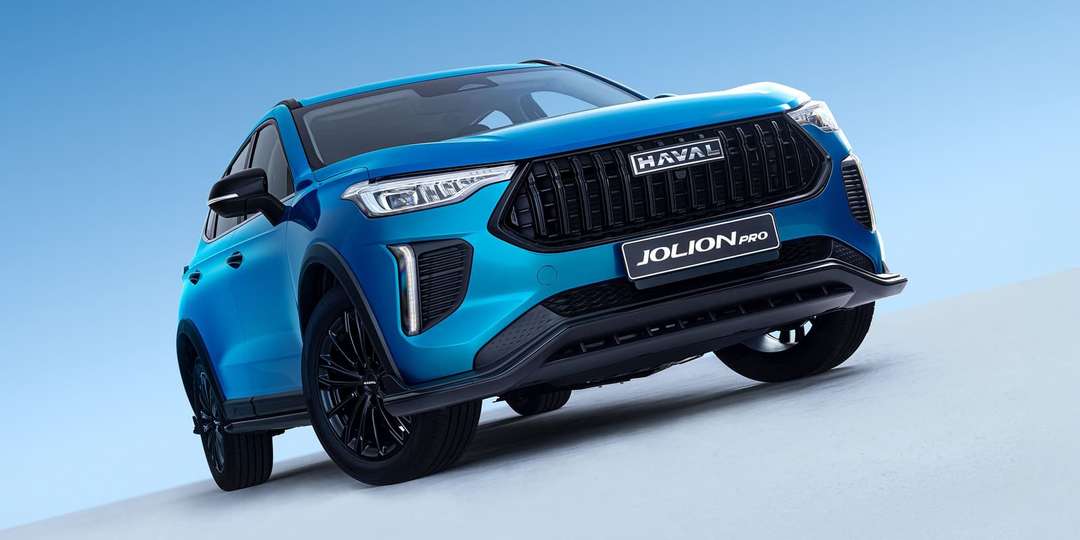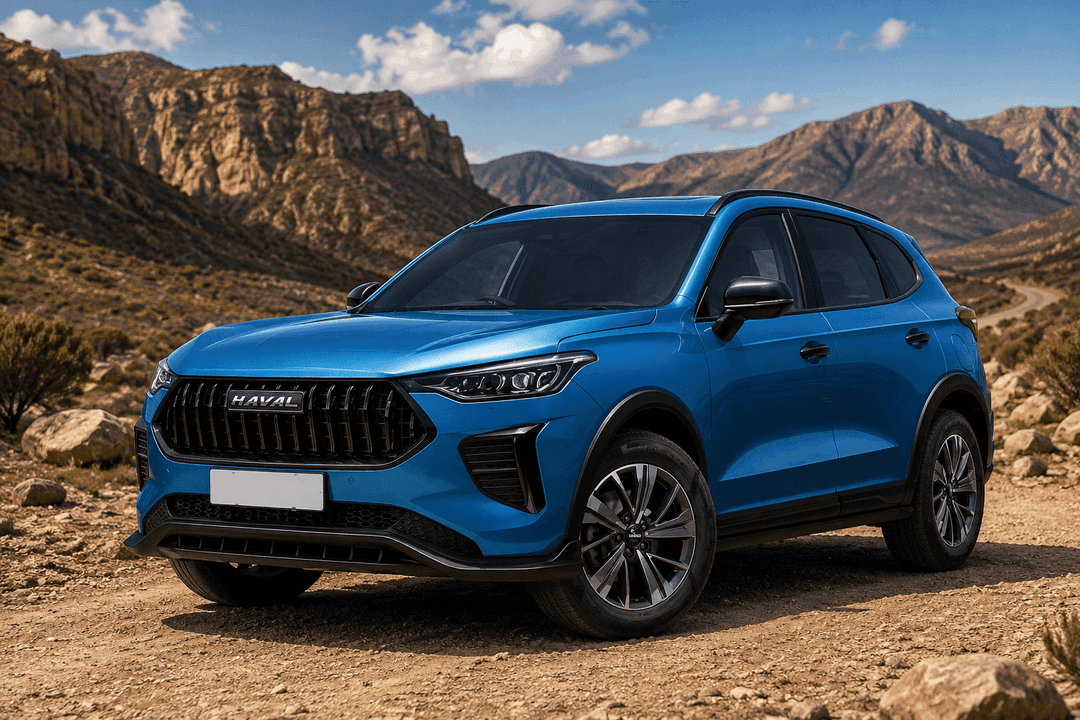
Omoda C5 vs Haval Jolion: Which Chinese Crossover Is the Better Buy?

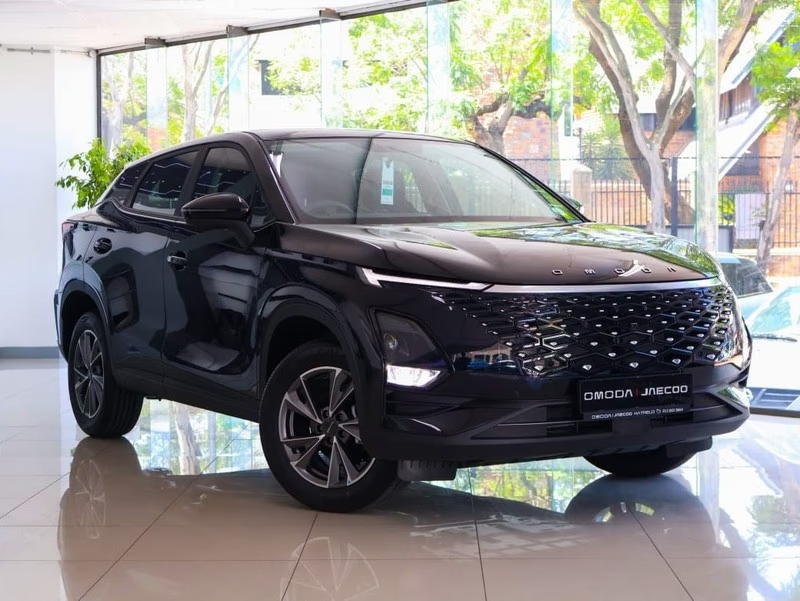
Choose the Haval Jolion 1.5T City Plus DCT if resale confidence and cabin quality carry the most weight.
Introduction
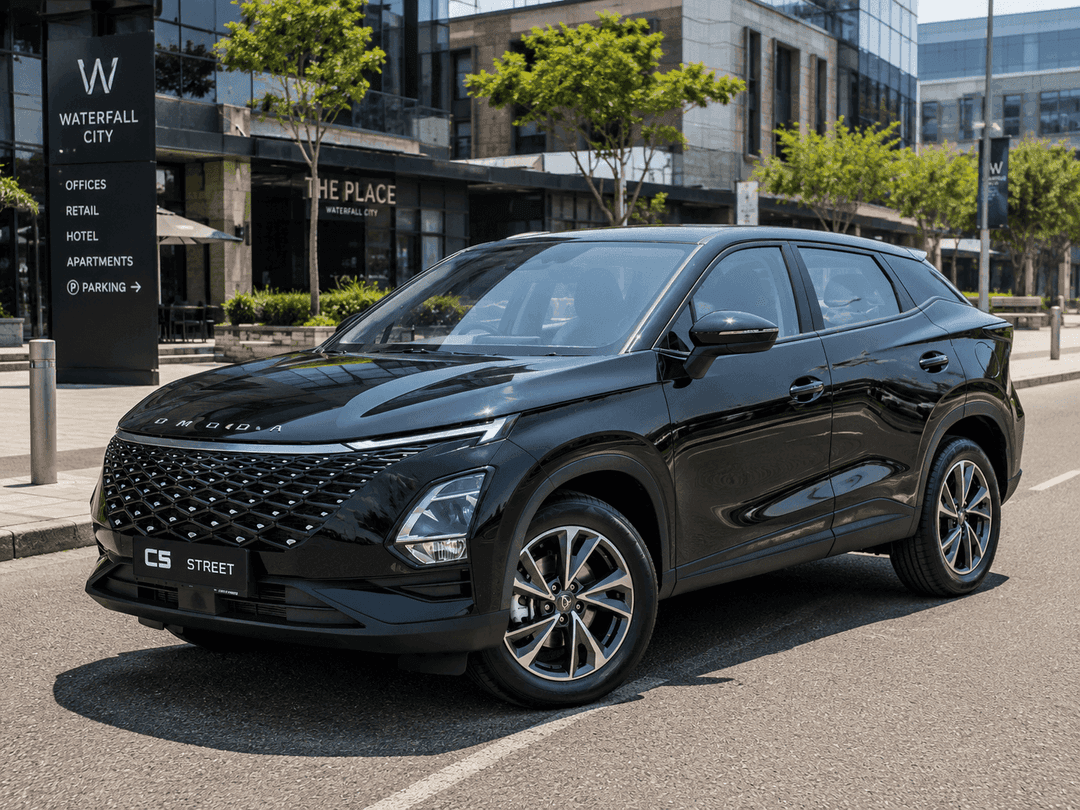
Here’s the short answer. With barely any money separating them, the Omoda C5 vs Haval Jolion decision rests on what you value most. The Omoda C5 Style X offers more power and torque, lower claimed fuel consumption and a recently upgraded chassis, while the Haval Jolion City Plus counters with a longer South African track record and a considerably longer service plan.
In September 2026, the Omoda C5 1.5T Style X lists at R374 900 and the Haval Jolion 1.5T City Plus DCT at R373 950. That is a difference of just R950 on vehicles costing close to R400 000.
Both have become familiar Chinese challengers on our shores, tempting buyers who may otherwise consider established compact crossovers from Korean and Japanese manufacturers. Proper competition, then.
The verdict: which should you buy?
The Haval Jolion 1.5T City Plus DCT makes sense if a longer local track record and stronger standard ownership package carry the most weight. Its seven-year/200 000 km warranty and seven-year/75 000 km service plan are substantial at this price.
The Omoda C5 1.5T Style X counters with a stronger engine. Its 1.5-litre turbocharged petrol unit produces 115 kW and 230 Nm, compared with the Jolion’s 105 kW and 210 Nm. Omoda also claims 6.9 L/100 km, against Haval’s 8.1 L/100 km.
The C5 Style X has also moved to a six-speed dual-clutch transmission and multi-link rear suspension, making the current vehicle mechanically different from earlier C5 derivatives.
With only R950 separating them, purchase price is effectively irrelevant. Powertrain, fuel consumption, service-plan coverage, equipment and your confidence in each brand’s ownership ecosystem matter considerably more.
Best suited to the Omoda C5: buyers wanting the stronger engine, lower claimed consumption and updated chassis.
Best suited to the Haval Jolion: buyers placing greater emphasis on the longer service plan and established local ownership history.
Quick verdict table
| Category | Omoda C5 Style X | Haval Jolion City Plus |
|---|---|---|
| Price | R374 900 | R373 950 |
| Difference | +R950 | — |
| Power | 115 kW | 105 kW |
| Torque | 230 Nm | 210 Nm |
| Transmission | 6-speed DCT | 7-speed DCT |
| Claimed consumption | 6.9 L/100 km | 8.1 L/100 km |
| Service plan | 2-year/25 000 km | 7-year/75 000 km |
| Vehicle warranty | 5-year/150 000 km | 7-year/200 000 km |
| Primary strength | Powertrain/chassis | Ownership package |
Specifications
Columns refer to the current Omoda C5 1.5T Style X and Haval Jolion 1.5T City Plus DCT.
| Specification | Omoda C5 Style X | Haval Jolion City Plus |
|---|---|---|
| Engine | 1.5-litre turbo petrol | 1.5-litre turbo petrol |
| Power | 115 kW | 105 kW |
| Torque | 230 Nm | 210 Nm |
| Gearbox | 6-speed DCT | 7-speed DCT |
| Drive | Front-wheel drive | Front-wheel drive |
| Fuel | Petrol | Petrol |
| Claimed consumption | 6.9 L/100 km | 8.1 L/100 km |
| Length | 4 400 mm | 4 472 mm |
| Width | 1 830 mm | 1 874 mm |
| Height | 1 590 mm | 1 581 mm |
| Wheelbase | 2 630 mm | Confirm current specification |
| Ground clearance | 169 mm | Confirm current specification |
| Boot | 442 litres | Confirm current specification |
| Price | R374 900 | R373 950 |
| Vehicle warranty | 5-year/150 000 km | 7-year/200 000 km |
| Service plan | 2-year/25 000 km | 7-year/75 000 km |
The power difference is real, but smaller than the original hp figures suggested. The C5 produces 10 kW and 20 Nm more than the Jolion.
Omoda also officially quotes a nine-second 0-100 km/h time for the updated C5 X drivetrain.
Performance and driving experience
| Factor | Omoda C5 | Haval Jolion |
|---|---|---|
| Urban driving | 115 kW/230 Nm | 105 kW/210 Nm |
| Daily commuting | Turbo/6DCT | Turbo/7DCT |
| Overtaking | Higher output | Adequate output |
| Rear suspension | Multi-link | Confirm current specification |
| Claimed consumption | 6.9 L/100 km | 8.1 L/100 km |
| Highveld driving | Turbocharged | Turbocharged |
| Drive | Front-wheel drive | Front-wheel drive |
The C5 has the stronger engine on paper. Its 115 kW represents a 10 kW advantage over the Jolion, while its 230 Nm gives it an additional 20 Nm.
Omoda has also made meaningful mechanical changes to the Style X. The previous transmission arrangement has been replaced by a six-speed DCT, while the rear suspension has moved from a torsion-beam arrangement to a multi-link setup.
Haval uses a seven-speed dual-clutch transmission with its 105 kW/210 Nm turbocharged engine.
Both should cope well with Highveld altitude because turbocharging compensates for some of the performance loss naturally aspirated engines experience as air density decreases.
The C5 has the performance advantage on paper, but buyers should drive both in stop-start traffic and at highway speeds before deciding. Transmission calibration matters just as much as the number of ratios.
Unique South African buying factors
Which survives South African potholes better?
Both are conventional front-wheel-drive crossovers rather than rugged SUVs.
Omoda’s move to multi-link rear suspension is an important mechanical upgrade, but suspension architecture alone does not determine pothole resistance.
Tyre profile, wheel size, vehicle speed and impact severity all matter.
The C5 Style X uses 17-inch alloy wheels, which should provide a useful compromise between appearance and tyre sidewall.
Check the Jolion City Plus wheel and tyre specification on the exact vehicle and obtain replacement prices before purchasing.
How is ground clearance for ramps and speed humps?
Omoda officially specifies 169 mm of minimum ground clearance for the C5 Style X.
That is adequate for normal speed humps, shopping-centre ramps and maintained gravel roads, but this remains a road-biased crossover.
The exact Jolion City Plus figure should be confirmed against the current GWM specification.
Neither should be treated as an off-road vehicle.
Which is the bigger hijack and theft target?
There is insufficient reliable model-specific evidence to state that either vehicle is inherently more likely to be hijacked or stolen.
Popularity alone does not establish individual theft risk.
Insurance premiums depend on location, driver profile, claims history, security equipment and repair costs.
Obtain comparable insurance quotations and establish whether the insurer requires an approved tracking system.
Which handles the long holiday trip?
Both use turbocharged engines and automatic dual-clutch transmissions, making either suitable for normal national-road touring.
The C5 carries a 10 kW and 20 Nm advantage, which may become more useful with passengers and luggage aboard.
Haval counters with a slightly larger body.
For families travelling regularly between provinces, fuel-tank capacity, luggage space, tyre specification and seat comfort should be compared alongside engine output.
Battery and electrical resilience
Both use conventional petrol drivetrains and 12V electrical systems.
Neither requires external charging, so load-shedding has no direct impact on their ability to refuel and operate.
Battery lifespan depends on battery quality, vehicle usage, climate and electrical load, so predicting a fixed replacement interval would be misleading.
Tyre cost and availability
The C5 Style X uses 17-inch alloy wheels.
Replacement cost will depend on the tyre brand and exact specification. The Jolion City Plus specification should likewise be checked before purchase.
Obtain prices for a full replacement set for both vehicles and confirm whether the required sizes are routinely stocked outside major metropolitan areas.
What is real-world fuel economy?
Omoda officially claims 6.9 L/100 km for the C5 Style X.
GWM lists the Jolion City Plus at 8.1 L/100 km.
That gives the Omoda a 1.2 L/100 km advantage on the official figures.
The original article’s claimed 8.9 L/100 km result from a 612 km test has been removed because there is insufficient supporting test information to present it as a verified measurement.
Actual consumption will vary according to altitude, traffic, speed, load and driving style.
Gravel-road durability
Both should comfortably handle maintained gravel roads when driven appropriately.
Neither has the ground clearance or underbody specification of a dedicated off-road SUV.
Regular gravel-road users should monitor tyre condition, suspension components, underbody damage, dust sealing and stone chips.
There is insufficient evidence to claim that either is inherently more durable on gravel.
Insurance reality
With only R950 separating their purchase prices, vehicle value alone is unlikely to create a meaningful insurance distinction.
Repair costs, theft data, driver profile and location matter more.
Get written quotations for both before purchasing.
Parts availability beyond major cities
Haval has been established in South Africa for longer than Omoda and consequently has a longer local ownership history.
Omoda’s footprint continues to grow.
Rather than assuming either network will suit your circumstances, establish where the nearest authorised workshop is if you live or regularly travel outside Johannesburg, Pretoria, Durban or Cape Town.
Running costs
Fuel consumption favours the C5 on official figures.
At 6.9 L/100 km versus 8.1 L/100 km, the difference is 1.2 litres per 100 km. Over 20 000 km, that equates to approximately 240 litres of petrol before the fuel price is applied.
Haval counters strongly through scheduled maintenance coverage.
The Jolion receives a seven-year/75 000 km service plan, while the C5 Style X carries a two-year/25 000 km service plan.
Omoda provides a five-year/150 000 km factory warranty and its 10-year/1 000 000 km engine warranty, subject to the applicable first-owner terms. Haval provides a seven-year/200 000 km warranty and seven-year unlimited-kilometre roadside assistance.
That makes this more nuanced than fuel consumption alone suggests.
Five-year ownership
Assume 20 000 km per year, giving 100 000 km over five years.
| Item | Omoda C5 | Haval Jolion |
|---|---|---|
| Purchase price | R374 900 | R373 950 |
| Difference | +R950 | — |
| Claimed consumption | 6.9 L/100 km | 8.1 L/100 km |
| Fuel at 100 000 km | 6 900 litres claimed | 8 100 litres claimed |
| Service plan | 2-year/25 000 km | 7-year/75 000 km |
| Vehicle warranty | 5-year/150 000 km | 7-year/200 000 km |
| Insurance | Quote required | Quote required |
| Resale | Developing market | Longer local history |
At the official consumption figures, 100 000 km would produce a theoretical difference of 1 200 litres of petrol.
Multiply that figure by the average petrol price actually paid over the ownership period to calculate the theoretical fuel-cost difference.
The original identical R230 000 five-year TCO figures have been removed. They cannot be supported without depreciation, finance, insurance, servicing, fuel, tyres and repair data.
Hidden ownership costs
Both use turbocharged petrol engines and dual-clutch transmissions.
That makes correct servicing important, but neither turbocharging nor a DCT should automatically be presented as an inevitable future repair.
Normal costs include tyres, windscreens, brake components, 12V batteries and replacement keys.
The C5’s shorter service plan also means owners covering substantial mileage should establish servicing costs beyond 25 000 km before purchase.
Haval’s service plan extends to 75 000 km.
Repairability
| Factor | Omoda C5 | Haval Jolion |
|---|---|---|
| Local history | Shorter | Longer |
| Engine | 1.5T | 1.5T |
| Transmission | 6DCT | 7DCT |
| Rear suspension | Multi-link | Confirm specification |
| Factory warranty | 5-year/150 000 km | 7-year/200 000 km |
| Service plan | 2-year/25 000 km | 7-year/75 000 km |
Haval’s longer South African history provides a larger pool of local ownership experience.
That does not, by itself, prove superior mechanical reliability.
Omoda’s current C5 Style X is also mechanically different from earlier examples, so reliability conclusions drawn from an older drivetrain should not automatically be applied to the updated vehicle.
Reliability timeline
Predicting particular component failures at arbitrary mileage intervals is not supported by credible comparative failure-rate data.
| Mileage | Omoda C5 | Haval Jolion |
|---|---|---|
| 0–20 000 km | Follow scheduled servicing | Follow scheduled servicing |
| 20 000–50 000 km | Maintain complete history | Maintain complete history |
| 50 000–100 000 km | Inspect normal wear items | Inspect normal wear items |
| 100 000–150 000 km | Condition increasingly important | Condition increasingly important |
| 150 000 km plus | Limited long-term local data | Larger local evidence pool |
For a used example, service history, condition and an independent inspection matter more than generic mileage predictions.
Real owner sentiment
Omoda C5
Styling, equipment and value form much of the C5’s appeal. The current Style X also benefits from drivetrain and suspension changes that differentiate it from earlier examples.
Haval Jolion
The Jolion has a longer South African history and a larger local owner base. Cabin presentation, pricing and ownership coverage are central to its appeal.
Owner discussions are useful for identifying recurring themes, but they should not be treated as controlled reliability statistics.
Buyer regret index
| Consideration | Omoda C5 | Haval Jolion |
|---|---|---|
| Purchase price | R950 more | R950 less |
| Power | 115 kW | 105 kW |
| Torque | 230 Nm | 210 Nm |
| Claimed fuel use | 6.9 L/100 km | 8.1 L/100 km |
| Service plan | 2-year/25 000 km | 7-year/75 000 km |
| Transmission | 6DCT | 7DCT |
| Resale certainty | Developing | Longer local history |
| Insurance | Quote required | Quote required |
Boot reality test
Omoda officially quotes 442 litres with the C5’s rear seats upright and 1 149 litres with the second row folded.
The original article’s claims about physically loading two suitcases, a folded pram and several bags have been removed because no supporting controlled luggage test accompanies the draft.
Buyers carrying a specific pram, wheelchair, golf bag or sports equipment should physically test those items in both vehicles.
Cabin and practicality
Both provide five seats and the raised seating position buyers expect from compact crossovers.
The Jolion is slightly larger externally at 4 472 mm long and 1 874 mm wide, compared with the C5’s 4 400 mm and 1 830 mm.
The C5 has a 2 630 mm wheelbase.
Exterior dimensions do not automatically determine usable interior space, so rear-seat accommodation and child-seat installation should be compared in person.
Cabin noise
Without controlled decibel measurements taken under identical conditions, there is no credible basis for declaring one significantly quieter.
Both use four-cylinder turbocharged petrol engines.
During a test drive, assess them at idle, under strong acceleration and at national-road speeds. Tyre and wind noise can matter as much as engine refinement.
Technology
These observations apply specifically to the C5 Style X and Jolion City Plus.
The Omoda includes a 10.25-inch touchscreen with wireless Apple CarPlay, Android Auto and Bluetooth.
Both provide the connectivity expected in this segment, although buyers should confirm the exact City Plus infotainment specification against the vehicle being purchased.
Pair your own phone during the test drive and use the systems rather than judging them purely by screen size.
Safety
The C5 Style X includes ABS, electronic brake-force distribution, electronic stability control, dual front airbags, front side airbags and ISOFIX mounting points.
The Jolion City Plus specification should be checked directly against GWM’s current specification sheet.
The C5 achieved a five-star Euro NCAP result in 2022, but that rating should only be applied to a South African derivative where its safety specification corresponds sufficiently with the tested vehicle.
Likewise, any Jolion crash-test result should be interpreted against the specification of the exact South African derivative.
Best trim to buy
| Vehicle | Derivative | Why |
|---|---|---|
| Omoda C5 | 1.5T Style X | 115 kW/230 Nm, 6DCT and multi-link suspension at R374 900 |
| Haval Jolion | 1.5T City Plus DCT | 105 kW/210 Nm and extensive ownership cover at R373 950 |
Compare current Omoda C5 and Haval Jolion listings on Auto.co.za.
Buying mistakes to avoid
- Choosing solely according to monthly repayment rather than total finance cost.
- Using the old 154 hp versus 143 hp figures. The current vehicles produce 115 kW and 105 kW respectively.
- Treating the C5 Style X as mechanically identical to older C5 derivatives.
- Ignoring the major difference in service-plan coverage.
- Assuming official fuel consumption will exactly match real-world driving.
- Buying used without an independent inspection and complete service history.
- Assuming future resale values are guaranteed.
- Applying specifications from higher Jolion or C5 derivatives to these particular vehicles.
Things nobody tells you
Omoda C5: the updated Style X is more than a cosmetic revision. Its 1.5-litre turbo produces 115 kW and 230 Nm, drives through a six-speed DCT and is paired with multi-link rear suspension. That materially changes the comparison with older C5 derivatives.
Haval Jolion: its strongest argument may not be the R950 saving at purchase. The seven-year/75 000 km service plan is considerably longer than the C5 Style X’s two-year/25 000 km plan and becomes more relevant the longer you own the vehicle.
Do not buy if
Omoda C5: reconsider it if the short standard service plan is a major concern or if you place greater importance on a longer-established local ownership history.
Haval Jolion: reconsider it if the C5’s additional 10 kW and 20 Nm, lower claimed fuel consumption and updated multi-link chassis matter more to you than the Haval’s ownership package.
Decision matrix
| If your priority is | Consider | Reason |
|---|---|---|
| Lower claimed fuel use | Omoda C5 | 6.9 vs 8.1 L/100 km |
| Higher power | Omoda C5 | 115 vs 105 kW |
| Higher torque | Omoda C5 | 230 vs 210 Nm |
| Longer service plan | Haval Jolion | 7-year/75 000 km |
| Longer factory warranty | Haval Jolion | 7-year/200 000 km |
| Updated rear suspension | Omoda C5 | Multi-link |
| Longer local history | Haval Jolion | Established earlier |
| Lowest purchase price | Haval Jolion | R950 cheaper |
| Insurance | Get quotes | Driver-specific |
| Highveld driving | Both | Both turbocharged |
Safety rating: Omoda C5
Euro NCAP · tested 2022
★★★★★ 5 stars
The rating applies to the vehicle specification tested by Euro NCAP. Confirm that the South African Style X carries the relevant safety equipment before treating the rating as directly applicable.
Safety rating: Haval Jolion
The supplied draft cites a 2026 Global NCAP #SaferCarsForAfrica result of two stars for adult occupant protection and three stars for child occupant protection.
Confirm that the tested specification corresponds with the current South African City Plus before using the result as a direct derivative comparison.
Final verdict
At R374 900 for the Omoda C5 Style X and R373 950 for the Haval Jolion City Plus DCT, the R950 price difference is effectively irrelevant.
The more meaningful differences sit beneath the metal.
The Omoda produces 115 kW and 230 Nm, giving it a 10 kW and 20 Nm advantage over the Haval’s 105 kW and 210 Nm. It also claims 6.9 L/100 km against the Jolion’s 8.1 L/100 km and now combines its six-speed DCT with multi-link rear suspension.
Haval counters with a substantially stronger standard ownership package. Its seven-year/200 000 km warranty and seven-year/75 000 km service plan compare favourably with the C5 Style X’s five-year/150 000 km factory warranty and two-year/25 000 km service plan.
That makes this less about the R950 showroom difference and more about what happens after purchase.
The C5 makes the stronger case for buyers prioritising engine output, claimed efficiency and the updated chassis. The Jolion makes its argument through longer scheduled-maintenance coverage and a longer South African ownership history.
Best suited to the Omoda C5: buyers prioritising powertrain specification, claimed efficiency and chassis hardware.
Best suited to the Haval Jolion: buyers prioritising warranty and service-plan coverage together with a longer local ownership record.
Compare both vehicles on Auto.co.za and confirm the exact derivative specification before signing an offer to purchase.
Summary
Choose the Haval Jolion 1.5T City Plus DCT if resale confidence and cabin quality carry the most weight. Haval has sufficient local history for its residuals to appear in trade valuation databases, with credible value retention at three years. Its interior also feels more cohesive and expensive. Pick the Omoda C5 1.5T Style X if you prefer the stronger engine (154 hp versus 143 hp), lower claimed consumption and slightly more eager road manners.