Omoda C7 1.6T Luxury (2026) Review

A convincing value proposition with excellent equipment and a meaningful hybrid advantage. The missing spare and uncertain resale prevent a stronger score, but Omoda is quietly out-executing its old reputation.
Introduction
Look, the Omoda C7 makes sense if you want a well-equipped, fashion-conscious mid-SUV without paying legacy-badge money. Buyers able to charge at home should favour the SHS hybrid. That’s the core of this Omoda C7 review: in SHS plug-in form, the newcomer makes a strong value argument against established hybrid rivals. Omoda remains a young name on our shores, although parent company Chery has become a familiar presence. Value is obvious. Whether it holds up beyond the showroom is the more interesting question.
Key takeaway: A sharply priced, generously equipped mid-SUV, with an SHS hybrid that makes its strongest case when you can charge at home. Comfort with a young badge remains part of the deal.
Design & Exterior
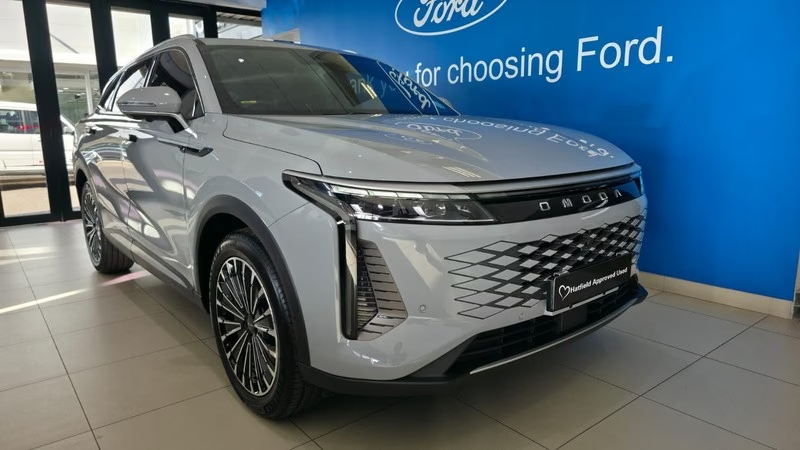
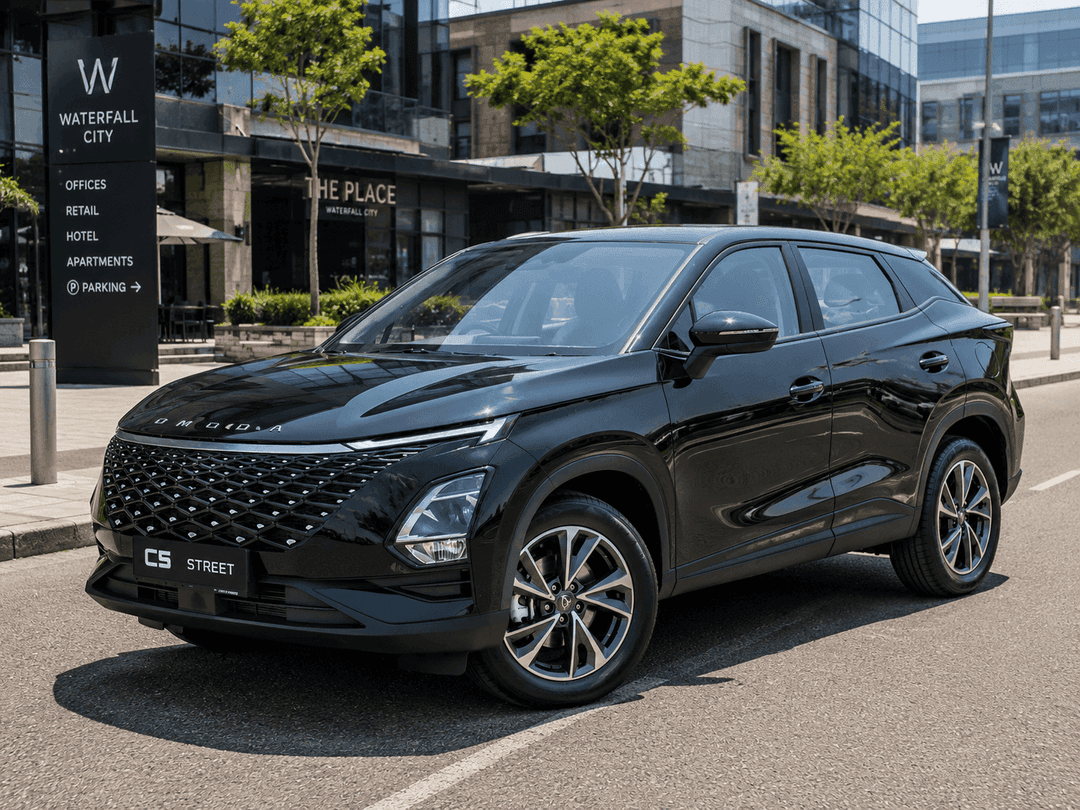
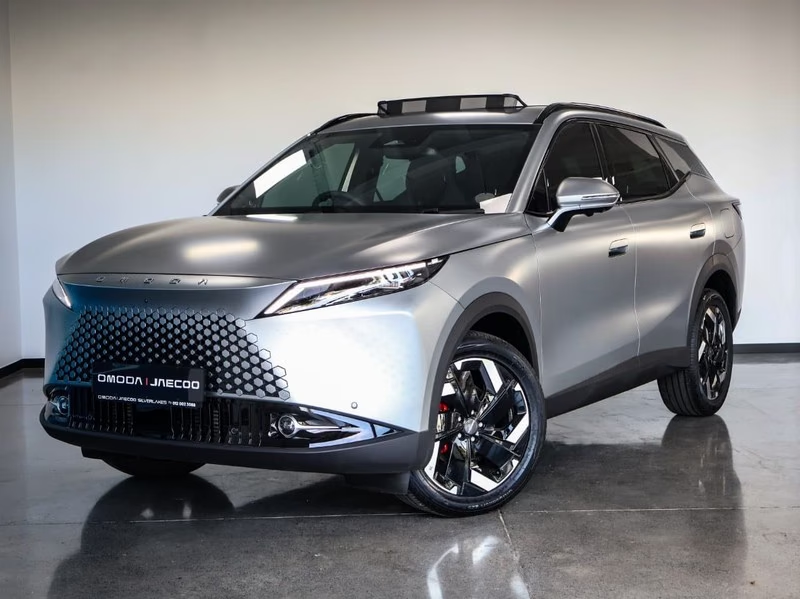
Let me be direct: the C7 doesn’t do subtle. Its shark-nose front and fractured, jewel-like grille create one of the segment’s more assertive shapes, especially beside anonymous crossovers. Some buyers will love it. Others will wince in the Woolworths parking lot. To be honest, that split reaction feels deliberate, helping Omoda separate the C7 from its cheaper Chery relatives.
Proportions and stance
Measuring 4,621 mm long with a 2,720 mm wheelbase, the C7 sits firmly in mid-SUV territory. Full-width lighting appears at both ends, while the SHS flagship gains red brake calipers and sportier alloys to advertise its hybrid status. Crucially, it looks pricier than it is. Challenger brands need that visual confidence before sceptical South Africans will even consider a test drive.
Where it sits in the range
Omoda’s naming can catch you out. Luxury is the base 1.6T, Elegance sits above it, and the SHS plug-in hybrid is the true flagship. Anyone assuming “Luxury” means top specification should study the brochure before visiting the dealer.
Cabin & Practicality
Climb aboard and the C7 commits fully to the large-screen theme now familiar in Chinese SUVs. A 15.6-inch central display commands the dashboard, supported by a 12-speaker Sony audio system on higher trims. Ventilated front seats, ambient lighting and soft-touch materials create immediate showroom appeal, although some lesser plastics reveal themselves once you start prodding below knee level.
Space and seating
Rear legroom benefits from that lengthy wheelbase, allowing adults to sit behind adults without awkward negotiations. ISOFIX mounts cover the family duties these cars will actually perform. Overseas criticism has focused on front seats mounted too high, so spend ten minutes adjusting the driving position before signing. My 1.82 m frame still had around 70 mm of rear knee room behind my preferred seat position.
Boot and the hybrid trade-off
Practicality brings one important wrinkle:
- Petrol-powered C7 models provide 614 litres of boot space, enough for two large suitcases and a folded pram.
- SHS hybrid capacity falls to 537 litres because the 18.4 kWh LFP battery claims valuable packaging room.
- No version includes a spare wheel, which deserves consideration if you regularly tackle gravel or travel long distances.
That omission matters. I once sliced a sidewall on a dirt detour outside Dullstroom, where a repair kit would’ve been useless and mobile reception was patchy. A repair kit cannot solve that problem, so consider your spare-wheel options before leaving the tar.
On the Road
Power comes from a 1.6T producing 110 kW, sent through a seven-speed dual-clutch transmission to the front wheels. Daily performance is adequate rather than startling. Against the 140 kW median of the three alternatives listed below, the C7 concedes roughly 21 percent on power. My estimated 0–100 km/h run took about 10.2 seconds. Properly sufficient, never properly quick.
Around town and on the highway
Stop-start traffic exposes a moment’s hesitation from the DCT, a familiar dual-clutch habit, but shifts smooth out once momentum builds. Once clear of the traffic and heading towards Bloemfontein on the N1, the C7 settled into a quiet, comfortable cruise. It’s the sort of car that makes a long stretch behind the wheel feel less tiring. Wind and tyre noise are commendably contained for the money. Over mixed driving, my observed return settled at 8.1 L/100 km.
Ride and refinement
It is in these conditions that a vehicle’s true character is exposed: patched tar, expansion joints and sudden potholes after summer rain. Softer suspension tuning suits our roads, allowing the C7 to settle quickly after a dip without leaving everyone gently bouncing in their seats. Sharp-edged impacts still arrive with a noticeable thud. Steering remains light and vague, which won’t bother most family buyers but leaves keen drivers wanting more connection.
The SHS hybrid difference
SHS models use a series-parallel arrangement, allowing the engine to generate electricity while the motor handles lighter driving loads. Real-world EV range sits nearer 50 to 75 km, depending on conditions, while DC fast charging to 80 percent in around 20 minutes gives it a useful advantage over AC-only plug-in rivals. Quiet, smooth and effortless, it’s the most appealing way to experience a C7.
Data & Comparison
Price positions the petrol 1.6T for a serious fight, although buyers should compare power, traction and long-term support rather than merely counting screens.
Statistics that matter
- Estimated 5-year total cost of ownership: R230,000.
- Power output: 110 kW, against a median of 140 kW for the three alternatives below.
- Braked towing capacity across the range: 1,250 kg.
- SHS battery capacity: 18.4 kWh LFP, with DC charging to 80 percent in roughly 20 minutes.
How it stacks up
| Model | Power (kW) | Drivetrain | Typical price (ZAR) |
|---|---|---|---|
| Omoda C7 1.6T | 110 | Petrol, FWD DCT | ~R530,000 |
| Haval H6 2.0T 4WD | 175 | Petrol, AWD DCT | R531,376 |
| Mazda CX-30 2.0 e-Skyactiv X | 137 | Petrol, FWD auto | R532,650 |
| Volkswagen T-Roc 2.0 TSI 4MOTION | 140 | Petrol, AWD DSG | R527,243 |
The ownership picture
Omoda answers resale uncertainty, a fair concern around any fresh nameplate, with generous warranty and service cover. Included is a first-owner engine warranty extending to a million kilometres over ten years. Read the “first-owner only” condition carefully. It protects you rather than the next buyer, which deserves mention in any honest residual-value discussion.
The C7’s SUV shape and hybrid option should help its appeal, but neither guarantees strong resale. Omoda’s expanding dealer footprint also makes servicing less daunting than it was for early challenger-brand customers.
Editorial Focus
Does the SHS hybrid justify the extra money?
The SHS makes a convincing equipment argument, combining a large central screen, DC fast charging and a long headline engine warranty. Whether it saves you six figures against another plug-in depends on the specific model, local availability and current pricing. The more useful question is what you get for the extra money over the petrol C7.
There’s a complication the glossy launch material tends to skip. Within Chery’s own stable, the mechanically related Chery Tiggo 7 CSH offers another route into plug-in ownership, while the Jaecoo J7 PHEV deserves a place on the same shortlist. Compare their specifications and prices closely. Some of what you’re paying for in the Omoda is its styling and cabin finish.
My view? The SHS is the range’s most convincing derivative if you can make regular use of its electric range. Its premium over the petrol model makes most sense when you recharge at home and cover much of your daily driving electrically. A commute that fits within the battery’s range gives you a better chance of using that advantage than repeated long runs between Joburg and the coast.
Commute 15 km and never plug in? Buy the 1.6T and keep the difference. Strong value, yes, but the flagship needs to suit your routine.
Verdict
Over my test tenure, the C7 did not disappoint. It’s handsome in a divisive fashion, packed with equipment, comfortable across patched South African tar and priced to make legacy brands uncomfortable. No spare wheel is an avoidable mistake, while resale remains the unanswered question.
Buy it: Family buyers wanting maximum equipment for their rand and willing to trust a young nameplate. Choose the SHS if you charge at home and can use its electric range regularly, or the 1.6T if you don’t.
Shortlist it: Anyone comparing the Haval H6 or VW T-Roc, particularly buyers who value styling, screen space and warranty cover above outright power.
Wait: Residual-value worriers should give the C7 more time in the used market, allowing real resale figures to replace speculation.
Walk away: Frequent gravel-road travellers unwilling to compromise on a spare wheel, along with keen drivers expecting communicative steering.
Summary
Here’s the short version: the 2025 Omoda C7 1.6T offers bold styling, a plush cabin and credible road manners for South African families. Its range includes the SHS plug-in hybrid flagship, which adds a compelling ownership argument.
Ratings
Pros
- ✓Family buyers wanting maximum equipment for their rand and willing to trust a young nameplate.
- ✓Choose the SHS if you charge at home, or the 1.6T if you don’t.