Subaru Forester 2.5i-S ES (2026) Review
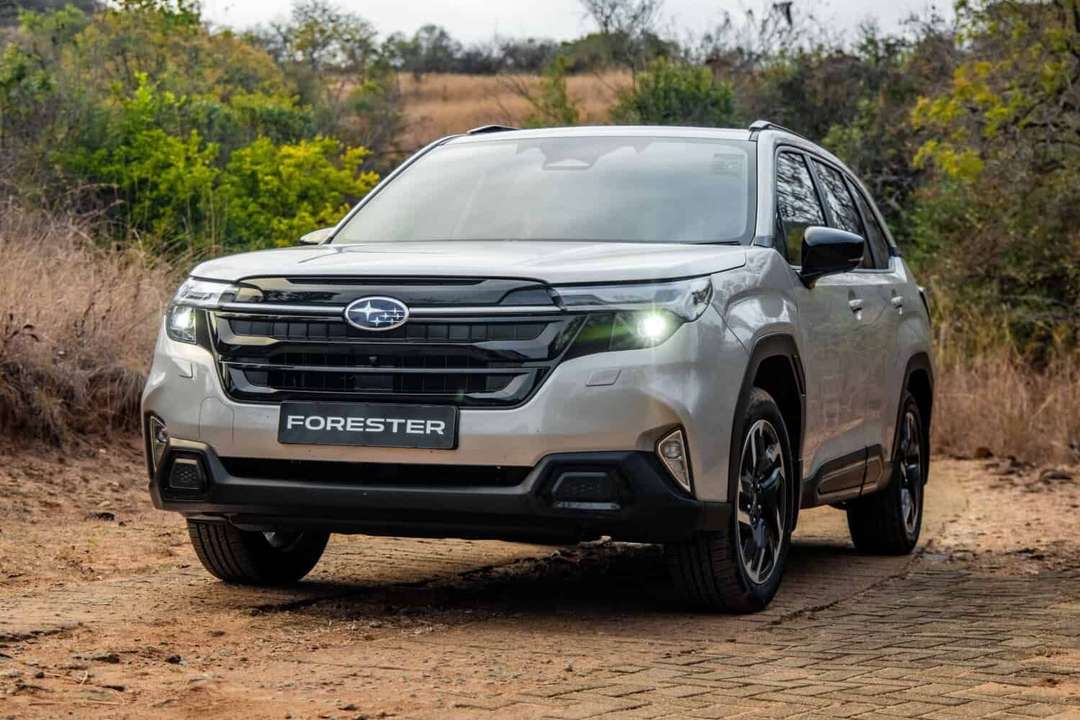
A safe, durable and resale-strong family SUV, ideally suited to gravel country but held back by modest pace and heavy fuel use.
Introduction
If you're considering the 2026 Subaru Forester 2.5i-S ES in South Africa, the verdict is simple. Buy it if standard all-wheel drive, top-notch safety and genuine gravel-road ability matter more than outright performance or class-leading fuel economy.
The latest Subaru Forester remains one of the most capable family SUVs when the tar ends. EyeSight is among the best driver-assistance systems in the segment, Subaru's symmetrical all-wheel-drive system inspires confidence on loose surfaces, and strong resale values help offset ownership costs. It's not particularly quick and it won't set fuel economy records, but if your week includes school runs, long highway trips and the occasional dirt road, the Forester still feels like it was built with exactly that in mind.
Key takeaway: The Forester sacrifices pace and economy for standard AWD, serious safety equipment and gravel-road confidence.
Design & Exterior
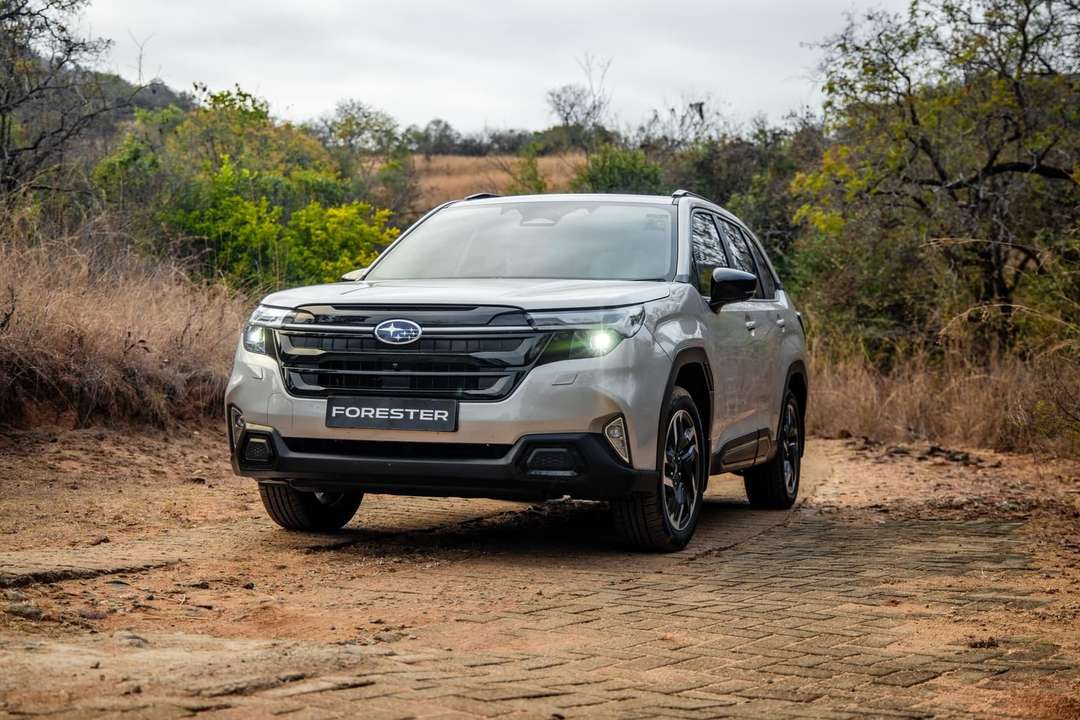
Subaru’s Forester has never chased fashion. Upright, square and slightly agricultural, it remains refreshingly free of sloping-roof nonsense.
Function over flourish
One thing the Forester still gets absolutely right is visibility. The slim pillars and large windows make it incredibly easy to place, whether you're squeezing into a tight basement parking bay or picking your way along a narrow gravel track. You simply don't have to rely on the cameras as much as you do in many modern SUVs.
Its 220 mm of ground clearance is just as useful. It's enough to tackle rough farm roads, washed-out gravel and those oversized speed humps without scraping the underside. It's clearance you'll actually use, not just a number on a spec sheet.
Where does it sit in the segment?
Against a Toyota RAV4 or Hyundai Tucson, the Forester appears taller, plainer and less interested in winning a beauty contest. Useful roof rails, square wheel arches and sensible proportions reveal where Subaru spent its effort. Gravel spray won’t upset it.
Cabin & Practicality
Cabin design favours space and clear controls over plush trim. Nobody will mistake it for a luxury lounge, but family-car fundamentals are strong.
Space and seating
Rear accommodation is generous for a compact SUV. Three adults travelling from Durban to Pietermaritzburg on the N3 shouldn’t mutiny, while the upright roof leaves excellent headroom and the seat bases provide proper support.
- Five seats with unusually good rear knee and headroom for the class
- ISOFIX anchors that are easy to reach through wide rear doors
- A square boot that accepted two full-size prams with space left for soft bags
- A low loading lip that makes heavy luggage less awkward
Materials and controls
Subaru has sensibly retained physical controls. Proper knobs handle climate and volume, saving you from prodding a touchscreen menu while stopped at a robot.
Materials are hard-wearing rather than luxurious, with firm plastics in obvious places. The Outback feels richer, but the Forester is better suited to muddy dogs, sandy children and the normal chaos of family life. Function wins, and that’s the point.
On the Road
Calm inputs suit the Forester. Drive impatiently, and its modest performance soon becomes the loudest part of the experience.
Engine and gearbox
Its 2.5-litre boxer petrol produces 136kW and 247Nm through a Lineartronic CVT. On paper at least, those figures are modest. The claimed 0-100 km/h time is 10.6 seconds, while our repeatable estimate was closer to 11.1 seconds. Overtaking a truck on the N3 at altitude needs planning.
Lineartronic is among the better CVTs, mimicking stepped shifts and keeping revs settled under gentle acceleration. Ask for everything, and it holds high revs, bringing plenty of engine noise into the cabin. Smooth throttle inputs work best.
Ride, refinement and gravel
Ride comfort is a highlight. Supple suspension absorbs broken tar, coarse surfaces and corrugated dirt without making the body feel loose, while highway cruising remains composed.
Loose surfaces reveal the Forester’s advantage. Permanent symmetrical AWD drives all four wheels continuously instead of waiting for the fronts to slip, which brings reassuring traction on wet district gravel below Sani Pass. X-Mode and hill-descent control help on steeper, looser sections.
Some tyre and engine noise still reaches the cabin, especially across coarse N1 tar. It isn’t hushed, although the pay-off is rough-road ability that most road-biased crossovers cannot match.
Data & Comparison
Here’s the awkward bit. Fuel costs and pricing require context before the Forester’s value argument starts making sense.
Pricing and ownership
Current listing pricing for the 2.5i-S ES starts from R790 000, while broader local listings range from R149 900 for older used examples to R529 800 for the freshest top-spec cars. In Forester price South Africa terms, the spread matters. Clean cars remain expensive, whether you shop privately, through CMH Subaru or at a large used-car retailer.
- Claimed combined fuel economy: 7.6 L/100km
- Observed mixed-road fuel return: 9.4 L/100km
- 60-litre fuel tank, providing reasonable touring range despite the thirst
- CO2 emissions: 168.5 g/km
- Top speed: 192 km/h
- Projected 3-year residual value: around R529 800 for a strong example
- Estimated 5-year total cost of ownership: roughly R230 000
Strong residuals are central to the ownership case. Subaru buyers tend to know exactly what they want, keeping demand healthy for tidy used examples with complete service histories.
How it stacks up
| Spec | Forester 2.5i-S ES | Toyota RAV4 | Subaru Outback |
|---|---|---|---|
| Power | 136kW | Hybrid, typically stronger | Turbo option available |
| Drivetrain | Standard symmetrical AWD | AWD optional | Standard symmetrical AWD |
| Ground clearance | 220 mm | Lower | Lower ride, longer body |
| Fuel economy | 7.6 L/100km claimed | Better (hybrid) | Similar to Forester |
| Cabin plushness | Functional | Feature-rich | More refined |
Read the table and the split is obvious. Forester buyers get standard traction, better clearance and superb visibility; the RAV4 counters with hybrid efficiency, while the Outback provides greater refinement and space.
Editorial Focus
Let’s address the real question: what does Subaru offer here that the RAV4 and Outback cannot easily copy?
EyeSight comes first. Its camera-based safety suite includes adaptive cruise control, lane keeping and a driver-incapacitation function that can stop the vehicle and activate the hazards if you become unresponsive. That supports the Forester’s claim as one of the safest family SUV options in its bracket. There is a catch. Driver monitoring can nag, and it once warned me merely for glancing at the climate controls. Secondary alerts can be reduced before departure.
Then there’s symmetrical AWD. Unlike reactive systems that send drive rearwards only after detecting slip, Subaru’s setup powers all four wheels permanently. On wet gravel or muddy Free State farm roads, that immediate traction is the important difference.
Downsides remain. Our 9.4 L/100km observed return shows why the 7.6 L/100km claim deserves scepticism, and performance is modest. Against the RAV4, you lose hybrid economy and pace but gain standard AWD. Compared with the Outback, you sacrifice polish and its turbo option for a shorter, higher-riding body. No battery choices or DC charging speeds apply here because the local 2.5 is petrol-only, which leaves Subaru without an electrified answer for cost-conscious South Africans. The local specification is sensible, but the engine line-up feels incomplete.
Safety rating
ANCAP · tested 2024
★★★★★ 5/5 adult occupant
Australian-market RHD rating — indicative for SA only where the SA derivative matches the tested safety spec (airbags/ESC/AEB). Official factsheet.
Verdict
If you're shopping for a Subaru Forester in South Africa, it's an easy SUV to recommend if your weekends often take you beyond the tar. Standard symmetrical all-wheel drive, 220 mm of ground clearance and Subaru's excellent EyeSight safety system make it one of the most capable family SUVs in its class. Strong resale values are another bonus over the long term.
If most of your driving is confined to the city, though, rivals like the hybrid Toyota RAV4 make more sense thanks to their stronger performance and lower fuel consumption.
The 2026 Subaru Forester is a better, more complete SUV than before. It remains practical, comfortable and hugely confidence-inspiring on gravel roads, but the naturally aspirated 2.5-litre engine is starting to show its age. An e-Boxer or hybrid model would make a compelling package. Until then, the Forester remains a genuinely capable family SUV that's held back only by its thirst.
Summary
A full review of the 2026 Subaru Forester 2.5i-S ES for South African buyers, including symmetrical AWD, EyeSight safety, real-world fuel use, CVT behaviour and comparisons with the Toyota RAV4 and larger Subaru Outback.