Mazda CX-30 2.0 Active Auto (2026) Review

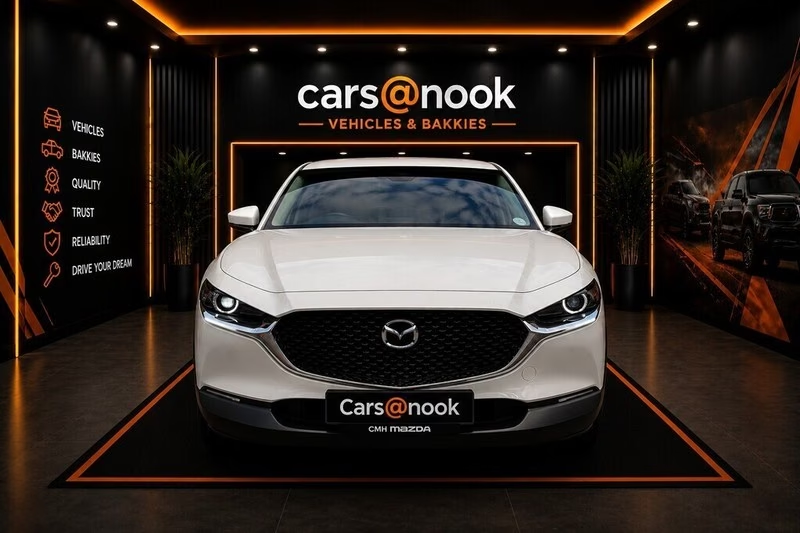
A beautifully built and genuinely enjoyable crossover, trading outright space and power for a premium character few similarly priced rivals can match.
Introduction
The Mazda CX-30 makes a fairly convincing argument for itself if you appreciate a beautifully finished cabin, excellent driving manners and a crossover that feels a little more special than the usual family SUV. The compromise comes in the form of average luggage space and a naturally aspirated engine that needs to work harder than many of the turbocharged alternatives in this segment.
Its biggest strength is that it manages to deliver an almost premium experience without immediately pushing buyers into premium-brand money. That remains important in a South African compact-SUV market where Chinese manufacturers continue arriving with more power, larger screens and lengthy equipment lists.
Mazda takes a different approach. Rather than trying to overwhelm you with specifications, the CX-30 relies on refinement, tactility and the way it drives. After spending a long Highveld week with it, there is still plenty to like about that philosophy.
Key takeaway: Cabin quality and driving enjoyment remain two of the CX-30's strongest attributes, although outright space and performance are not class-leading. For the right buyer, that remains a fair compromise.
Design & Exterior
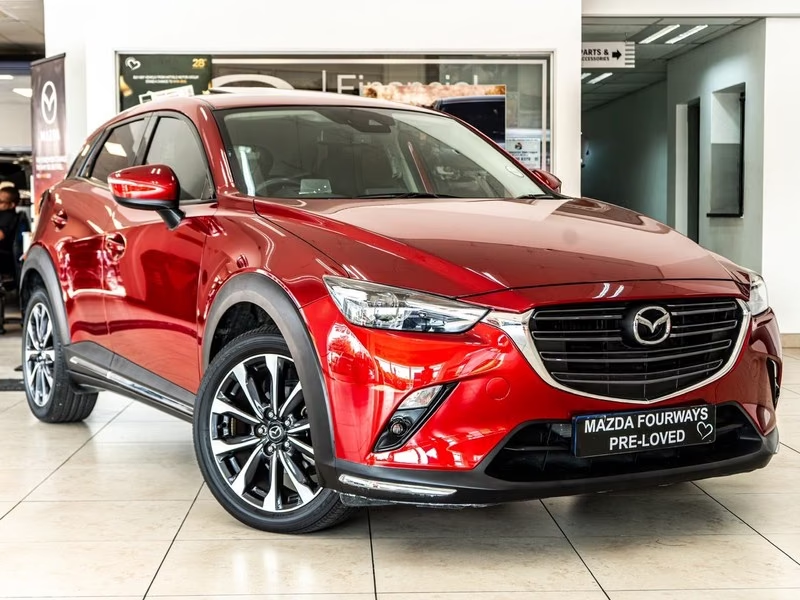
Mazda's KODO design language has aged exceptionally well, and the CX-30 is perhaps one of the better examples of why.
While many of its competitors have turned towards oversized grilles, exaggerated creases and unnecessary vents, the Mazda remains refreshingly clean. Its surfaces are simple, the proportions are balanced and the bodywork has a way of catching the late-afternoon Highveld light that makes the vehicle appear considerably more expensive than it is.
Park it alongside something like a Haval Jolion and there is a noticeable difference in approach. The Haval is more dramatic, while the Mazda feels more restrained and mature.
From the side, the CX-30 carries a gently coupe-like roofline that adds to the styling but inevitably removes some practicality from the equation. The wheel-arch cladding gives it enough crossover character without making it look like a hatchback desperately trying to convince everyone it is an SUV.
It is one of those designs that should continue ageing well precisely because Mazda resisted the temptation to chase every current styling trend.
Cabin & Practicality
This is where the CX-30 really begins justifying itself.
The quality of the dashboard materials, the padding on the doors and even the weight behind the switches all create an impression of something more expensive. There is a solidity to the cabin that many vehicles around this price point still struggle to replicate.
The driving position is equally impressive. During an extended run on the N3, including rough tar, toll plazas and several uninterrupted hours behind the wheel, the seats remained supportive and comfortable.
Materials and ergonomics
Mazda continues to use its rotary controller for the infotainment system rather than relying entirely on touchscreen operation, and I actually prefer the approach once the vehicle is moving.
At 120 km/h, twisting a controller without taking your eyes off the traffic feels considerably more natural than trying to hit a small icon on a touchscreen.
There are still some areas that remind you this is not a true premium product. The gloss-black trim quickly collects fingerprints, while I noticed a faint creak when entering a particularly sharp driveway.
Neither was enough to detract significantly from what remains one of the better assembled interiors in this segment.
Space for people and luggage
Practicality is where the CX-30 begins giving some ground back to its rivals.
That attractive roofline compromises rear headroom slightly, while luggage capacity is more average than outstanding. Two adults sitting behind another two adults should be perfectly comfortable, but asking three grown passengers to spend several hours across the rear bench between Johannesburg and Durban would be ambitious.
- Rear-seat space: Comfortable enough for two adults, although things become considerably tighter with three aboard.
- Boot: Average for the segment, with the sloping roofline limiting the ability to carry taller or bulkier items. During my test, two 75-litre travel bags fitted beneath the luggage cover.
- ISOFIX: Child-seat mounting points are fitted to both outer rear seats.
On the Road
South African roads are particularly good at exposing a vehicle's weaknesses. Smooth sections of the N1 can quickly give way to broken provincial roads, potholes and corrugated gravel, and the CX-30 handles that mixture particularly well.
The engine reality at altitude
The 2.0-litre e-Skyactiv G petrol engine produces approximately 121 kW and sends power to the front wheels through a six-speed automatic transmission.
The engine is smooth, predictable and easy to live with, but there is no escaping the fact that it needs to be worked.
That becomes more noticeable on the Highveld, where naturally aspirated engines do not enjoy the same altitude compensation as their turbocharged counterparts. Joining a fast-moving N1 with passengers and luggage aboard therefore requires a firmer right foot than you might initially expect.
My estimated 0-100 km/h run took around 10.4 seconds.
Push the engine hard and it becomes slightly vocal, but once the vehicle settles into a cruise, the drivetrain feels much happier. Overtaking simply requires a little more planning than it would in some of the turbocharged competition.
Chassis and refinement
The steering remains one of the CX-30's best attributes.
There is a natural weight to it, the responses are predictable and the front tyres communicate what is happening beneath them far better than many vehicles in this class.
On a corrugated gravel section near Magaliesburg, chosen specifically because roads like this quickly reveal suspension noise and poor body control, the CX-30 remained impressively composed. The suspension absorbed the worst of the surface without crashing through potholes or sending unnecessary vibrations into the cabin.
Broken tar brings out the same maturity.
At one point I found myself taking the longer R21 interchange simply because the CX-30 felt so settled and enjoyable through the corners. That probably explains the Mazda better than any specification sheet can.
Data & Comparison
Two areas ultimately shape the CX-30's value proposition.
Fuel consumption is respectable rather than exceptional, while its naturally aspirated engine gives away some outright performance to the increasingly common turbocharged alternatives.
The approximately 121 kW output is competitive enough for normal driving but no longer stands out in a class where turbocharged engines have become increasingly common.
A projected five-year total cost of ownership of around R230 000 keeps the CX-30 competitive once its aftersales cover is included in the equation.
During my test, I recorded approximately 68 dB inside the cabin at 120 km/h on smooth N1 tar, which supports the sense of refinement you initially notice when climbing inside.
How it stacks up
| Model | Power | Avg price (R) | Fuel |
|---|---|---|---|
| Mazda CX-30 2.0 e-Skyactiv G | ~121 kW | See dealer | Petrol |
| Jetour Dashing 1.5 TGDI DCT | ~125 kW | 465,233 | Petrol |
| Haval Jolion 1.5T DCT | ~105 kW | 460,820 | Petrol |
| Mini Countryman JCW ALL4 | ~228 kW | 459,695 | Petrol |
The newer challenger brands demonstrate exactly how competitive this segment has become. Vehicles such as the Jetour Dashing and Haval Jolion offer substantial specification, turbocharged performance and aggressive pricing.
Anybody searching Mazda CX-30 for sale listings will therefore quickly realise that Mazda cannot compete purely by counting features.
Instead, the CX-30 counters with a better resolved driving experience, high cabin quality and the familiarity of an established dealer network. Whether that matters more than outright equipment will depend entirely on the buyer.
Aftersales and search demand
Mazda backs the CX-30 with a five-year, unlimited-kilometre warranty, five years of roadside assistance, a five-year anti-perforation warranty and a standard service plan.
That ownership protection is increasingly important because newer brands have made lengthy warranty and service packages a central part of their South African strategy.
Pricing varies according to derivative, so buyers should compare written quotations from more than one dealer rather than concentrating purely on the advertised monthly instalment.
SUV demand also continues to make this one of the most competitive parts of the market, which means the CX-30 will face an increasing number of rivals offering more equipment for similar money.
Safety equipment
The CX-30 is equipped with seven airbags, including a driver's knee airbag, along with ABS, electronic brake-force distribution and stability control.
Its generation also achieved a five-star Euro NCAP result with particularly strong adult-occupant protection.
Where buyers need to pay attention is the exact driver-assistance specification of the derivative being considered. Equipment such as adaptive cruise control and more advanced lane assistance is not necessarily standard throughout the range.
Check the individual specification sheet rather than assuming every CX-30 comes with the same ADAS package.
Editorial Focus
Does the premium-feel argument survive Corolla Cross money?
This is probably the most important question surrounding the CX-30.
The Toyota Corolla Cross has become one of the default choices in this part of the South African market because it offers space, practicality, familiarity and, depending on derivative, hybrid efficiency.
The Mazda takes a different route.
Spend a week inside the CX-30 and the difference in cabin presentation becomes obvious. The seats, switchgear, dashboard materials and overall ambience create the impression of something from a more expensive segment.
The steering also gives the driver considerably more involvement than most buyers probably expect from a compact crossover.
That extra polish comes with compromises, though.
The Corolla Cross provides more useful rear accommodation, greater luggage versatility and the option of a hybrid drivetrain that makes considerable sense during stop-start Johannesburg traffic.
Technology and driver-assistance equipment can also favour the Toyota depending on the derivatives being compared.
So yes, the CX-30 can deliver a premium-feeling experience at roughly Corolla Cross money, but that does not automatically make it the better choice for everyone.
If the quality of the cabin, steering response and overall driving experience matter more to you than maximum boot capacity, the Mazda begins making plenty of sense.
If the vehicle's primary role involves family logistics, carrying plenty of luggage and chasing the lowest possible fuel consumption, something like the Corolla Cross becomes easier to justify.
Verdict
The Mazda CX-30 did not disappoint during my time with it.
It remains one of the more enjoyable vehicles to drive in a segment that increasingly prioritises screens, specification sheets and practicality above everything else. Its beautifully finished cabin also succeeds in making the vehicle feel considerably more expensive than it is.
There are compromises.
The naturally aspirated engine requires more effort than the increasingly common turbocharged alternatives, luggage capacity is merely average and some rivals offer more comprehensive driver-assistance equipment.
None of those completely undermines the CX-30, because its strengths lie elsewhere.
This is a crossover for somebody who still cares about how a steering wheel feels in their hands, how a switch operates and how a vehicle settles into a corner.
- Buy it: If you want near-premium cabin quality, rewarding handling and excellent long-distance comfort without immediately paying for a premium badge.
- Shortlist it: If you are also considering a Toyota Corolla Cross or Haval Jolion. Drive all three before deciding whether driving quality, practicality or outright specification matters most.
- Wait: If the latest driver-assistance technology is essential to you, because equipment varies according to derivative and some newer competitors provide more.
- Walk away: If every buying decision starts and ends with boot capacity, outright performance and fuel consumption. There are roomier and more efficient alternatives.
Summary
A South African take on the 2.0 e-Skyactiv G Mazda CX-30, from cabin quality and long-distance manners to ownership costs and Corolla Cross-rivalling value. It suits buyers chasing near-premium polish without paying for a German badge.
Ratings
Pros
- ✓If you want near-premium ambience, rewarding handling and long-distance comfort without paying for a German badge, and you don't need the segment's largest boot.