Haval H6 vs Toyota RAV4: Half the Price, Same Family SUV?

Choose the Haval H6 2.0T Super Luxury DCT (R542 500, verified September 2026) if monthly repayments and standard equipment sit at the top of your list.
Haval H6 vs Toyota RAV4: Half the Price, Same Family SUV?
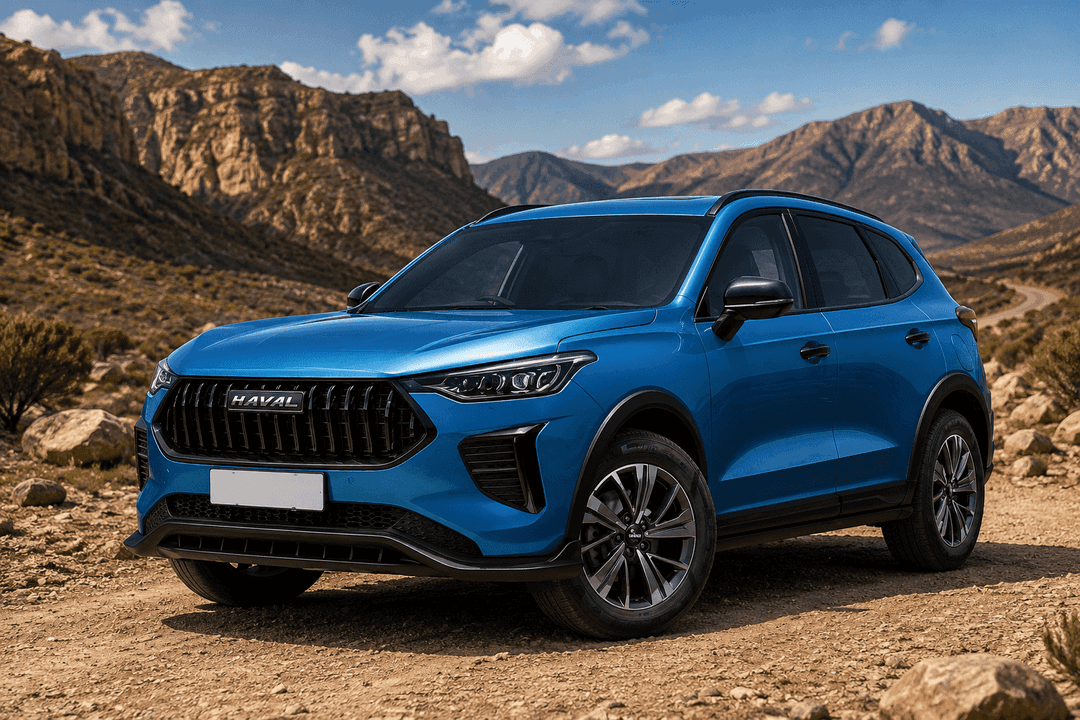
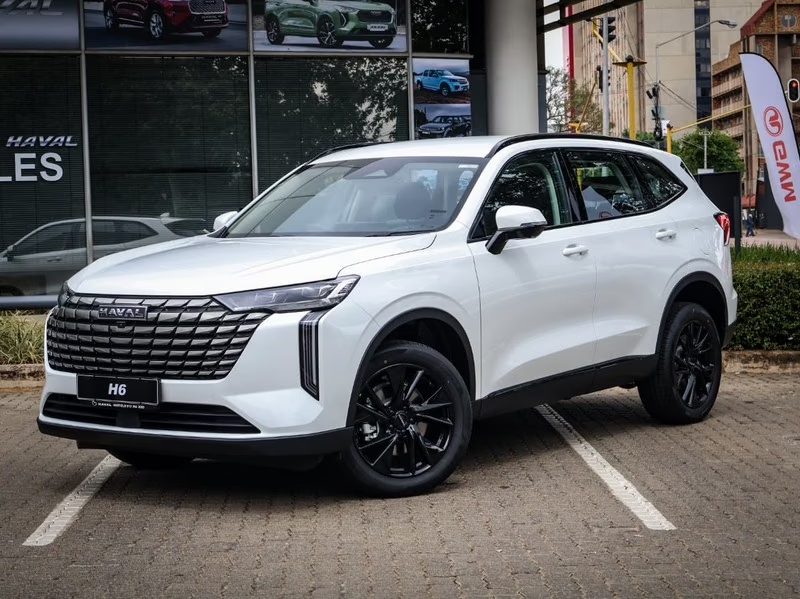
Look, the biggest difference between these two family SUVs is obvious before either leaves the showroom. The Haval H6 2.0T Super Luxury 9DCT costs R542 500, while the new Toyota RAV4 range starts at R770 500. That leaves R228 000 between them.
For many South African families, that is enough money to settle the argument immediately. The H6 counters Toyota's reputation with a powerful 2.0-litre turbocharged engine, plenty of standard equipment and one of the stronger warranty packages in the segment. Toyota's case rests on hybrid efficiency, its established dealer network and the RAV4's long history in the local market.
This Haval H6 vs Toyota RAV4 comparison therefore comes down to how much value you place on the R228 000 saving against Toyota's hybrid drivetrain and established ownership ecosystem.
The verdict: which should you buy?
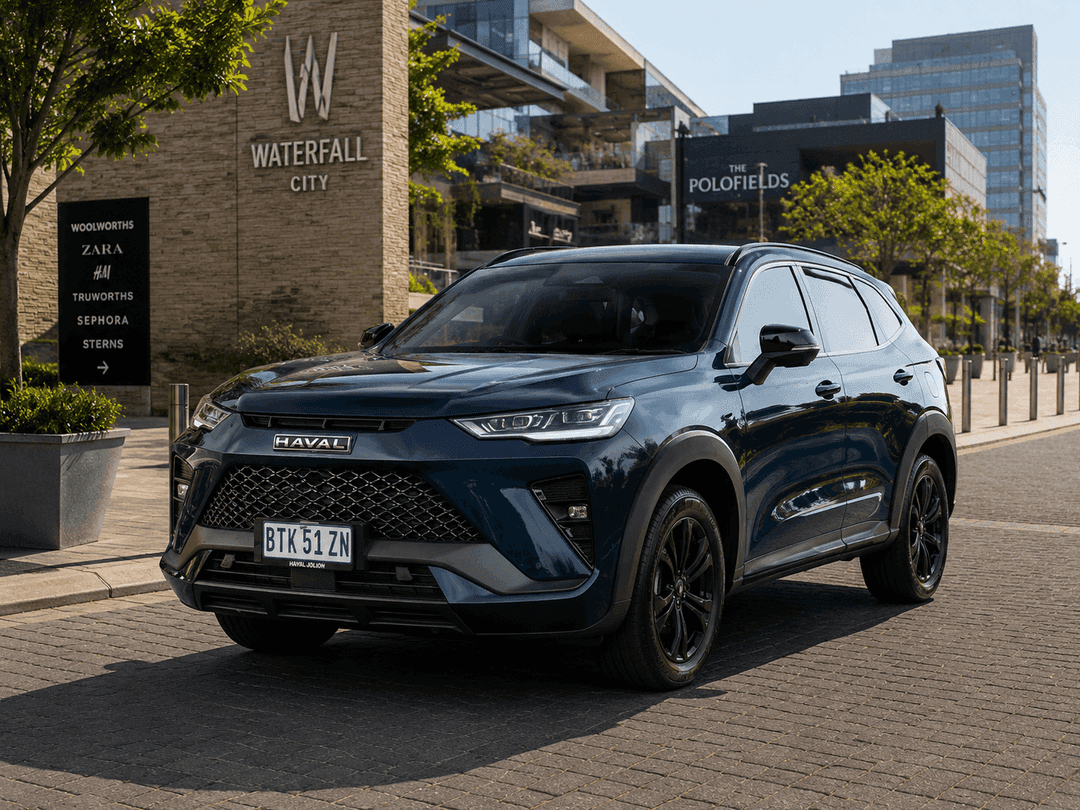
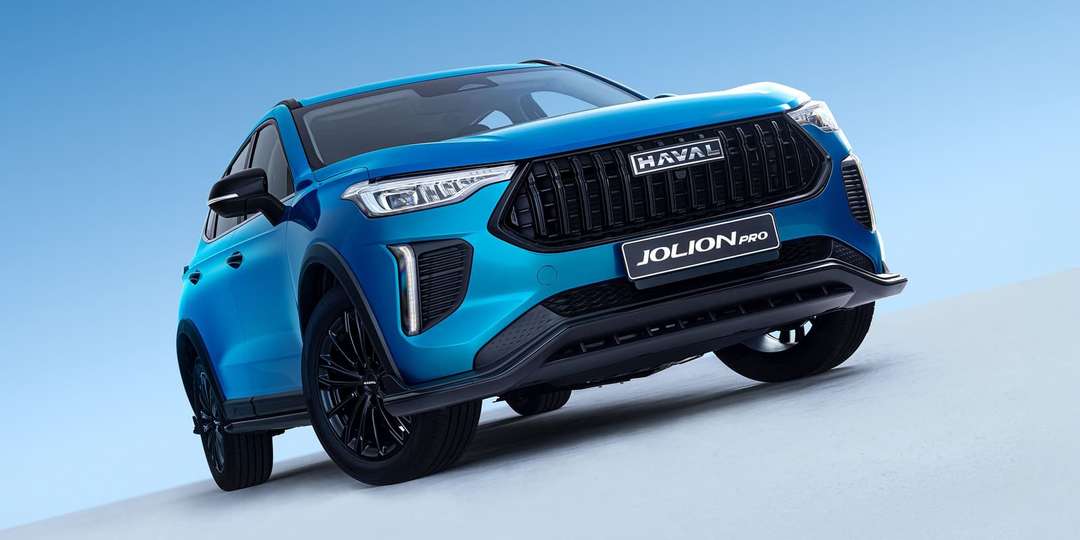
The Haval H6 2.0T Super Luxury 9DCT makes sense for buyers looking to maximise the amount of SUV they receive for their money. At R542 500, it costs R228 000 less than the RAV4's R770 500 starting price while producing 170 kW and 380 Nm from its 2.0-litre turbocharged petrol engine.
Importantly, the Super Luxury compared here is front-wheel drive. The original article incorrectly listed it as AWD. Haval reserves four-wheel drive for other derivatives in the range.
Toyota takes a different approach with the new RAV4. The South African range has moved into a new generation for 2026, with hybrid power playing a central role. Its higher purchase price therefore needs to be considered alongside potential fuel savings, Toyota's established national support network and the RAV4's long local history.
The R228 000 difference remains difficult to ignore. Haval gives buyers considerably more room in the household budget at purchase, while Toyota asks buyers to spend significantly more upfront for the hybrid proposition and established ownership ecosystem.
Best suited to the Haval H6: value-conscious families wanting specification and performance without spending close to R800 000.
Best suited to the Toyota RAV4: buyers specifically wanting Toyota's hybrid technology and established ownership network and who can accommodate the considerably higher purchase price.
Quick verdict table
| Category | Haval H6 | Toyota RAV4 |
|---|---|---|
| Price | R542 500 | From R770 500 |
| Price difference | R228 000 cheaper | — |
| Powertrain | 2.0T petrol | 2.5 HEV |
| H6 output | 170 kW/380 Nm | — |
| Transmission | 9-speed DCT | Electrified transmission |
| H6 drivetrain | 2WD | Confirm exact derivative |
| Fuel strategy | Conventional turbo petrol | Hybrid |
| Warranty | 7-year/200 000 km | Confirm current RAV4 terms |
| Service plan | 7-year/75 000 km | Confirm current derivative |
| Primary strength | Price, performance and equipment | Hybrid efficiency and established support |
Specifications
The Haval specifications below refer specifically to the H6 2.0T Super Luxury 2WD 9DCT. The Toyota column refers to the new-generation 2.5 HEV GX currently advertised in South Africa.
| Specification | Haval H6 2.0T Super Luxury | Toyota RAV4 2.5 HEV GX |
|---|---|---|
| Engine | 2.0-litre turbo petrol | 2.5-litre petrol hybrid |
| Power | 170 kW | Confirm current SA specification |
| Torque | 380 Nm | Confirm current SA specification |
| Transmission | 9-speed DCT | Hybrid transmission |
| Drive | Front-wheel drive | Confirm current derivative |
| Fuel | Petrol | Petrol-electric hybrid |
| Length | 4 703 mm | Confirm current specification |
| Width | 1 886 mm | Confirm current specification |
| Height | 1 730 mm | Confirm current specification |
| Wheelbase | 2 738 mm | Confirm current specification |
| Seats | 5 | 5 |
| H6 warranty | 7-year/200 000 km | Confirm current specification |
| H6 service plan | 7-year/75 000 km | Confirm current specification |
| Price | R542 500 | From R770 500 |
The most important correction concerns the Haval. It does not produce 238 hp as stated in the original article. GWM South Africa specifies 170 kW and 380 Nm.
It is also not all-wheel drive in Super Luxury specification. The R542 500 derivative is a 2WD model using GWM's nine-speed dual-clutch transmission.
Performance and driving experience
| Driving factor | Haval H6 | Toyota RAV4 |
|---|---|---|
| Urban driving | 2.0T/9DCT | Hybrid advantage in traffic |
| Daily commuting | Strong 170 kW output | Hybrid-focused |
| Long-distance | 380 Nm useful for overtaking | Hybrid touring ability |
| Overtaking | Strong turbo output | Electrified assistance |
| Rear suspension | Multi-link independent | Confirm current specification |
| Steering | Electric assistance | Electric assistance |
| Highveld driving | Turbocharged | Hybrid |
| Drive | Front-wheel drive | Confirm exact derivative |
The H6's 170 kW and 380 Nm give it healthy outputs for a family SUV at this price.
Its nine-speed dual-clutch transmission is also an important change from previous versions of the H6. Buyers moving from an older H6 should therefore not assume the new vehicle behaves identically.
The original article's estimated 8.6-second 0-100 km/h run on the N1 has been removed because there is insufficient supporting evidence to present it as a measured test result.
The same applies to claims about gearbox behaviour observed during a specific test tenure.
On specification alone, the Haval offers plenty of performance for a R542 500 family SUV. The RAV4's argument is less about outright turbocharged performance and more about the efficiency and response associated with its hybrid drivetrain.
Unique South African buying factors
Which handles South African potholes better?
Both are family SUVs with independent suspension systems designed primarily for road use.
The H6 uses MacPherson independent front suspension and multi-link independent rear suspension. Its 19-inch wheels mean buyers should pay attention to tyre replacement prices and sidewall profile.
Suspension design alone does not establish which vehicle will survive potholes better.
A severe pothole can damage the tyre, wheel, alignment or suspension of either vehicle.
Ground clearance for everyday obstacles
Both are SUVs intended to cope comfortably with ordinary ramps, speed humps and maintained gravel roads.
Exact current ground-clearance specifications should be confirmed against the respective South African model sheets before publication.
Neither should automatically be treated as a serious off-roader simply because it wears an SUV body.
The H6 Super Luxury in this comparison is front-wheel drive.
Which is the bigger hijack target?
There is insufficient reliable model-specific evidence to state that either the H6 or RAV4 is inherently the greater hijacking risk.
Popularity does not automatically establish individual theft probability.
Insurance companies calculate risk using factors including location, driver history, repair cost, vehicle value and theft data.
Obtain comparable insurance quotations for both and establish whether an approved tracking system is required.
Long-holiday-trip ability
Both should comfortably handle the type of long-distance family travel expected of a mid-size SUV.
The H6's 380 Nm provides useful flexibility when carrying passengers and luggage, while its turbocharger helps maintain performance at Highveld altitude.
The Toyota's hybrid drivetrain should become particularly useful where a journey includes significant urban or stop-start driving.
The original claim that the RAV4 leaves its occupants fresher after a specific 500 km coastal trip has been removed because the draft provides no supporting test evidence for that journey.
Battery and electrical resilience
The H6 uses a conventional petrol drivetrain and 12V electrical system.
The RAV4 is a self-charging hybrid. It does not require a plug or home charging point for normal operation, so load-shedding does not prevent the vehicle from being used or refuelled.
Its high-voltage battery forms part of the hybrid system and should not be confused with the conventional 12V battery fitted to both vehicles.
Confirm the current battery warranty applicable to the new-generation South African RAV4.
Tyre cost and availability
The H6 2.0T Super Luxury uses 225/55 R19 tyres.
That is useful information to have before purchase because replacing four 19-inch tyres can become a meaningful ownership expense.
Check current prices from several tyre retailers rather than relying on generic estimates.
Do the same with the RAV4's exact tyre specification before ordering.
Real-world fuel economy
The RAV4's hybrid architecture should provide its greatest efficiency advantage in urban and mixed driving, where regenerative braking and electric assistance can reduce petrol consumption.
The H6 relies entirely on its 2.0-litre turbocharged petrol engine.
The original article's claimed 7.1 L/100 km observed H6 consumption has been removed because there is insufficient supporting information to present it as a verified test result.
Actual consumption for either vehicle will depend on traffic, altitude, load, speed and driving style.
Gravel-road durability
Both should manage maintained gravel roads without difficulty when driven appropriately.
The H6 Super Luxury is front-wheel drive, so the original article should not imply that it carries an AWD advantage.
The RAV4's exact drivetrain needs to be confirmed before making equivalent AWD claims.
Neither vehicle should be treated as a replacement for a proper low-range 4x4 on difficult terrain.
Insurance reality
The R228 000 difference in purchase price may affect replacement value, but that does not automatically mean the Haval will be R228 000 cheaper to insure proportionally.
Insurers consider repair costs, theft risk, claims data, driver profile and location.
Get like-for-like written quotations before purchase.
Parts availability beyond major cities
Toyota has a long-established South African dealer and parts network.
GWM has also built a substantial national presence after many years in the local market, so describing Haval as having a newly established dealer network is no longer particularly accurate.
The practical question is whether either manufacturer has authorised support near where the owner lives and travels.
Buyers outside the major metropolitan areas should check that before purchase.
Running costs
This is where the two vehicles begin to separate.
The H6 costs R228 000 less upfront, an enormous difference at this end of the market.
Toyota's hybrid drivetrain should reduce fuel consumption, particularly in urban use, but fuel savings need to be substantial to recover a R228 000 initial difference.
Haval also includes a seven-year/200 000 km warranty, seven-year/75 000 km service plan and seven years of unlimited-kilometre roadside assistance.
That means the H6's ownership proposition cannot simply be reduced to "cheap to buy but expensive afterwards".
Toyota's long-established dealer network and hybrid experience remain meaningful advantages, but the actual five-year cost needs to be calculated rather than assumed.
Five-year ownership
Assume 20 000 km annually, giving 100 000 km over five years.
| Item | Haval H6 | Toyota RAV4 |
|---|---|---|
| Purchase price | R542 500 | From R770 500 |
| Initial difference | R228 000 cheaper | — |
| Fuel | Turbo petrol | Hybrid |
| Service plan | 7-year/75 000 km | Confirm current terms |
| Warranty | 7-year/200 000 km | Confirm current terms |
| Insurance | Quote required | Quote required |
| Resale | Requires current valuation data | Requires current valuation data |
| Five-year TCO | Requires calculation | Requires calculation |
The original R230 000 five-year TCO figure for both vehicles has been removed.
It is not credible to assign identical ownership costs without accounting for depreciation, finance, insurance, fuel, scheduled maintenance, tyres and unscheduled repairs.
Fuel savings alone also cannot be assumed to erase a R228 000 purchase difference.
A proper five-year calculation requires actual fuel consumption, annual mileage, finance terms, insurance quotations and expected residual values.
Hidden ownership costs
Both vehicles introduce different potential ownership expenses.
The H6 uses a turbocharged petrol engine and nine-speed dual-clutch transmission. Correct servicing is therefore important, but that does not mean turbocharger or transmission failure should be predicted.
The RAV4 introduces a high-voltage hybrid battery and associated hybrid hardware, but Toyota has extensive experience with this technology.
Other expenses common to both include windscreens, tyres, brake components, 12V batteries, replacement keys and potential ADAS recalibration following certain repairs.
Obtain actual quotations rather than relying on generic estimates.
Repairability
| Aspect | Haval H6 | Toyota RAV4 |
|---|---|---|
| Local brand history | Established | Long established |
| Engine | 2.0T petrol | 2.5 hybrid |
| Transmission | 9DCT | Hybrid transmission |
| Electronic complexity | High | High |
| Dealer support | National network | Extensive national network |
| Warranty | 7-year/200 000 km | Confirm current model |
| Service plan | 7-year/75 000 km | Confirm current model |
Toyota has the longer local history and larger established support ecosystem.
That does not mean a new H6 should automatically be described as unreliable or difficult to repair.
GWM has operated in South Africa for many years and the H6 is an established product locally.
Reliability timeline
Predicting specific failures according to mileage is not supported by credible comparative failure-rate data.
| Mileage | Haval H6 | Toyota RAV4 |
|---|---|---|
| 0–20 000 km | Follow scheduled servicing | Follow scheduled servicing |
| 20 000–50 000 km | Maintain complete history | Maintain complete history |
| 50 000–100 000 km | Inspect normal wear items | Inspect normal wear items |
| 100 000–150 000 km | Condition/history increasingly important | Condition/history increasingly important |
| 150 000 km plus | Long-term condition becomes critical | Long-term condition becomes critical |
The new H6's nine-speed DCT has less local high-mileage history than Toyota's established hybrid technology.
That is a lack of long-term evidence, not evidence that the transmission will fail.
Real owner sentiment
Haval H6
Equipment, interior presentation and value remain central to the H6's appeal. The latest model also brings a more powerful 170 kW/380 Nm engine and nine-speed DCT.
Toyota RAV4
The RAV4 has a considerably longer history in South Africa and Toyota's hybrid technology is well established internationally.
The new-generation 2026 vehicle is, however, new enough that long-term owner conclusions about this specific model should not simply be copied from the outgoing generation.
Owner feedback should be treated as sentiment rather than scientific reliability evidence.
Buyer regret index
| Consideration | Haval H6 | Toyota RAV4 |
|---|---|---|
| Purchase price | R542 500 | From R770 500 |
| Price difference | R228 000 cheaper | R228 000 more |
| Engine output | 170 kW/380 Nm | Confirm current system output |
| Fuel strategy | Turbo petrol | Hybrid |
| Service plan | 7-year/75 000 km | Confirm current model |
| Dealer reach | Established | Extensive |
| Insurance | Quote required | Quote required |
| Resale | Obtain valuation | Obtain valuation |
Boot reality test
Both are five-seat family SUVs designed to handle ordinary household luggage.
The original article's claims about specific luggage configurations have been removed because they were not supported by a documented luggage test.
Before buying, physically test your own pram, wheelchair, golf clubs, cooler boxes or holiday luggage.
A quoted litre figure does not always describe how useful the actual shape of a load bay will be.
Cabin and practicality
The H6 measures 4 703 mm long, 1 886 mm wide and 1 730 mm high, with a 2 738 mm wheelbase.
Those dimensions make it a substantial family SUV.
Its Super Luxury specification also provides the type of equipment buyers increasingly expect at this price, including a large infotainment display and an extensive convenience specification.
The new RAV4 remains a five-seat family SUV, but its exact current dimensions and equipment should be taken from Toyota's new-generation South African specification rather than recycled from the outgoing model.
Cabin noise
Without controlled decibel measurements under identical conditions, there is no basis for declaring either vehicle significantly quieter.
The RAV4 hybrid can operate briefly without its petrol engine running under appropriate conditions, giving it an inherent advantage at very low speeds.
Under stronger acceleration, hybrid powertrains can hold engine speed as the transmission manages power delivery.
The H6's turbocharged engine and nine-speed DCT operate more conventionally.
These characteristics should be assessed during a back-to-back test drive.
Technology
The H6 Super Luxury is generously equipped.
Its specification includes a 14.6-inch infotainment touchscreen, wireless smartphone connectivity, wireless charging and an extensive suite of convenience and driver-assistance technology.
The new RAV4 introduces Toyota's latest infotainment and safety technology, but the exact South African GX specification should be verified before direct feature-by-feature comparisons are published.
This is particularly important because specifications from the outgoing RAV4 should not automatically be carried over to the new 2026 model.
Safety
The H6 includes six airbags and a broad suite of active driver-assistance systems depending on derivative.
The H6 platform achieved a five-star ANCAP rating in 2022, although the applicability of that result should always be considered against the exact South African vehicle specification.
The new-generation RAV4's current South African safety equipment should be compared directly with the GX derivative being sold locally.
Avoid applying crash-test results or equipment from an outgoing RAV4 automatically to the new model.
Best trim to buy
| Vehicle | Derivative | Why |
|---|---|---|
| Haval H6 | 2.0T Super Luxury 2WD 9DCT | 170 kW/380 Nm and extensive equipment at R542 500 |
| Toyota RAV4 | 2.5 HEV GX | Entry point to the new hybrid RAV4 range |
Compare current Haval H6 and Toyota RAV4 listings on Auto.co.za.
Buying mistakes to avoid
- Listing the H6 Super Luxury as AWD. The R542 500 derivative is front-wheel drive.
- Using 238 hp for the H6. The current 2.0T produces 170 kW and 380 Nm.
- Carrying outgoing RAV4 specifications into the new-generation 2026 model.
- Assuming fuel savings automatically recover the R228 000 purchase difference.
- Buying according to monthly repayment without comparing total finance cost.
- Ignoring insurance and tyre costs.
- Predicting resale without current valuation data.
- Treating the H6's nine-speed DCT as unreliable simply because it is relatively new.
- Applying specific road-test anecdotes without documented test data.
- Comparing different derivatives as though their drivetrains and equipment are identical.
Things nobody tells you
Haval H6: the latest H6 is not simply the old vehicle with a facelift. Its 2.0-litre turbocharged engine now produces 170 kW and 380 Nm and is paired with a nine-speed DCT. The Super Luxury derivative at R542 500 is front-wheel drive.
Toyota RAV4: the R770 500 starting point belongs to the new-generation RAV4 range. Specifications from the outgoing RAV4 should therefore not be copied across automatically simply because the model name remains unchanged.
Do not buy if
Haval H6: reconsider it if Toyota's hybrid technology, longer-established support ecosystem and the RAV4 nameplate matter enough to justify spending another R228 000.
Toyota RAV4: reconsider it if R770 500 places unnecessary pressure on the household budget or if your priority is simply obtaining the greatest amount of performance and equipment for the money.
Decision matrix
| If your priority is | Consider | Reason |
|---|---|---|
| Lowest purchase price | Haval H6 | R228 000 cheaper |
| Turbocharged performance | Haval H6 | 170 kW/380 Nm |
| Hybrid drivetrain | Toyota RAV4 | 2.5 HEV |
| Longer-established local support | Toyota RAV4 | Toyota network |
| Standard warranty | Haval H6 | 7-year/200 000 km |
| Standard service plan | Haval H6 | 7-year/75 000 km |
| Equipment per rand | Haval H6 | Strong Super Luxury specification |
| Urban efficiency | Toyota RAV4 | Hybrid drivetrain |
| Insurance | Get quotes | Driver-specific |
| Lowest five-year TCO | Calculate | Insufficient data for a credible winner |
Safety rating: Haval H6
ANCAP · tested 2022
★★★★★ 5 stars
The rating applies to the specification tested by ANCAP. Confirm that the relevant South African derivative carries equivalent safety equipment before treating the result as directly applicable.
Final verdict
Correcting the specifications changes this comparison significantly.
The Haval H6 2.0T Super Luxury costs R542 500 and produces 170 kW and 380 Nm through a nine-speed dual-clutch transmission. Crucially, this derivative is front-wheel drive, not AWD.
The new Toyota RAV4 range starts at R770 500 with the 2.5 HEV GX, leaving a substantial R228 000 gap between the two.
That difference cannot simply be dismissed on the assumption that Toyota's lower fuel consumption and stronger resale will automatically recover it. To prove that, you would need actual fuel consumption, annual mileage, finance costs, insurance premiums and future residual values.
Haval's argument is immediate. R542 500 buys a large five-seat SUV with 170 kW, 380 Nm, a nine-speed DCT, extensive equipment, a seven-year/200 000 km warranty and seven-year/75 000 km service plan.
Toyota's proposition is different. Buyers are paying considerably more to enter the new-generation RAV4, gaining a hybrid drivetrain together with Toyota's long-established South African ownership and support ecosystem.
For buyers protecting the household budget, the R228 000 saving gives the H6 a compelling financial argument. For buyers specifically wanting the new RAV4's hybrid technology and Toyota ownership experience, the additional expenditure may still make sense.
Best suited to the Haval H6: value-focused families prioritising purchase price, performance and equipment.
Best suited to the Toyota RAV4: buyers specifically prioritising hybrid technology and Toyota's established ownership ecosystem.
Find both vehicles on Auto.co.za, compare current dealer listings and confirm the exact RAV4 derivative specification before signing an offer to purchase.
Summary
Choose the Haval H6 2.0T Super Luxury DCT (R542 500, verified September 2026) if monthly repayments and standard equipment sit at the top of your list. You’ll need to accept a younger dealer network and an unproven 9-speed dual-clutch, but you get more features, stronger claimed power and R228 000 left in your pocket at purchase. Pick the Toyota RAV4 2.5 GX Hybrid E-Four (R770 500) if you cover serious kilometres, chase lower fuel bills and place a premium on predictable resale.