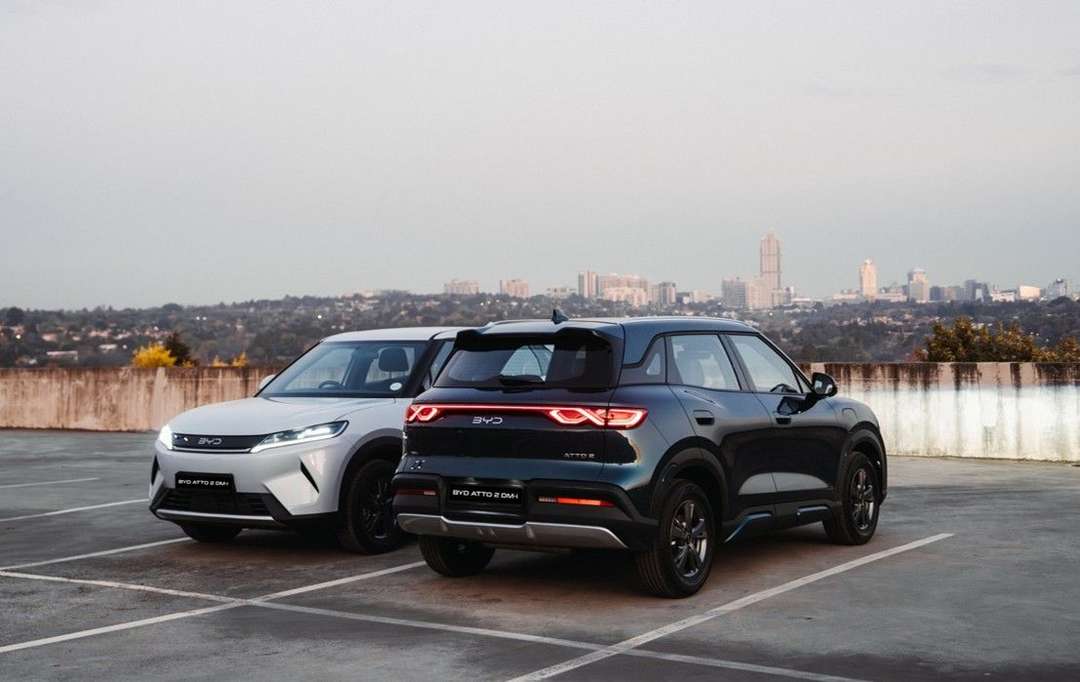
BYD Sealion 7 Premium (2026) Review

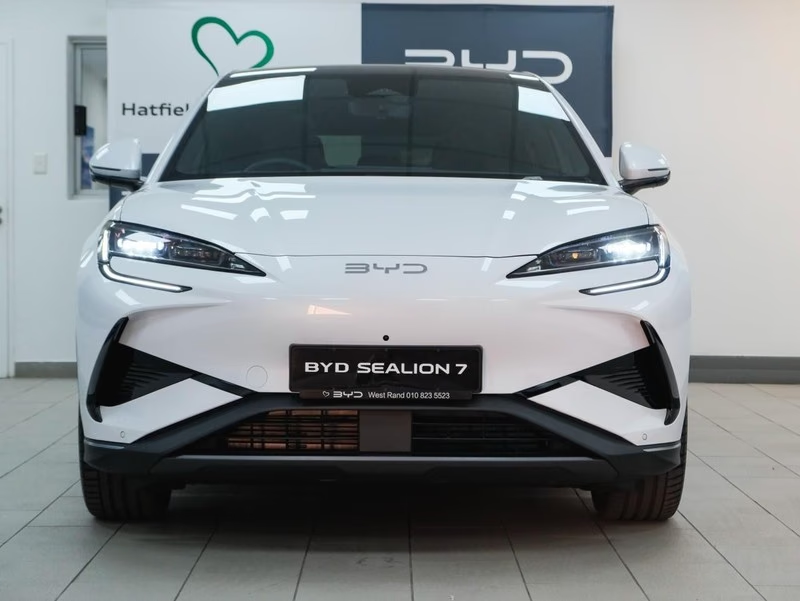
A persuasive electric SUV built around value, pace and generous equipment. Its optimistic range claim and developing support network prevent a higher score, but the established premium players should be paying attention.
Introduction
The BYD Sealion 7 makes a very strong case for itself if you want a genuinely quick electric SUV, plenty of interior space and a generous ownership package without immediately moving into premium-brand EV money.
BYD has only been in South Africa for a relatively short period, yet the pace at which the brand has expanded has been difficult to ignore. That growth is almost as interesting as the vehicle itself, because it shows just how quickly perceptions around Chinese manufacturers are changing.
During my time with the Sealion 7, I wanted to see whether the value proposition still made sense once the launch excitement had disappeared and the car had to deal with the realities of N1 traffic, toll roads, charging stops and everyday South African driving.
The answer is mostly yes.
Key takeaway: The Sealion 7 combines serious performance, excellent cabin space and aggressive pricing, although its real-world range does not quite match the headline claim.
Design & Exterior
BYD has moved a long way from some of the more awkward design details found on its earlier products.
The Sealion 7 looks considerably more resolved, with a low nose, smooth bodywork and a gently tapering rear giving it the proportions expected from a modern coupe-SUV.
It manages to look expensive without trying too hard, which I think suits the vehicle.
Where it sits in the segment
Park it alongside something like a Tesla Model Y or Ford Mustang Mach-E and the Sealion 7 does not disappear into the background.
The five-door body hides its size well from most angles, although there is no escaping the fact that this is a large, heavy EV once you enter a tight parking area.
The coupe-style roofline also introduces the usual compromises. Rear headroom is not quite as generous as the overall exterior dimensions might suggest, while the luggage area loses some of the useful squareness found in a more conventional SUV.
Neither compromise is serious enough to undermine the package.
Distinctive touches
- Smooth exterior surfacing helps keep wind noise under control on the highway.
- The full-width rear lighting treatment is clean and should age better than some of the more complicated designs coming from China.
- A useful front frunk provides dedicated space for charging cables and keeps them away from luggage, shopping or muddy outdoor gear.
Cabin & Practicality
Space is probably the first thing you notice when climbing inside.
The Sealion 7 does not feel cramped, and passengers have enough room to settle in without constantly negotiating knees, shoulders and seatbacks.
That immediately gives the BYD an advantage over some similarly priced premium SUVs where rear accommodation can be more compromised than the exterior dimensions suggest.
Materials and ergonomics
The cabin presentation is impressive.
Soft-touch materials cover most of the areas you regularly interact with, while the general fit and finish is good enough to support BYD's premium ambitions.
The rotating centre touchscreen remains one of the cabin's talking points, switching between portrait and landscape orientation at the touch of a control.
It is clever and certainly gets attention.
What I am less convinced by is the number of everyday functions still buried inside the screen. Climate controls are a good example. After several hours behind the wheel, I still found myself wishing for a few proper physical buttons or dials.
You eventually learn where everything lives, but that does not automatically make the arrangement better.
Space, boot and family duty
Rear passengers are particularly well catered for.
Two adults can sit behind another two without knees pressing against the front seats, while the flat floor also means the middle passenger has somewhere sensible to place their feet.
ISOFIX mounting points take care of child-seat duties.
During my test, I loaded two medium suitcases, a folded pram and three soft bags without having to fold the rear seats. The charging cables remained in the frunk, which is exactly where they belong rather than being thrown into the luggage area with everything else.
- Heated and ventilated front seats are fitted as standard.
- A panoramic glass roof makes the already spacious cabin feel even more open.
- A head-up display works alongside a comprehensive driver-assistance package.
- Vehicle-to-load capability allows the Sealion 7 to power external appliances, which can be particularly useful during load-shedding or on a weekend away.
On the Road
Performance is where the Sealion 7 AWD immediately grabs your attention.
With approximately 390 kW and all-wheel drive, it leaves the line with the kind of force that makes passengers stop talking for a moment.
Independent testing has recorded 0-100 km/h in roughly 4.5 seconds, which puts this large family SUV comfortably into serious performance territory.
Join the R21, press the accelerator properly and the Sealion 7 simply gathers speed.
It is properly quick.
Highway and long-distance manners
At a steady 120 km/h on the N1, the character changes completely.
The Sealion 7 becomes quiet, stable and impressively relaxed, which is probably more relevant to most owners than how quickly it reaches 100 km/h.
Across a mixture of highway and suburban driving, my test car returned an indicated 21.2 kWh/100 km.
With restraint, close to 400 km of real-world driving should be possible, although sustained highway speeds begin reducing that figure fairly quickly.
That becomes especially noticeable on long-distance routes such as the N3, where speed, altitude and repeated overtaking can all work against efficiency.
This is where route planning becomes important.
Do not rely purely on the optimistic dashboard range figure. Plan around available charging infrastructure and treat the displayed estimate as just that: an estimate.
Steering, ride and the honest caveats
For all of its straight-line performance, the Sealion 7 is not particularly interested in pretending to be a sports car.
The steering is light and slightly numb, while the brake pedal has more travel than I would like before becoming properly firm.
BYD may position it as sporty, but brisk and comfortable describes the car more accurately.
The ride is generally well judged for South African roads. Broken Gauteng tar rarely unsettles it, although sharp expansion joints and particularly abrupt imperfections can still send a solid thump through the cabin.
I also noticed a knock from the rear suspension over one particularly broken gravel ridge, although it disappeared as soon as the surface improved.
Overall refinement remains one of its strengths.
The Sealion 7 can move very quickly when asked, but that does not mean it suddenly turns into a driver's car.
Data & Comparison
The AWD model uses an 82.5 kWh LFP Blade battery, which remains one of the more important technical elements of the package.
The chemistry also gives owners more flexibility around regularly charging to 100%, which changes the way the available range can be used day to day.
The spec that counts
- Battery: 82.5 kWh LFP Blade
- Output: approximately 390 kW, all-wheel drive
- 0-100 km/h: around 4.5 seconds in independent testing
- Real-world range: close to 400 km with restrained driving
- Five-year cost of ownership: approximately R230 000 based on the supplied modelling
How it stacks against rivals
| Model | 0-100 km/h | Battery | Drive |
|---|---|---|---|
| BYD Sealion 7 AWD | ~4.5 sec | 82.5 kWh | AWD |
| Tesla Model Y Long Range | ~5.0 sec | ~75 kWh | AWD |
| Volvo EC40 Twin | ~4.7 sec | ~78 kWh | AWD |
Pricing is where the BYD becomes particularly difficult to ignore.
The BYD Sealion 7 price starts at R999 900 for the Premium, while the AWD Performance tested here costs R1 199 900.
That still places it below much of the traditional German premium EV field while offering a significant amount of performance and equipment.
Search interest also suggests South Africans are becoming increasingly curious about EVs, even if adoption remains slower than the interest itself.
The issue is not necessarily whether buyers are interested.
The bigger challenge remains whether the charging infrastructure, purchase price and ownership maths work for the way they actually drive.
Warranty and charging
BYD includes a 5-year/150 000 km vehicle warranty, an 8-year/200 000 km battery warranty and a 5-year/100 000 km maintenance plan.
That ownership package adds considerably to the value argument.
A home wallbox also removes one of the bigger practical hurdles around EV ownership. For somebody who can charge overnight at home, the Sealion 7 immediately becomes much easier to live with.
Using an appropriate DC fast charger, a 10% to 80% charge took an observed 34 minutes.
Home charging remains the more convenient and economical solution for everyday use, while the portable charger should really be regarded as a backup rather than the primary way of keeping the battery topped up.
Editorial Focus
Electric SUV value benchmark: Sealion 7 versus premium EV pricing
This is where the Sealion 7 begins making its strongest argument.
Criticism from some overseas markets often centres around its pricing compared with established rivals, but the South African context changes the picture considerably.
Here, premium-badged electric SUVs can become extremely expensive very quickly.
Against that backdrop, the Sealion 7 offers serious performance, plenty of interior space and a high level of standard equipment without immediately moving into the pricing territory occupied by some of the traditional luxury manufacturers.
Getting approximately 390 kW and sub-five-second performance from a premium European badge generally requires spending considerably more money.
The ownership proposition strengthens the case further.
The battery warranty, maintenance plan and home charging solution all remove some of the uncertainty traditionally associated with making the switch to an EV.
There are still compromises.
Real-world highway range does not match the most optimistic claim, public charging infrastructure remains inconsistent outside the major centres and BYD's dealer network is still developing compared with brands that have operated in South Africa for decades.
That matters if you regularly travel long distances.
For somebody commuting daily, doing school runs and charging at home, however, the Sealion 7 becomes considerably easier to justify.
The occasional Johannesburg-to-Durban trip is still entirely possible, but it requires more planning than simply stopping at whichever filling station appears next.
That is the distinction.
The Sealion 7 works extremely well when the owner's charging routine suits the vehicle.
Safety rating
ANCAP · tested 2025
★★★★★ 5/5 adult occupant
The Australian-market right-hand-drive rating should be treated as indicative for South Africa only where the local derivative matches the tested safety specification, including airbags, ESC and autonomous emergency braking.
Verdict
The BYD Sealion 7 is another example of just how quickly the gap between established manufacturers and newer Chinese brands is closing.
It is fast, spacious, well equipped and comfortable enough to handle everyday family duties without feeling like its impressive performance figure dominates the entire experience.
More importantly, it offers much of the substance buyers expect from premium electric SUVs without immediately demanding premium-brand money.
The biggest question is not really whether the Sealion 7 is good enough.
It is whether an electric vehicle fits into the way you live.
If you have reliable home charging and most of your driving happens in and around the major metropolitan areas, the argument becomes extremely convincing.
If your life involves constant long-distance highway travel through areas where charging infrastructure remains limited, the compromises become considerably harder to ignore.
- Buy it if: You have home charging, want serious EV performance and space, and would rather spend the money on equipment and capability than a premium badge.
- Shortlist it if: You are considering a Tesla Model Y or premium-badged electric SUV and are willing to accept a smaller dealer footprint in exchange for a strong ownership package.
- Wait if: BYD's dealer expansion and public-charging coverage are important to your driving routine, particularly if you spend significant time outside the major metropolitan areas.
- Walk away if: Most of your driving involves long, high-speed highway journeys where dependable fast charging cannot be guaranteed.
Summary
A thorough look at the BYD Sealion 7 82.5 kWh AWD Electric for South African buyers, including usable range, charging, family practicality and its sharp pricing against premium-badged electric SUVs on our shores.
Ratings
Pros
- ✓You have home charging, want premium-EV substance without the premium price, and value a long battery warranty plus vehicle-to-load for load-shedding.