Honda HR-V 1.5 Comfort CVT (2024) Review
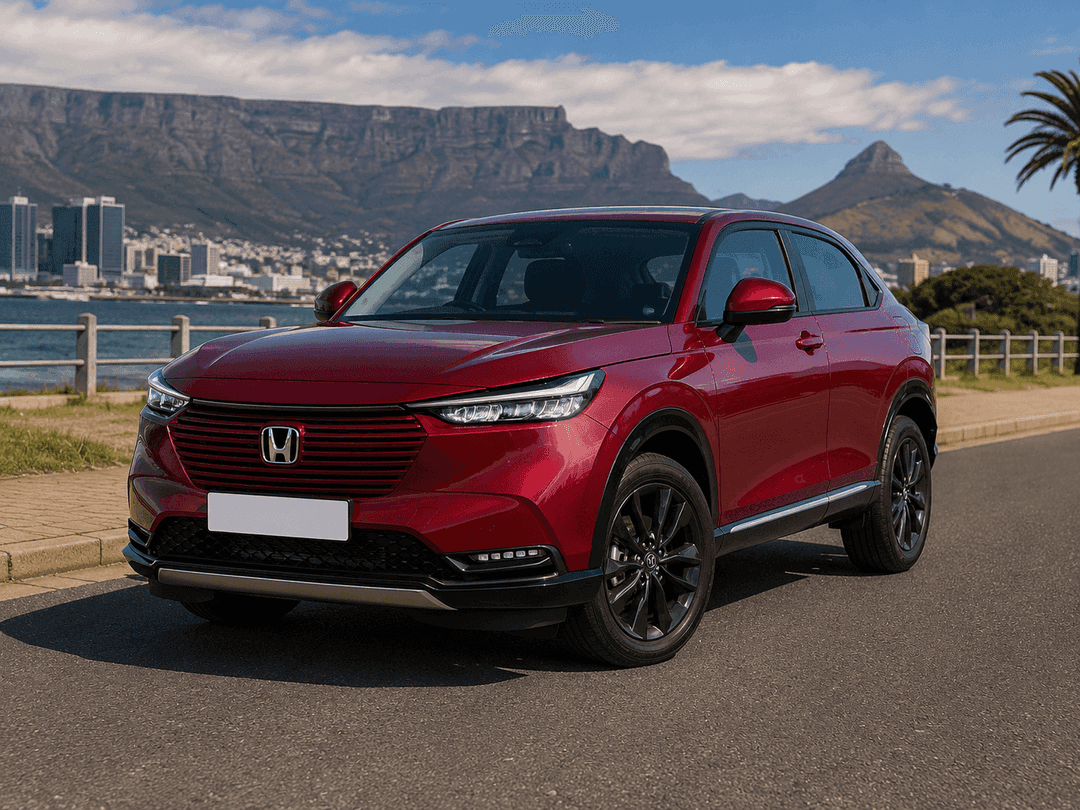
— the substance is there, but the local market has moved the goalposts. A turbo or confirmed hybrid would make this an easy 8.
Introduction
Look - if you’re shopping for a compact SUV with proper Honda reliability, the HR-V 1.5 Comfort CVT still makes a strong case. Honda’s known for build quality that stands up to decades of Gauteng sun, and the HR-V keeps that reputation alive with its honest cabin and no-fuss ownership. But step outside the brand bubble, and you’ll notice rivals shouting louder on price, spec, and outright pace. That sums up the Honda HR-V story in South Africa for 2026. The latest HR-V III looks sharp and feels well screwed together, but it’s up against a value-obsessed crowd. Honda SA now offers just one derivative. That alone tells you plenty about how tough this corner of the market has become.
Key takeaway: The Honda HR-V is cleverly packaged and built to last - but in South Africa, it’s fighting rivals who stack the spec sheet for less cash upfront.
Design & Exterior
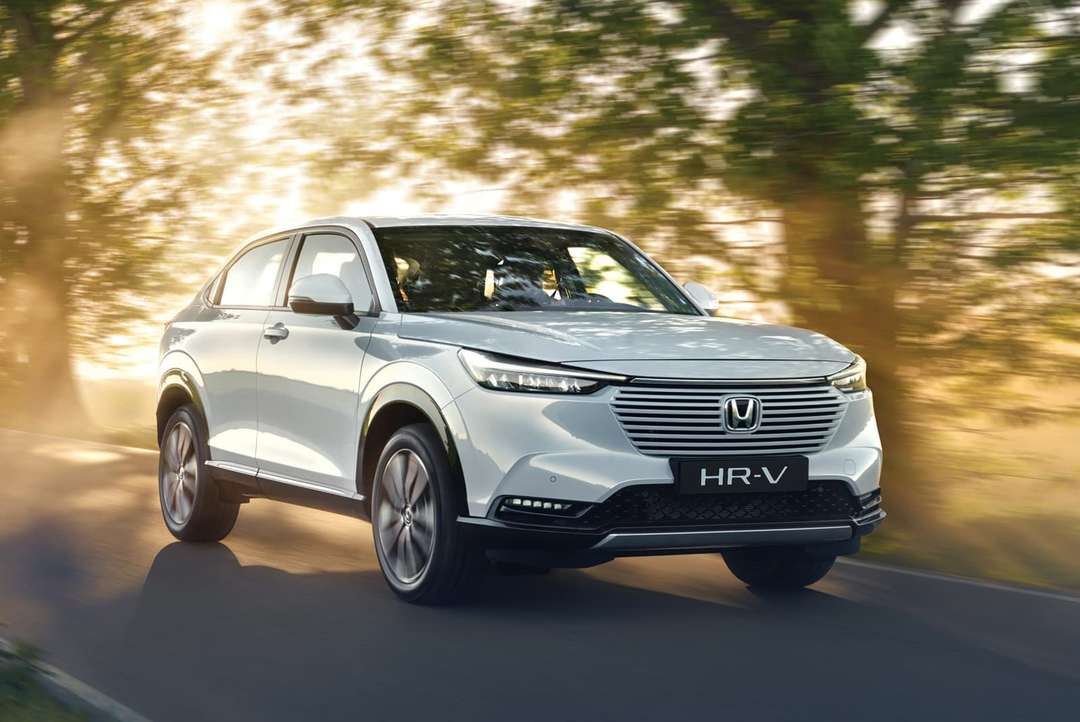
The HR-V’s shape works. There’s no posturing here - just that grille-less front, a coupe-ish roof, and those rear door handles tucked up high. The look is quietly confident. No cheap chrome, no fake bash plates, and frankly, it’s all the better for it. This is a car that’ll still look decent after five years dodging potholes on the road.
Stance and proportions
Sitting on 18-inch alloys with 225/50 R18 rubber, the HR-V looks pricier than it is. Paint’s deep, panel gaps are tight, and the LED lighting is subtle - not the light show you’ll find on some Chinese SUVs. I once parked up at a Honda Auto SA branch next to a Chery Tiggo 8 Pro; the Honda looked understated, the Chery ready for a tech expo. Both brands know their audience.
Ground clearance and SA reality
Here’s something practical: 187mm of ground clearance. That’s enough for Joburg’s cratered back roads, or the odd gravel detour to avoid roadworks. You won’t mistake it for a Duster, but you also won’t be scraping every speed bump from here to Potch.
Cabin & Practicality
Inside is where Honda gets it right. The dashboard is clean, climate controls are proper dials - none of that touchscreen faff at 120 km/h down the N1 - and everything you touch feels honest, not dressed up with cheap gloss. Simple, but considered. No fake luxury here.
Magic Seats and boot
Let’s talk party tricks: Honda’s Magic Seats. Flip the back seat base up and suddenly you’ve got space for a mountain bike, a fridge, or a week’s worth of flea market finds. The official Honda HR-V boot space is 304 litres for the hybrid, expanding to 1,274 litres with the seats down. Honestly, 304L feels tight for this class - on paper at least - so if you’re hauling prams and bulk Makro runs, check it in person. If you pack smart, though, it’s more flexible than most rivals.
Controls and infotainment
Honda nails the basics:
- Knurled climate dials you can actually find without a YouTube tutorial.
- 8-inch touchscreen - wired Apple CarPlay and Android Auto, no faffing with Bluetooth dropouts.
- Honda Sensing ADAS, including adaptive cruise and lane-keep. Not just for brochure points - it works well on real roads.
- Excellent outward visibility. I once caught a delivery bike sneaking past in Rosebank; never lost sight through the A-pillar.
- Wide rear doors that make wrestling in an Isofix base a non-issue.
But don’t expect luxury: no powered seat, no sunroof, no wireless charging, and no blind-spot monitor in Comfort spec. The Executive trim used to fix that, but Honda’s dropped it from the line-up.
On the Road
Driving in South Africa exposes the HR-V’s reality. The spec sheet talks up a 1.5 i-MMD e: HEV with 107 kW and e-CVT - that’s the global hybrid. Locally, though, you’ll usually find the non-hybrid 1.5 i-VTEC. Be sure to quiz your Honda dealer, because these drive quite differently.
Around town
Urban driving - school drop-off runs, lunchtime crawl through Sandton, or slogging up the N1 past Rivonia - the HR-V feels light and easy. Steering’s direct, the turning circle is proper B-segment tight, and the brakes are reassuring. The 225/50 R18s handle patchy tar and sleeping policemen out near Edenvale without tossing your coffee. It’s composed, even when minibus taxis cut in front of you at the lights.
Highway and altitude
But hit the N3 climbing out past the Wilge toll, and that naturally aspirated 1.5 needs real patience. 0–100 km/h comes up in 11.62 seconds at the coast. Up on the Highveld, figure on another second or so lost - atmospheric reality bites. In my mixed driving, I averaged 6.7 L/100km in the petrol CVT, with the trip computer peaking at 8.1 L/100km during a week of stop-start commutes. If you get the hybrid, 5.0 L/100km is realistic, but stock is thin on the ground.
Refinement
Ask for a quick pass, and the CVT spins the engine up - plenty of noise, not as much go. The chassis itself could easily handle more power, which is frustrating because it deserves better than Honda’s current engine lineup.
Data & Comparison
Let’s talk numbers. The Honda HR-V 1.5 Comfort CVT price in South Africa is R539,900 for the Elegance - Comfort, which was R520,900 before the trim cull. Over five years, expect a total cost of around R230,000. Your Honda HR-V service plan in South Africa is included, but check the details - Honda’s cover is often shorter than Toyota’s or GWM’s.
Spec callout
- Power: 107 kW system output. That’s 41.2% down on the segment’s 182 kW average.
- Boot space: 304 litres (hybrid) - tight, but flexible if you use the Magic Seat tricks.
- Ground clearance: 187mm - a genuine advantage for gravel and potholes.
- 5-year TCO: About R230,000.
How it stacks up
| Model | Avg price (ZAR) | Power (kW) | Drive | Fuel |
|---|---|---|---|---|
| Honda HR-V 1.5 e:HEV | R539,900 | 97 | FWD | Petrol hybrid |
| Volvo XC60 T5 AWD (used) | R489,900 | 186 | AWD | Petrol |
| Subaru Forester 2.5 AWD | R529,800 | 135 | AWD | Petrol |
| Mitsubishi Outlander 2.5 S-AWC | R549,900 | 134 | AWD | Petrol |
That comparison isn’t flattering. A used XC60 undercuts the HR-V by R15,980 and doubles the power. Subaru Forester costs R23,920 more but brings full-time AWD. Mitsubishi Outlander is R44,020 up but gives you seven seats and S-AWC. And don’t forget the Corolla Cross hybrid, Mazda CX-30, Omoda C5, Kia Seltos diesel, Haval H6, and Chery Tiggo 8 Pro - all playing for the same wallet.
Trend context
Our data shows SUV demand in South Africa sitting at a healthy 74–78 score up to November 2025, with hybrid interest steady in the low 70s. Buyers are out there. The HR-V should be cleaning up, but with Honda slimming to a single spec, it’s clear demand isn’t matching supply - or, perhaps, the spec isn’t nailing what locals want.
Editorial Focus
Style or Substance in SA?
Let’s be honest: the HR-V delivers genuine substance. The chassis is sorted, steering feels planted, and the cabin stays rattle-free after a winter of corrugated gravel outside Ermelo. Magic Seats, tactile dials, real ground clearance - that matters. No marketing fiction here.
But by 2025, substance also means kilowatts per rand, gadgets per rand, and metal per rand. The HR-V falls behind on those. Chery Tiggo 8 Pro? Seven seats, more screens, turbo punch. Corolla Cross hybrid? Lower fuel bills, bigger dealer presence. Haval H6? More gadgets and torque. So, style or substance? Both, if you’re a long-term Honda driver who values cabin quality over a flashy spec list. For everyone else, it’s a harder sell. And that’s the point.
Verdict
The HR-V III is finally what the HR-V should have been from the start: grown-up design, proper build, and honest execution. It rides well, the cabin layout makes sense, and Magic Seats are still magic. Dealer back-up is straightforward. But the engine range is overdue for an update - at altitude especially, you feel every missing kilowatt - and rivals simply offer more spec, more power, or more seats for the same budget.
Summary
The updated HR-V III is finally the HR-V Honda should have offered from the start, design-wise — mature, well-built, honest. It rides well, the cabin is thoughtfully laid out, and those Magic Seats genuinely set it apart. Dealer support is straightforward. Still, the engine range lags behind what the chassis deserves, especially up on the Reef, and the value-for-money argument doesn’t land when rivals are dishing out more spec, more grunt, or more sheetmetal for the same spend.
Ratings
Pros
- ✓You’re a Honda lifer, you’ll trade features for reliability, you drive mostly at sea level, and you want a crossover that’ll still feel tight at 200,000 km.
Cons
- ✗You live at altitude and want urgent overtakes, you want more gadgets per rand, or you’re drawn to the value of seven-seat Chinese competition.