Kia Seltos 2026 Review: Which Engine Is Worth the Extra R88,000?

A rounded, reassuring compact SUV, but its strongest value is now found on the used market rather than in the new-car headline.
Introduction
Here’s my Kia Seltos 2026 review in one sentence: the cheaper LS makes sense for high-mileage buyers, but most people will find better value by stepping up a trim level, particularly on the used market. Kia’s new LS derivative costs R389,995 — roughly R88,000 below the previous entry point — and that materially changes the equation.
But cheaper doesn’t automatically mean smarter. The real questions are whether Kia has delivered genuine value or simply stripped equipment to hit a lower price, and whether the diesel premium still makes sense when inland diesel and petrol prices are so close. Those are the numbers worth digging into.
Key takeaway: The 2026 Seltos LS at R389,995 offers honest value for high-mileage drivers, although a lightly-used higher trim is the better buy for most households.
Design & Exterior
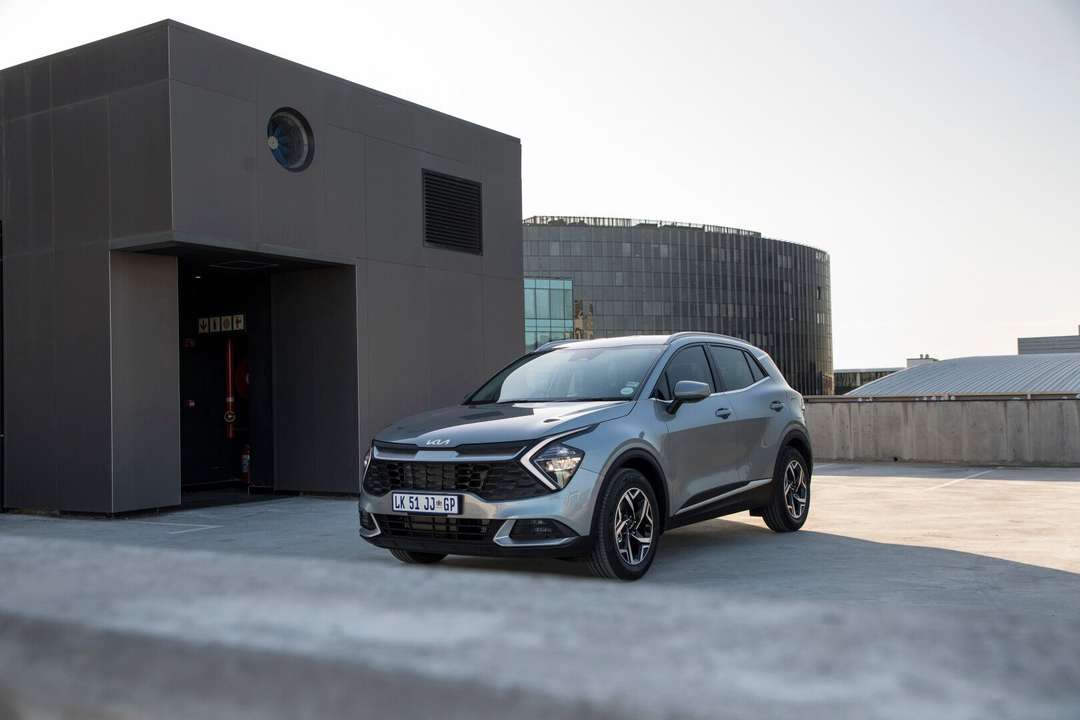
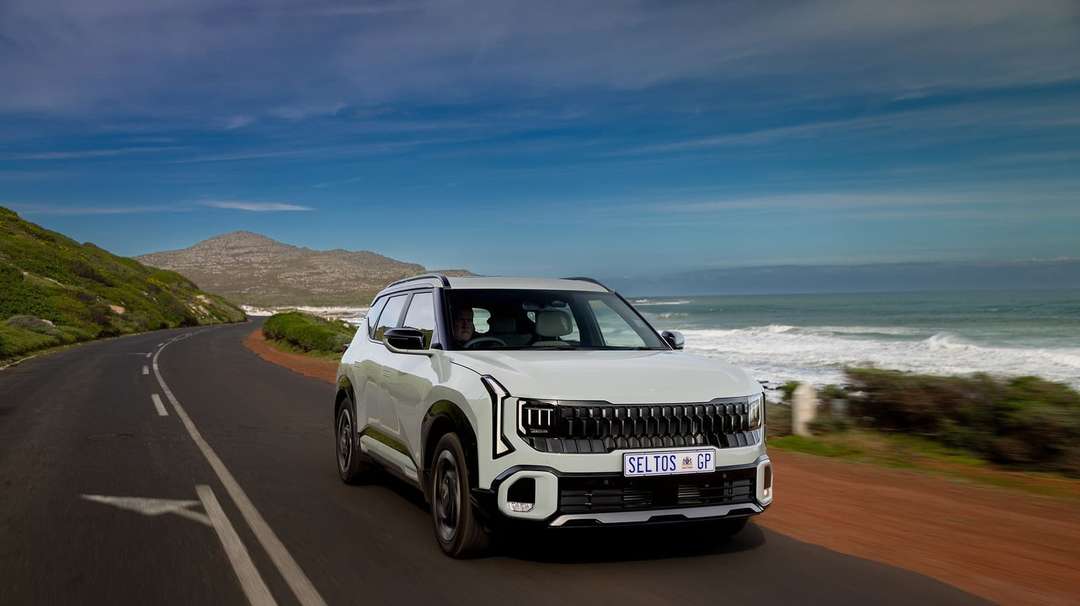
Look, the facelifted first-generation Kia Seltos still on South African showroom floors in 2026 has aged well. Slim daytime-running lights, a broad grille and tidy proportions give it enough presence without trying too hard.
The incoming India-built second-generation Seltos grows substantially, measuring roughly 4,430–4,460mm long and riding on a 2,690mm wheelbase. That adds around 80mm between the axles, which should make a noticeable difference for rear passengers. B-segment SUVs can get cramped behind taller front occupants, so the extra space is welcome. Ground clearance remains 190mm across the range, enough for rutted gravel and washed-out district roads around Dullstroom. Every South African derivative is front-wheel drive, though, so don’t mistake it for a substitute for a Toyota Hilux or Ford Ranger.
Even the entry-level Seltos LS gets 16-inch alloys and roof rails, meaning it doesn’t look like a rental special parked outside a Kia dealer. And at this price point, that matters.
Cabin & Practicality
What the LS keeps and drops
Here’s where the value argument gets interesting. Despite that large price cut, the R379,995 LS retains the equipment most owners will use every day:
- Six airbags and electronic stability control
- Touchscreen with wireless Apple CarPlay and Android Auto
- 16-inch alloy wheels and roof rails
- Reverse camera and rear park sensors
Against the LX, you lose the following:
- LED daytime running lights
- Cruise control
- Leather-wrapped steering wheel and shifter trim
- Auto-dimming interior mirror
Cruise control is the painful omission, especially during a long Bloemfontein-to-Joburg run on the N1. Everything else is mostly cosmetic, while proper buttons remain for the important cabin functions. The LS feels cheaper in places, but Kia hasn’t hidden why.
Space and boot
Boot space in the outgoing model is a useful 433-litre, while the new generation increases that to about 536 litres. I loaded a full-size pram and two soft weekend bags without removing the parcel shelf; the measured loading lip was 740 mm from the ground. Five seats, five doors and sensible door bins complete a practical package. If you pack smart, four people can manage a Drakensberg weekend without fitting a roof box.
On the Road
Three engines, three characters
South African buyers can choose a 1.5-litre naturally aspirated petrol, a 1.5-litre turbo-petrol or a 1.5-litre turbodiesel. Each suits a different owner.
Entry-level NA petrol models produce 85 kW and 144 Nm. They’re agreeable around town, although overtaking on the N3 at altitude requires planning; my estimated 0-100 km/h run took 12.1 seconds with two occupants aboard. The turbo-petrol flagship delivers around 119kW and 253 Nm through a seven-speed dual-clutch transmission, which occasionally dithers at crawling speed. My preference is the diesel. Its 85 kW looks modest, but 250 Nm from about 1,500 rpm and a conventional six-speed auto make everyday driving easier.
Ride and gravel
Passenger complaints about the flagship’s firmer suspension are justified, particularly across corrugations. I heard one sharp thump from the rear over a washed-out section, but no trim rattles followed. Diesel and lower-spec derivatives ride with more composure. On loose gravel, 190 mm of clearance helps the FWD Seltos remain settled and predictable. It isn’t an off-roader, yet a rough farm road or wet Sani Pass approach won’t immediately expose it.
Data & Comparison
Kia Seltos fuel consumption, real versus claimed
For Kia Seltos fuel consumption, real-world figures shape the diesel argument more than brochure claims:
- NA petrol: 6.3-6.7 l/100km claimed
- Turbo-petrol: real-world often 8-9 l/100km in town
- Diesel: ~5.2 l/100km claimed, closer to 6.0 l/100km in mixed driving
Our reference car returned 6.3 l/100km, with 154 g/km CO2 and a 50-litre tank. During a separate 186 km mixed route, including stop-start traffic and an open N1 section, the trip computer showed 6.1 l/100km.
Depreciation from live listings
Across 21 recent listings, the retained-value curve is fairly clear. This is the practical Kia Seltos price South Africa by model year:
| Model year | Typical asking (avg) | Range |
|---|---|---|
| 2020 | R240,498 | R199,900 - R299,500 |
| 2021 | R273,339 | R219,000 - R299,950 |
| 2022 | R320,558 | R249,900 - R359,900 |
| 2023 | R321,658 | R279,990 - R339,900 |
| 2024 | R384,900 | R345,900 - R418,900 |
| 2026 | R459,945 | R429,900 - R489,990 |
A three-year-old Seltos averages R321,658, roughly R58,000 less than the new LS despite having plenty of useful life remaining. Estimated five-year running costs sit around R230,000, so leave room for servicing, tyres, insurance and inevitable fuel-price increases.
How it stacks against rivals
| Spec | Kia Seltos (diesel) | Hyundai Creta | Toyota Corolla Cross |
|---|---|---|---|
| Torque | 250 Nm | ~250 Nm (diesel) | 142 Nm (1.8 petrol) |
| Real-world economy | ~6.0 l/100km | ~6.0 l/100km | ~6.5 l/100km |
| Ground clearance | 190 mm | 190 mm | ~160 mm |
| Drivetrain | FWD | FWD | FWD/hybrid |
Comparing the Kia Seltos vs Hyundai Creta is tricky because they share their basic underpinnings. Kia generally supplies more cabin technology for the money, while Hyundai benefits from stronger familiarity among local buyers. Toyota’s Corolla Cross brings the hybrid option missing from the Seltos range, plus a dealer network that reaches well beyond the major cities.
Editorial Focus
Does the diesel premium still pay back?
Right, so this is the question that’s often raised without anyone doing the arithmetic. Using July 2026 Gauteng prices, 95 unleaded costs around R26.10/l and 50ppm diesel around R25.16/l inland. With less than a rand separating them, the diesel’s old pump-price advantage has largely disappeared.
Payback therefore depends almost entirely on consumption: roughly 6.0 l/100km for the diesel against 6.3-6.7 for the NA petrol. Assume a 0.4 l/100km real-world saving, and you’re keeping about R100 per 1,000 km. If the diesel costs roughly R117,000 more than an equivalent petrol, with the LS auto near R404,995 versus diesel from about R521,995, fuel savings alone require well over a million kilometres to recover the difference.
Read that once more. Current South African fuel prices don’t support the diesel on running costs alone. Its appeal lies in torque, relaxed N3 cruising and stronger resale, particularly for owners covering serious annual mileage. My Kia Seltos 1.5 CRDi review verdict is straightforward: choose it because you prefer the way it works, not because a spreadsheet promises cheap motoring. That calculation no longer holds.
Reliability and recalls, the honest version
Regarding Kia Seltos problems, the main concern is a piston-oil-ring recall covering 2021-2023 naturally aspirated petrol engines in some markets, with stalling and fire risks if left unresolved. Crucially, it involved the base NA engine rather than the turbo or diesel. South African cars are built in India, so local applicability can differ. Anyone considering a used Kia Seltos for sale in South Africa should check the VIN, request proof of inspection or the software update, and monitor NA models for oil-consumption symptoms. Kia’s five-year, unlimited-km warranty and broad local dealer footprint provide some reassurance.
Four-tier verdict, per derivative
- Buy it - Diesel EX+: Strong resale, easy long-distance manners and torque you’ll appreciate on every trip.
- Shortlist it - LX auto petrol: The sensible middle ground, complete with cruise control and LED lights.
- Think twice - LS at R379,995: Honest value above roughly 30,000 km a year, but regular N1 users will miss cruise control.
- Avoid - Turbo-petrol flagship for town-only use: Consumption of 8-9 l/100km and a firm ride make little sense for commuting.
Safety rating
Bharat NCAP · tested 2026
★★★★★ 5/5 adult occupant
★★★★★ 5/5 child occupant
Applies ONLY to the incoming all-new (2nd-gen) India-built Seltos, and only to SA derivatives carrying the tested 6-airbag + ESC spec — SA local specification was not yet confirmed at research time (launch ~Aug 2026), so verify entry-trim airbag count before applying. Official factsheet.
Verdict
Kia’s 2026 Seltos is no longer the disruptive bargain it once was, and while the LS price cut helps, it doesn’t completely change the equation. It remains spacious, solidly built and sensibly equipped, even towards the bottom of the range. The diesel is still the nicest everyday companion, but its running-cost advantage has weakened considerably as South African petrol and diesel prices converge.
For me, the real value now sits among lightly used Seltos examples rather than under showroom lights. Buy according to how each version drives, how well it should retain its value and which equipment you’ll actually use. If you’re waiting for the crash-tested new-generation Seltos, it makes sense to hold off until the expected August 2026 launch, then check the South African safety specification for each trim before signing.
And if a trade-in forms part of the deal, value your current car first.
Summary
A wallet-led review of the 2026 Kia Seltos for South African buyers, covering the new R379,995 LS, its 1.5 NA petrol, 1.5 T-GDI and 1.5 CRDi diesel engines, listing-based depreciation, recall history and used alternatives.