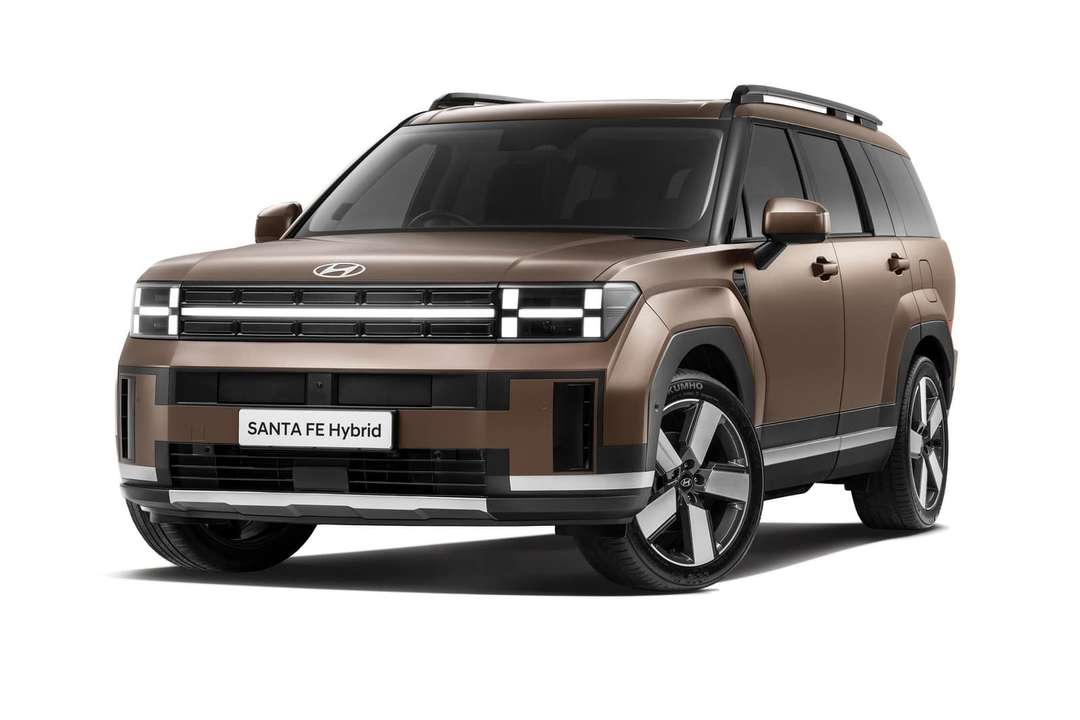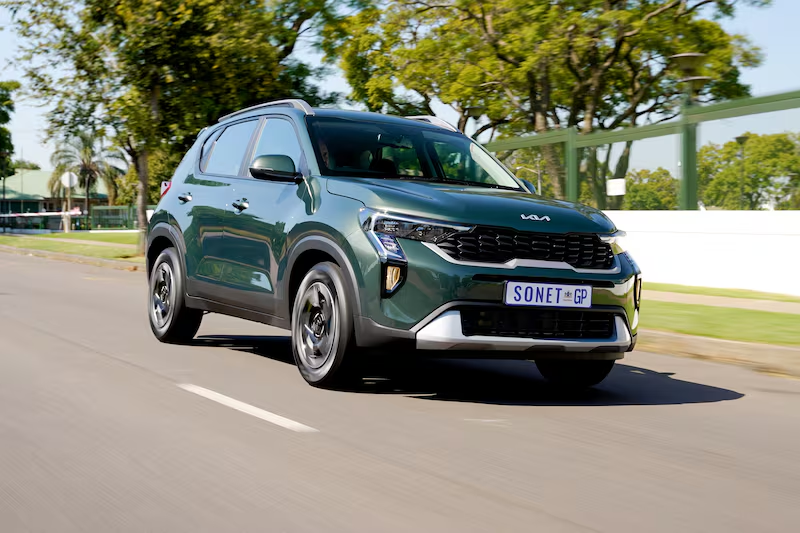
Hyundai Santa Fe vs Kia Sorento: the Korean 7-seater sibling battle
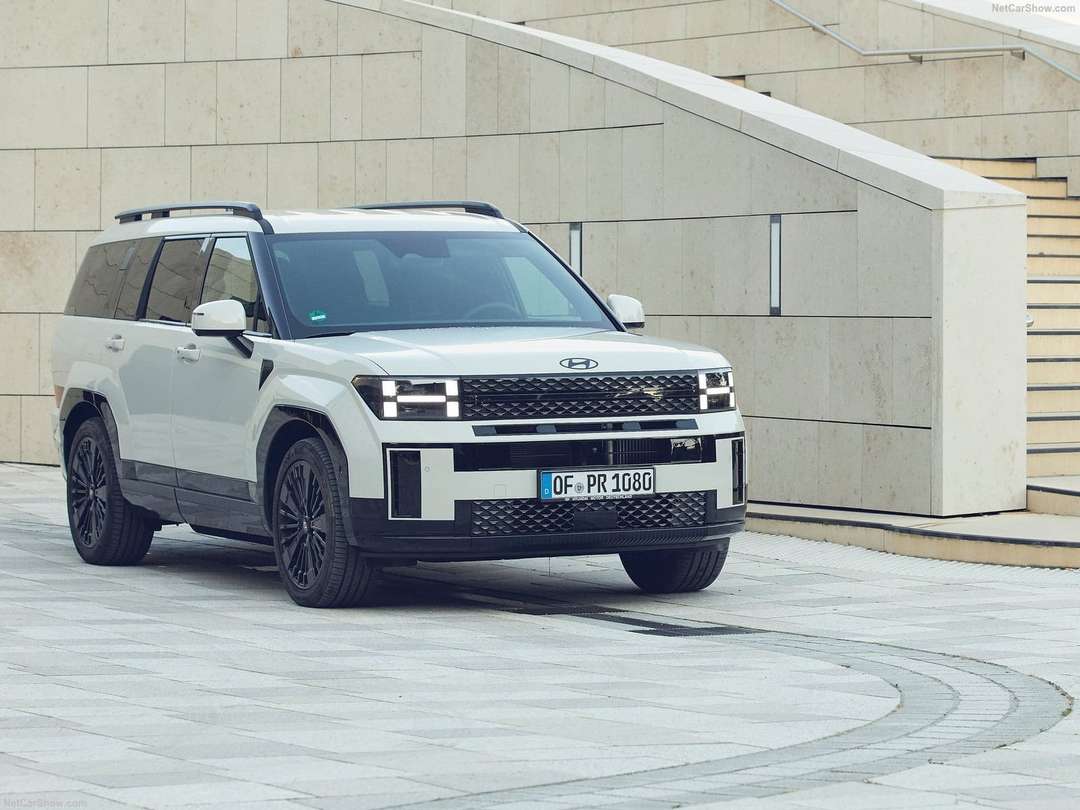
Go for the Hyundai Santa Fe 1.6T HEV if your life is mostly Gauteng school runs, stop-start commutes, and the odd weekend trip.
Introduction
Let's get straight to it. If you're comparing the Hyundai Santa Fe and Kia Sorento in South Africa, there's one key difference that changes the conversation immediately: only the Santa Fe is available as a hybrid. If a hybrid 7-seater SUV in South Africa is what you're after, Hyundai is your only option.
But the choice isn't as simple as petrol versus diesel. I've driven both on the climb up the N3 from Durban, and the differences become obvious once you're behind the wheel. The Santa Fe leans into refinement and efficiency, while the Sorento still feels every bit the effortless long-distance cruiser thanks to its diesel powertrain. On paper they're close, but out on the road, they have very different personalities.
The verdict: which should you buy?
The Hyundai Santa Fe 1.6T HEV makes the most sense if your life revolves around school runs, traffic and city driving. The hybrid system comes into its own in stop-start traffic, while Hyundai's 8-year/160,000km battery warranty takes much of the uncertainty out of hybrid ownership.
The Kia Sorento 2.2 CRDi, on the other hand, is built for buyers who spend more time on the open road. With a 2,500kg towing capacity and an 80-litre fuel tank, it's the one I'd choose for towing a caravan, family holidays or regular long-distance trips.
The reality is that both SUVs cost money that's edging into German territory, just without the premium-badge headaches. They share the same DNA, but their personalities couldn't be more different. The Santa Fe is the smarter choice for urban families, while the Sorento remains the better fit for buyers who rack up kilometres and need diesel muscle.
Quick verdict table
| Category | Winner | Why |
|---|---|---|
| Best overall | Santa Fe HEV | Newer design, hybrid tech, deeper hybrid warranty |
| Best driving experience | Sorento | Diesel torque delivery feels more relaxed at cruise |
| Lowest fuel costs | Santa Fe HEV | 7.2 l/100 km claimed vs 6.0 l/100 km diesel, but hybrid wins in traffic |
| Best interior quality | Santa Fe HEV | Redesigned cabin with curved twin-screen |
| Strongest reliability | Sorento | Proven 2.2 CRDi block, long track record locally |
| Highest resale value | Sorento | Diesel demand and known residual trade estimates around R579,733 at three years, unconfirmed |
| Lowest total running costs | Tie | Both around R230,000 over five years on our TCO model |
| Best first car | Neither | Both are large family SUVs, unsuitable as a first buy |
| Best value for money | Santa Fe HEV | Elite AWD undercuts Sorento SXL by roughly R50,000 at launch pricing, unconfirmed for current MY |
| Best for towing | Sorento | 2,500 kg braked capacity vs 1,650 kg |
| Best warranty depth | Santa Fe HEV | Hybrid battery cover extends to 8 years |
Specifications
2026, 7-seat, AWD specs only. Double-check with a franchised dealer - trim and price can shift fast.
| Specification | Hyundai Santa Fe 1.6T HEV (2026) | Kia Sorento 2.2 crdi (2026) | Winner |
|---|---|---|---|
| Engine (cc) | 2199 | 2151 | Tie, virtually identical |
| Power (kW) | 175 | 148 | Sorento |
| Torque (Nm) | 367 | 440 | Sorento |
| Gearbox | Automatic | Dual-clutch | Santa Fe (torque-converter smoother in traffic) |
| Fuel economy (l/100 km combined) | 7.2 | 6.0 | Sorento on paper at least |
| Fuel tank (litres) | 65 | 80 | Sorento |
| Ground clearance (mm) | 185 | 176 | Santa Fe |
| Seats | 5 (7-seat variant available) | 7 | Sorento as tested |
| 0-100 km/h (s) | 10.1 | Quote required from dealer | Santa Fe (only verified figure) |
| Warranty | 5yr/150,000 km + 8yr hybrid battery | 5yr/unlimited km + 6yr/90,000 km service plan | Depends on your priorities |
Performance and driving experience
Sorento’s diesel is built for swallowing up highway miles, especially through the Karoo. Santa Fe’s hybrid is punchier off the mark in traffic, with the electric motor smoothing out lag. In Sandton gridlock, it’s the Santa Fe you want - you’re gliding in silence, hardly burning any fuel. Properly quick from a standstill too.
| Factor | Santa Fe HEV | Sorento | Winner |
|---|---|---|---|
| Urban driving | Silent EV creep | Diesel clatter at cold start | Santa Fe |
| Highway overtaking | Strong initial surge | Muscular mid-range | Sorento |
| Ride comfort | Softer damping | Firmer, more controlled | Santa Fe |
| Engine refinement | Coarse under hard load | Diesel grumble present | Tie |
| Long-distance ease | Good | Excellent | Sorento |
Unique South African buying factors
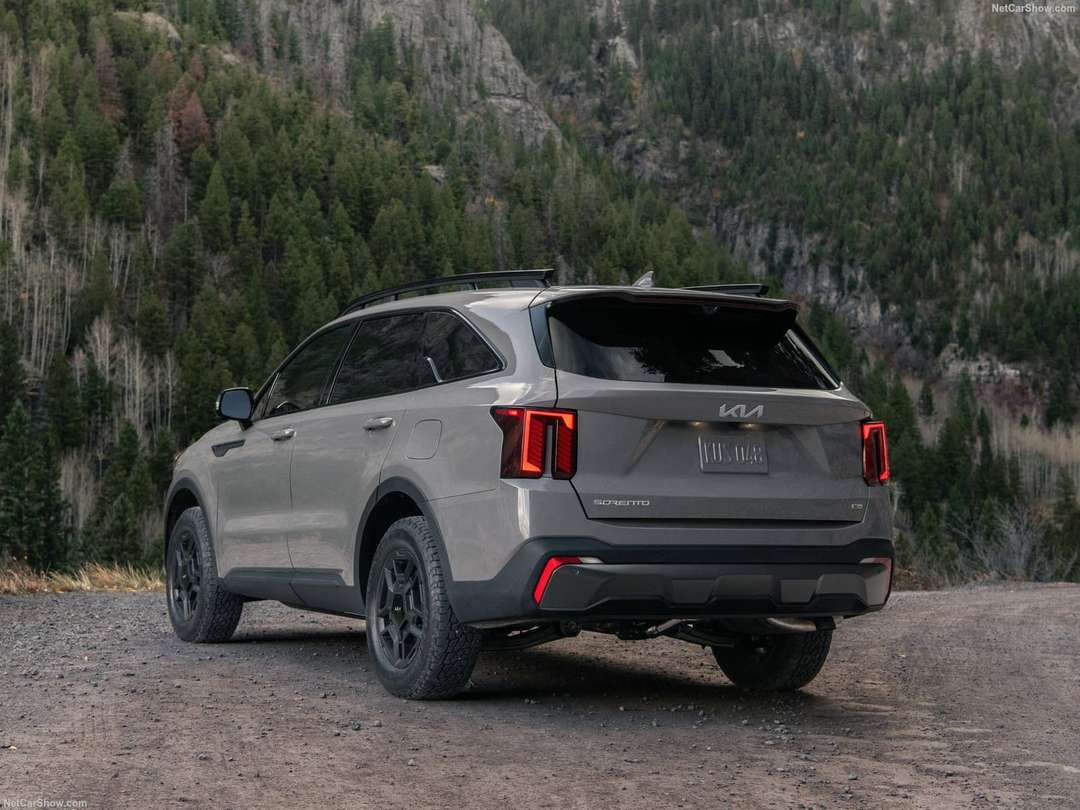
Which handles South African potholes better?
On paper, there's only 9mm between them, but South African roads have a way of making small numbers feel much bigger. The Hyundai Santa Fe offers 185mm of ground clearance, compared with the Kia Sorento's 176mm, giving it a slight advantage over potholes, gravel roads and steep driveways.
Both SUVs ride on large alloy wheels, though, which means neither is immune to expensive rim or tyre damage. Before signing on the dotted line, it's worth checking replacement tyre and wheel prices. It's one of those ownership costs that can come as a nasty surprise after one badly timed encounter with a pothole.
Ground clearance for daily obstacles
Neither of these SUVs is built for serious off-roading, and neither pretends to be. They'll handle steep driveways, surprise speed bumps and the occasional gravel road without breaking a sweat. The Santa Fe's extra ground clearance gives it a slight edge on rougher surfaces, but don't expect either to tackle technical trails.
For the occasional trip down a Free State gravel road or a weekend getaway, both are more than capable. Just pack sensibly, slow down when the road gets rough, and they'll look after you.
Hijack and theft desirability
Big SUVs get flagged by Tracker and Cartrack, but neither is a top SAPS target. Still, get a tracking subscription. Insurance isn’t cheap; get that quote before you commit.
Long holiday trip ability
Sorento’s 80-litre tank and 6.0 l/100 km claim means 1,300 km between fill-ups is doable, a plus for N1 trips to Cape Town. Santa Fe HEV’s 65-litre tank and 7.2 l/100 km mean more stops. Loaded up, both will drink more, but diesel still wins on the highway.
Battery and electrical resilience
Santa Fe’s hybrid battery is covered for 8 years or 160,000 km. No load-shedding headaches - neither is a plug-in. Both come with a physical key. Don’t laugh: I once had to dig one out in a dimly lit parking lot when the fob died. Saved the day.
Tyre cost and availability
Tyre sizes (235/55 R19 and 255/45 R20) are easy to find at Tiger Wheel & Tyre or Supa Quick. A set isn’t cheap - price it before you buy. Most trims give you a space-saver, not a full-size spare.
Real-world fuel economy
With November 2025’s 95-octane at R21.34 per litre, Santa Fe’s edge in town grows. Typical 1,500 km monthly commutes at 8.5 l/100 km will cost about R2,720. Sorento, at 7.0 l/100 km, is close - especially if most of your driving is highway.
Gravel-road durability
Underbody protection is decent, and dust sealing is okay. On Sani Pass gravel, my Sorento press car rattled less than I expected - just the usual dust on the boot seal, no squeaks.
Parts availability
Both brands have dealer networks reaching beyond Polokwane or Mthatha. That matters for long-term peace of mind if you’ll keep the car after the warranty.
Deciding factors
It comes down to your towing needs, trust in hybrid warranties, and your daily mileage split. The rest is about which trim suits your taste.
Running costs
Fuel: Sorento wins for long trips, Santa Fe for city life. Servicing intervals are similar. Insurance can be a shock, so check. Tyre costs are a wash. For mostly urban owners, Santa Fe HEV wins; for towers and long-hauliers, Sorento takes it.
Five-year ownership
Assuming 20,000 km a year and November 2025’s fuel prices.
| Item | Santa Fe HEV | Sorento |
|---|---|---|
| Fuel spend | Lower urban, higher rural | Lower rural, competitive urban |
| Maintenance | Included in warranty period | Covered by 6yr/90,000 km plan |
| Repairs | Low expected | Low expected |
| Resale (trade estimate, unconfirmed) | Quote required | Approximately R579,733 at 3 years |
| Insurance | Quote required | Quote required |
| Overall 5yr TCO estimate | R230,000 | R230,000 |
Hidden ownership costs
ADAS windscreens? Calibration isn’t free. Brake pads, tyres, 12V batteries - all standard stuff. Santa Fe’s big battery is covered for 8 years, so risk is low. Sorento’s DCT needs proper servicing, especially on higher mileage examples.
Repairability
| Factor | Santa Fe HEV | Sorento | Winner |
|---|---|---|---|
| Parts availability | Good | Good | Tie |
| Independent workshop support | Growing (hybrid specialists limited) | Extensive | Sorento |
| Electronic complexity | Higher | Moderate | Sorento |
Reliability timeline
| Mileage band | Santa Fe HEV | Sorento |
|---|---|---|
| 0-20,000 km | Trouble-free expected | Trouble-free expected |
| 20,000-50,000 km | Monitor infotainment updates | Monitor DCT behaviour in traffic |
| 50,000-100,000 km | Hybrid battery health check | Injector service window |
| 100,000-150,000 km | Battery still under warranty | Watch DPF regeneration |
| 150,000 km plus | Data limited, monitor cell balance | Proven long-haul block |
Real owner sentiment
Santa Fe owners like the techy interior and how quiet it is in town, but the engine note under load disappoints. Sorento drivers love the towing and relaxed long trips, but complain about DCT hesitation from standstill. These keep showing up in owner reports. Not gospel, but worth considering.
Buyer regret index
| Regret theme | Santa Fe HEV | Sorento |
|---|---|---|
| Wanted more performance | Occasional | Rare |
| Underestimated insurance | Common | Common |
| Disliked gearbox feel | Rare | Occasional (DCT crawl) |
| Underestimated tyre costs | Common | Common |
Boot reality test
| Item | Santa Fe HEV | Sorento | Winner |
|---|---|---|---|
| Weekly groceries | Easy | Easy | Tie |
| Two cabin bags | Easy | Easy | Tie |
| Large suitcase | Fits with row 3 down | Fits with row 3 down | Tie |
| Pram | Fits | Fits | Tie |
| Cooler box | Yes | Yes | Sorento (flat floor) |
| Weekend luggage for four | Comfortable | Comfortable | Santa Fe (squarer aperture) |
Cabin and practicality
Both offer three rows in 7-seat form. Third row is for kids, not adults. Santa Fe’s dash has more personality; Sorento’s is calmer. Visibility is solid in both.
Cabin noise
Santa Fe is quiet at idle on electric. Sorento’s diesel is always present, but not rough. At 120 km/h, wind noise is average for the class. No hard decibel numbers, just what your ears tell you.
Technology
Apple CarPlay, Android Auto, Bluetooth, digital cluster, reverse cam, wireless charging: tick the right trim, you get them. Santa Fe’s curved dual display is flashier, Sorento’s glass panel is neater. Depends what you want to look at in Sandton’s morning crawl.
Safety
ABS, stability control, airbags, ISOFIX, and driver aids are mostly standard on higher trims. No public Global NCAP Africa scores yet. As always, check your specific trim.
Best trim to buy
| Vehicle | Recommended | Why |
|---|---|---|
| Santa Fe | Elite AWD HEV | Only hybrid trim locally, full kit |
| Sorento | EX+ | Mid-spec trim is likely the better value choice, most kit for the money |
Buying mistakes to avoid
- Don’t choose on monthly payment alone. Extras you don’t need add up quickly.
- Get an insurance quote first. Santa Fe premiums can be 20 per cent higher than you’d expect.
- On used HEVs, check battery health. Hybrid surprise bills are real.
- Remember tyre costs on 20-inch wheels - R20,000 a set is no joke.
- Check for a complete service record. One missing stamp can void your hybrid warranty.
Things nobody tells you
Santa Fe: Hybrid is so quiet at low speed, I nearly reversed into a silent pedestrian once in Woodmead.
Sorento: DCT can hesitate on steeper hills like Constantia Nek if you’re heavy-footed.
Do not buy if
Santa Fe HEV: You need to tow more than 1,650 kg.
Sorento: Your life is mostly stop-start city driving and you fret about fuel bills.
FAQ
Which handles South African potholes better?
Santa Fe - just. 185 mm clearance and a softer tune help with sharp potholes. Both run low-profile tyres, so rim repairs are likely on the R55 or Kensington’s bad patches. Budget for one in two years, and get a tracker plus decent insurance.
Which is a bigger hijack target?
Neither is top of the SAPS list, but both are flagged by Tracker and Netstar. Factory immobilisers work, but keyless relay theft is a risk. A Faraday pouch at home is a cheap bit of peace of mind. Insurance can swing by R1,000 per month - shop around.
Which is cheaper to run per month in South Africa?
Depends on your route. Santa Fe HEV is cheaper for city use, with the electric motor cutting petrol at low speeds. Sorento diesel wins on the highway. For a Gauteng commuter doing 1,500 km mostly in town, Santa Fe HEV can save R400 to R700 per month on fuel right now.
Which loses less power at Highveld altitude?
Sorento’s turbo diesel keeps most of its power at Jozi’s 1,750 metres. Santa Fe’s turbo-petrol plus electric motor means almost no altitude loss. Both are better than a naturally aspirated rival for overtakes on the R59.
Which has better resale value?
Trade estimates put Sorento at around R579,733 after three years. Diesel SUVs that tow well still hold up. Santa Fe HEV is too new to call; hybrid tech may slow early resale.
Which is more reliable?
Sorento’s 2.2 CRDi is proven locally. Santa Fe HEV is newer here, but Hyundai’s global hybrid experience counts. That 8-year battery warranty helps. Both are solid if serviced properly.
Which is the better first-car alternative?
Neither. Both are expensive family SUVs, north of R1 million. First-timers should look at smaller crossovers.
Decision matrix
| If your priority is | Buy | Reason |
|---|---|---|
| Lowest urban fuel costs | Santa Fe HEV | Electric assist in traffic |
| Best driving experience | Sorento | Diesel torque, relaxed cruise |
| Better boot space | Sorento | Flat floor, marginal edge |
| Lowest ownership costs | Tie | Both around R230,000 over 5 years |
| Premium interior | Santa Fe HEV | Newer design language |
| Proven reliability | Sorento | Longer local track record |
| Long-distance comfort | Sorento | 80-litre tank, diesel refinement |
| Best overall value | Santa Fe HEV | Undercuts Sorento flagship |
| Best resale confidence | Sorento | Trade estimate R579,733 at 3 years, unconfirmed |
| Towing capacity | Sorento | 2,500 kg vs 1,650 kg |
Final verdict
If I had to choose, I'd base it on how you actually use your SUV. The Hyundai Santa Fe HEV is the smarter buy for city families, daily commutes and buyers who want the benefits of hybrid efficiency, modern tech and the reassurance of Hyundai's battery warranty.
The Kia Sorento, meanwhile, remains the better option if your weekends involve towing, road trips or covering serious kilometres. Its diesel engine is still hard to beat for long-distance touring and heavy-duty work.
There's no wrong choice here. The Santa Fe is for buyers embracing hybrid technology, while the Sorento is for those who value diesel torque and proven long-haul ability. Compare both on Auto.co.za, get a few quotes and, most importantly, drive them back-to-back before making your decision.
Summary
Go for the Hyundai Santa Fe 1.6T HEV if your life is mostly Gauteng school runs, stop-start commutes, and the odd weekend trip. The hybrid drivetrain shines in traffic, and Hyundai’s 8-year/160,000 km battery warranty is a proper safety net. If you’re the type to haul a caravan to the coast or do Joburg-Cape Town family marathons, the Kia Sorento 2.2 CRDi is your friend. Its 2,500 kg braked tow rating and hefty 80-litre diesel tank easily outmatch the Santa Fe HEV’s 1,650 kg limit.