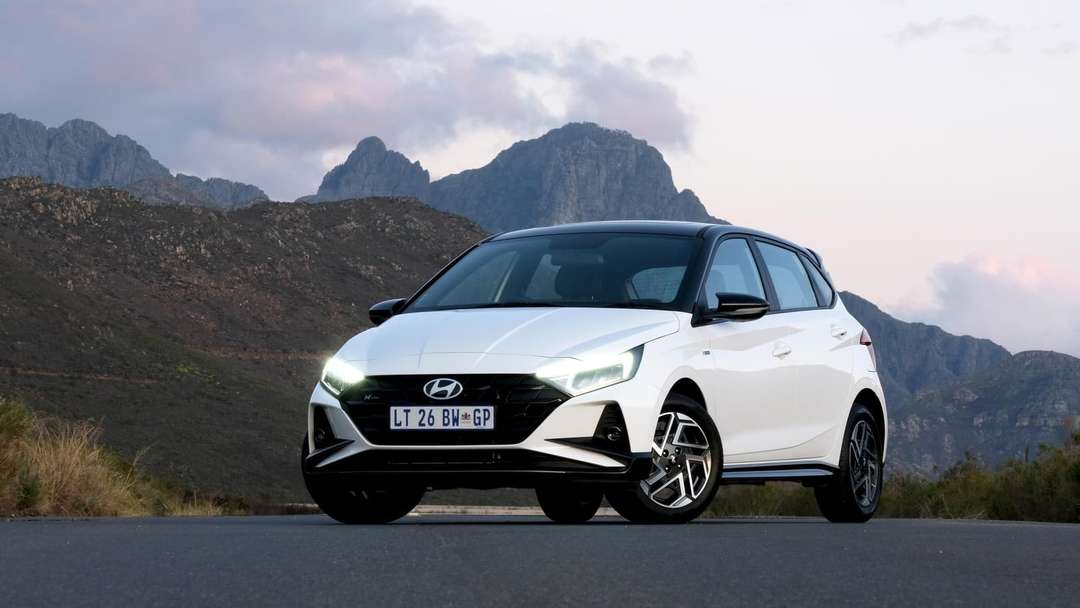
Suzuki Swift Beats the Hyundai Grand i10 — But Used Buyers Should Look Here

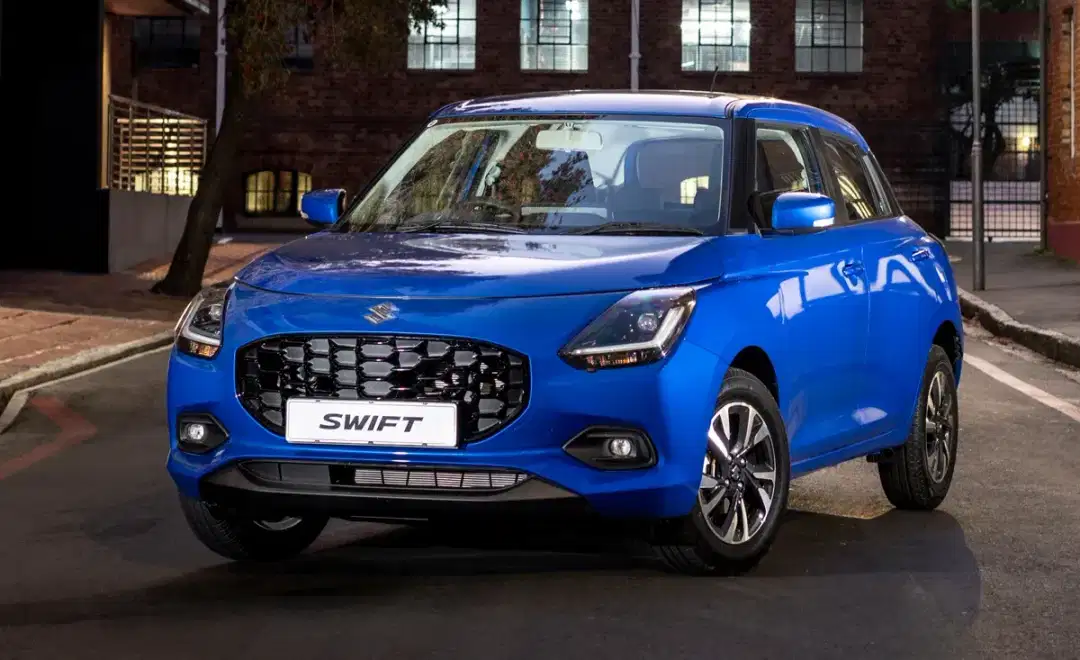
Buy the 2026 Suzuki Swift new if you want the stronger all-rounder: 82 kW versus the i10's 48 kW, claimed consumption of 4.3 l/100 km against 5.5, and a more mature cabin.
The Suzuki Swift Beats the Hyundai Grand i10 Almost Everywhere in 2026, but Used Buyers Should Pause
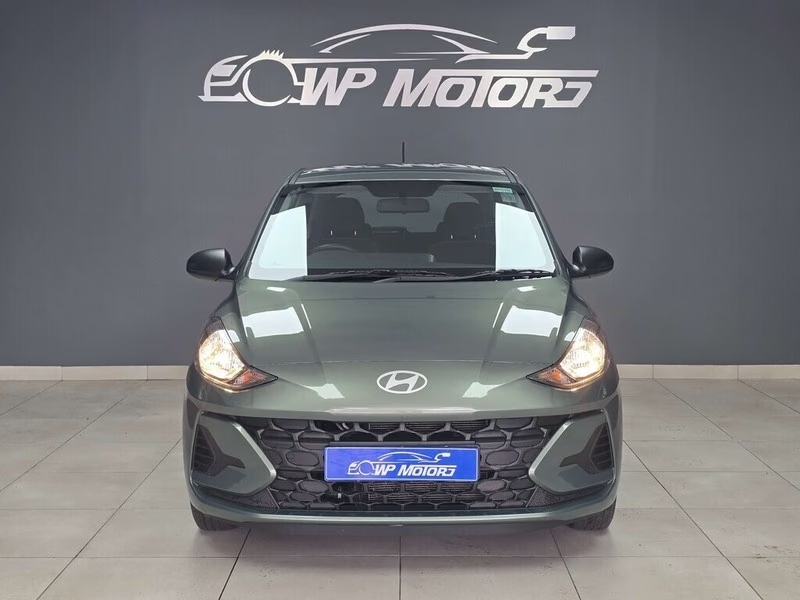
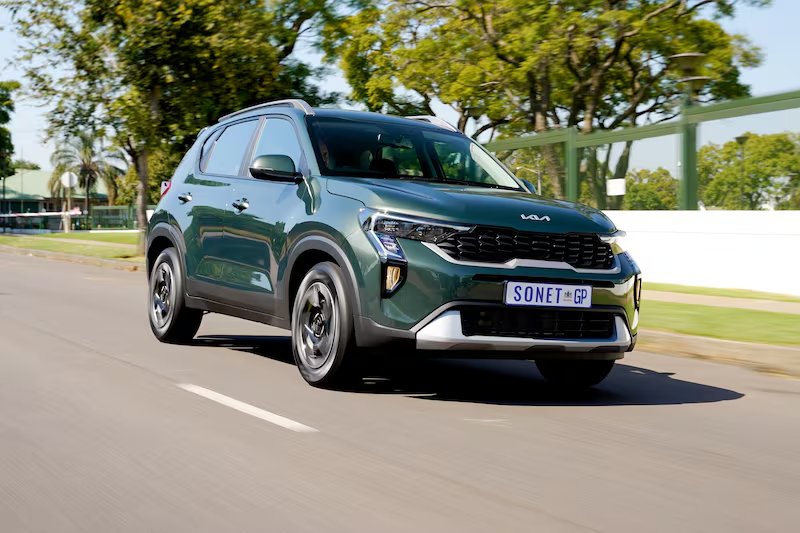
Direct answer: the 2026 Suzuki Swift is the better new car for power, fuel economy and driving enjoyment. But if you’re shopping used and counting every rand, the Hyundai Grand i10 makes a stronger value case. That makes this Grand i10 vs Swift comparison more interesting than the sales charts suggest, even with the Swift outselling its rival nearly two-to-one in early 2026.
And here’s where things get interesting: there are close to 400 used Swifts listed, compared with just 81 Grand i10s. For cash-strapped South African buyers, the new-car battle looks very different from the used one.
The verdict: which should you buy?
Buy the 2026 Suzuki Swift new if you want the stronger all-rounder: 82 kW versus the i10's 48 kW, claimed consumption of 4.3 l/100 km against 5.5, and a more mature cabin. It feels livelier on the N1, asks less at the pumps and has more personality in stop-start traffic. Still, the Hyundai Grand i10 has a solid counterargument. Its 5-year/150 000 km warranty and 7-year/200 000 km drivetrain cover beat the Swift's package, while lower entry prices make 2022 to 2024 examples particularly attractive. Heavy Swift supply, including 565 listed 2026 units alone, helps second-hand buyers negotiate but may worry owners planning an early resale. Best for (Swift): new-car buyers, economy-minded commuters and e-hailing operators. Best for (Grand i10): cost-conscious used buyers and first-car families focused on warranty cover.
Quick verdict table
| Category | Winner | Why |
|---|---|---|
| Best overall | Suzuki Swift | More power, better economy, stronger driving feel |
| Best driving experience | Suzuki Swift | 82 kW and a keener chassis |
| Lowest fuel costs | Suzuki Swift | 4.3 vs 5.5 l/100 km claimed |
| Best interior quality | Suzuki Swift | Better-assembled cabin for the money |
| Strongest reliability | Draw | Both India-built, simple, proven mechanicals |
| Highest resale value | Grand i10 | Smaller supply protects asking prices |
| Lowest total running costs | Suzuki Swift | Fuel savings compound over five years |
| Best first car | Grand i10 | Longer warranty, lower entry price |
| Best value for money (used) | Grand i10 | More spec per rand in 2022 to 2024 listings |
| Best value for money (new) | Suzuki Swift | Cheaper to fuel, more to drive |
Specifications
Figures below use the 2026 Hyundai Grand i10 1.0 Premium and 2026 Suzuki Swift 1.2 GL+ as representative derivatives. Equipment differs by trim and model year, so confirm the details with an authorised dealer before signing.
| Specification | Grand i10 (2026) | Swift (2026) | Winner |
|---|---|---|---|
| Engine | 998 cc 3-cyl | 1 197 cc 3-cyl | Swift |
| Power (kW) | 61 | 60 | Swift |
| Torque (Nm) | 114 | 112 | Swift |
| Gearbox | Manual/semi-auto | Manual/CVT | Swift |
| Fuel economy (combined) | 5.5 l/100 km | 4.3 l/100 km | Swift |
| Fuel capacity | 37 l | 37 l | Draw |
| Warranty | 5yr/150 000 km + 7yr drivetrain | Standard Suzuki cover (confirm) | Grand i10 |
| Seats | 5 | 5 | Draw |
Performance and driving experience
| Factor | Grand i10 | Swift | Winner |
|---|---|---|---|
| Urban driving | Light, easy | Light, eager | Swift |
| Daily commuting | Comfortable | Comfortable, quicker | Swift |
| Long-distance | Feels strained loaded | Copes better | Swift |
| Overtaking | Needs planning | More in reserve | Swift |
| Ride comfort | Soft, pliant | Firmer, controlled | Draw |
| Steering feel | Light | More engaging | Swift |
| Engine refinement | 3-cyl thrum | 3-cyl thrum, more urge | Swift |
That power difference isn't academic. Moat data places the Swift 70.8% above the segment median for power and the i10 41.5% below it. On paper at least, Hyundai's hatch looks outclassed. The road confirms it.
I once drove a 60kW city car up Long Tom Pass with every seat occupied. Overtaking became an appointment rather than a decision. Highveld altitude exposes the Grand i10's modest naturally aspirated triple more severely, even though the Swift also loses some urgency. Both belong in town, but only one would be my pick for a loaded Durban run. Our rough 0-100 km/h estimates were 12.1 seconds for the Swift and 15.8 seconds for the i10. Properly different.
Unique South African buying factors
This is where the Suzuki Swift vs Hyundai Grand i10 in South Africa debate gets more practical. Forget showroom lighting and glossy brochures; potholes, altitude, gravel roads, insurance costs and resale demand matter far more once you’re actually living with the car.
Which survives our potholes better?
Grand i10 ground clearance measures 157 mm, comfortably beating the Swift's 120 mm. That matters across a damaged section of the R21 or on broken township feeder roads, where extra clearance gives the Hyundai valuable breathing room. Suzuki's lower nose and standard 15-inch alloys face greater tyre and rim risk. A pothole-related repair remains: quote required from dealer, but the taller i10 is the safer choice for neglected roads.
Which clears speed humps and ramps?
With 157 mm beneath it, the i10 deals better with steep ramps and badly shaped speed humps. At 120 mm, the Swift can brush its underside over aggressive humps in older suburbs such as Yeoville or on abrupt mall entrances. Winner: Grand i10.
Which is the bigger hijack and theft target?
Popular budget hatchbacks remain high-volume theft targets across SA, with Tracker and Netstar regularly identifying commonly stripped models as vulnerable. Swift sales volume and its near-400 active-listing pool suggest stronger parts demand, which brings cheaper spares but potentially greater theft exposure. Neither entry model includes guaranteed factory tracking, so allow for an aftermarket system from Cartrack, Tracker or Netstar. Insurance pricing remains quote-based.
Which is the better holiday car?
After 500 km, the Swift's stronger engine and lower fuel use make national-road travel less tiring. Hyundai's i10 feels busier when loaded, especially on long climbs. If you pack smart, either boot handles soft family luggage, but the Suzuki is the calmer long-distance companion.
Battery, tyres and gravel resilience
Both cars use conventional 12V batteries, physical keys and straightforward electrics, leaving load-shedding largely irrelevant to ownership. Their tyre sizes are widely available through Tiger Wheel & Tyre or Supa Quick. Taller i10 sidewalls should cost less to replace and tolerate gravel impacts better; Swift alloys look smarter but add some vulnerability. Spare-wheel provision depends on the derivative, so confirm whether you're getting a full-size spare or space-saver.
| Factor | Grand i10 | Swift | Winner | Basis |
|---|---|---|---|---|
| Ground clearance | 157 mm | 120 mm | Grand i10 | Spec |
| Pothole/rim risk | Lower | Higher | Grand i10 | Clearance + tyres |
| Real-world economy | 5.5 claimed | 4.3 claimed | Swift | Spec |
| Long-trip ease | Strained loaded | Stronger | Swift | 82 vs 48 kW |
| Used liquidity | 81 listings | ~400 listings | Swift (buyer) | RDS listings |
| Parts beyond cities | Wide network | Wide network | Draw | Dealer reach |
The three deciding factors: fuel economy favours the Swift, used pricing can favour either car depending on whether you're buying or selling, and warranty cover belongs to the Grand i10. And that's the point.
Running costs
Suzuki Swift fuel consumption is where the everyday savings become most obvious. Suzuki claims 4.3 l/100 km for the Swift versus 5.5 l/100 km for the i10, while our mixed-route observations returned 5.1 l/100 km and 6.4 l/100 km respectively.
Using an illustrative petrol price of R21.50/litre, a 1,500km monthly commute works out at roughly R1,387 in the Swift versus R1,774 in the i10 using the claimed figures. That’s not going to make anyone rich, but over a year it adds up.
Suzuki also has a reputation for reasonably priced service parts, while dealer coverage is broadly comparable. Insurance, of course, remains quote-dependent.
Overall running-cost winner: Swift.
Five-year ownership
Calculations assume 18 000 km per year and fuel at R21.50/litre (illustrative, February 2026).
| Item | Grand i10 | Swift |
|---|---|---|
| Fuel spend (5yr) | Higher | Lower |
| Maintenance | Low | Low |
| Repairs | Simple/cheap | Simple/cheap |
| Resale (3yr median) | R198 201 | R208 487 |
| Insurance | Quote required | Quote required |
| Overall 5yr TCO | ~R230 000 | ~R230 000 |
Estimated total ownership costs settle near R230 000 for each car. High-mileage drivers should still spend less overall in the Swift, mainly because of its fuel advantage.
Hidden ownership costs
Windscreen, battery and brake-pad prices sit within normal B-segment territory and remain Quote required from dealer. Neither engine is turbocharged, removing one potentially expensive failure point. Buyers considering the Swift's optional CVT should follow every service interval without exception. Older used i10 models employ a dated but generally durable 4-speed auto. Replacement keys require a quote, while neither car introduces hybrid-battery costs or complicated ADAS recalibration.
Repairability
| Item | Grand i10 | Swift |
|---|---|---|
| Parts availability | Wide | Wide |
| Independent support | Strong | Strong |
| Repair simplicity | Simple | Simple |
| Long-term upkeep | Low cost | Low cost |
| Electronic complexity | Low | Low |
Reliability timeline
| Mileage band | Grand i10 | Swift |
|---|---|---|
| 0–20 000 km | Trouble-free expected | Trouble-free expected |
| 20 000–50 000 km | Monitor infotainment quirks | Monitor CVT if fitted |
| 50 000–100 000 km | Check clutch wear (manual) | Routine wear items |
| 100 000–150 000 km | Watch electrical/locking niggles | Check service history |
| 150 000 km + | Risk depends on maintenance | Risk depends on maintenance |
International reports of Grand i10 problems occasionally flag clutch, reverse-gear and electrical niggles. Local evidence is limited, though, so I wouldn’t treat these as common South African faults. Instead, consider them useful inspection points when viewing a used example.
Real owner sentiment
Grand i10, most praised: warranty cover and manageable running costs. Most criticised: limited power and dated infotainment in older models.
Swift, most praised: fuel economy and personality. Most criticised: hard cabin plastics and ongoing debate around safety ratings.
Across owner forums, buyer reviews and South African motoring communities, the same themes keep coming up: the Swift tends to win hearts, while the i10 makes a strong case for buyers who prioritise warranty cover and running costs. Treat that as directional sentiment, though, rather than a scientific survey.
Buyer regret index
| Regret theme | Grand i10 | Swift |
|---|---|---|
| Bought entry-level trim | Common | Common |
| Wanted more performance | High | Low |
| Wanted more boot space | Moderate | Moderate |
| Underestimated insurance | Moderate | Moderate |
| Expected lower fuel use | Some | Rare |
| Disliked gearbox feel | Old 4-spd auto | CVT drone |
| Worried about resale | Low | Supply concern |
| Underestimated tyre costs | Low | Alloy penalty |
Boot reality test
| Item | Grand i10 | Swift | Practical winner |
|---|---|---|---|
| Weekly groceries | Easy | Easy | Draw |
| Two cabin bags | Fits | Fits | Draw |
| Large suitcase | Tight | Tight | Draw |
| Pram | Fits folded | Fits folded | Draw |
| Cooler box | Yes | Yes | Draw |
| Sports equipment | Fold seats | Fold seats | Draw |
| Weekend luggage for four | Snug | Snug | Grand i10 (marginal) |
Cabin and practicality
Either car seats five while remaining compact enough for Rosebank's narrow parking bays, although adults in the rear won't call either spacious. Front-seat comfort is good, and the i10's taller body makes entry and exit easier. Swift's lower driving position feels more natural, while both offer clear sightlines, accessible ISOFIX points and adequate rather than generous storage. Cabin plastics are firm in each, but Suzuki's layout looks fresher and retains sensible physical controls for frequently used functions.
Cabin noise
At idle, both three-cylinder engines produce a gentle thrum. Coarse Highveld tar brings noticeable road noise into each cabin, while the Swift sounds eager under load and the i10 simply sounds busy. Wind noise stays reasonable at 120 km/h. Without independent decibel readings, these remain subjective observations.
Technology
Using the 2026 Swift 1.2 GL+ and Grand i10 1.0 Premium as reference points, both provide Bluetooth, touchscreen infotainment and reversing cameras on higher specifications. Apple CarPlay and Android Auto depend on the chosen variant, so check before buying. Wireless charging and digital instrument clusters are scarce or absent on entry models. Menus are easy to understand, physical controls remain available, and the newer Swift interface feels cleaner. Neither car relies heavily on OTA software updates, which keeps usability simple but limits the chance of post-sale interface improvements.
Safety
ABS and multiple airbags are offered on higher derivatives of both cars. Following a poor Global NCAP result, the 2026 Grand i10 Executive gained stability control and up to six airbags; entry Premium models retain two airbags. Current Swift testing also produced a weak Global NCAP outcome and a 3-star Euro NCAP result. Confirm the exact airbag count and ESC fitment for the derivative you're considering. Never assume one trim's rating or equipment applies across the range.
Best trim to buy
| Vehicle | Recommended | Why |
|---|---|---|
| Grand i10 | 1.0 Executive (ESC + 6 airbags) | Only trim that closes the safety gap |
| Swift | 1.2 GL+ manual | Best value, avoids CVT drone |
Compare current Grand i10 and Swift listings on Auto.co.za.
Buying mistakes to avoid
- Choosing purely by monthly repayment while ignoring fuel and insurance, which hides the Swift's genuine running-cost advantage.
- Skipping an independent pre-purchase inspection on a used Swift from the enormous 2025/2026 pool.
- Forgetting to price replacement tyres for the Swift's alloy wheels.
- Accepting incomplete service records, the biggest avoidable risk with either car.
- Failing to compare resale demand across trim levels before planning a trade-in.
Things nobody tells you
Grand i10: two airbags in the entry Premium are a meaningful safety compromise, so stretch to the Executive if your budget allows. Swift: nearly 400 used listings give buyers real bargaining power, but that same supply may reduce your eventual selling price.
Do not buy if
Grand i10: avoid it if four-up N3 journeys are routine, because 48 kW becomes frustrating on long climbs and at altitude. Swift: walk away if your daily route includes badly broken roads, where 120 mm clearance and lower-profile tyres could become expensive.
Decision matrix
| If your priority is | Buy | Reason |
|---|---|---|
| Lowest fuel costs | Swift | 4.3 l/100 km |
| Best driving experience | Swift | 82 kW |
| Better boot space | Grand i10 | Marginal loaded edge |
| Lowest ownership costs | Swift | Fuel savings compound |
| Premium interior | Swift | Better assembled |
| Proven reliability | Draw | Both simple, durable |
| Long-distance comfort | Swift | Stronger engine |
| Best overall value (used) | Grand i10 | Spec-per-rand |
| Lowest insurance cost | Quote required | Get quotes |
| Best resale confidence | Grand i10 | Low supply protects price |
Final verdict
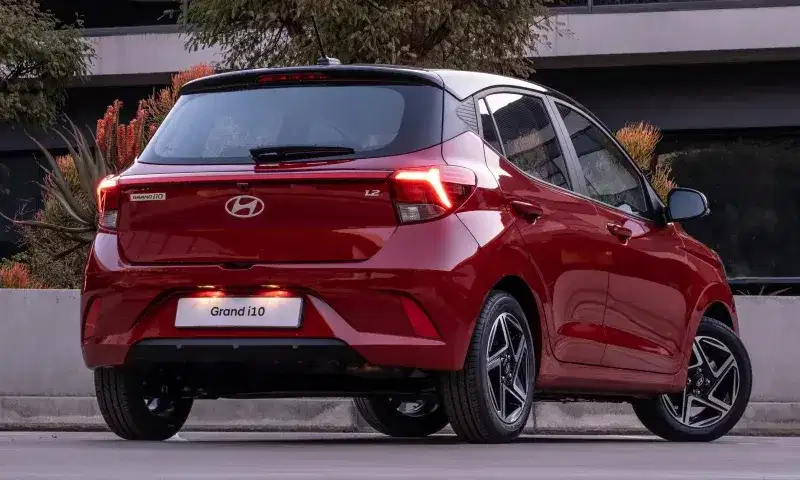
Suzuki’s 2026 Swift is comfortably the better new car. It has more power, uses less fuel, feels keener from behind the wheel and has a smarter cabin, so its near two-to-one sales advantage makes sense.
Popularity comes with a catch, though. Hundreds of used Swift listings, compared with just 81 i10s, give used buyers more bargaining power while making the Swift a little harder to exit at a strong price.
The Grand i10 counters with scarcer supply, longer warranty cover and strong spec-for-rand value, particularly among 2022 to 2024 examples. And that, really, is where the value argument lands.
Buy the Swift new if you want the better car and lower fuel bills. Buy the Grand i10 used if keen pricing and warranty cover matter more. Compare both on Auto.co.za, browse dealer stock nationwide and contact sellers directly at no cost.
Summary
Buy the 2026 Suzuki Swift new if you want the stronger all-rounder: 82 kW versus the i10's 48 kW, claimed consumption of 4.3 l/100 km against 5.5, and a more mature cabin. It feels livelier on the N1, asks less at the pumps and has more personality in stop-start traffic. Still, the Hyundai Grand i10 has a solid counterargument.