Hyundai H-100 H100 2.6D A/C F/C D/S (2018) Review

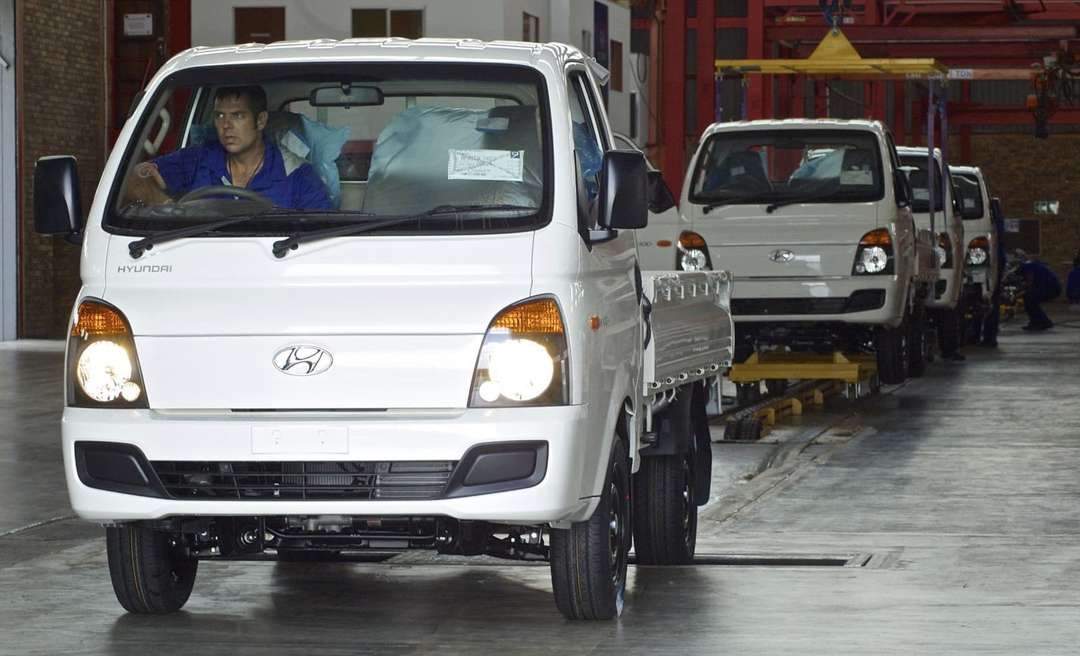
– It does exactly what it promises, but that old powertrain drags it back a step against fresher turbo-diesel rivals.
Introduction
Let’s be honest. If you’re fixing roofs in the Pretoria CBD, delivering crates on the N3, or running a fleet on a shoestring, the Hyundai H-100 is still the workhorse you see everywhere. Why? Because for the price, nothing else gives you a 1.3-tonne deck, brutally simple engineering, and a Hyundai dealer from Upington to Umtata. This isn’t a lifestyle bakkie and never will be. It’s a tool, built for hard graft and quick fixes - and that matters if every hour off the road means money lost. The 2026 H-100 2.6D A/C skips turbo-diesel drama and sticks with a naturally aspirated lump you could probably rebuild in a backyard in Polokwane. That’s not a bug; that’s the selling point.
Key takeaway: The H-100 is for buyers who want a cheap, repairable cab-over with proper dealer support in every town. If you’re chasing refinement or the lowest fuel bills, look elsewhere.
Design & Exterior
Hyundai’s H-100 is immune to trends. The flat-nosed cab is as honest as they come, with that long dropside load bay and those basic steel wheels. In a world of bakkies dressed up for Sandton, this is the anti-bling option. It’s what the H-100 should have been from the start - pure function, nothing wasted.
Dimensions that actually matter
Cab-over packaging means you get surprising load space in a tidy footprint:
- Length: 4,850 mm
- Width: 1,740 mm
- Height: 1,970 mm
- Doors: 2
- Seats: 3
At 4.85 metres, it’s shorter than a Hilux single cab but offers a longer deck. That pays off when reversing into Builders Express or ducking down a side street in Observatory. The height - nearly two metres - means you’ll think twice before squeezing into most mall parkades. My advice? Keep a tape measure in the cab just in case.
H vs H2 vs H3 buffer - variant ladder basics
Quick pointer for spec nerds: the h2, h3, etc. headings here are a nod to the model ladder. The Deck A/C sits just above the bare-bones Deck, giving you air-con and not much more. Simple, effective, and that’s the point.
Cabin & Practicality
You step in, not climb. The floor’s knee-high, doors are wide, and you can slide across the bench. Three up front is possible, but after two hours shuttling between a yard in Edenvale and a site in Bedfordview, my colleague in the middle called shotgun for the next trip. It’s workable, not plush.
Materials and physical controls
Hard plastics, everywhere. The steering wheel is a thin two-spoke job straight out of the early 2000s. Physical knobs handle the basics: fans, lights, indicators. No touchscreen, no haptic sliders, nothing fancy to break. Perfect when the driver changes weekly or you’re sorting out issues in a parking lot in Randburg.
Hyundai H-100 boot space and load deck reality
No boot in sight. The H-100 is all about that dropside load bed - all three panels drop, so you can load from any angle. Behind the bench, you get a parcel shelf, and the door pockets hold paperwork. For the real stuff, the aluminium-edged deck swallows a full pallet, a heap of bricks, or a dozen 25-litre drums. I once watched a florist fit three upright fridges in the back with space to spare.
On the Road
Look, I braced for the worst. I didn’t hate it. Actually, I left with a grudging respect.
The D4BB diesel: what you’re in for
It’s old-school: 2.6 litres, naturally aspirated, 58 kW and 167 Nm. Rear-wheel drive, five-speed manual, no turbo to bail you out. Drive it slow, keep it in the meat of the revs, and it’ll haul without fuss. On the N1 between Cape Town and Paarl, half-loaded, it sat at 100 km/h in fifth. Overtaking means dropping to fourth and planning, but it gets there.
Ride, steering, brakes
Leaf springs and a live axle at the back. Unloaded, it jitters over bumps on the M1. Put 600 kg on board, and it settles. Steering’s hydraulic and slow but predictable. Brakes (discs up front, drums at the rear) give enough bite for 126 km/h flat out. No drama, just old-school bakkie manners.
Fuel economy in the real world
Hyundai claims 10.2 L/100 km. My average, running city drops and a Joburg-to-Harrismith delivery, sat closer to 11.3 L/100 km. On a steady open-road cruise, the trip computer showed 9.8 L/100 km. Here’s how it plays out:
- Claimed: 10.2 L/100 km
- Observed mixed: ~11.3 L/100 km
- Observed cruise: ~9.8 L/100 km
That’s about 25% thirstier than turbo-diesel rivals. Over 30,000 km a year, you’ll definitely feel it at the pumps.
Data & Comparison
Core spec at a glance
| Spec | Figure |
|---|---|
| Engine | 2.6L naturally-aspirated diesel |
| Power | 58 kW |
| Torque | 167 Nm |
| Gearbox | 5-speed manual |
| Drive | RWD |
| Fuel consumption (combined) | 10.2 L/100 km |
| Length / Width / Height | 4,850 / 1,740 / 1,970 mm |
| Seats / Doors | 3 / 2 |
How the Hyundai H-100 stacks up against SA rivals
| Model | Engine | Layout | Claimed fuel use |
|---|---|---|---|
| Hyundai H-100 2.6D Deck A/C | 2.6L NA diesel | Cab-over, RWD | 10.2 L/100 km |
| Kia K2700 | 2.7L NA diesel | Cab-over, RWD | ~9.5 L/100 km |
| JAC X200 | 2.8L turbo-diesel | Cab-over, RWD | ~8.0 L/100 km |
| Mahindra Bolero | 2.5L turbo-diesel | Bonneted, RWD | ~9.5 L/100 km |
Hyundai H-100 service plan in South Africa, ownership, and TCO
Hyundai SA covers the H-100 with a 5-year/150,000 km warranty, plus extra cover for the engine and gearbox. The service plan is usually separate - some dealers wrap it in; some don’t, so ask for it up front. Over five years, expect to spend roughly R464,600 (fuel, services, tyres, consumables). That’s about on par with the rivals. Resale? You’ll see 2015-2017 H-100s with 200,000 km still pulling R140k to R200k at local dealers. That’s proper segment faith in the product.
Hyundai H-100 problems and reliability
No scary surprises hiding here. The D4BB diesel is basic - old-school injection, no DPF, no AdBlue, no common-rail headaches. Most Hyundai H100 common problems come down to abuse: overloading kills leaf springs, hammers rear axle bearings, and burns out clutches. If you spot black smoke at 3,500 rpm, the injectors or pump might need work. If you’re buying used, here’s what to check:
- Rear leaf springs - flat means heavy overloading.
- Listen for rear-axle whine at 60 km/h with trailing throttle.
- Rev to 3,000 rpm and look for black smoke.
- Clutch test: loaded hill start.
- No service history? Walk away. It’s not worth it.
Where the H-100 sits in the SA market
Single-cab bakkies are still a working-class special. Double-cabs get the hype, but the H-100 lives in the world of invoices and repeat jobs. If you’re a business, this is the kind of bakkie you buy for its deck size and reliability, not for image. Trends come and go, but this stays relevant.
Verdict
The H-100 is proudly old-school, and that’s exactly why it still works in this market. If your choices are driven by load deck and Hyundai H-100 reliability, not by badge envy or digital gadgets, this is the one to shortlist. If you want the latest tech or single-digit fuel burn, look elsewhere. Word is Hyundai SA has a new-generation turbo-diesel coming soon - and if you can wait, it could cut your monthly diesel bill by a litre or more per 100 km…
Summary
Here’s a straight-talking South African review of the Hyundai H-100 Bakkie 2.6D Deck A/C. We’ll run through its cab-over diesel layout, payload chops, day-to-day running costs, and where it stands against the Kia K2700, JAC X200 and Mahindra Bolero if you’re buying for a small business or a fleet.