Hyundai Creta 1.5 Premium (2021) Review
Sensible, practical, but left behind by faster-moving competition. Still worth a test drive — but try two Chinese rivals before making your pick…
Introduction
Right, so - if you want a hassle-free family crossover with backup that actually means something in South Africa, the Hyundai Creta 1.5 Premium still has a place. But if you want airbags everywhere or the latest screens, keep your wallet shut. That's the honest read on Hyundai's volume-seller as we are deep in 2026, with Chinese rivals like Haval and Chery flooding the market and undercutting the Koreans on price and kit. This review is about the manual-only Premium - the one you'll actually see on the road - and whether it still holds up in the face of shifting expectations.
Key takeaway: The Creta 1.5 Premium is built for buyers who value aftersales support above spec-sheet bragging rights - but its Chinese rivals now beat it on price and features.
Design & Exterior
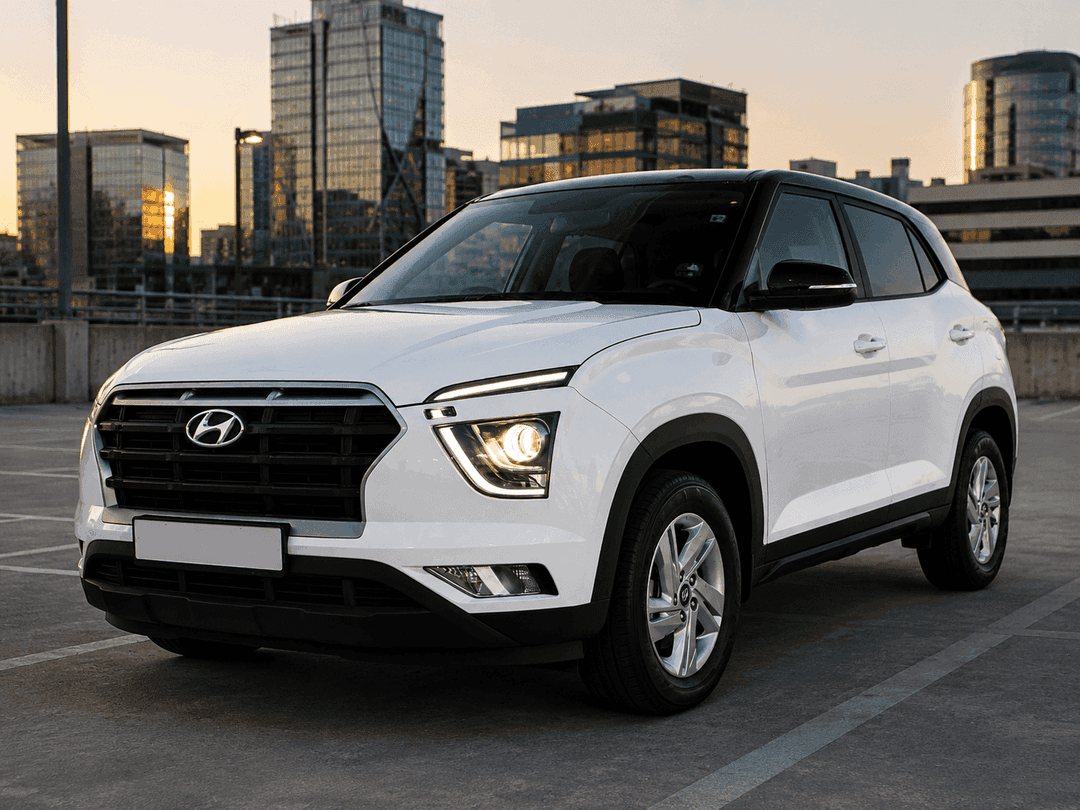
Second-generation Creta (SU2i, built in India for us) finally gave Hyundai's small crossover a look you won't forget in the parking lot. Split headlights, a gaping grille, sharp creases everywhere. Some hate it. I think it works - especially in darker paint, where the shapes make more sense.
How the Premium differs visually
Premium models roll on 16-inch alloys, not the Executive's 17s. Might sound second-rate, but the taller tyre wall is a blessing for Gauteng potholes. Tyres are cheaper at Tiger Wheel & Tyre, too. And that's the point.
- 5 doors, FWD, the usual crossover stance
- Smaller wheels, chunkier tyres - better ride, less rim damage
- Roof rails and cladding standard, so you don't lose the SUV look
Where it sits in the segment
It's the softer, less flashy cousin to the Kia Seltos. Against the Haval Jolion and Chery Tiggo 4 Pro, the Creta looks more mature but doesn't shout about features. The 190 mm ground clearance is a real asset - ask anyone who's run the last 20 km of gravel between Harrismith and Underberg after a summer storm. That extra bit of clearance is worth more than a badge.
Cabin & Practicality
Step in and you see exactly where Hyundai cut costs. Hard plastics on the dash, door cards you can rap your knuckles on, and a steering wheel that's basic urethane - only the higher trims get leather. It won't put off most buyers, but you feel it every day.
Ergonomics and controls
Physical dials for aircon, real buttons for skipping tracks, and an actual volume knob. I’ll always back that over some cheap tablet glued on. Driving on the highway, I didn't have to take my eyes off the road to adjust the fan. Small mercy on a long haul.
Boot and rear seat
Boot space is one of the Creta's big wins. The floor is flat, there's no lip to wrestle groceries over, and the boot light actually lets you see your bags at night. ISOFIX is fitted to the outer rear seats, and knee room behind my own (six-foot) driving position was just okay on a 40-minute run. If you pack smart, you’ll fit a pram and the week’s shopping - but a tall teen and a forward-facing child seat will be on speaking terms.
- Flat boot floor, no awkward loading lip
- Boot light that actually works at night
- ISOFIX on the outer rear seats
- Physical controls for climate and audio are still here
On the Road
Hyundai's naturally aspirated 1.5-litre Smartstream puts out 84 kW and sends it to the front axle via a 6-speed manual. On paper at least, that's not much next to the turbo Chinese alternatives, which boast 105 kW and more shove. But the Creta’s lighter than you’d think, and the manual lets you squeeze what you need out of it. It’s what the Creta should have been from the start.
The manual gearbox question
Shifts are light, reasonably precise, and the clutch is easy to live with. Anyone trading up from a compact hatch will get the hang of it in a week. The trade-off? Premium spec is manual-only. If you’re stuck in Sandton or the Cape Town CBD every morning, you’ll wish you spent more for the CVT Executive. That's not a flaw - just the way the range is built.
Highway behaviour and ride
Indian-market suspension has its pros and cons. In town, over broken tar and patched potholes, the Creta soaks it up. But at 120 km/h on the N1 north of Pretoria, steering feels vague around the centre, and side winds nudge you off line more than you'd like. Not dangerous, just a bit floaty. That 190 mm ride height gives you clearance, but not cornering confidence - don’t expect Polo GTI moves.
Real-world fuel economy
Measured returns on the CVT version were about 6.7 L/100 km, with the manual Premium about the same if you’re gentle. Push it hard at Highveld altitude, and you’ll see 8 L/100 km. The 50-litre tank gives you a real-world 650 km between fill-ups - and yes, I saw that number on a long Easter trip, even with the aircon running and the boot full.
Data & Comparison
Here's the money talk, which matters more than any marketing in 2026.
Ownership numbers that matter
- 5-year/150 000 km warranty
- 5-year/90 000 km service plan for scheduled maintenance
- 7-year/150 000 km roadside assistance
- Estimated 5-year ownership cost: roughly R230 000 for fuel, tyres, insurance, and wear items
The Creta's service plan - 5 years/90 000 km - beats most competitors, and that’s half the reason it still moves metal for Hyundai SA.
Hyundai Creta vs the segment
| Model | Power | Gearbox | Warranty | Positioning |
|---|---|---|---|---|
| Hyundai Creta 1.5 Premium | 84 kW | 6MT | 5yr/150 000 km | Aftersales-led |
| Haval Jolion Pro 1.5T Premium | 105 kW | 7DCT | 5yr/100 000 km | Tech-heavy budget |
| Chery Tiggo 4 Pro 1.5T Urban | 108 kW | CVT | 5yr/150 000 km | Cheapest turbo route |
| Kia Seltos 1.5 EX | 84 kW | CVT | 5yr/unlimited | Sibling, more polished |
Segment trend and what it tells you
Market data for June–November 2025? The crossover segment bounces between 34 and 42 on the tracker, while proper SUVs are well into the 70s. That tells you most Creta buyers are deal-hunters, not badge snobs. Price is everything, and the Creta's sticker now faces far more aggressive competition than it did three years ago.
Editorial Focus
Budget Crossover Worth It?
Let’s not sugar-coat it. The Creta 1.5 Premium isn’t the value king it was at launch - price is now north of R460 000, and at that money you have to stare down the Jolion Pro with more power, more kit, and six airbags for R390 000. The Premium makes do with two airbags. That's not just a stat - it's a real safety gap, and you'd be mad to ignore it. The Jolion gives you six standard. So, why would you still consider the Creta?
Three reasons, and they’re all about life after purchase. Hyundai has dealers in places Haval and Chery haven’t reached. Parts pricing is predictable. Resale isn’t brilliant, but it’s a safer bet than the Chinese brands - for now. And that service plan takes the sting out of early ownership costs.
If you can stretch to the Executive, do it - the extra airbags alone make it a no-brainer. If not, the Premium is only a sensible buy if you plan to keep it through the warranty, and you live within an hour of a Hyundai dealer. Otherwise? Shop around. That matters.
Verdict
The second-gen Hyundai Creta 1.5 Premium is honest about what it is: practical, easy to live with, and backed by a service plan that removes some stress. The manual is friendly, the boot is family-sized, and the ride is tuned for real SA roads. But two airbags just don’t cut it in 2026, and Chinese rivals now offer more for less. The segment has moved on - Hyundai’s pricing hasn’t, and that’s the point.
Summary
The second-gen Hyundai Creta 1.5 Premium is honest about what it is: practical, easy to live with, and backed by a service plan that removes some stress. The manual is friendly, the boot is family-sized, and the ride is tuned for real SA roads. But two airbags just don’t cut it in 2025, and Chinese rivals now offer more for less. The segment has moved on — Hyundai’s pricing hasn’t, and that’s the point.
Ratings
Pros
- ✓Aftersales support and warranty matter more to you than features
- ✓Your driving is mostly suburban or provincial, not endless highways
- ✓You keep cars through the full warranty period
- ✓You snag a discounted in-stock unit
Cons
- ✗You want top safety kit for your money — Executive is the baseline
- ✗Your commute is bumper-to-bumper every day (manual fatigue is real)
- ✗Big screens and adaptive cruise are must-haves