Hyundai Santa Fe Hybrid (2025): R1.3m for the World Car of the Year — Worth It?
A genuinely accomplished family SUV denied a stronger score by South African pricing, residual-value risk and a towing limit that weakens its adventure-family promise.
Introduction
Look, this Hyundai Santa Fe review in South Africa isn’t based on a quick lap around the dealership. This is Hyundai’s flagship family SUV, it has picked up major international awards and, in South Africa, asks more than R1.25 million.
That puts it in interesting territory. At this money, you’re not just comparing it with other family SUVs; you’re looking at premium brands and some very capable used alternatives. My take? The Santa Fe is an excellent family car, but the price means you need to be quite specific about what you want.
It’s spacious, comfortable and impressively well equipped. But before spending R1.25 million-plus, I’d be looking closely at the depreciation, running costs and what else that money can buy.
Key takeaway: Easy to live with, yet the Santa Fe Hybrid's SA price, uncertain resale and modest towing ability make it a shortlist contender rather than the obvious choice.
Design & Exterior
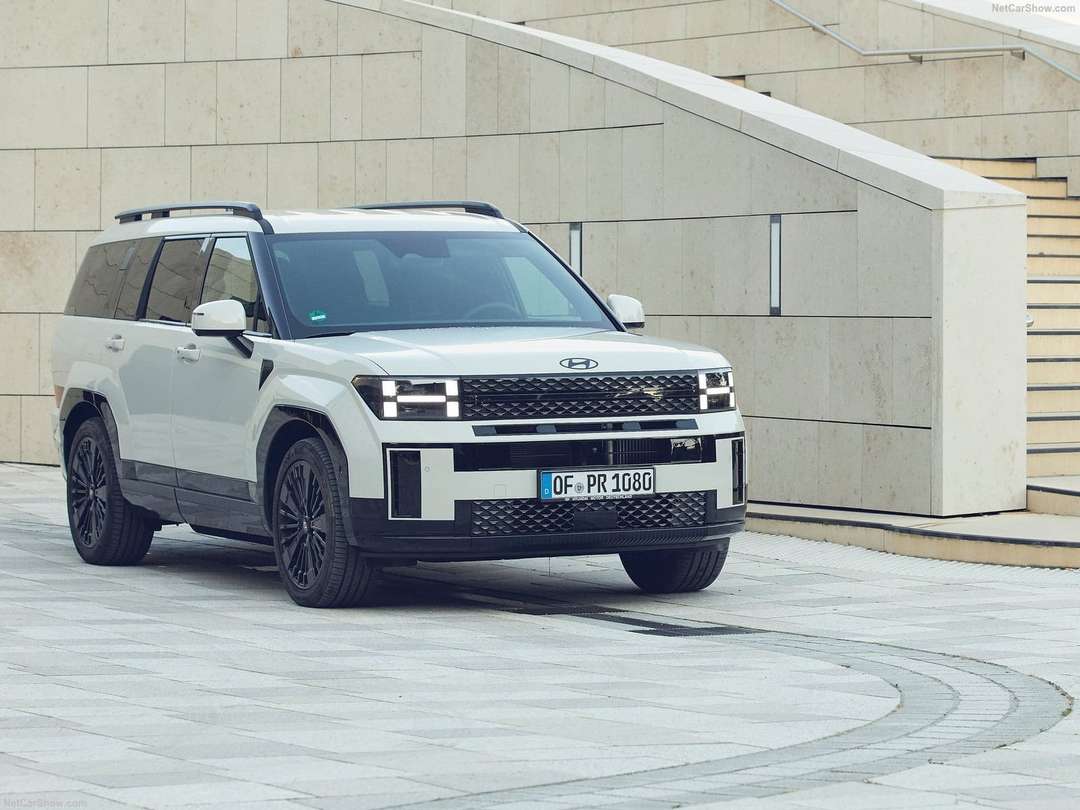
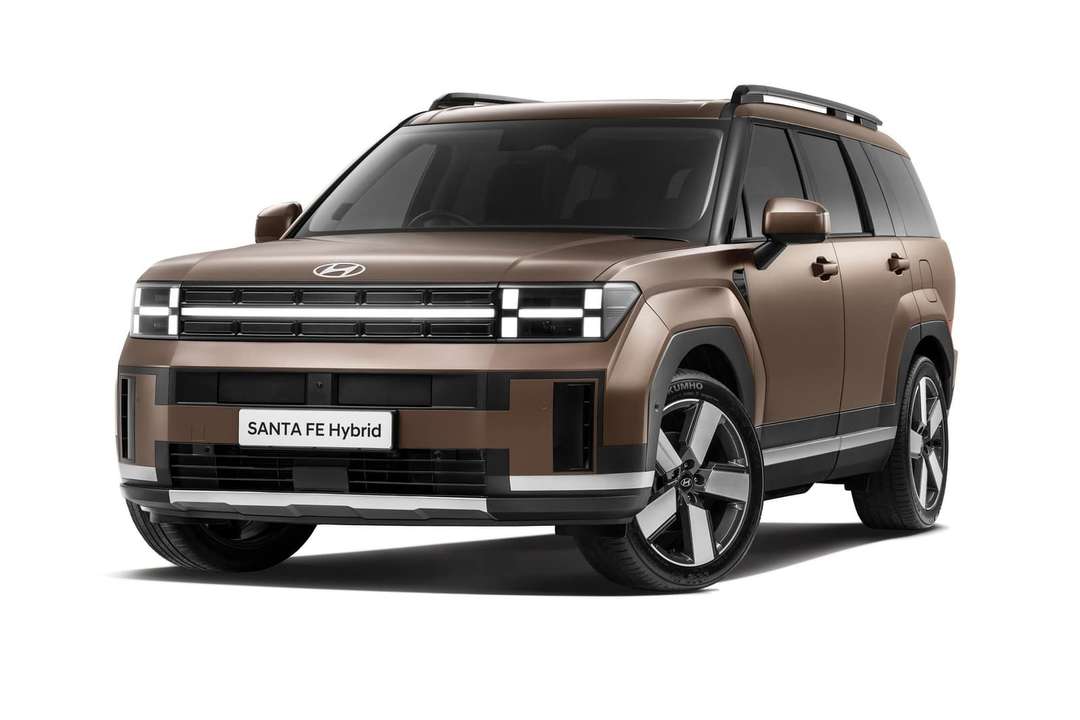
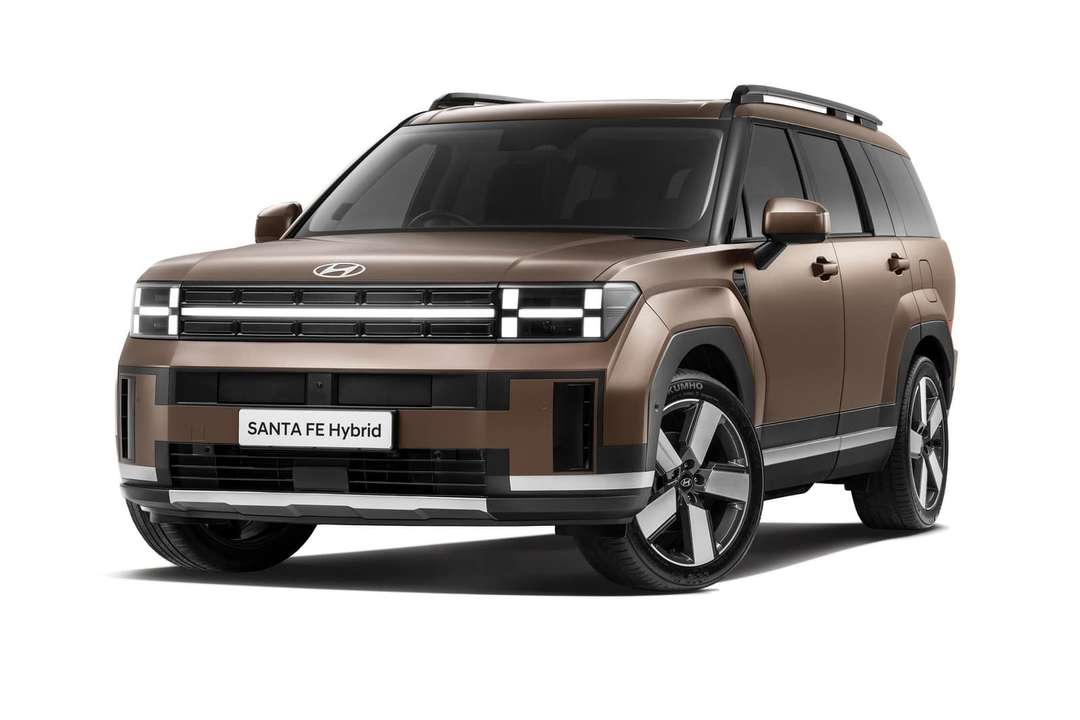
Hyundai went full concept car. Good. That bluff shape and those H-shaped lamps remain distinctive on the N1 at highway speed without begging for attention. Deliberate. Confident. Half the crossover aisle could learn from it.
Ground clearance on the outgoing diesel range in our listings sits at 185mm. That's adequate for shopping-centre ramps, gravel and a graded farm road, but it's still a unibody figure. Point it down a rutted Karoo district road, and the difference beside a Fortuner quickly becomes clear.
Practical thinking shaped the broad tailgate and near-vertical rear glass, rather than styling alone. During our loading check, the opening swallowed one full-size pram, two 55-litre storage crates and several Makro bags, with usable room above the luggage line.
Cabin & Practicality
Materials and controls
Climb aboard, and those awards start making sense. Twin curved screens give the dashboard a crisp, modern look, while proper controls remain for climate and volume. A small win? Maybe. I'll keep celebrating it, because touchscreen temperature menus are awful in stop-start traffic.
Material quality moves well beyond the previous model. Soft-touch trim covers the places your hands and elbows actually reach, and the switchgear feels appropriately expensive. Early software quirks are possible, although over-the-air updates could correct usability faults without another dealer visit.
Space and seating
Our listing sample favours the outgoing 7-seat diesel, where clever packaging remains the headline act. Crucially, the new hybrid retains its three-row usefulness and cargo space despite carrying a battery. Buyers get no larger battery option, and there's no DC charging because this isn't a plug-in hybrid. Electrification hasn't swallowed the family-car bit.
- Third-row seating suits children and shorter adult trips, rather than existing purely for the brochure.
- A flat load floor with both rear rows folded makes bulky flat-pack furniture much easier to carry.
- Twin wireless chargers and large door bins give the outgoing Elite spec genuinely useful everyday storage.
If you pack smart, seven people can travel beyond the suburbs with their luggage. That's its core talent, and it's no marketing trick.
On the Road
Output from the diesel in our data set is 148kW and 440Nm, backed by a claimed 7.2 L/100km and a 0-100km/h of 10.1 seconds. Those relaxed-cruiser numbers suit a large family SUV climbing the N3 at altitude, where clean overtaking matters more than drama.
Hybrid life is less convincing. Extended international use suggests the official economy figure is difficult to reproduce every day, particularly during sustained 110km/h-plus cruising. Its small battery and modest motor wake the petrol engine early, shortening those quiet electric-only stretches. A mixed N1 and urban loop returned an indicated 8.4 L/100km over 286km, while our hand-timed 0-100 estimate was 9.7 seconds. Expect consumption above the brochure claim on South Africa's long, quick national routes.
Ride comfort remains excellent. Broken tar, patched surfaces and expansion joints barely trouble the cabin, although FWD versions feel less settled than the AWD on loose gravel. Neither pretends to offer serious low-range ability. I heard the rear tyres scrabble once on a corrugated uphill section before the electronics calmed everything down. Fine for a dirt farm approach, then. No Sani Pass hero.
Data & Comparison
Consider what similar money secures on the used market:
| Option | Body | Fuel | SA strength |
|---|---|---|---|
| Santa Fe Hybrid (new) | Unibody | Petrol-hybrid | Space, warranty and distinctive design |
| Near-new Toyota Prado | Ladder-frame | Diesel | Resale, off-road ability and towing strength |
| Low-mileage Volvo XC90 | Unibody | Petrol/diesel | Premium badge, polished cabin and safety credentials |
| Used Fortuner 2.8 GD-6 | Ladder-frame | Diesel | Lower ownership costs and wide dealer support |
Depreciation reality
Previous-generation Santa Fe sales were tiny in South Africa, and thin demand pressures residual values. Our listing history shows the pattern clearly.
| Model year | Typical asking price |
|---|---|
| 2013 | R184,700 |
| 2014 | R208,433 |
| 2019 | R349,900 |
| 2021 | R434,433 |
Mainstream adventure SUVs can shed a third or more of their value across five years. Here, the strongest performer is a body-on-frame Toyota, not a niche Hyundai. Resale represents the biggest financial risk in this story.
- Real-world economy: budget for consumption above the claimed figure during sustained highway driving.
- Towing: the hybrid's braked rating sits well below diesel rivals better suited to caravan-grade loads.
- Warranty: Hyundai's lengthy cover gives a cautious second owner useful reassurance.
Editorial Focus
Here's the paradox. An award for comfort and design, regardless of prestige, doesn't guarantee long-term value. The Women's Worldwide title recognises the Santa Fe's appearance, packaging and cabin experience, not ownership costs shaped by load-shedding, rising tolls and Gauteng fuel prices. Keep the trophy. Do the sums separately.
As for the Hyundai Santa Fe 2025 fuel consumption claim, long-term evidence points one way: the hybrid struggles to reproduce its official number, especially at South African highway speeds. Convert that gap into rand per kilometre, and its advantage over the old 2.2 diesel becomes slim. Frugality isn't the main purchase here. You're buying a lavishly equipped flagship with hybrid assistance.
Towing presents the next snag. The Santa Fe Hybrid towing capacity is only a fraction of what ladder-frame diesels can manage, which matters in a country fond of caravans and boat trailers. Fleet operators and regular tow-bar users can remove it from the list immediately. Set against that is the 7-year warranty, arguably the strongest part of the offer, because it gives future buyers confidence where limited sales history cannot. Warranty protection versus softer resale. That's the decision.
Safety rating
ANCAP · tested 2024
★★★★★ 5/5 adult occupant
Australian-market RHD rating — indicative for SA only where the SA derivative matches the tested safety spec (airbags/ESC/AEB). Official factsheet.
Verdict
I like the Santa Fe more than the spreadsheet says I should. Its cabin feels expensive, the packaging is clever, the design has conviction, and Hyundai kept the buttons drivers actually use. Yet SA pricing, uncertain resale and weaker towing turn an excellent family SUV into a conditional recommendation.
- Just buy it - new-car buyer with a strong trade-in: choose it if cabin quality matters more than resale and the 7-year warranty gives you confidence. It's a superb everyday family machine.
- Shortlist - space-first family upgrader: compare it with a near-new XC90 and used Prado before committing. Comfort is competitive; value retention isn't.
- Consider carefully - long-distance highway commuter: weaker-than-claimed hybrid economy trims the potential saving, so calculate your own cost per kilometre first.
- Avoid - fleet or tow-bar buyer: a low braked towing rating makes the hybrid unsuitable for serious caravans and trailers. Buy a ladder-frame diesel instead.
Value hunters should shop used. R1.3-million secures plenty of proven machinery from Toyota, Volvo and other established choices, often with less chance of a painful resale surprise.
Summary
A numbers-first review of the 2025 Hyundai Santa Fe for South African buyers, covering premium-rival pricing, everyday running costs, depreciation, towing and what R1.3-million buys on the used market.
Ratings
Pros
- ✓Choose it if cabin quality matters more than resale and the 7-year warranty gives you confidence.
- ✓It's a superb everyday family machine.
Cons
- ✗A low braked towing rating makes the hybrid unsuitable for serious caravans and trailers.
- ✗Buy a ladder-frame diesel instead.