Hyundai Tucson 2.0 ELITE A/T (2016) Review
Half a point off for the GDI’s oil appetite, half a point for the underwhelming petrol. Everything else—kit, comfort, space, value—is real class-leading stuff for a 2025 used buy. It’s what the family
Introduction
Right, so you’re trawling the classifieds for a used family SUV below R300k, and the Tucson 2.0 ELITE A/T keeps coming up. Should you buy it? Short answer: yes, if the service history is watertight and the last owner didn’t treat the GDI petrol engine like it was a Corolla. This is the third-generation TL Tucson - on sale between 2016 and 2021 - and in Elite trim, it’s one of Hyundai’s strongest efforts for South African families. Now that prices have hit proper bargain levels in 2025, the value proposition shifts completely.
Key takeaway: A well-cared-for 2016–2021 Tucson 2.0 Elite A/T is my pick for a sensible family SUV under R300k in SA - generous kit, real cabin space, a modest petrol engine, and, above all, a documented service history mean more than mileage ever will.
Design & Exterior
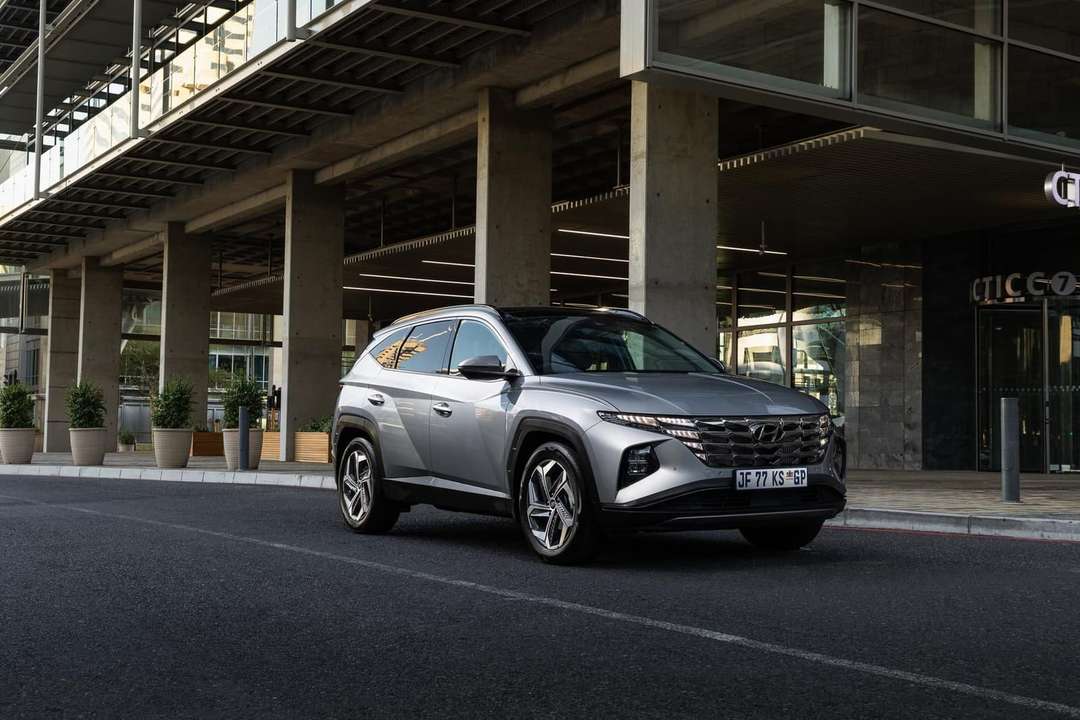
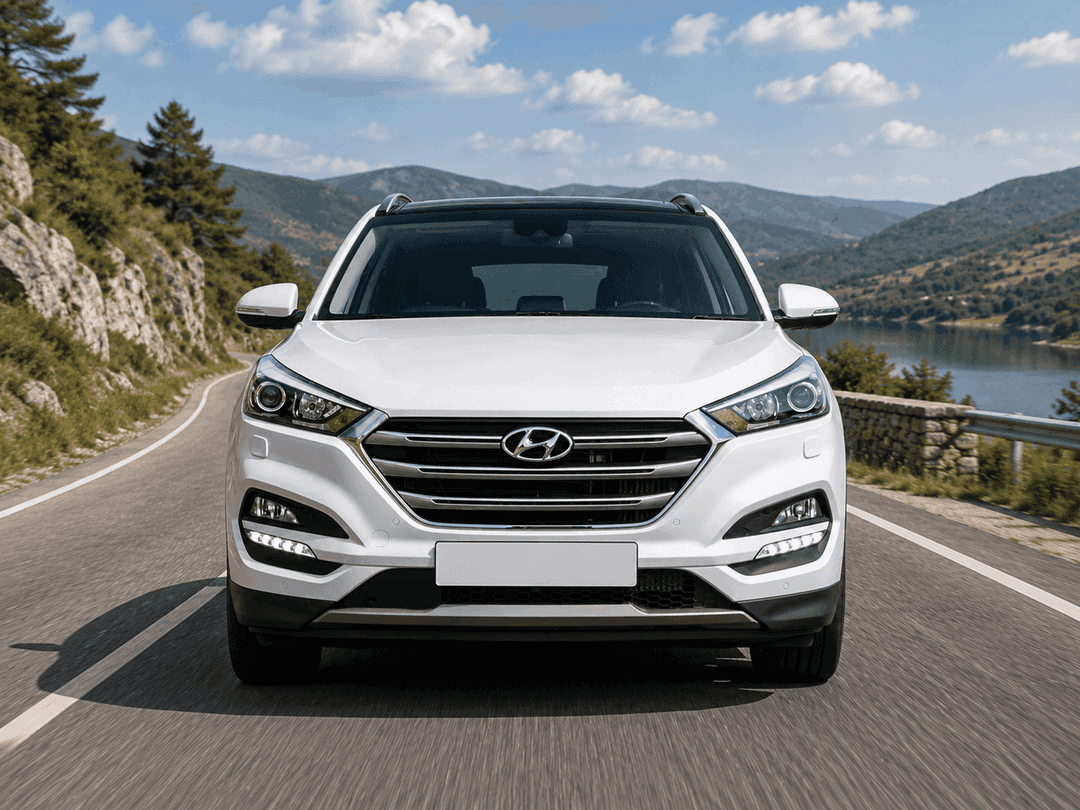
The TL Tucson marks the point at which Hyundai stopped playing catch-up. Schreyer’s influence is clear - hex grille, taut lines, DRLs recessed just so in the headlights. Park it next to the old ix35, and suddenly the older car looks like it belongs at a rental desk at King Shaka.
Stance and detailing
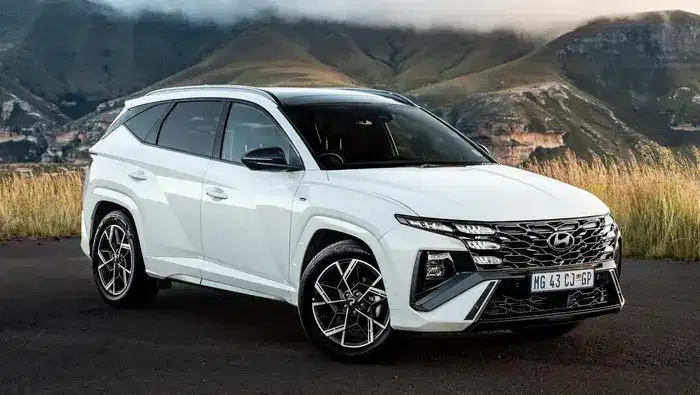
Elite spec brings 18-inch alloys, full LED DRLs, chrome window trims, and a panoramic glass roof that makes the side profile look sleeker than it has any right to. Even in 2026, the Tucson still looks fresh - can’t say the same for a same-era Kuga or X-Trail.
Colour and ageing
Stick to white or silver for the best ageing. The deep blue hides those trolley scars you’ll collect at the supermarket lot - on a nine-year-old SUV, that matters more than you’d think.
Cabin & Practicality
This is where the Elite really earns its sticker. Hyundai threw the works at it - leather seats (ventilated up front), dual-zone climate, electric driver’s seat, push-start, panoramic roof, blind-spot, lane-departure, adaptive cruise. Back in 2016, this made the RAV4 GX look basic, and the Tiguan Trendline feel stingy.
Materials and ergonomics
Soft dash tops, hard door plastics - classic Hyundai from that era. Proper physical climate dials and a real volume knob. After a week in a capacitive-button modern, you’ll thank the Tucson for keeping it simple. The controls click with conviction. The infotainment screen is small, but at least the menus are easy to figure out.
Space for a family
Three grown-ups across the rear bench won’t hate you after a 90-minute Vaal run. The 60/40 split rear bench reclines, and ISOFIX points are easy to reach - no acrobatics needed here (unlike some German options).
- Boot: 488 litres with seats up, expanding to about 1 478 litres folded
- Full-size spare lives under the boot floor - essential for SA gravel and surprise potholes
- Dual-level cargo floor for valuables
- Two USBs, 12V sockets front and rear, massive door pockets
The Tucson’s boot figure really stacks up - beats the CX-5 of the same vintage, matches the Tiguan on paper at least. If you pack smart, two prams and a shopping bag will fit.
On the Road
Let’s talk about the 2.0 Nu petrol. With 115 kW and 196 Nm, driving the front wheels via a 6-speed auto and hauling over 1 500 kg, you’re not getting fireworks.
The powertrain in real driving
In town? It’s enough. The 6-speed auto shifts with zero fuss, none of the low-speed dithering you get from the 1.6T’s 7-speed DCT in traffic. On the N1 heading up to Pretoria loaded with four adults and bags, you’ll feel the engine working - kickdown is frequent, revs hover around 4 000 rpm for overtakes, and the soundtrack is more “functional” than “fun”. 0–100 km/h takes about 11.4 seconds. Top speed? 181 km/h. But you’re not buying this car for numbers.
Ride, steering, refinement
The ride is better than you’d expect. Hyundai tuned the suspension for SA - firm but comfortable, so it doesn’t bounce over M1 expansion joints or smash through Joburg’s pothole repairs. Steering is light and direct - never chatty, but easy to live with. NVH is impressive for a car built in 2017. At 120 km/h, cabin hush is closer to a Tiguan’s than the same-generation RAV4.
Hyundai Tucson fuel consumption - claimed vs reality
Hyundai says 8.9 L/100 km combined. I saw 10.2 over a week, mixing Joburg commutes and a Magaliesberg trip. On the N3 to Durban, I managed 8.4. Hammer it in traffic, and you’re staring at 11s. That’s par for any naturally aspirated 2.0 petrol in an SUV - ignore anyone who claims 7s.
Data & Comparison
The numbers that matter
- Power: 115 kW from a 2.0L naturally aspirated petrol
- Gearbox: 6-speed torque-converter auto
- Drive: Front-wheel drive only (no AWD on this petrol Elite)
- Doors/seats: 5 / 5
- Generation: Third-gen TL, 2016–2021
- Estimated 5-year TCO (fuel, servicing, tyres, insurance): roughly R230 000
How it stacks up against rivals from the era
| Model (used, 2016–2018) | Engine | Power | Gearbox | Drive |
|---|---|---|---|---|
| Hyundai Tucson 2.0 Elite A/T | 2.0 petrol | 115 kW | 6-spd auto | FWD |
| Toyota RAV4 2.0 GX A/T | 2.0 petrol | 108 kW | CVT | FWD |
| VW Tiguan 1.4 TSI Comfortline | 1.4 turbo | 110 kW | 6-spd DSG | FWD |
| Mazda CX-5 2.0 Active | 2.0 petrol | 123 kW | 6-spd auto | FWD |
Hyundai Tucson price in South Africa (used market, 2025)
A clean 2017 Elite A/T with 90 000 km trades for R215 000 to R265 000 depending on service history. 2016 models dip as low as R180 000. The big depreciation cliff hits between years 4 and 6 - so you’re buying after most of the pain. That’s where the value lives.
Service plan and warranty reality
Originals shipped with a 7-year/200 000 km warranty and 5-year/90 000 km service plan - top tier for the time. In 2025, every service plan will be done. 2016–2018 warranties have timed out; 2019s are on their last months. Hyundai service plan extensions sometimes happen at your local dealer - get a written quote first. Realistically, a major service at Hyundai costs R4 500 to R6 500. An indie with OEM parts will do it for R3 200 to R4 800. Plan for it.
Editorial Focus
The Family SUV Formula - does the Tucson nail it?
Family SUV rules in SA are simple: five usable seats, boot for a pram and a Makro haul, service network outside Cape Town, and running costs that don’t force a bond renegotiation. The Tucson 2.0 Elite A/T ticks all of these.
Excitement? Not really. The 2.0 Nu isn’t lively, and FWD only means this isn’t your choice for muddy gravel - if that’s your life, get the diesel or a locking-diff X-Trail. For the usual cycle - school run, avoiding dodgy taxi ranks, weekends at the mall, a Drakensberg guesthouse once a year - this is the right tool.
The spec sheet seals it. Adaptive cruise, lane keep, blind-spot, pano roof, ventilated leather, dual-zone climate - all standard. In 2017, this was luxury-SUV territory. Now, it’s less than a new entry-level Haval Jolion. That’s the formula working. But here’s the catch: buy on service history, not lowest price. A R190k Tucson without a stamped book is a R60k engine problem waiting to happen.
Verdict
Tucson 2.0 Elite A/T? It’s the used family SUV I’d tell a colleague or sibling to buy - if, and only if, the service book is bulletproof. Engine’s fine, not exciting. Gearbox is bulletproof. The cabin’s still generous and well-equipped, almost a decade on. The ride is honestly sorted for South African roads.
Summary
Tucson 2.0 Elite A/T? It’s the used family SUV I’d tell a colleague or sibling to buy—if, and only if, the service book is bulletproof. Engine’s fine, not exciting. Gearbox is bulletproof. The cabin’s still generous and well-equipped almost a decade on. Ride is honestly sorted for South African roads.
Ratings
Pros
- ✓You want a top-spec family SUV under R250 000, drive mostly on tar but sometimes hit gravel, and you’ll do oil changes every 10 000 km.
Cons
- ✗You need AWD, want diesel torque for towing, or the service book is missing pages.