2026 Hyundai i20 Review: New or Used VW T-Cross for R310k?

A well-equipped, warranty-backed B-segment hatch hampered by firm suspension and cheap plastics, and best bought used with its cover intact.
Introduction
Look, buy the 2026 Hyundai i20 new if transferable factory cover matters more to you than getting the most car for every rand. That’s the honest premise of any Hyundai i20 2026 review written for the person actually signing the finance agreement.
Prices run from roughly R310k for the entry 1.2 to around R467k for the N Line, creating two very different value arguments within the same range. The i20 is a good little hatch, but things get interesting once you cross the R310k mark. Suddenly, two- and three-year-old Polos, used T-Crosses and even the occasional one-owner GTI enter the conversation. As of 2026, those aren’t theoretical alternatives — they’re real options worth considering before you buy new.
Key takeaway: Warranty-first owners will find plenty to like, but used Polos deserve a proper comparison before anyone signs. Hyundai’s 7-year/200,000 km transferable cover remains the i20’s strongest card.
Design & Exterior
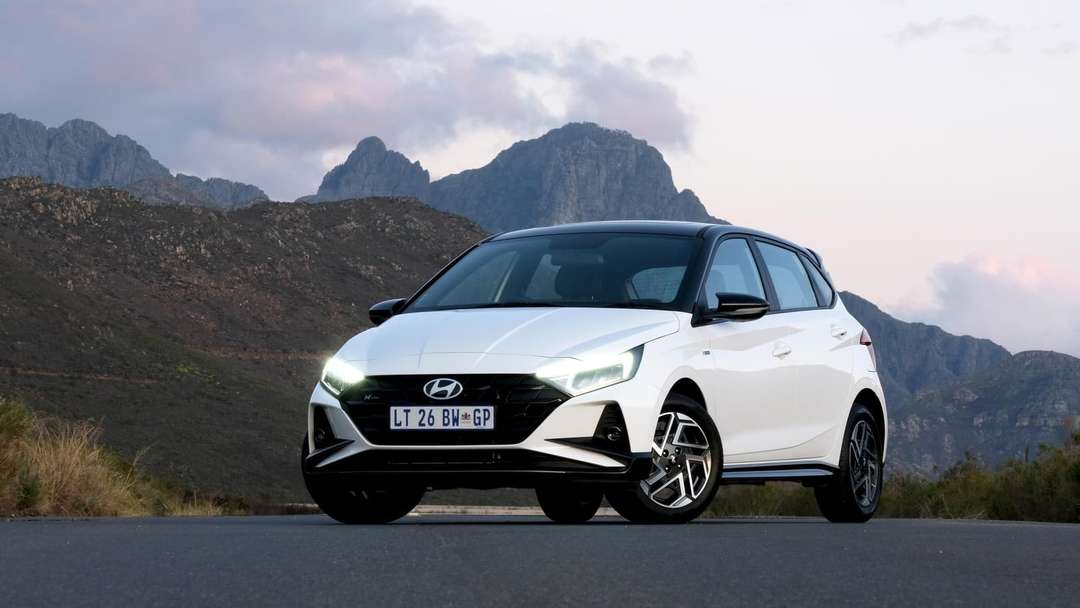
Hyundai’s i20 looks properly quick. It isn’t, but the creased flanks, broad grille and mildly angry nose give this B-segment hatch genuine road presence without making it look like a cartoon.
N Line trim adds a body kit, unique bumpers, twin-tip exhaust styling and larger wheels, making it the version most likely to attract a second glance at a Hyundai dealer. The volume-selling 1.2 Premium and Executive models look cleaner, though, and may age more gracefully once today’s styling trends have moved on.
With five doors, five seats and 170mm of ground clearance, the i20 copes neatly with steep ramps, awkward entrances and oversized speed humps. That matters on South African roads, where an innocent-looking shopping-centre entrance can quickly feel like a gravel obstacle course.
Cabin & Practicality
Materials and controls
Here’s the weak point: cabin plastics. Upper dashboard surfaces present well enough, but the door cards and lower console feel hard and scratchy beside the polished exterior. Not awful. Just obvious cost-cutting in a B-segment car that’s no longer especially cheap.
Credit goes to Hyundai for keeping physical controls. Proper climate buttons, a volume knob and straightforward switchgear mean you won’t spend half the M1 commute prodding a screen. The 8-inch touchscreen supports wireless Apple CarPlay and Android Auto, and generally behaves itself. N Line specification adds digital dials, wireless charging, a Bose system and a sunroof.
Space and family duty
Rear space is reasonable for the class. Two adults can sit behind two adults during an N1 run to Bloemfontein without immediate complaints, although three abreast should remain a short-trip arrangement. ISOFIX points strengthen its case as a young family’s second car. During my packing check, 2 carry-on cases and a folded compact pram fit beneath the parcel shelf, with no desperate rearranging required.
- Seating capacity: 5
- Door count: 5
- Ground clearance: 170 mm
- Fuel capacity: 37 litres
On the Road
The engine and gearbox
Let’s start with the often-overlooked volume seller. Its 1,197cc four-cylinder engine produces 61kW and 115Nm, drives the front wheels and, paired with the manual gearbox, carries a claimed 0-100km/h time of 12.9 seconds. Top speed is 169km/h.
Properly unhurried. Around town and on level roads, the 1.2 is perfectly adequate; load four occupants and luggage for Van Reenen’s Pass, though, and you’ll be working the gearbox hard, occasionally dropping two ratios to keep momentum. My dry-road 0-100km/h estimate was about 14.0 seconds with one occupant. Think of it as a city engine that can handle the highway, rather than an eager long-distance companion.
Ride quality on SA surfaces
Criticism of the firm ride is justified, especially once local roads enter the picture. Smooth tar makes the chassis feel tidy and controlled, while patched Joburg surfaces and corrugated Karoo gravel send sharper edges through the seat. Nothing crashes or sounds loose. A Polo simply settles faster after a nasty bump.
Once, while driving a 1.2 across broken tar near Krugersdorp, I felt the rear axle skip slightly over several closely spaced ruts. It wasn’t frightening, only untidy. Try one along your regular route before signing, because a quick dealership loop on smooth tar won’t tell the whole story.
Data & Comparison
What it costs and what it returns
On Hyundai i20 fuel consumption, the 1.2 carries a combined claim of 5.9 l/100km. My mixed urban and highway route returned 6.8 l/100km, making a real-world figure in the high sixes entirely believable. Paired with the 37-litre tank, careful driving should still deliver a genuine 500 km-plus between fuel stops, even with Gauteng altitude and N3 toll-road speeds in the mix.
- Claimed combined consumption: 5.9 l/100km
- CO2 output: 130.5 g/km
- 3-year residual from our listing data: around R247,084
- Estimated ownership cost over 5 years: roughly R230,000
New i20 versus the rivals
| Model | Engine | Claimed economy | Main selling point |
|---|---|---|---|
| Hyundai i20 1.2 | 1.2 NA, 61kW | 5.9 l/100km | 7yr/200,000 km drivetrain warranty |
| VW Polo 1.0 TSI | 1.0 turbo | ~5.0 l/100km | Better resale and a more polished cabin |
| Suzuki Baleno | 1.5 NA | ~5.4 l/100km | More space at a lower price |
Most shoppers eventually arrive at the Hyundai i20 vs VW Polo argument. Volkswagen counters with a richer cabin and formidable resale, while the Baleno costs less than both. Hyundai lands between them, relying on generous equipment, broad dealer support and lengthy warranty cover to justify its position.
Used i20 depreciation by year
Listing data paints a useful depreciation picture for anyone weighing a factory-fresh car against a lightly used example. The numbers also explain why searching for a used Hyundai i20 for sale in South Africa may produce the smarter deal.
| Model year | Typical asking price (median) |
|---|---|
| 2025 | R339,948 |
| 2024 | R249,950 |
| 2023 | R237,725 |
| 2022 | R254,925 |
| 2021 | R219,950 |
| 2020 | R199,500 |
| 2019 | R181,748 |
At a median asking price of R249,950, a 2024 i20 substantially undercuts the new entry model while potentially retaining years of transferable factory cover. Do that calculation before visiting a Hyundai Automotive South Africa dealer, not after the salesperson has prepared the paperwork.
Editorial Focus
The R310k decision, priced properly
Right, so let’s judge the Hyundai i20 price South Africa against cars people can actually buy. At roughly R310k for the base model, a two- to three-year-old Polo 1.0 TSI or used VW T-Cross brings more space, greater presence and that desirable higher seating position. Move towards the near-R467k Hyundai i20 N Line price and you’re suddenly knocking on used Polo GTI territory. Properly quick.
Measured purely by how much car and performance your money buys, the i20 struggles here. It’s a good hatch, but the new-car price puts some seriously tempting used alternatives within reach.
The trump card no rival matches
One advantage changes the calculation. Hyundai’s transferable 7-year/200,000 km drivetrain warranty is something the Polo cannot match. Accuracy matters: full vehicle cover runs 5 years/150,000 km, while the 7-year/200,000 km provision applies specifically to the drivetrain, supported by a 4-year/60,000 km service plan. Since that protection transfers, a two-year-old i20 could be the best-covered used small car in SA. Buy through an authorised dealer and the passport follows the vehicle; private sales first require an inspection.
Baleno and Polo, head-on
Baleno supporters have a strong price argument, although its cabin finish and safety equipment are less persuasive. Polo loyalists can point to better materials and stronger resale, two areas Hyundai cannot fully answer. Instead, the i20 combines equipment, warranty protection and a substantial dealer and parts network, including representation beyond Sandton and Cape Town. For buyers in smaller towns, that support can matter more than showroom gloss.
Safety rating
Global NCAP India · tested 2022
★★★☆☆ 3/5 adult occupant
★★★☆☆ 3/5 child occupant
Applies to SA i20 Premium and Executive trims (2 airbags, ABS/EBD, no ESC — matches tested spec). Official factsheet.
Verdict
Hyundai’s i20 remains a likeable, generously equipped hatch, held back by hard cabin plastics and firm suspension that patchy SA tar quickly exposes. Transferable warranty protection is its decisive advantage. Here’s the derivative-by-derivative and buyer-by-buyer verdict.
- Buy it - the warranty-first new buyer: Pick the 1.2 Premium new if transferable factory protection and a broad dealer network matter most. Keep every service stamped and every invoice filed.
- Consider it - the used i20 shopper: A 2024 example at around R249,950, with transferable drivetrain cover intact, could be SA’s best-protected used small car. Strong value, especially if the history is spotless.
- Think twice - the Polo-loyal resale chaser: Buyers prioritising long-term resale should examine a used Polo TSI instead. It retains value better and feels richer inside. Hyundai loses this round.
- Walk away - the near-N-Line performance buyer: Close to R467k opens the door to used Polo GTI territory. For similar money, the proper hot hatch offers considerably more excitement than the N Line.
It’s an honest commuter that makes far more sense once the warranty enters the calculation, and that’s the point.
Summary
A South African buyer’s guide to the 2026 Hyundai i20 range, from the 1.2 Premium and Executive derivatives to the 1.0T N Line, with honest running costs, safety caveats and used-car alternatives.
Ratings
Pros
- ✓Choose the 1.2 Premium new if transferable factory protection and a broad dealer network sit high on your list.
- ✓Keep every service stamped.