Kia Sonet (2026) Review: Is It Better Than a Used Seltos?

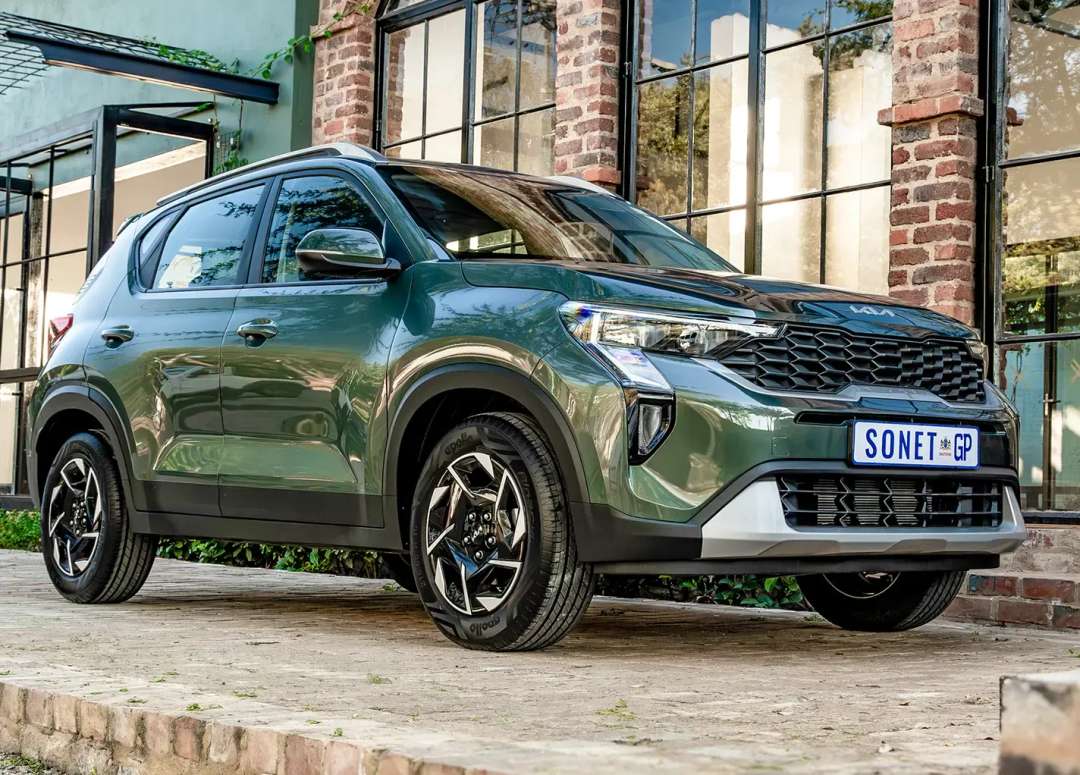
- Spacious, well assembled and backed by a strong warranty, the Sonet deserves its top-15 status. Just skip the safety-shy entry model and overpriced flagship.
Introduction
Buy the Kia Sonet if you want a tall, cleverly packaged crossover, a long warranty and solid dealer coverage through groups such as Motus. Stick to the middle of the range, though. The flagship SX now costs used-Seltos money, and that changes the conversation around this Kia Sonet 2026 review.
As of 2026, the Sonet remains a top-15 seller in South Africa, yet pricing stretches from genuine budget territory to around R485k. Forget simply asking, “Sonet or rival?” The better question is, “Which Sonet, and what nearly-new alternative costs the same?” Every derivative needs to be judged against its depreciation curve.
Key takeaway: The Sonet is strongest as a mid-range buy. Since the SX flagship overlaps nearly-new Seltos stock, shop by derivative rather than badge.
Design & Exterior
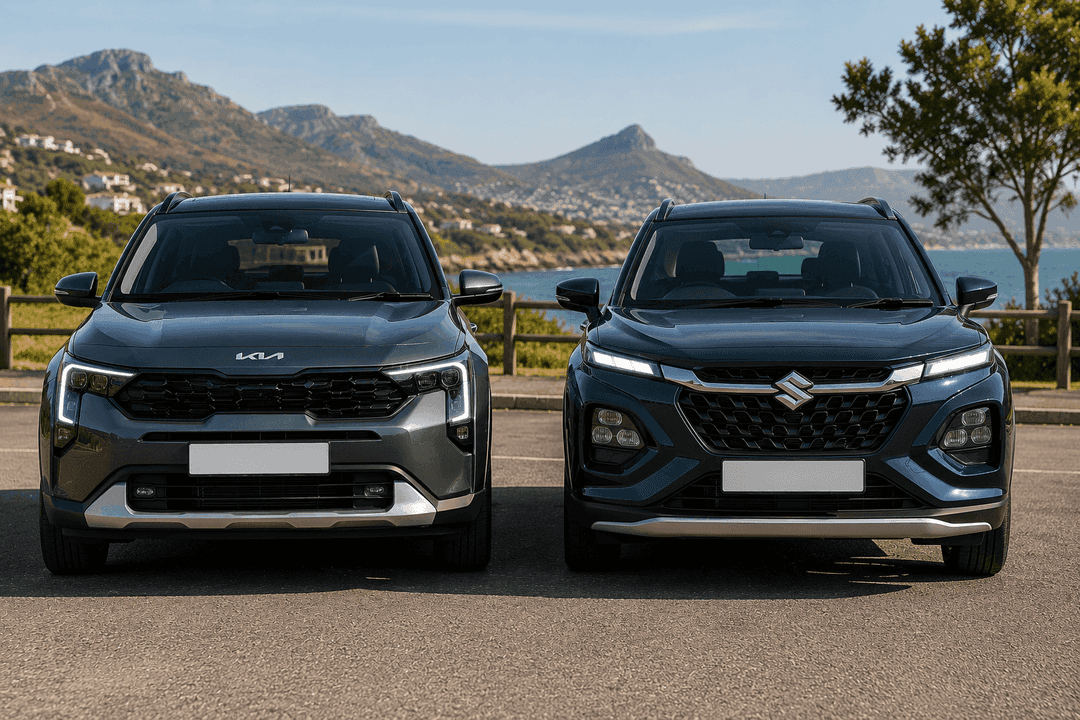
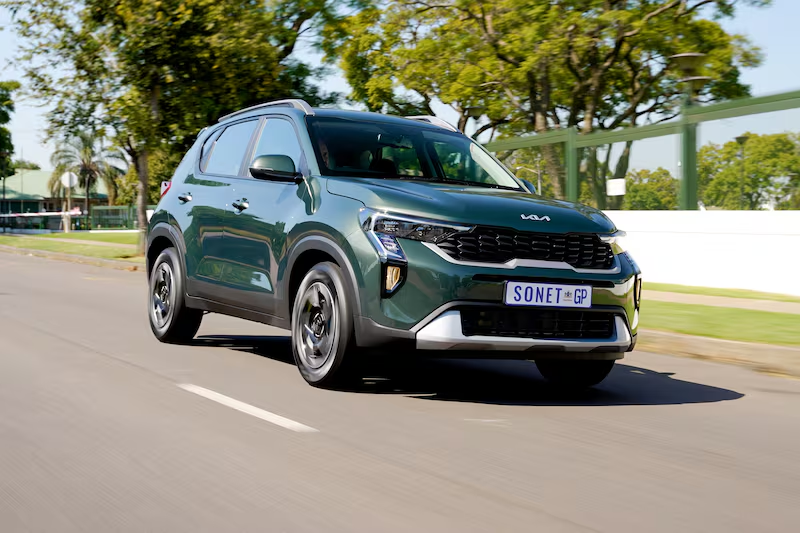
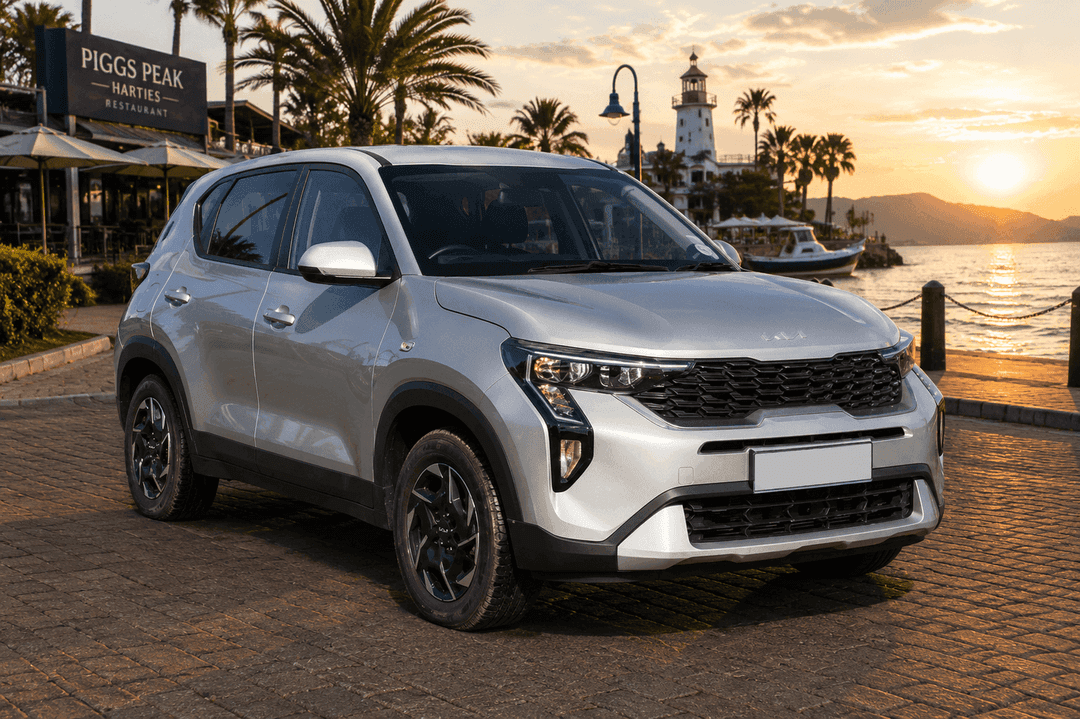
Kia’s 2024 facelift sharpened the Sonet without overdoing it. The tiger-nose grille is bolder, the LED signatures look crisper, and the optional two-tone roof supplies much of the kerb appeal. Parked next to a T-Cross, it looks taller and more upright, which suits the practical package underneath.
At roughly 4,110mm long, it has a proper B-segment footprint, although the styling makes it look bigger. The 190mm of ground clearance earns its keep, too. Across broken Joburg tar and corrugated gravel, that extra height leaves useful breathing room underneath.
Two awkward truths remain. Thick C-pillars create serious rear blind spots, making the parking sensors more than a brochure extra. Meanwhile, the entry LS on steel wheels looks every bit as basic as its price suggests. Move up one rung, though, and the Sonet suddenly looks far more polished.
Cabin & Practicality
Materials and controls
Cabin quality partly explains the Sonet’s popularity. Everything feels tightly assembled, the switchgear operates positively, and the EX+ and SX receive a 10.25-inch digital cluster that lifts the ambience. Wireless smartphone mirroring on upper derivatives is useful. Better still, physical climate switches remain, so you needn’t prod through touch menus while driving.
Space and the long wheelbase
Packaging is the clever bit. Its 2,500mm wheelbase creates generous rear legroom for the class, while the square boot uses its volume better than many fashion-led rivals. If you pack smart, a family weekend won’t demand luggage Tetris. During our check, it swallowed two 67cm suitcases and a folded compact pram with the parcel shelf fitted.
- The long wheelbase provides competitive rear legroom.
- A broad, square boot opening suits bulky family luggage.
- ISOFIX and five seats are standard, although three adults across the rear will struggle on longer journeys.
- Its 190mm ground clearance helps on rough roads and makes loading less awkward.
Here’s the caveat glossed over at launch: the rear bench is cramped with three grown adults aboard. Two adults and children? Fine. Put three across for a Durban run, and somebody will be grumbling before Harrismith.
On the Road
Engines and altitude
Two powertrains matter. The 1,497cc naturally aspirated 1.5 produces around 85kW and works with a CVT, while the sweeter 1.0T turbo-triple is quoted near 88kW and 172Nm through a 7-speed DCT. The dataset headline figures for the range read 85kW and 250Nm.
Up on the Highveld, the choice largely makes itself. The naturally aspirated 1.5 loses noticeable urgency at Reef altitude, turning overtakes on the R21 into planned events rather than quick decisions. By contrast, the 1.0T copes much better above 1,400 metres. During one uphill merge, I heard the triple sharpen its note before the gearbox finally committed. My indicated 0-100km/h run took 10.9 seconds.
Ride and refinement
Ride quality is firm. Scarred tar keeps the suspension busy at low speeds, while corrugated gravel makes the body fidget more than it would in a softer rival. It’s not crashy, just alert. Once settled on the N1 at highway speed, the Sonet feels composed and secure enough for long-distance family duty, tolls included.
Below about 2,500rpm, the DCT can hesitate before delivering its best. Then it wakes up cleanly. That matches my previous experience with the Kia Sonet 1.0T EX review car: refined around town, properly brisk once the turbo comes on song, but occasionally indecisive from rest.
Data & Comparison
Pricing and the depreciation curve
New Sonet pricing runs from roughly R295k to R485k, while the dataset new-listing average sits near R303,237. Used stock warrants attention, because 750-plus Sonets are advertised nationally from about R169k. Here’s how asking prices move by model year in our listings sample.
| Model year | Typical asking (median) | Range |
|---|---|---|
| 2021 | R237,500 | R208,500 - R249,990 |
| 2022 | R244,725 | R239,450 - R279,500 |
| 2023 | R284,900 | R249,900 - R299,950 |
| 2024 | R309,995 | R269,900 - R398,900 |
| 2025 | R319,900 | R275,900 - R399,990 |
| 2026 | R329,972 | R319,950 - R339,995 |
Those numbers reveal a gentle depreciation curve, supporting Kia Sonet resale value. Our data places the three-year residual around R283,076. Kia’s five-year unlimited-km warranty, broad dealer network and parts coverage help resale confidence and insurance calculations.
Fuel and running costs
Kia’s claimed figure is 7.0 L/100km, with some derivatives quoted as low as 6.6. Real-world Kia Sonet fuel consumption sits within a roughly 6.7 to 8.4 L/100km band. Budget around 7.2 in mixed Reef driving for the 1.0T. Our test loop returned 7.4 L/100km over 286km, including stop-start traffic and an N3 section at altitude.
- Claimed consumption: 7.0 L/100km, with emissions of 148 g/km CO2.
- Real-world consumption band: 6.7 - 8.4 L/100km.
- A 45-litre tank provides an indicative range of near 700km.
- The five-year TCO estimate is around R230,000.
How it stacks up
A Kia Sonet vs Hyundai Venue comparison is natural because they’re corporate cousins. Flagship Sonet buyers should also inspect larger used options, including the Seltos, rather than staying inside the B-segment. The Hilux and the Ranger aren’t direct rivals, obviously, but many households will judge whether the Sonet works as their smaller second car.
| Model | Power | Claimed fuel | Ground clearance | From (new) |
|---|---|---|---|---|
| Kia Sonet 1.0T | 88kW / 172Nm | 7.0 L/100km | 190mm | ~R303k avg |
| Hyundai Venue 1.0T | turbo-triple | ~7 L/100km | 190mm | Budget-competitive |
| Used Kia Seltos | larger SUV | similar | higher | Overlaps SX money |
Editorial Focus
Which derivatives actually earn their price
Right, so let’s price-test the Sonet against its depreciation curve. The flagship 1.5 SX at around R485k is where the argument unravels. Current listings put nearly-new Kia Seltos stock within reach, alongside used Corolla Cross and T-Cross examples. You’re paying top-spec B-segment money while a larger used class waits nearby.
Mid-range models make a stronger case. An LX or 1.0T EX in the mid-R300k bracket brings the better drivetrain, worthwhile equipment and pricing that our label data marks GOOD-to-FAIR once it reaches the used market. That’s the sweet spot.
Then there’s the SA-only 1.5 LS panel van. For a VAT-registered small business, it’s a smart tool: crossover clearance, an attractive body, manageable running costs and Kia’s warranty. Load-shedding has made operating expenses unpredictable enough, so a straightforward petrol workhorse retains its appeal.
Safety requires precise wording. The SA-spec Kia Sonet scored 1 star for adult occupants (3 for child) in Global NCAP’s 2026 #SaferCarsForAfrica test of the entry-level 2-airbag LS; higher trims with 6 airbags (EX+, SX) are untested. ESC remains standard across the range, so the key shortfall is airbag count rather than stability control. Budget-conscious family buyers should choose a six-airbag derivative.
Safety rating
Global NCAP Africa · tested 2026
★☆☆☆☆ 1/5 adult occupant
★★★☆☆ 3/5 child occupant
The 1-star adult rating applies to the 2-airbag entry Sonet LS as tested (and any other SA derivative with only dual front airbags). Official factsheet.
Verdict
Look, the Sonet is a good B-segment crossover. An ambitious flagship price and the safety question around the cheapest trim prevent an automatic recommendation. Buy from the middle, insist on six airbags, and it becomes one of the class’s more sensible family choices. Here’s the tiered call.
- Just buy it - 1.0T EX (mid-range): The sweeter drivetrain, an altitude-friendly turbo, useful equipment and a warranty that supports resale. It’s the range’s best all-rounder.
- Shortlist - 1.5 LX/EX Auto: Fair money, decent specification and encouraging residuals. Cross-shop carefully if most of your driving happens on the Highveld.
- Consider - 1.5 SX flagship: The cabin is lovely, but at R485k you should inspect a nearly-new Kia Seltos or used Corolla Cross first. That overlap cannot be ignored.
- Avoid the entry 2-airbag LS as a family car: Its 1-star adult Global NCAP result is difficult to dismiss. It works as a panel-van business buy, not the default family school-runner.
Summary
Here’s the 2026 Kia Sonet review South African buyers need, covering the 1.5 naturally aspirated and 1.0T derivatives, real-world fuel use, Global NCAP safety, used pricing and the trims worth buying.
Ratings
Pros
- ✓The sweeter drivetrain, an altitude-friendly turbo, useful equipment and a warranty that supports resale.
- ✓It’s the range’s best all-rounder.
Cons
- ✗Its 1-star adult Global NCAP result is difficult to dismiss.
- ✗It works as a panel-van business buy, not as the default family school-runner.