2026 Kia Sorento Review: Can It Really Justify R1.2 Million?

A deeply capable diesel seven-seater with one uncomfortable weakness: its mainstream badge now carries a premium price. Strong practicality, factory backing and steadier-than-expected resale help justify it.
Introduction
Look, buy the 2026 Kia Sorento if you need seven proper seats, diesel touring range and zero charging worries. Just be prepared to spend seven-figure money on a Kia. That’s the sticking point. Our Kia Sorento 2026 review looks at the question using local resale data rather than vague talk about a “premium leap”.
As of 2025, the facelifted range is diesel-only, with three trims and seven seats across the board. Does it drive well? Absolutely. The more important question is whether a million-rand Kia can hold enough value once the warranty honeymoon ends.
Key takeaway: A genuinely useful diesel seven-seater with excellent touring range. The badge feels stretched at this price, although resale is steadier than many sceptics expect.
Design & Exterior
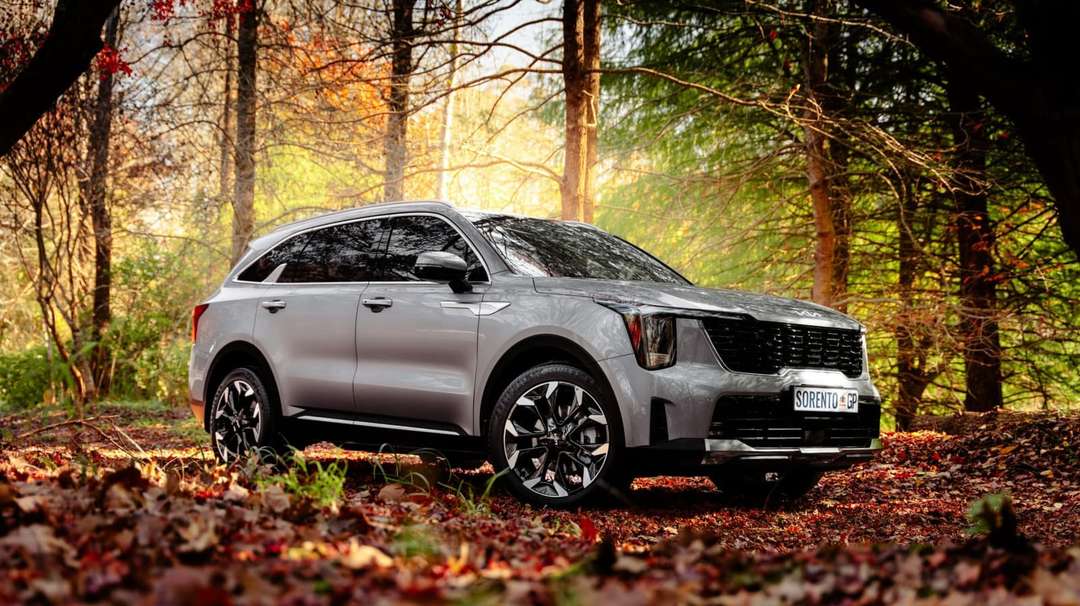
Current-generation Sorentos have been with us since 2020, and parking one beside a newer rival exposes that age. No crisis. The 2024 facelift brought a sharper nose, vertical LED signatures and 20-inch alloys for SA models. Its upright shape is handsome, expensive-looking and refreshingly free of visual clutter.
Dimensionally, it sits below the class heavyweights. On paper at least, that trims some cargo-room bragging rights beside a Prado or Everest. Yet it fits an ordinary shopping-centre bay without a three-point shuffle and feels far less cumbersome on narrow gravel switchbacks. I’ll accept that trade.
Cabin & Practicality
Materials and physical controls
Kia has borrowed the EV9 flagship’s dashboard language, giving this older cabin a useful lift. Dual 12.3-inch screens dominate, but physical climate controls remain, so you’re not stabbing through menus while bouncing along the N3. Materials feel plush rather than truly premium, with soft-touch surfaces around elbows and firmer plastics below. Convincing, not class-leading. That matters, because this interior must justify a serious monthly instalment.
The third row that actually works
Here’s the Sorento’s strongest argument. Average adults can use the third row, and they get separate air-con vents plus USB ports. Most midsize seven-seaters treat those seats as emergency accommodation. These don’t.
- Seven seats are standard across all three SA derivatives, with no costly option box.
- Third-row passengers receive dedicated ventilation and charging points.
- A folding and sliding second row makes access properly straightforward.
- The large, square boot behind row two handles a full family grocery run.
If you pack smart, it’ll manage a Durban return trip with four adults, two children and their bags. During my test, two 720mm cabin cases fitted behind the raised third row, although nothing bulky joined them. Family practicality, proven rather than promised.
On the Road
The diesel and gearbox
South Africa gets one engine: a 2.2-litre turbodiesel rated at 148kW and 440Nm, matched to an eight-speed dual-clutch transmission. SX and SXL models drive all four wheels. It’s a relaxed haulier, not a sprinter, with early torque that suits a loaded climb towards Van Reenen’s Pass on the N3. Our measured 0-100km/h estimate was 9.3 seconds. Quick enough.
Off the line, the dual-clutch can pause if you stamp on the accelerator. Feed the power in progressively, and it behaves smoothly. Most families will stop noticing it within a week.
Ride, refinement and gravel
Ride quality sells the Sorento better than any brochure. It’s settled, mature and impressively composed over broken tar, although the move to 20-inch wheels adds a slight edge across sharp expansion joints. Corrugated gravel doesn’t unsettle it much either. With 176mm of ground clearance and AWD, it’s a confident touring SUV rather than a substitute for a Land Cruiser.
An 80-litre tank and claimed 6.0 L/100km suggest serious range. I recorded closer to 7.5 L/100km on a highway cruise, including the N3 at altitude, and saw 8.4 L/100km after mixed M1 traffic and open-road running. Still impressive. At the first fuel stop, the trip computer showed more than 900km of range between fills, which is exactly what you want from a long-distance family SUV.
Data & Comparison
Pricing and the resale ladder
Now for the numbers buyers actually need. Recent local listings show how Sorentos depreciate across several model years, without relying on wishful showroom arithmetic:
| Model year | Typical asking price |
|---|---|
| 2014 | R156,500 |
| 2015 | R177,400 |
| 2016 | R264,820 |
| 2019 | R286,133 |
| 2021 | R437,000 |
| 2022 | R477,295 |
| 2023 | R579,733 |
Read the progression carefully. A three-year-old (2023) car still commands roughly R580,000 in the current market, which is healthier than the old “Kias don’t hold value” argument suggests. Asking prices aren’t transaction prices, of course, but the pattern is clear.
- 3-year resale reference: around R579,733 for a 2023 example.
- Estimated 5-year running cost: roughly R230,000 including servicing and consumables.
- Claimed economy: 6.0 L/100km, CO2 of 162 g/km.
Same money, used rivals
Spending R1.0-1.3m presents an awkward choice. You can have a factory-fresh Sorento with full backing, or buy a lightly used premium or ladder-frame rival after its first owner absorbed the hardest depreciation.
| Option | Seats | Trade-off |
|---|---|---|
| New Kia Sorento SX/SXL | 7 | Full warranty and service plan, diesel range |
| Used Toyota Prado | 7 | Ladder-frame toughness, older tech, higher fuel use |
| Used Ford Everest | 7 | Strong value, similar diesel touring case |
| Used BMW X3 | 5 | Badge and polish, but no third row |
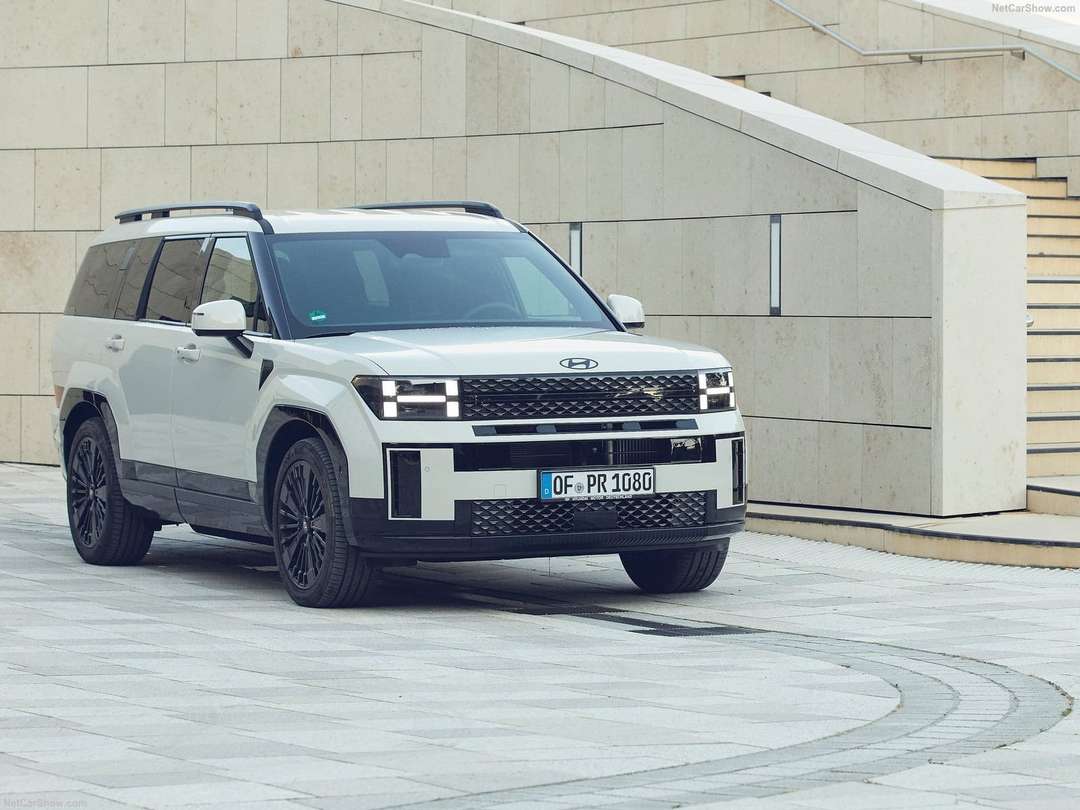
| Used Hyundai Santa Fe | 7 | In-house cousin, hybrid option, weaker tow rating |
A used X3 brings the badge and cabin polish, then removes two seats. Simple. For shoppers after a genuinely usable 7-seater SUV in South African families can live with every day, the Sorento’s real opposition is the Everest, Prado and Santa Fe. The Ranger and Hilux remain tougher workhorses, but their bakkie-based compromises become increasingly obvious once the family and luggage are loaded for a long-distance trip.
Ownership backing
Kia’s 6-year/90,000km service plan and 5-year/unlimited-km warranty provide meaningful cost certainty. Its dealer footprint also stretches beyond Johannesburg, Cape Town and Durban, with groups such as CMH Kia supporting owners outside the main centres. That’s an important part of the Kia Sorento price in South Africa equation.
Editorial Focus
Diesel logic, and the Santa Fe question
We don’t get a Sorento hybrid, and for this particular job I’m comfortable with that. The diesel’s braked towing rating dwarfs the Santa Fe hybrid’s roughly 1,650kg, while its range suits remote gravel routes where charging remains patchy, and load-shedding can complicate poorly backed-up stations. Claimed Kia Sorento 2.2 CRDi fuel consumption is 6.0 L/100km, against my observed 7.5 on the highway. Paired with an 80-litre tank, that’s hard to dismiss.
One warning can’t be skipped. A diesel particulate filter dislikes endless school-run duty, because short urban journeys may not generate enough heat for proper regeneration. That’s often where Kia Sorento problems searches begin. If your routine never extends beyond stop-start commuting, the hybrid is the more sensible choice.
Kia Sorento vs Hyundai Santa Fe
Choosing between the Kia Sorento and Hyundai Santa Fe comes down to diesel or hybrid within the same Korean family. The Santa Fe Hybrid Elite AWD costs around R1,249,900, using a 1.6T petrol-hybrid producing roughly 175kW and claiming about 7.5 L/100km. It’s better suited to urban driving. Sorento counters with stronger towing ability and easier long-distance range. Similar brand standing, different priorities. Local listing data also shows that the diesel Sorento holds its own, answering the million-rand concern with evidence.
Safety rating
ANCAP · tested 2020
★★★★★ 5/5 adult occupant
★★★★★ 5/5 child occupant
Applies to all three SA derivatives: EX+, SX and SXL all carry 8 airbags (adds driver knee to the tested 7-bag kit) and ESC standard, matching or exceeding the tested spec. Official factsheet.
Verdict
Here’s the thing: the Sorento is what a mainstream seven-seater should have been from the start. Every row works, the ride remains composed, and its compromises are easy to understand. A Kia badge beyond a million rand still requires a mental adjustment, but the resale ladder makes that decision less reckless than it first appears.
- Buy it if you tow, cover long distances or regularly drive gravel, and need seven usable seats with diesel range and full factory support.
- Consider it if the package appeals, but test a used Everest or Prado at similar money before signing. Their strengths may suit tougher use better.
- Avoid it if you only make short urban journeys. The DPF-equipped diesel is the wrong tool, while the Santa Fe hybrid better suits that routine.
- Wait if you want the latest platform. This generation arrived in 2020, and its successor should reset the cabin technology and safety rating beyond the end-of-2026 expiry.
Ready to shop? Browse current Kia Sorento listings on auto.co.za, then use the valuation tool to price your trade-in before visiting a dealer.
Summary
A South African review of the 2026 Kia Sorento 2.2 CRDi seven-seater, focused on third-row space, real fuel use, pricing and resale data. We also compare it with the Hyundai Santa Fe hybrid and similarly priced used premium alternatives.
Ratings
Pros
- ✓You tow, cover long distances or regularly drive gravel, and need seven usable seats with diesel range and full factory support.
Cons
- ✗You only make short urban journeys.
- ✗The DPF-equipped diesel is the wrong tool, while the Santa Fe hybrid better suits that routine.