Volkswagen Amarok 2.0 BiTDI 4Motion Style D/C P/U (2026) Review
The Style is, honestly, what the Amarok II should have been from the start: priced right, kitted right, engineered right, and special without the flagship price. Touchscreen-only climate and missing d
Introduction
Right, so you want a Ranger-based bakkie, but you’re after something quieter, with less flash inside, and you actually plan to fill that load bay - not just park it at the Steers on Beyers Naudé. That’s where the 2026 Volkswagen Amarok 2.0 BiTDI 4Motion Style D/C P/U fits in: practical, real-world, and undercutting the Hilux Legend, Ranger XLT, and even the new GWM P500, while keeping that 4Motion badge. With Amarok now rolling out of Silverton and popping up everywhere from Pretoria East to Pinetown, the Style spec has quietly become the clever choice in the range.
Key takeaway: Amarok Style is, honestly, what the Amarok II should have been from the start - all the important kit, real 4Motion, and a cabin that’s noticeably calmer than its Ford sibling. And that matters.
Design & Exterior
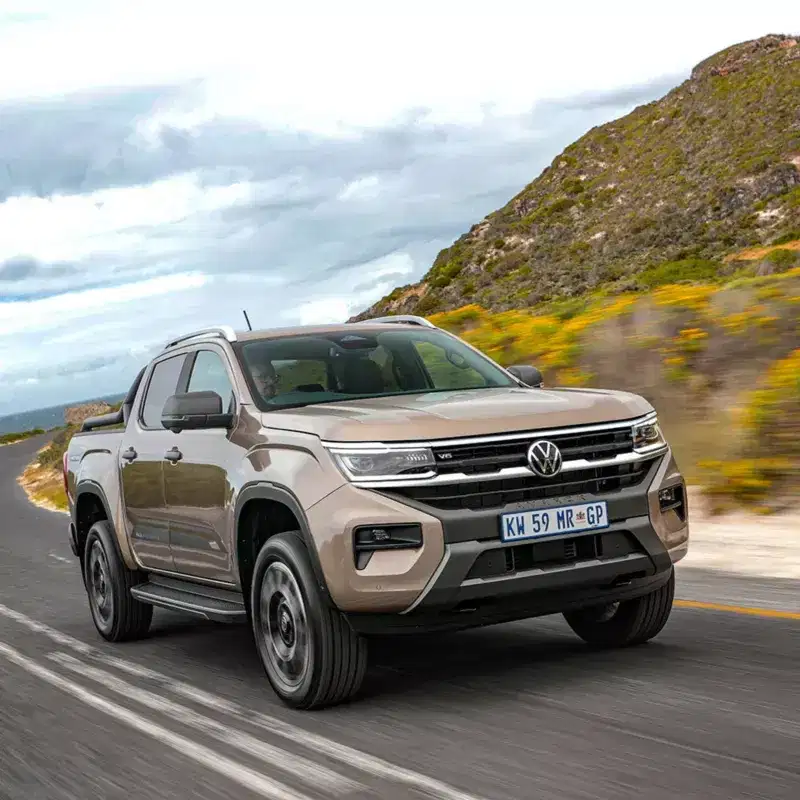
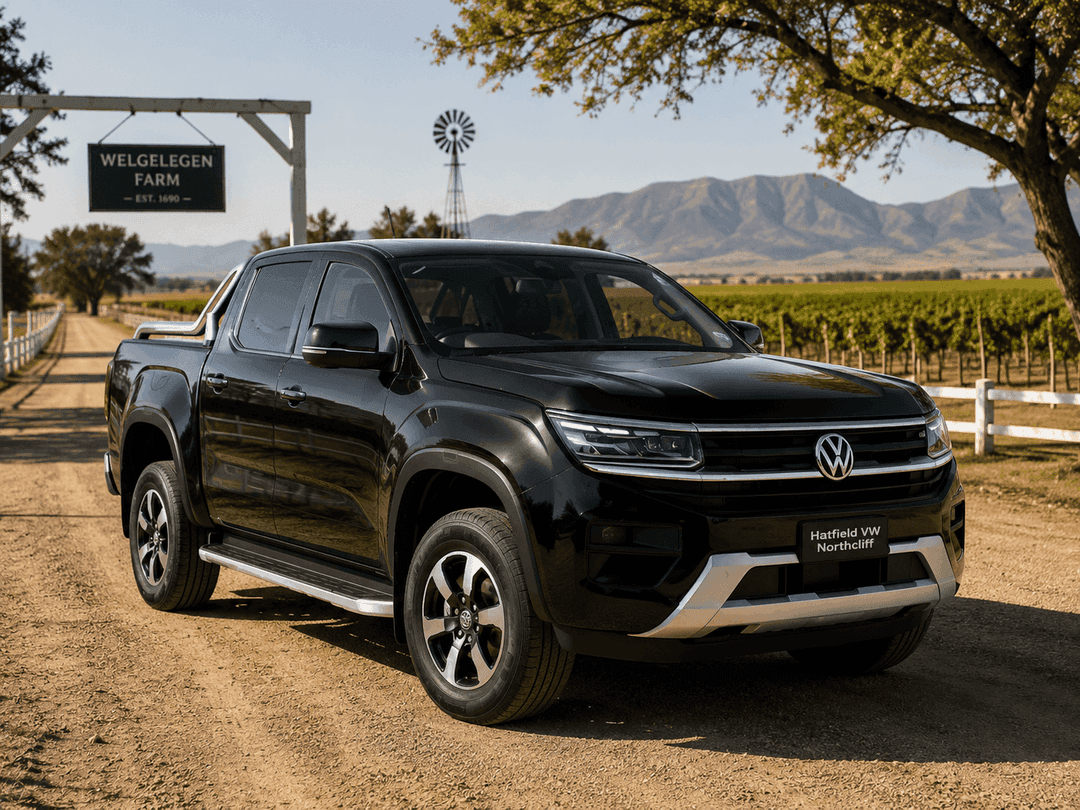
Spot one next to a Ranger Wildtrak and you’ll see the family resemblance - roof, mirror caps, and door handles scream “Ford source bin.” But there’s no mistaking the Amarok for anything else: C-shaped LED headlights, a slim grille, cleaner rear lamp clusters, and bodywork that looks grown-up, not desperate for attention. Far less ‘boet’ than a Wildtrak, more understated than a Hilux GR-Sport. The Amarok doesn’t shout to be noticed; it just looks sorted.
Style trim presence
Sitting between the bare-bones Life and the more OTT PanAmericana and Aventura, the Style rolls on 18-inch alloys shod in chunkier rubber. This matters - after a short stint on the Aventura’s 21s, my fillings still resent me. The Style’s ride is better. You get a sports bar, side steps, and proper matrix LEDs, but the usual sticker overload is blissfully absent. Subtle, but not snoozy.
Where it sits in the segment
In a world where bakkies try to look ready for Dakar, Amarok Style stands out by not playing dress-up. Hilux GR-Sport blares, Wildtrak flexes, BYD Shark 6 looks like it belongs at Comic-Con. Amarok Style? Just a bakkie - and that’s the point. After a week of school runs and a run to Builders Warehouse, I appreciated the low-key vibe.
Cabin & Practicality
This is where Amarok distances itself from the “Ranger with a VW badge” jokes. Yes, the dashboard layout is familiar, but the Amarok’s material choices, steering wheel, and tactile surfaces lift it a notch above. Leather where it counts, proper padding, and that classic VW sense of being bolted together tightly. Sure, the infotainment is mostly Ford SYNC, but you’d have to really squint to care.
Tech and ergonomics
The 12.3-inch vertical touchscreen dominates the dash, flanked by a digital cluster, wireless Apple CarPlay and Android Auto, a 230V plug in the load bay, and ambient lighting that doesn’t look like it belongs in a boy racer’s Polo. Downside? Climate control is touch-only. No dials. Changing fan speed while crawling through Sandton in December is a thumb gymnastics session. I miss old-school knobs, and so will your front passenger.
Real-world practicality
- Style 4Motion hauls up to 1,148 kg - more than the Aventura flagship
- Braked towing rated at 3.5 tonnes
- Wading depth now 800 mm, up 300 mm from the old Amarok
- Two ISOFIX anchors in the back for car seats
- Load bay just fits a Builders Warehouse pallet, if you pack smart
Legroom in the back is actually usable - I sat behind myself (1.83m) from Cape Town to Hermanus and didn’t lose feeling. The rear bench is a bit upright, but that’s every double cab, not just VW’s.
On the Road
Let’s call it: Amarok is the most car-like double cab you’ll find on SA roads. Style trim, with its smaller wheels and chunkier tyres, is the sweet spot. The 2.0 TDI 125 kW and 405 Nm 4Motion with 6-speed manual is a rare combo these days - most bakkie buyers default to auto - but this one rewards you for actually driving it.
Powertrain feel
Forget V6 heroics. The single-turbo 2.0 TDI pulls smoothly from around 1,800 rpm and fades with grace rather than dropping off a cliff. The manual’s throw isn’t short - longer than a Polo GTI’s - but the clutch is friendly. I’ve stalled a Hilux three times. Amarok? No drama, even in stop-start traffic. On gravel, the Amarok stays composed where most leaf-sprung rivals skip and chatter. This matters, because for many, gravel is a daily reality, not just a weekend adventure.
Ride and refinement
At 120 km/h on the N1, Amarok Style feels more Tiguan than workhorse. Wind noise is minimal, diesel clatter only pipes up if you’re heavy-footed, and the electric steering is sharper than a Hilux’s, which can feel vague on-centre. My actual fuel return: 9.1 L/100 km, mixed driving. That’s better than the 10.2 L/100 km I managed in the heavier 154 kW BiTDI auto. Manual’s the way to go if you care about the economy.
Data & Comparison
How it stacks up against rivals
| Model | Power (kW) | Drive | Avg price (ZAR) |
|---|---|---|---|
| VW Amarok 2.0 TDI 4Motion Style (tested) | 125 | 4x4 | ~896 600 |
| Ford Ranger 2.0 EcoBlue e-4WD Auto | 154 | 4x4 | R664,842 |
| Ford Ranger 2.0 EcoBlue e-4WD Auto (alt trim) | 154 | 4x4 | R668,868 |
| VW Amarok 3.0 V6 TDI 4Motion Auto (prev-gen) | 190 | 4x4 | R659,950 |
Look at those numbers. At 125 kW, this Amarok trails the segment’s 154 kW median by 17.1%. On paper at least, there’s less go than a Ranger Wildtrak BiT. In real driving, you don’t feel shortchanged - the 2.0 never seems out of breath, and with the manual, you’re always in the right gear for passing on the R21.
Ownership maths
- 5-year total cost of ownership: around R230,000 for fuel, servicing, and usual wear (estimate)
- Power deficit vs segment median: 17.1% ( 126 kW vs 154kW)
- Wading depth improvement over Mk1: up by 300 mm, now at 800 mm
- Fuel saving vs 3.0 V6: about 1 L/100 km in mixed use
On the service plan front: Amarok ships with a 3-year/100,000 km warranty. You can tack on the EasyDrive plan - most fleets do, and you should try to get it thrown in when haggling. Dealers like Barons or Hatfield VW have some wiggle room here, and in this market, you want every bargaining chip you can find.
Market trend context
Double-cab bakkies are still gold in South Africa - search data put them between 62 and 66 points from June to November 2025. Sedans hover around 67, crossovers lag far behind. The segment isn’t shrinking, but expectations inside the cab are climbing fast, and Amarok’s interior finally delivers what locals want.
Volkswagen Amarok reliability and known issues
The Amarok II borrows its diesel hardware from Ranger, so you’re getting Ford’s mostly proven motors. So far, the new Amarok has been behaving - no major local recall patterns in three years. The old Mk1? That’s a different story. 2013 VW Amarok common problems included DPF clogging and mechatronic failure on the 8-speed auto. 2014 VW Amarok common problems include timing chain rattle and failure at high mileage. None of those headaches made it to the new generation. Ignore the Facebook horror stories - this Amarok doesn’t repeat the sins of its fathers.
As for pricing, the 154 kW auto BiTDI sits about R50,000 above this 170 hp manual, pegged around R665,000. Volkswagen Amarok price South Africa has always been strong, but now the Volkswagen Amarok 2.0 BiTDI 4Motion Style D/C P/U price South Africa undercuts rivals with more grunt. The Amarok range starts at just under R780k for the Life (auto only), then past R1.1m for the Aventura V6. Local assembly at Silverton? That means parts are quicker, jobs stay here, and pricing stays competitive against Chinese and European imports.
Safety rating
ANCAP · tested 2022
★★★★★ 5/5 adult occupant
Australian-market RHD rating — indicative for SA only where the SA derivative matches the tested safety spec (airbags/ESC/AEB). Official factsheet.
Verdict
The Amarok Style 4Motion? This is the Amarok I’d spend my own money on. Aventura’s overkill, Life is too bare. Here you get proper 4Motion, a legitimately upmarket cabin, wheels you won’t fear on the R573’s potholes, and a payload that embarrasses Amaroks costing R150k more.
Summary
The Amarok Style 4Motion? It’s the Amarok I’d put my own cash into. The Aventura overdoes it, the Life is too bare. Here, you get serious 4Motion hardware, a properly upmarket cabin, wheels that won’t shake your fillings loose on the R573 Moloto Road, and a payload that embarrasses pricier Amaroks.
Ratings
Pros
- ✓You want a double cab for family and work, tow now and then, appreciate a refined interior, and have no time for ‘look-at-me’ bakkie bling.
- ✓The 6-speed manual is for people who still care about driving and want the best from the 2.0 TDI.
Cons
- ✗Adaptive cruise and 360 camera are must-haves, you tow heavy every week (look at the V6 or BiTDI auto), or you live where Ford’s dealer network dominates — parts still matter if you’re running out past Upington.