Volkswagen Tiguan 1.4 TSI Comfortline R-Line (2017) Review
- A genuinely good family SUV held back by DSG anxiety and post-plan running costs, both of which careful buying can neutralise.
Introduction
A used Volkswagen Tiguan 1.4 TSI can be an excellent buy, offering plenty of space, a solid cabin and strong availability in South Africa. But before buying a second-hand Tiguan, there’s more to consider than mileage and shiny R-Line wheels. We look at the EA211 engine, DSG gearbox, service history, used prices and the maintenance-plan cliff.
Key takeaway: A used VW Tiguan 1.4 TSI is a strong family SUV if its DSG fluid history is documented and the maintenance plan hasn’t quietly expired.
Design & Exterior
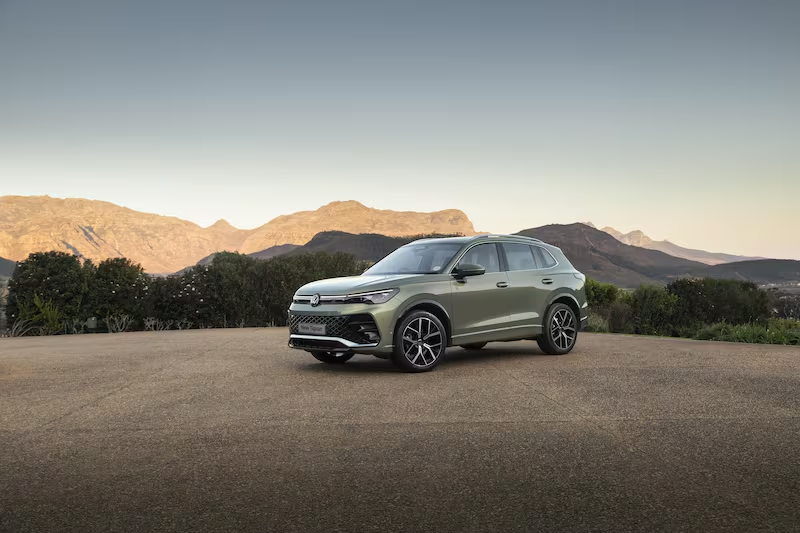
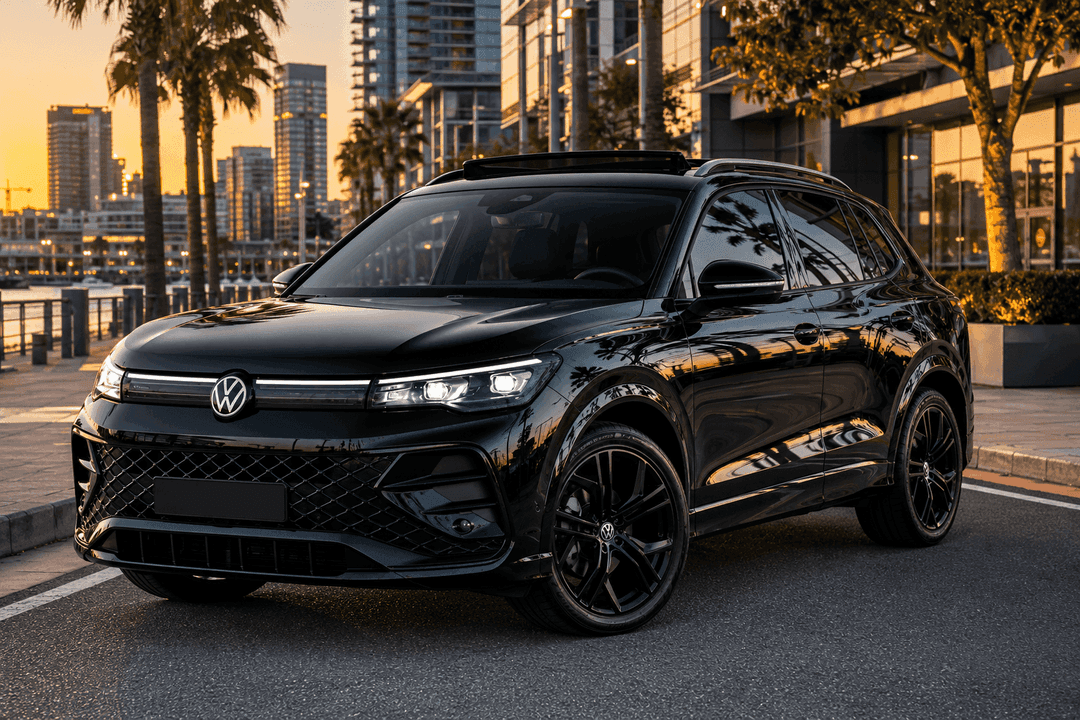
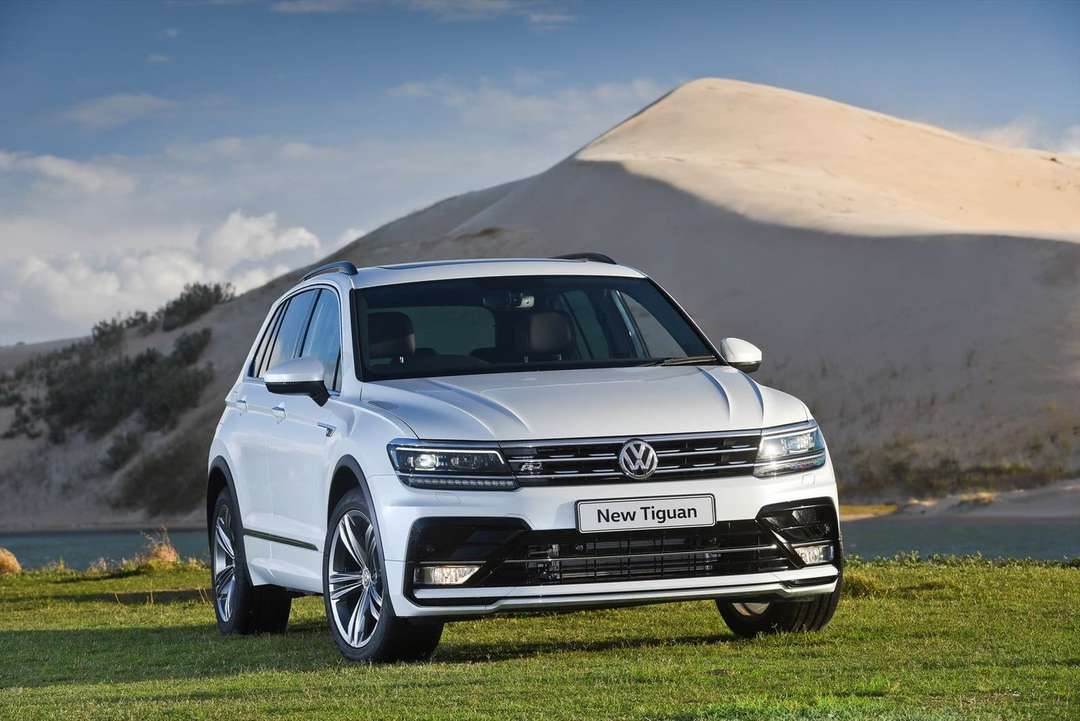
Launched locally in 2017, the second-generation Tiguan has aged rather well. It looks confident without trying too hard, while R-Line trim adds sharper bumpers, larger wheels and a stance that still looks fresh on a 2025 dealer floor.
Compared with the softer, slightly van-like first-generation model, this one has cleaner lines and better proportions. There’s 191 mm of ground clearance, enough for gravel roads and the occasional badly rutted access road. But let’s be honest, if the going gets properly tough, you want a Hilux or Ranger.
With five doors and five seats, the Tiguan doesn’t pretend to be anything it isn’t. Park it next to a Toyota RAV4 or Kia Sportage, and it still has that premium-badge appeal, which helps attract buyers when it’s time to sell.
Cabin & Practicality
Materials and controls
Cabin quality remains one of the Tiguan’s strongest cards. Soft-touch plastics cover the important areas, the switches feel properly damped, and the driving position takes little adjustment. R-Line versions add sportier seats and brighter trim without turning the interior into a costume.
Early examples also retain physical climate dials, which are easier to use than the touch sliders VW later imposed on buyers. A facelift car with a clean digital cockpit and usable buttons is the sweet spot, provided the price doesn’t run away.
Space and family duty
Family practicality is properly sorted. Rear legroom is generous, while the boot took one full-size pram, four soft bags and a Shoprite grocery haul during our check. With the rear bench slid forward, we measured 980 mm of usable floor length behind it.
- Two ISOFIX points are fitted to the outer rear seats, standard across the range.
- A sliding rear bench appears on many trims, allowing owners to trade passenger room for luggage space.
- The 55-litre fuel tank provides useful touring range for an N3 run to Durban.
Allspace derivatives add a third row and seven-seat capacity, although the rearmost pair is best left to children. If you pack smart, the standard Tiguan handles most family duties without the added length or purchase cost.
On the Road
Engine and gearbox
Power comes from a 1.4 TSI producing 110kW and 250Nm from 1,395cc. Those numbers might not sound particularly exciting, but the turbocharged shove low down makes the Tiguan feel responsive in Joburg traffic and when overtaking on the N1 at altitude.
Independent testing puts 0–100km/h at around 9.2 seconds, with a claimed top speed of 207km/h. That’s more than enough for a family SUV. It never feels genuinely quick, but there’s enough punch to handle a full load of people and luggage without complaint.
The DSG is the one area I’d pay close attention to. A healthy gearbox shifts quickly and smoothly; a neglected one can turn an otherwise sensible used-car purchase into a very expensive mistake.
Ride and refinement
Ride comfort is one of the Tiguan’s strengths, particularly on sensible wheel sizes. Across the pockmarked N3 near Harrismith, our Tiguan stayed composed where firmer rivals would have thumped through the broken sections. Even the cabin remained impressively free of rattles.
I did hear a faint DSG shudder while pulling away from an uphill toll queue. It disappeared once the gearbox warmed up, but that little moment was enough to send me straight back to the service invoices. With a used Tiguan, you can never be too careful.
Wind and road noise are also well contained. Think comfortable long-distance cruiser first and sporty SUV a distant second, which is exactly how most South African families will use it.
Volkswagen claims 8.5 L/100km, while our 412km mixed route, including R21 traffic and open-road running, returned 9.3 L/100km. That feels like a realistic figure. Load the cabin and the little turbo has to work harder, so don’t budget around the brochure figure alone.
Data & Comparison
Price bands by year
Used pricing is where the Tiguan starts making a strong case for itself. A listing sample of 330 cars shows steep early depreciation, putting older second-generation examples firmly in the buyer’s favour.
- 2017 models average around R324,440, with the cheapest near R308,000.
- 2019 sits close to R316,881 average, a genuine value pocket.
- 2021 jumps to around R425,953 average as facelift stock enters.
- 2024 averages R619,270, and 2026 stock pushes to R795,347.
A brand-representative 1.4 TSI Comfortline R-Line lands around R625,956. At the opposite end, the absolute floor across all years is R169,900, which means an old, high-km first-generation car carrying considerably more risk.
Residuals and running costs
Three-year residual value sits at roughly R202,620 on the relevant band, while a five-year total cost of ownership estimate comes in near R230,000. Keep that second number in mind. European-brand labour rates and parts pricing make the Tiguan dearer to maintain than a simpler Japanese rival, whether you use Barons or a reputable VW specialist.
| Model | Approx used price | Power | Reliability reputation |
|---|---|---|---|
| VW Tiguan 1.4 TSI (2019) | ~R316,881 | 110kW | Good engine, DSG the watch-item |
| Toyota RAV4 2.0 | Higher for age | Comparable | Class-leading, simpler drivetrain |
| Kia Sportage 2.0 | Similar band | Comparable | Strong, long warranty when new |
Editorial Focus
Its predictable weak point is the plastic thermostat and water-pump housing, which can crack after repeated heat cycles somewhere between 60,000 and 100,000 km. Check for coolant residue, a dropping reservoir level and invoices showing replacement work. Budget for it regardless.
Gearbox identification needs more care than simply trusting the advert. DQ381 versus DQ250 fitment can vary by derivative and production date, so confirm the transmission code through the VIN with a VW dealer or specialist. What you want is proof, not a salesperson’s guess.
Stronger wet-clutch DSG units tend to be more durable than the dry-clutch DQ200 found in lower-torque VWs, particularly under hot SA stop-start conditions. VW markets DSG fluid as lifetime-fill, but experienced specialists disagree. So do I.
A fluid and filter change around 60,000 km is cheap insurance against a five-figure gearbox failure. Mechatronic problems often appear in the 60,000 to 80,000 km window, making that mileage a useful risk threshold rather than an automatic reason to walk away.
Then comes maintenance-plan expiry. VW SA’s value-type plans for older vehicles may cover oil services without including common wear items, while a firm ceiling around 15 years or 300,000 km leaves older cars outside any plan. Once cover lapses, use a trusted independent VW specialist and ask for itemised invoices. The sums remain far more manageable.
Safety rating
ANCAP · tested 2024
★★★★★ 5/5 adult occupant
Australian-market RHD rating — indicative for SA only where the SA derivative matches the tested safety spec (airbags/ESC/AEB). Official factsheet.
Verdict
A used Tiguan 1.4 TSI can be one of SA’s smarter compact SUV buys, but only if you do your homework. Find a 2018 to 2020 example with a complete service history and documented DSG fluid changes, and you get a spacious, comfortable family car that still feels properly premium.
Who should walk away? Anyone tempted by the R169,900 bargain without a repair reserve. Older, high-kilometre examples with expired maintenance plans are exactly where a gearbox bill can suddenly become a painful chunk of the car’s value.
If Toyota-grade simplicity matters more than cabin polish, a RAV4 may give you fewer sleepless nights. Otherwise, buy the Tiguan, keep some money aside for maintenance and enjoy one of the better all-round compact SUVs on the used market.
Summary
A used-buyer’s guide to the 2017-onward Volkswagen Tiguan 1.4 TSI in South Africa, covering DSG servicing, EA211 versus EA888 engines, maintenance-plan expiry and realistic price bands by model year.