Volkswagen T-Cross 1.0 TSI Life DSG (2026) Review

The 2025 T-Cross is quietly impressive, let down by steep pricing and some poor facelift choices. It’s what the T-Cross should have been from the start in terms of cabin feel and tech — and that’s the
Introduction
If you’re looking for a compact SUV that holds its value, drives with Polo-like confidence, and can be fixed in just about every dorpie with a VW shield out front, the 2025 Volkswagen T-Cross 1.0 TSI Life DSG is still a solid bet. There’s a catch, though: you’ll need to swallow a chunky price tag and put up with that DSG hesitation before your first cup of coffee. This Volkswagen T-Cross review is written for the family shopper eyeing up a Creta, Jetour Dashing, or Corolla Cross. Built in Kariega, the T-Cross has been South Africa’s default compact SUV for a reason, but in 2026, the Chinese upstarts are breathing down its neck - and they’re not bluffing.
Key takeaway: If it’s resale you’re after, the T-Cross Life DSG is still the most reliable choice - but you’re paying for the badge and VW’s vast dealer network, not for outright power or the latest features. The competition is catching up, fast.
Design & Exterior
Facelift changes that actually matter
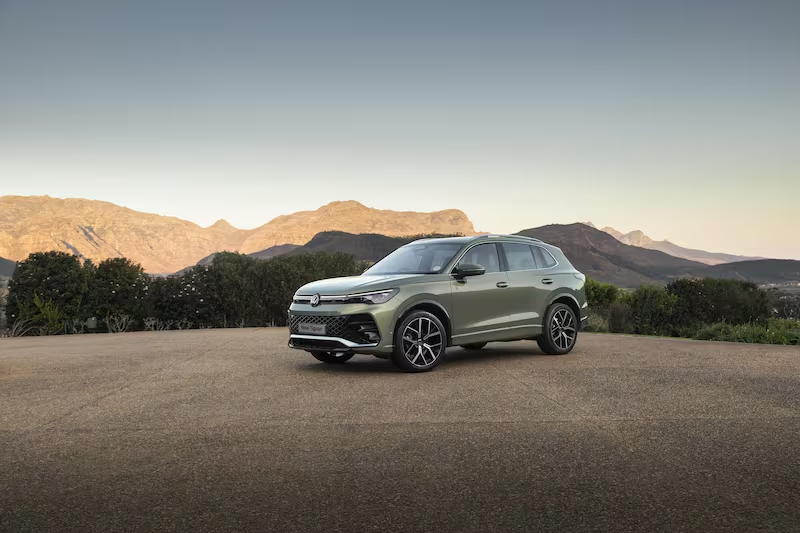
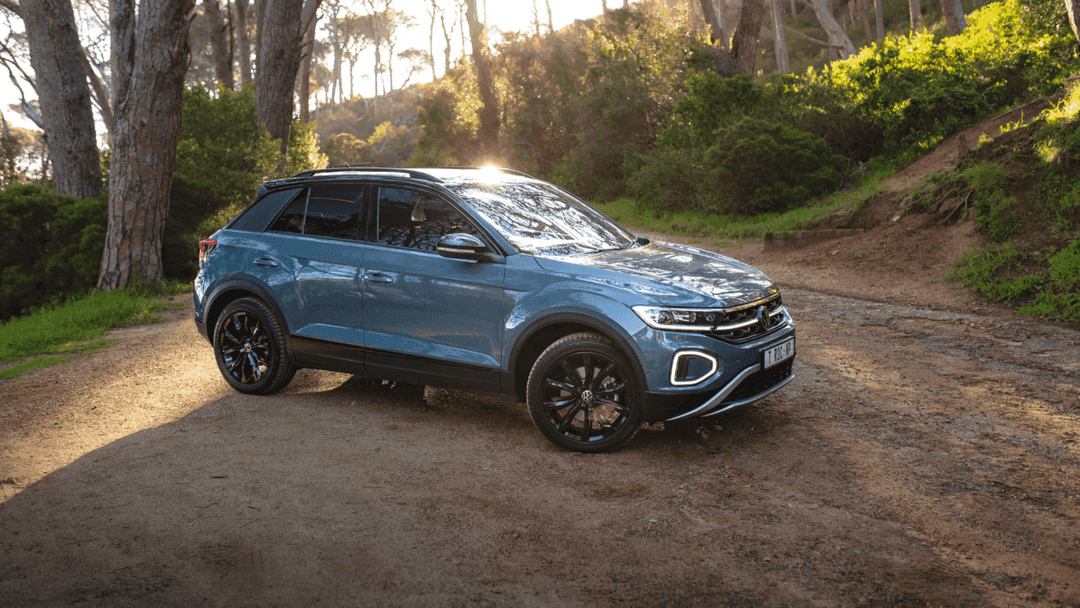
VW didn’t go wild with the 2023 update. They gave it LED headlights, tweaked the bumper with a wider lower intake, stretched it a smidge, and added sharper tail-light graphics. That’s your lot. Parked next to its predecessor, you’d be hard-pressed to spot the difference. But drop it next to a Jetour Dashing, and suddenly the T-Cross looks like it’s wearing a school uniform at a fashion show.
Subtlety is the T-Cross’s design brief. It’s built to look good on a used car lot three years from now, not to turn heads for the ‘Gram. Those clean lines mean it’ll still look presentable when you’re ready to sell - and that matters.
Stance and segment positioning
- Five-door SUV body on MQB A0 platform (shared with the latest Polo)
- Front-wheel drive only - no 4Motion here
- Life trim wears 16-inch alloys; R-Line jumps to 17s or 18s
- Assembled locally at Kariega with the Polo
Local assembly isn’t just a marketing line. It means faster panel replacements after a Joburg fender-bender, parts that match our fuel, and suspension that can shrug off a pothole. It’s the fine print that keeps your downtime short and your insurance bill lower.
Cabin & Practicality
What the facelift fixed inside
First thing you’ll notice: the new dash and door materials. No more scratchy plastic everywhere - the soft-touch bits feel like a real upgrade. The steering wheel (straight from the Golf) is a proper highlight, especially on a long haul. The 8-inch touchscreen with wireless CarPlay and Android Auto is now standard on Life trim, and the digital cluster finally drags the T-Cross into 2026 after those tired old dials.
What the facelift broke
But VW giveth and VW taketh away. The new touch-sensitive climate controls are a pain. Adjusting fan speed in stop-start traffic means looking down, poking at the panel, then double-checking - not great when you’re trying to keep your eyes up. That’s not something an OTA update can fix; it’s a hardware issue. Also, there’s still plenty of hard plastic on the dashboard. At nearly Tiguan money, that’s a letdown.
Real-world space
The Volkswagen T-Cross's boot space is its secret weapon. Thanks to a sliding rear bench, you get 455 litres with the seats forward, or 385 litres with them all the way back. Not many rivals offer that kind of flexibility. If you pack smart, you can fit four people’s airport bags - no creative Tetris required.
- Boot: 385–455 litres, depending on bench position
- ISOFIX on both outer rear seats
- The sliding rear bench is rare for the segment
- Wireless phone mirroring is standard on this trim
On the Road
The engine
Under the bonnet, you get a 1.0-litre turbo triple serving up 85 kW & 200 Nm through a 7-speed DSG. On paper at least, those numbers don’t scream excitement. But the torque arrives early (from 1,800 rpm), making the T-Cross feel livelier than the spec sheet suggests, especially when overtaking trucks. Load it up with passengers and hit a headwind, and yes, you’ll remember it’s a three-pot. Still, it never feels truly underpowered.
The gearbox
Here’s where the Volkswagen T-Cross 1.0 TSI Life DSG review in South Africa gets honest. From a dead stop - like at a robot on a gentle incline - there’s a definite pause, then a mild lurch as the DSG hooks up. I noticed it most on a recent climb up Kloof Nek in Cape Town; I had to rethink my throttle inputs. Kickdown for a quick overtake? There’s a noticeable delay before anything happens. Once you’re cruising at 120 km/h on the N3 in seventh, it’s smooth and refined - but city traffic exposes the gearbox’s quirks.
Ride and chassis
The T-Cross’s ride is its ace. On the 16-inch Life alloys, the suspension feels dialled in for South African roads. It soaks up joints on the N3, shrugs off battered Germiston tar, and takes Joburg’s endless speed bumps in stride. That’s important here, where wheel and tyre claims are a weekly insurance headache.
Data & Comparison
The Volkswagen T-Cross price in South Africa reality
The Volkswagen T-Cross 1.0 TSI Life DSG price in South Africa sits at roughly R471,000 as tested for 2026. And here’s the rub: for this kind of money, several rivals out-muscle it and come with more toys.
| Model | Power (kW) | Avg price (ZAR) | Gearbox |
|---|---|---|---|
| VW T-Cross 1.0 TSI Life DSG | 85 | ~471,000 | 7-speed DSG |
| Jetour Dashing 1.5 TCI DCT | 116 | 458,117 | DCT |
| Jetour X70 1.5 TGDI DCT | 145 | Not in SA | DCT |
| Mini Countryman JCW ALL4 (used) | 228 | 459,695 | Steptronic AWD |
Spec callouts
- Power vs segment: 85 kW is about 37.5% below the segment median (137 kW for the rivals above)
- 5-year TCO estimate: R230,000 (service plan, fuel, insurance, tyres)
- Service plan: 3 years / 45,000 km standard
- Warranty: 3 years / 120,000 km
- Fuel economy: VW claims 5.6 L/100km; my real-world figure from Sandton to Rosebank in mixed traffic was 7.4 L/100km
Service plan and after-sales context
The Volkswagen T-Cross service plan in South Africa exposes the premium you pay for the badge. Three years/45,000 km is standard - extendable, but at a cost. Haval’s Jolion gives you a 7-year/200,000 km warranty plus a 5-year/75,000 km plan; Hyundai’s Creta stretches to 5 years/90,000 km. VW’s ace? There’s a service centre in every corner of South Africa, from Upington to Mthatha. That nationwide coverage is why buyers keep coming back, even if the service plan is short.
Trend signal
SUV demand here is still strong - local interest is hovering in the high 70s through late 2025, while hatchbacks battle in the low 40s. Strong resale keeps T-Cross buyers happy and explains why so many fleets renew them year after year.
Verdict
Who should buy it
Pick the T-Cross Life DSG if you care about resale, want easy servicing, and value a cabin that won’t date too quickly. It’s the motoring equivalent of a navy blazer: versatile, never out of place. Suburban families planning to keep it for three to five years, commuters racking up 25,000 km a year, and anyone moving up from a Polo will settle in fast.
Who should skip it
If you want the max value for every rand, look elsewhere. Jetour’s Dashing brings more grunt for less money, and Haval’s Jolion smashes it on warranty. If you’re obsessed with fuel economy, the Corolla Cross hybrid leaves the T-Cross looking thirsty. And if the DSG’s quirks annoy you on the test drive, trust your instincts - it won’t magically behave better at home.
Rating
7.5 / 10. The 2025 T-Cross is quietly competent, let down by high pricing and a few questionable facelift choices. It’s what the T-Cross should have been from the start in terms of feel and tech - and that’s the point. Life DSG remains the safest pick in the segment. It’s just not the default choice anymore…
Summary
Choose the T-Cross Life DSG if you care about resale, easy servicing, and a cabin that won’t age overnight. It’s the small SUV equivalent of a navy suit — always appropriate, never flashy. Suburban families planning to keep it for three to five years, commuters racking up 25,000 km annually, and anyone moving up from a Polo will find it fits smoothly into daily life.
Ratings
Pros
- ✓Choose the T-Cross Life DSG if you care about resale, easy servicing, and a cabin that won’t age overnight.
- ✓It’s the small SUV equivalent of a navy suit — always appropriate, never flashy.
- ✓Suburban families planning to keep it for three to five years, commuters racking up 25,000 km annually, and anyone moving up from a Polo will find it fits smoothly into daily life.
Cons
- ✗Give it a miss if you want maximum value for every rand.
- ✗Jetour’s Dashing gives you more power for less, and Haval’s Jolion comes with a monster warranty.
- ✗If fuel efficiency is key, the Corolla Cross hybrid makes the T-Cross look thirsty.
- ✗And if the DSG’s behaviour bugs you on a test drive, trust your gut — it won't magically improve at home.