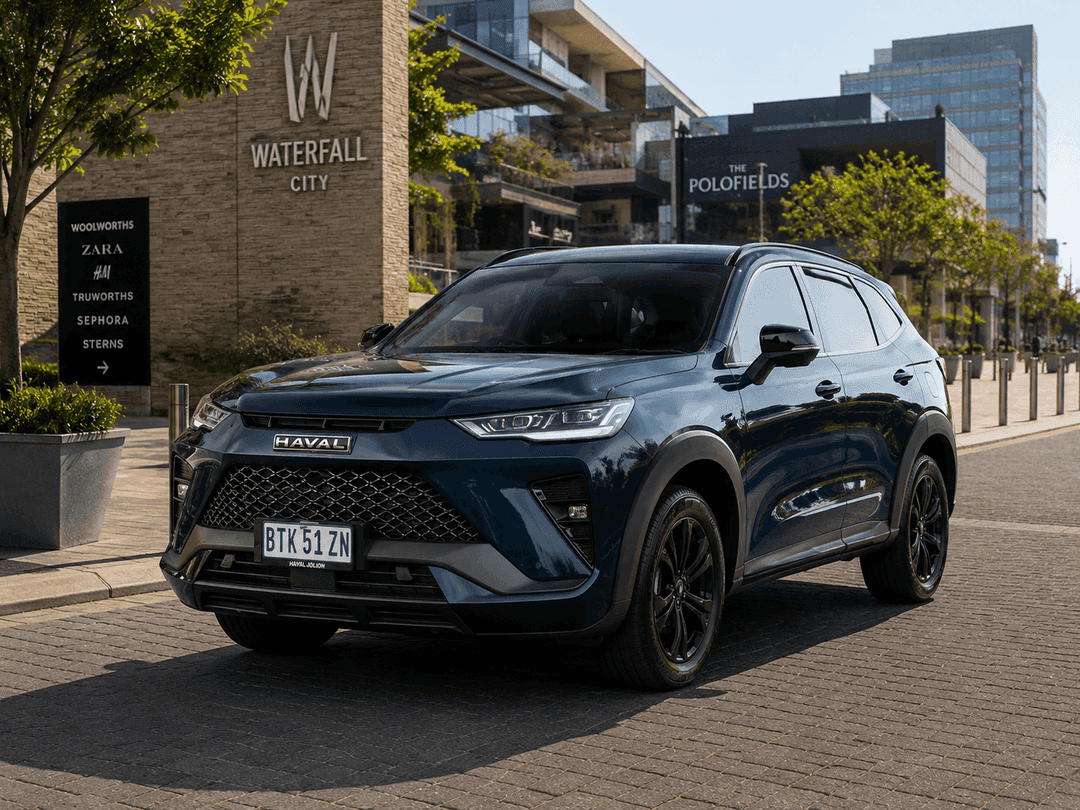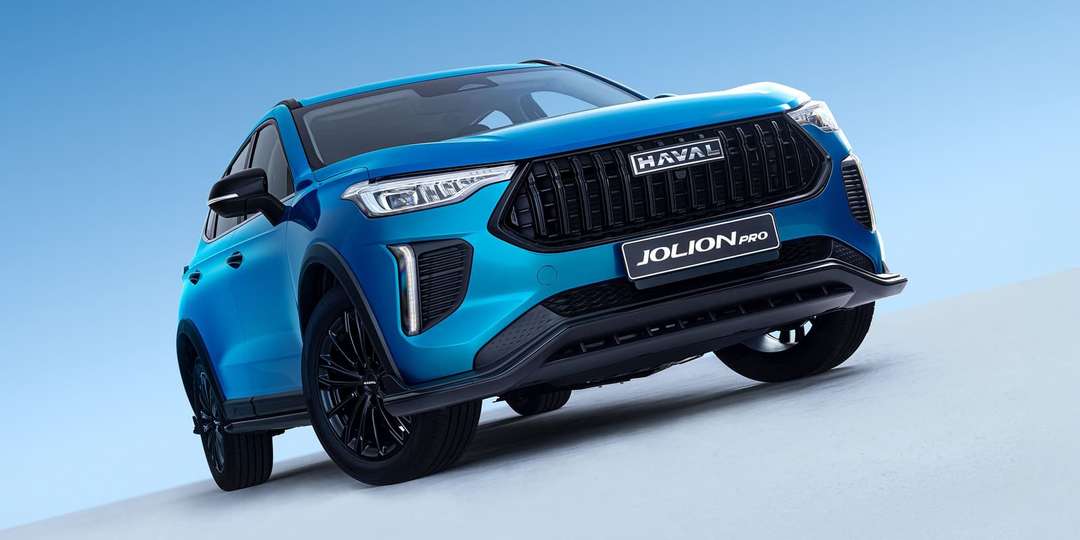
Haval H6 vs VW Tiguan: Value Challenger vs Premium Benchmark

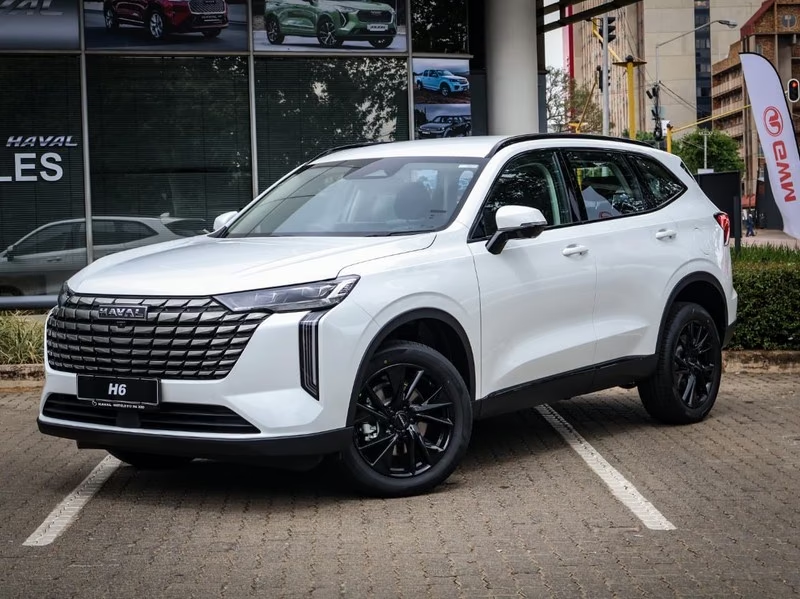
Choose the Haval H6 2.0T Super Luxury DCT if price, equipment and outright shove lead your decision.
Haval H6 vs VW Tiguan: Value Challenger vs Premium Benchmark
If every rand needs to earn its keep, the Haval H6 2.0T Super Luxury 9DCT makes a strong opening argument. At R542 500, it costs R174 400 less than the Volkswagen Tiguan 1.4 TSI Life DSG at R716 900. More importantly, the H6 brings considerably more power and torque, a long warranty and plenty of standard equipment.
The Tiguan approaches the family-SUV brief differently. Its 1.4-litre turbocharged engine is less powerful, but Volkswagen counters with a polished driving experience, a large 652-litre luggage compartment, established local support and a five-year/90 000 km service plan.
This Haval H6 vs VW Tiguan comparison therefore comes down to whether the Volkswagen's more established ownership proposition is worth R174 400 more.
The verdict: which should you buy?
Choose the Haval H6 2.0T Super Luxury 9DCT if purchase price, performance and equipment are central to your decision. R542 500 buys a 2.0-litre turbocharged engine producing 170 kW and 380 Nm, paired with a nine-speed dual-clutch transmission.
Importantly, this particular Super Luxury derivative is front-wheel drive. The original article incorrectly listed it as AWD.
The Volkswagen Tiguan 1.4 TSI Life DSG costs R716 900 and produces 110 kW and 250 Nm through a seven-speed DSG. It is also front-wheel drive.
That means the Haval produces 60 kW and 130 Nm more while costing R174 400 less.
Volkswagen's argument rests elsewhere. The Tiguan brings a mature driving package, 652 litres of luggage capacity, a three-year/120 000 km warranty and five-year/90 000 km EasyDrive service plan, together with Volkswagen's established South African dealer network.
Best suited to the Haval H6: families prioritising purchase price, performance and equipment.
Best suited to the VW Tiguan: buyers placing greater emphasis on Volkswagen's established ownership ecosystem, luggage space and European road manners.
Quick verdict table
| Category | Haval H6 | VW Tiguan |
|---|---|---|
| Price | R542 500 | R716 900 |
| Price difference | R174 400 cheaper | — |
| Power | 170 kW | 110 kW |
| Torque | 380 Nm | 250 Nm |
| Transmission | 9-speed DCT | 7-speed DSG |
| Drive | Front-wheel drive | Front-wheel drive |
| Boot | Confirm current H6 figure | 652 litres |
| Warranty | 7-year/200 000 km | 3-year/120 000 km |
| Service plan | 7-year/75 000 km | 5-year/90 000 km |
| Primary strength | Performance and value | Refinement and practicality |
Specifications
These columns compare the Haval H6 2.0T Super Luxury 2WD 9DCT with the Volkswagen Tiguan 1.4 TSI Life DSG.
| Specification | Haval H6 | VW Tiguan |
|---|---|---|
| Engine | 2.0-litre turbo petrol | 1.4-litre TSI petrol |
| Power | 170 kW | 110 kW |
| Torque | 380 Nm | 250 Nm |
| Drive | Front-wheel drive | Front-wheel drive |
| Gearbox | 9-speed DCT | 7-speed DSG |
| Length | 4 703 mm | 4 539 mm |
| Width | 1 886 mm | 1 842 mm |
| Height | 1 730 mm | 1 660 mm |
| Wheelbase | 2 738 mm | 2 676 mm |
| Boot space | Confirm current figure | 652 litres |
| Warranty | 7-year/200 000 km | 3-year/120 000 km |
| Service plan | 7-year/75 000 km | 5-year/90 000 km |
| Seats | 5 | 5 |
| Price | R542 500 | R716 900 |
The correction to the H6 is important. The current 2.0T produces 170 kW and 380 Nm, not 238 hp. The Super Luxury derivative at R542 500 is also 2WD rather than AWD.
Volkswagen's 1.4 TSI produces 110 kW and 250 Nm, with the manufacturer quoting a 0-100 km/h time of 9.2 seconds and a top speed of 207 km/h.
Performance and driving experience
| Driving factor | Haval H6 | VW Tiguan |
|---|---|---|
| Urban driving | Strong 380 Nm | Smaller engine, 250 Nm |
| Daily commuting | 2.0T/9DCT | 1.4 TSI/7DSG |
| Long-distance | Strong performance reserve | Refinement-focused |
| Overtaking | 170 kW/380 Nm | 110 kW/250 Nm |
| Rear suspension | Multi-link independent | Multi-link arrangement |
| Steering | Electric assistance | Electric assistance |
| Highveld driving | Turbocharged | Turbocharged |
| Drive | Front-wheel drive | Front-wheel drive |
The H6 holds a substantial performance advantage on paper. Its 170 kW output is 60 kW higher than the Tiguan's, while 380 Nm gives it an additional 130 Nm.
Those are meaningful differences rather than marginal specification-sheet victories.
The Tiguan is not trying to beat the H6 on outright output. Volkswagen quotes 9.2 seconds from 0-100 km/h for the 1.4 TSI, which is perfectly adequate for an everyday family SUV.
Both engines are turbocharged, which also makes them well suited to Highveld conditions.
The original article's estimated 8.1-second H6 acceleration run has been removed because there is insufficient supporting test data to present it as a measured result.
Unique South African buying factors
Which handles South African potholes better?
Both use independent suspension front and rear, with the H6 combining MacPherson front suspension with a multi-link rear arrangement.
The H6 Super Luxury uses 225/55 R19 tyres.
Large wheels look good, but tyre profile and replacement cost become important on badly damaged roads. A severe pothole can damage the tyre, rim, alignment or suspension regardless of badge.
Rather than predicting which vehicle will survive potholes better, compare wheel and tyre specifications and obtain replacement prices before purchase.
Ground clearance for daily obstacles
Both are road-focused family SUVs rather than serious off-road vehicles.
They should comfortably handle normal shopping-centre ramps, speed humps and maintained gravel roads when driven sensibly.
The H6 Super Luxury compared here is front-wheel drive. The original article's suggestion that its AWD system provides an advantage on gravel or flooded roads therefore does not apply to this derivative.
Likewise, the Tiguan 1.4 TSI Life is front-wheel drive.
Which is a bigger hijack target?
There is insufficient reliable model-specific evidence to claim that either vehicle presents the greater hijacking risk.
General vehicle-theft statistics should not be converted into unsupported probabilities for individual models.
Insurance companies consider location, vehicle value, claims data, repair costs, security equipment and driver profile.
Obtain comparable quotations for both and confirm whether an approved tracking device is required.
Which handles the long holiday trip?
Both are designed for family touring.
The H6's 170 kW and 380 Nm should provide useful performance when carrying passengers and luggage, particularly at altitude.
The Tiguan counters with a large 652-litre luggage compartment and a drivetrain designed around efficiency rather than outright output.
Its 110 kW and 250 Nm are considerably lower than the H6 figures, but Volkswagen's quoted 9.2-second 0-100 km/h time indicates adequate performance for normal family use.
The original claims involving specific drives through Villiers and Van Reenen's Pass have been removed because there is insufficient documented test information to support them.
Battery and electrical resilience
Both use conventional internal-combustion drivetrains and 12V electrical systems.
Neither requires external charging, so load-shedding has no direct effect on the ability to refuel or operate either vehicle.
As with any modern SUV, buyers should familiarise themselves with keyless-entry backup procedures and battery replacement requirements.
Tyre cost and availability
The H6 Super Luxury uses 225/55 R19 tyres.
Volkswagen's exact Life tyre specification should be checked against the vehicle being purchased.
Before signing, price a complete replacement set for both vehicles rather than concentrating only on monthly instalments.
Tyres can become a significant ownership expense over several years.
Real-world fuel economy
The Tiguan's smaller 1.4-litre turbocharged engine should not automatically be declared more economical purely because of its capacity.
Vehicle mass, gearing, traffic, driving style and drivetrain calibration all influence consumption.
The original article's claimed 9.6 L/100 km H6 test result has been removed because there is insufficient supporting information to verify the route and test conditions.
Buyers should compare official consumption figures and then consider reputable independent testing.
Gravel-road durability
Both vehicles should comfortably manage maintained gravel roads.
Neither derivative in this comparison is all-wheel drive.
The original article's Dullstroom gravel-road anecdote has been removed because there is insufficient evidence supporting that specific comparative test.
Owners regularly travelling on gravel should pay attention to tyre condition, underbody damage, dust sealing and suspension inspections.
Insurance reality
The H6 costs R174 400 less, but that does not establish its insurance premium.
Vehicle value is only one factor.
Obtain like-for-like quotations using the same driver, address, excess and security requirements.
The original generic R1 000-per-month estimate has been removed because it cannot reliably represent an individual buyer's premium.
Parts availability beyond major cities
Volkswagen has an extensive and long-established South African dealer network.
GWM is no longer a newcomer either and has developed a substantial national presence.
Buyers outside major metropolitan areas should establish the location of the nearest authorised workshop for each brand and ask about parts availability before purchase.
The original claim that H6 parts can take two to three months has been removed because such lead times vary according to the component and circumstances.
Running costs
The H6 starts with an enormous R174 400 purchase-price advantage.
It also carries a seven-year/200 000 km warranty, seven-year/75 000 km service plan and seven years of unlimited-kilometre roadside assistance.
Volkswagen supplies the Tiguan with a three-year/120 000 km warranty and five-year/90 000 km EasyDrive service plan.
That produces an interesting split. Haval provides the longer vehicle warranty, while Volkswagen's standard service plan extends 15 000 km further.
Fuel consumption needs to be assessed using verified figures rather than assuming that the smaller engine will always use less.
Insurance should also be individually quoted.
Five-year ownership
Assume 20 000 km annually, giving 100 000 km over five years.
| Item | Haval H6 | VW Tiguan |
|---|---|---|
| Purchase price | R542 500 | R716 900 |
| Initial difference | R174 400 cheaper | — |
| Power | 170 kW | 110 kW |
| Torque | 380 Nm | 250 Nm |
| Service plan | 7-year/75 000 km | 5-year/90 000 km |
| Warranty | 7-year/200 000 km | 3-year/120 000 km |
| Insurance | Quote required | Quote required |
| Resale | Requires current valuation data | Requires current valuation data |
| Five-year TCO | Requires calculation | Requires calculation |
The original R230 000 five-year ownership estimate for both vehicles has been removed.
There is no credible basis for assigning identical TCO figures without including depreciation, fuel, finance, insurance, servicing, tyres and repairs.
The same applies to the claim that the Tiguan will depreciate exactly R100 385 less.
Residual-value differences may exist, but they need current market data rather than an unsupported fixed prediction.
Hidden ownership costs
Both use turbocharged petrol engines and dual-clutch transmissions.
Correct servicing is therefore important, but neither turbocharger nor transmission failure should be treated as inevitable.
Common ownership expenses include tyres, windscreens, brake components, 12V batteries and replacement keys.
ADAS-equipped vehicles can also require calibration following certain windscreen, suspension or body repairs.
Obtain actual quotations for these costs rather than relying on generic estimates.
Repairability
| Item | Haval H6 | VW Tiguan |
|---|---|---|
| Local brand presence | Established | Long established |
| Engine | 2.0T petrol | 1.4 TSI petrol |
| Transmission | 9DCT | 7DSG |
| Independent rear suspension | Yes | Yes |
| Dealer network | National | Extensive national |
| Warranty | 7-year/200 000 km | 3-year/120 000 km |
| Service plan | 7-year/75 000 km | 5-year/90 000 km |
Volkswagen benefits from a long-established dealer and independent-workshop ecosystem.
GWM's South African footprint has also grown considerably, meaning it should no longer be described as a newly established brand.
Actual repairability will depend on the component involved, parts availability and workshop location.
Reliability timeline
There is insufficient credible comparative failure-rate data to predict which components will fail at specific mileages.
| Mileage | Haval H6 | VW Tiguan |
|---|---|---|
| 0-20 000 km | Follow scheduled servicing | Follow scheduled servicing |
| 20 000-50 000 km | Maintain complete service history | Maintain complete service history |
| 50 000-100 000 km | Inspect normal wear items | Inspect normal wear items |
| 100 000-150 000 km | Condition and history increasingly important | Condition and history increasingly important |
| 150 000 km plus | Assess condition individually | Assess condition individually |
The current H6's nine-speed DCT has less long-term South African history than Volkswagen's established DSG technology.
That does not prove it is less reliable.
For used vehicles, maintenance history and condition remain more useful indicators than generic mileage predictions.
Real owner sentiment
Haval H6
Value, equipment, interior presentation and warranty coverage remain central to the H6's appeal.
The current vehicle also brings a significantly updated powertrain, with 170 kW, 380 Nm and a nine-speed DCT.
VW Tiguan
The Tiguan has a longer local history and an established owner base.
Refinement, practicality and the Volkswagen dealer ecosystem form an important part of its proposition.
Online owner discussions can identify recurring themes, but they should not be treated as controlled reliability statistics.
Buyer regret index
| Consideration | Haval H6 | VW Tiguan |
|---|---|---|
| Purchase price | R542 500 | R716 900 |
| Power | 170 kW | 110 kW |
| Torque | 380 Nm | 250 Nm |
| Drive | FWD | FWD |
| Service plan | 7-year/75 000 km | 5-year/90 000 km |
| Warranty | 7-year/200 000 km | 3-year/120 000 km |
| Insurance | Quote required | Quote required |
| Resale | Obtain current valuation | Obtain current valuation |
Boot reality test
Volkswagen officially quotes 652 litres for the new Tiguan's luggage compartment when loaded to the height of the rear seat backrests.
That is a useful amount of family carrying capacity.
The original article's unsupported claims about specific suitcases, prams, cooler boxes and sports equipment have been removed.
Buyers with particular luggage requirements should physically test their own pram, wheelchair, golf clubs or holiday bags before purchasing.
Cabin and practicality
Both are substantial five-seat family SUVs.
The H6 measures 4 703 mm long, 1 886 mm wide and 1 730 mm high, riding on a 2 738 mm wheelbase.
The Tiguan is approximately 4 539 mm long, while Volkswagen has concentrated heavily on packaging efficiency. Its 652-litre luggage compartment is one of the strongest practical arguments in this comparison.
The H6 counters with generous standard equipment and a cabin that makes a strong technology statement for R542 500.
Cabin noise
Without controlled decibel readings recorded under identical conditions, there is no credible basis for declaring one substantially quieter.
Both use turbocharged four-cylinder petrol engines.
Assess road noise, wind noise and drivetrain refinement during a back-to-back test drive at urban and national-road speeds.
This provides considerably more useful information than generic claims about one being quieter on a particular unnamed stretch of road.
Technology
The H6 Super Luxury provides a strong standard technology package, including a 14.6-inch infotainment display, wireless smartphone integration, wireless charging and an extensive driver-assistance suite.
The Tiguan Life brings Volkswagen's current-generation digital architecture, smartphone connectivity and driver-assistance technology.
Feature lists should always be checked against the exact derivative because equipment changes between grades.
The H6's advantage is the amount of equipment available at R542 500, while the Tiguan's technology forms part of a more expensive overall package.
Safety
The Haval H6 achieved a five-star ANCAP rating in 2022.
The current Volkswagen Tiguan achieved five stars in Euro NCAP testing in 2024.
Those ratings are useful references, but buyers should confirm that the South African derivatives carry safety equipment corresponding sufficiently with the vehicles tested.
Both offer extensive active and passive safety technology depending on specification.
Best trim to buy
| Vehicle | Derivative | Why |
|---|---|---|
| Haval H6 | 2.0T Super Luxury 2WD 9DCT | 170 kW/380 Nm and extensive equipment at R542 500 |
| VW Tiguan | 1.4 TSI Life DSG | Adds useful equipment while retaining the 110 kW/250 Nm drivetrain |
Compare current Haval H6 and Volkswagen Tiguan listings on Auto.co.za.
Buying mistakes to avoid
- Listing the H6 Super Luxury as AWD. The R542 500 derivative is front-wheel drive.
- Using 238 hp for the H6. The current engine produces 170 kW and 380 Nm.
- Using 150 hp for the Tiguan when South African specifications should be expressed as 110 kW and 250 Nm.
- Assuming the Tiguan automatically costs less to run because its engine is smaller.
- Predicting exact depreciation without current residual-value data.
- Assigning generic insurance premiums to individual buyers.
- Treating the H6's nine-speed DCT as unreliable simply because it has less local history.
- Ignoring tyre replacement costs.
- Buying according to monthly repayment rather than total finance cost.
- Using specific road-test anecdotes without documented test data.
Things nobody tells you
Haval H6: the latest 2.0T H6 is substantially different from the vehicle many buyers may remember. It now produces 170 kW and 380 Nm and uses a nine-speed DCT. The Super Luxury derivative at R542 500 is front-wheel drive.
VW Tiguan: the 1.4 TSI Life produces 110 kW and 250 Nm. It cannot match the H6 for outright engine output, but Volkswagen gives it a 652-litre luggage compartment and a five-year/90 000 km service plan.
Do not buy if
Haval H6: reconsider it if Volkswagen's established support ecosystem and the Tiguan's practicality matter enough to justify spending another R174 400.
VW Tiguan: reconsider it if R716 900 places unnecessary pressure on your budget or if outright performance and equipment per rand sit at the top of your priorities.
Decision matrix
| If your priority is | Consider | Reason |
|---|---|---|
| Lowest purchase price | Haval H6 | R174 400 cheaper |
| Higher power | Haval H6 | 170 vs 110 kW |
| Higher torque | Haval H6 | 380 vs 250 Nm |
| Longer warranty | Haval H6 | 7-year/200 000 km |
| Longer service distance | VW Tiguan | 90 000 vs 75 000 km |
| Larger verified boot | VW Tiguan | 652 litres |
| Established support ecosystem | VW Tiguan | Long VW presence |
| Equipment per rand | Haval H6 | Super Luxury specification |
| Insurance | Get quotes | Driver-specific |
| Lowest five-year TCO | Calculate | Insufficient evidence for a credible winner |
Safety rating: Haval H6
ANCAP · tested 2022
★★★★★ 5 stars
Australian-market rating. Confirm the South African derivative carries corresponding safety equipment before treating the result as directly applicable.
Safety rating: Volkswagen Tiguan
Euro NCAP · tested 2024
★★★★★ 5 stars
Confirm that the South African Life derivative carries the relevant safety specification before applying the rating directly.
Final verdict
Correcting the powertrain specifications makes the value gap considerably clearer.
The Haval H6 2.0T Super Luxury costs R542 500 and produces 170 kW and 380 Nm through a nine-speed dual-clutch transmission. It is front-wheel drive, not AWD.
The Volkswagen Tiguan 1.4 TSI Life DSG costs R716 900 and produces 110 kW and 250 Nm through a seven-speed DSG, also driving the front wheels.
That leaves the Haval R174 400 cheaper while producing an additional 60 kW and 130 Nm.
The H6 also brings a seven-year/200 000 km warranty and seven-year/75 000 km service plan. Volkswagen counters with a five-year/90 000 km service plan, its established support ecosystem and a verified 652-litre luggage compartment.
What cannot be credibly stated without additional data is that Volkswagen's resale and fuel consumption will automatically recover the R174 400 purchase-price difference. That calculation requires real consumption figures, finance costs, insurance premiums and future residual values.
The H6 therefore makes its argument through immediate value, engine output and equipment. The Tiguan makes its case through packaging, refinement and Volkswagen's established ownership infrastructure.
Best suited to the Haval H6: families prioritising performance, specification and keeping the purchase price under control.
Best suited to the VW Tiguan: buyers prioritising practicality, established support and the Tiguan's more mature overall package.
Find both vehicles on Auto.co.za, compare current dealer listings and confirm specifications on the exact derivatives before signing an offer to purchase.
Summary
Choose the Haval H6 2.0T Super Luxury DCT if price, equipment and outright shove lead your decision. R542 500 buys 238 hp, all-wheel drive, a supple ride and a 7-year/200 000 km transferable warranty, removing much of the usual challenger-brand anxiety. That R174 400 difference could sit in your bond account instead. Pick the Volkswagen Tiguan 1.4TSI Life DSG at R716 900 if you'll trade after three to five years.