Volkswagen Transporter Kombi Commerce 2.0 TDI 8-Speed Automatic SWB (2026) Review
A genuinely improved Kombi for commercial realities, let down a touch by entry-level cost-saving and some early software niggles, but saved by real-world refinement and a warranty you can actually use.
Summary
Here’s the reality check on the 2026 Volkswagen Transporter Kombi Commerce 2.0 TDI 8-speed automatic SWB - straight for South Africans who actually use their vans. You’ll get the full experience: what it’s like on the road, how practical the cabin is, what it’ll cost to own, and - crucially - where it lands against the Ford Tourneo Custom and other people-movers you might cross-shop. This is the no-frills, entry-level T7, the one that matters for shuttle operators and hardworking businesses. If you've been searching for a grounded Volkswagen Transporter review in South Africa, this is for you.
Introduction
Right, so the Transporter Kombi Commerce 2.0 TDI Automatic SWB is a simple proposition: buy it if you need a workhorse that can haul people and goods, you care about a real warranty, and you can stomach the penny-pinching trim. For 2026, Volkswagen’s T7 arrives in South Africa, built on Ford hardware, which puts it in a different league from the outgoing T6.1. We’re looking at the most affordable automatic Kombi in the lineup - the one you’ll actually see outside OR Tambo’s terminal, not the one starring in glossy brochures. It’s not glamorous, but it’s sensible. And that matters.
Key takeaway: The Commerce SWB auto is the pragmatic T7 Kombi: light on luxury, but with VW’s warranty, decent refinement, and Ford’s platform. If you work your vehicles hard, this is the Kombi that makes the most sense.
Design & Exterior
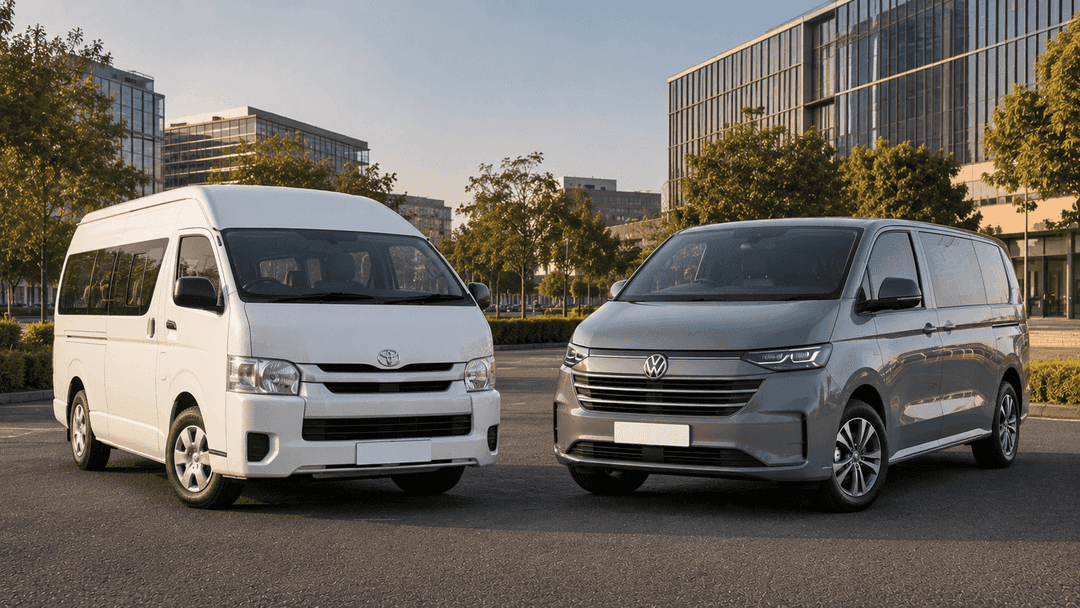
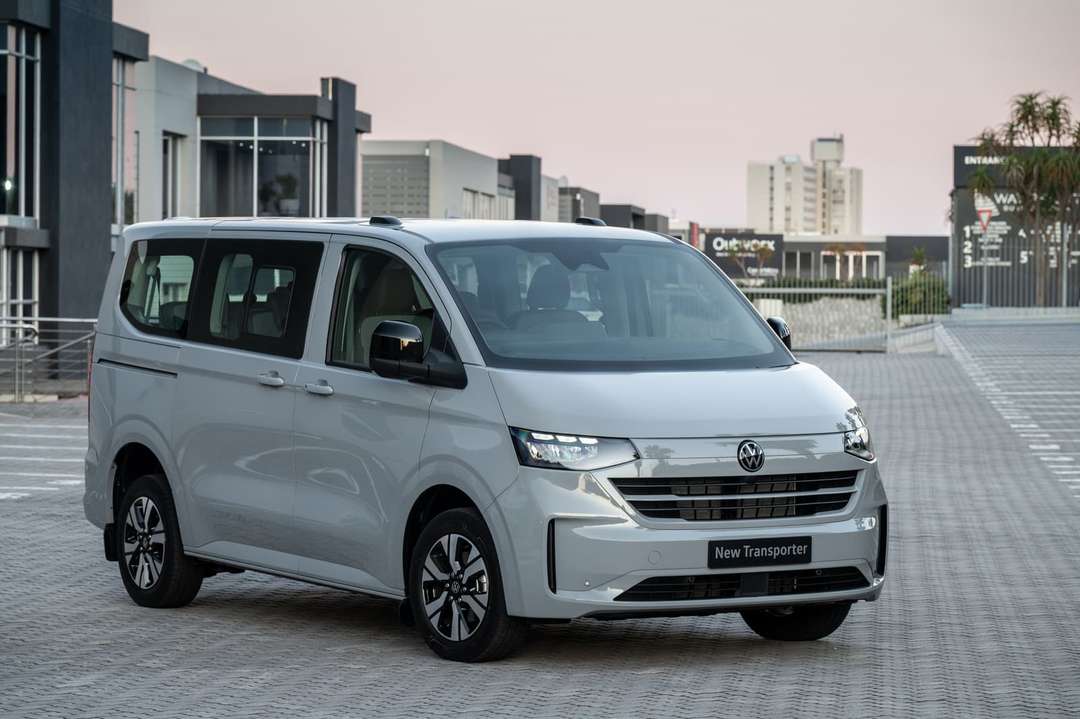
No drama here. Volkswagen’s kept the T7 clean and functional, with a flat grille, slimmed-down headlights, and body panels that look fresh for 2025. It’s big - 5050 mm long, 2032 mm wide, 1983 mm tall - but the lower roof means you can roll into most mall parkades at Sandton City or Gateway without sweating the clearance bar. Useful, that.
What's distinctive
- Blocky nose, flat VW badge, and a chunkier bumper than the old T6.1.
- Simpler side profile, fewer creases, and a stretched 3100 mm wheelbase for more presence.
- Steel wheels on Commerce spec. They’re basic, but at least they’re honest.
- L1H1 short wheelbase, low-roof body - helps when squeezing into Cape Town CBD loading docks.
Park it next to a Ford Tourneo Custom, and you’ll spot the shared DNA. Both ride on the same Ford-developed bones, built in Turkey. Still, the VW front end keeps it recognisably a Transporter, even if the engineering credit sits in Dunton, not Hannover.
Cabin & Practicality
Climb in, and you’ll spot the cost savings. Hard plastics everywhere, a urethane steering wheel, and no centre bin between the seats - Volkswagen’s gone with a walk-through layout. If you’re shuttling people, that’s handy for moving around inside. If you’re a tradie, you’ll miss a spot for your odds and ends. I found myself fishing under the seat for my wallet more than once.
Storage and the twin glovebox question
You do get two gloveboxes, deep door bins, and an overhead shelf above the windscreen, which helps make up for the missing centre bin. After three days running between Pretoria and Joburg, juggling two phones and a power bank, I managed to stash everything, but it took some creative packing.
Seating, ISOFIX and boot space
This Kombi seats six, with removable benches for the second and third rows. Two ISOFIX points are on the second row. Boot space behind the third row is around 470 litres - tight if you’re hauling a full soccer team’s kit, but yank the third row, and you’ve got a near-flat load bay that eats up mountain bikes, Makro furniture, or a couple of paint pallets. If you pack smart, you’ll manage. Volkswagen Transporter boot space is better than you might expect for a van this compact.
Tech and physical controls
- Touchscreen infotainment with wireless Apple CarPlay and Android Auto.
- Physical climate dials below the screen - a relief for anyone who hates menu-diving while driving.
- Digital instrument cluster, even in this entry model.
- USB-C ports front and back.
The infotainment never glitched on me, but international owners have reported the odd freeze that a software update usually sorts. Before you drive out of the dealer - especially if it’s a Barons - they should check for the latest firmware. VW needs to get serious about over-the-air updates in this segment.
On the Road
Here’s where the Transporter Commerce does its job. The 2.0 TDI puts out 125 kW and 390 Nm. That sounds light for a van tipping the scales at 1835 kg, but the torque arrives early and sticks around. The eight-speed automatic - oddly a Ford design that Ford doesn’t actually use elsewhere - takes its time swapping gears. Not fast, but never flustered.
Highway and long-distance behaviour
On the N1, cruising at 120 km/h, the cabin is surprisingly hushed. There’s some wind noise off those massive mirrors, but it won’t drown out a phone call. The old T6.1’s diesel clatter is much less intrusive now. A 14.7-second 0-100 km/h time tells you all you need to know: not quick, but relaxed at speed. Suits the shuttle crowd perfectly.
Around town and on poor surfaces
In stop-start traffic, the gearbox can hesitate when you get back on the throttle after a lift-off. Not a dealbreaker, but it’s the main quirk. On Gauteng’s battered backroads, the ride stays firm but never harsh. The rear axle skips a bit when empty, which is standard van behaviour.
Driver-assistance reality check
Lane-keep assist and driver fatigue warnings are a bit too eager. On the N3 between Heidelberg and Villiers, the system nagged me constantly because of fading lane paint. Annoyingly, the disable button is buried in a touchscreen menu - no quick physical switch. If you’re doing 40 000 km a year, that’s a real irritation.
Volkswagen Transporter ground clearance
Ground clearance is about 167 mm. Enough for gravel farm roads or a rough guesthouse driveway in the Drakensberg, but don’t mistake this for a soft-roader. Front-wheel drive keeps things honest - tarmac and occasional dirt, nothing heroic.
Data & Comparison
Core specs at a glance
| Spec | Figure |
|---|---|
| Engine | 2.0 TDI, 4-cyl diesel |
| Power | 125 kW |
| Torque | 390 Nm |
| Gearbox | 8-speed automatic |
| Drive | Front-wheel drive |
| 0-100 km/h | 14.7 seconds |
| Combined consumption (claim) | 7.5 L/100 km |
| Length/width / height | 5050 / 2032 / 1983 mm |
| Wheelbase | 3100 mm |
| Kerb weight | 1835 kg |
How it stacks up against rivals
| Model | Power | Avg price (ZAR) | Drive |
|---|---|---|---|
| VW Transporter 2.0 TDI 150 Auto (this car) | 125 kW | ~R 1 102 800 | FWD |
| VW Transporter 2.0 TDI 170 4MOTION Auto | 125 kW | R1 081 049 | AWD |
| Ford Tourneo Custom 2.0 EcoBlue 170 Auto | 125 kW | R1 083 272 | FWD |
| VW Caravelle 2.0 TDI 180 DSG (outgoing) | 132 kW | R1 099 000 | FWD |
Key numbers worth flagging
- Real-world fuel consumption: You’ll see 8.0–8.5 L/100 km in mixed SA driving, not the claimed 7.5.
- Five-year TCO estimate: R402 500 in running costs, so budget accordingly.
- Power deficit vs segment: 112 kW is 34% down on the segment median of 170 kW - so you’re buying on value, not muscle.
- Service intervals: 15 000 km - about right for long-hauliers.
Volkswagen Transporter service plan in South Africa
Volkswagen covers maintenance for five years or 60 000 km, with a three-year/120 000 km warranty and a 12-year anti-corrosion guarantee. If your van’s clocking up big mileage, you’ll burn through the 60 000 km service plan inside two years. Get an extended plan price upfront from your dealer - don’t get caught short.
Volkswagen Transporter vs Caddy
Thinking about the Transporter vs Caddy? It comes down to size and intent. The Caddy is a car-like five- or seven-seater, easier to park and cheaper to run. The Transporter delivers real commercial space and presence. If you need proper cargo and a six-seat cabin, the Transporter is your only bet. Caddy wins if you’re city-bound and hate fuel bills.
Volkswagen Transporter vs Ford Transit
Choosing between Transporter and Ford Transit is no longer about mechanics - they share a platform. Volkswagen leans on brand, TDI tuning, the after-sales experience, and perceived resale. Ford counters with sharper pricing and loads more commercial dealers, especially outside the big metros. Pick the badge and dealer you trust. That’s the point.
Segment trend signal
Panel van interest in SA is steady at 18 points through late 2025, while SUVs pull a whopping 76. The Transporter Commerce is for those who buy on need, not image.
People Also Ask
Is the new Volkswagen Transporter reliable?
So far, the T7’s reliability looks promising with that familiar 2.0 TDI engine and the Ford Transit Custom backbone. Some early owners have complained about hesitant shifts from the eight-speed auto and infotainment freezes - both fixable with software. The 12-year anti-corrosion warranty shows VW has faith in the bodywork. Volkswagen Transporter reliability is a strong selling point for fleet buyers.
What are the common problems with VW cars in the Transporter range?
Most complaints focus on low-speed jerkiness from the eight-speed auto, the odd infotainment reboot, and some tailgate alignment that scuffs the taillights. None are dealbreakers. Just make sure you get the latest software flashed at delivery and give the tailgate a proper look-over before you sign off.
What are the most common Volkswagen problems on diesel vans?
The usual suspects on TDI vans: DPF issues in urban stop-start use, AdBlue sensor gremlins, and historic DSG mechatronic failures. The T7 uses an eight-speed torque-converter auto, not a DSG, so long-term durability should be better. Stick to your 15 000 km services, and the 2.0 TDI will run for years.
How much boot space does the Volkswagen Transporter have?
Boot space in the SWB Kombi Commerce is about 470 litres behind the third row. Drop both rear benches and you’re looking at over 3000 litres - enough for surfboards, furniture, or six big suitcases. That wide, flat floor is a real-world advantage over something like the Hyundai Staria. I once fit a double pram and two mountain bikes in, no sweat.
What ground clearance does the Volkswagen Transporter offer?
Ground clearance is roughly 167 mm for the front-wheel-drive Commerce. That’ll get you over gravel, guesthouse driveways, and most speed humps. If you need to hit rougher ground, the 4MOTION Style is a better fit. Don’t try the Sani Pass fully loaded in this one.
How does the Transporter compare to the Caddy for family use?
For families, the Caddy is more wallet-friendly, easy to thread through malls, and sips diesel. The Transporter adds proper adult space for six or seven and massive cargo flexibility. If you need a real seven-seat room, pay the Transporter premium. If not, the Caddy does the trick and saves you cash.
Verdict
The Transporter Commerce SWB auto is the T7’s workhorse. You won’t see it in VW’s splashy launch ads, and it’s not the one competing with the Kia Carnival for private buyers. For shuttle services, guesthouses, or small businesses that need to split the difference between carrying people and cargo, it’s exactly what the new Transporter should have been from the start. Refinement is up, the eight-speed auto is generally smooth, and sharing a platform with Ford should make for good parts supply. If you want all-wheel drive or a plush seven-seater, look elsewhere. If you’re holding out for the Multivan T7, that’s the lifestyle pick. And if you’re an early adopter, maybe wait for VW to iron out the teething software bugs. Otherwise, this is the sensible buy.
Rating
7.5/10. A genuinely improved Kombi for commercial realities, let down a touch by entry-level cost-saving and some early software niggles, but saved by real-world refinement and a warranty you can actually use.
Summary
Here’s the reality check on the 2025 Volkswagen Transporter Kombi Commerce 2.0 TDI 8-speed automatic SWB, straight for South Africans who actually use their vans. You’ll get the full experience: what it’s like on the road, how practical the cabin is, what it’ll cost to own, and—crucially—where it la