Mahindra KUV100 Nxt K6+ mFalcon Petrol 1.2 (2018) Review

- Honest value, strong on safety and running costs, but let down by its breathless motor at altitude and a manual-only range.
Introduction
Let’s not waste time: if you’re after the cheapest, decently specced, pseudo-crossover in South Africa and your life is mostly urban, the Mahindra KUV100 Nxt K6+ should be on your list. Regular highway runs down the N1 to Bloem with a full boot? Give it a skip. There’s the headline. This review looks at the facelifted Nxt, the 2018-and-newer shape you’ll find both pre-owned and still hanging around Mahindra dealer lots in 2026. Oddball? Absolutely. But that’s part of its charm.
Key takeaway: The KUV100 Nxt K6+ makes a strong case as a first car or city runabout, provided you accept its town-focused nature.
Design & Exterior
Proportions that confuse people
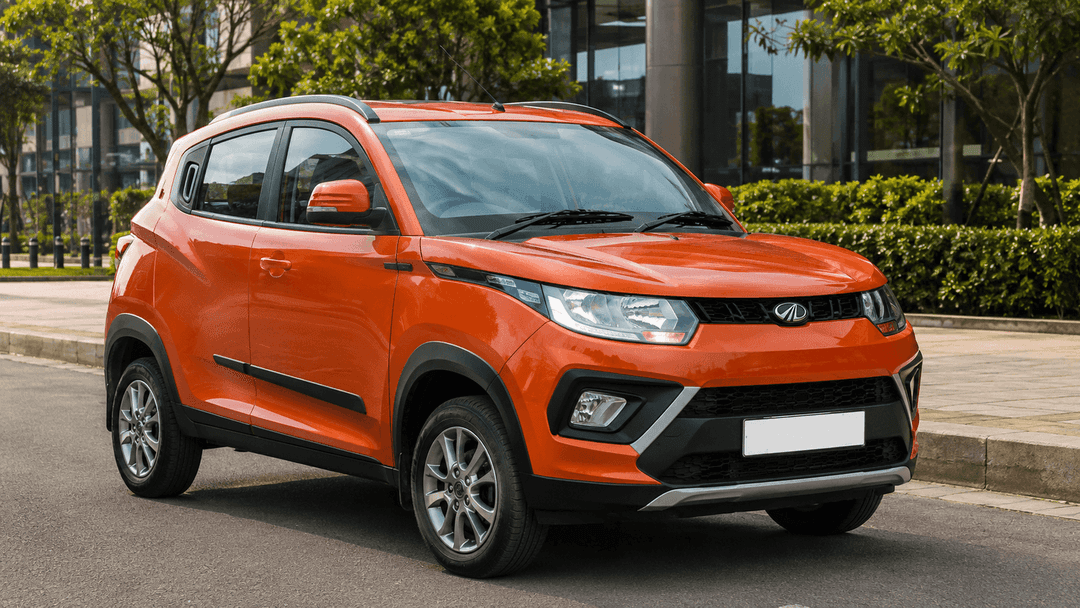
The KUV100 looks like a regular hatchback jacked sky-high, only they left the wheels comically small. At 3 700 mm long and 1 655 mm tall with a 1 727 mm-wide stance, it’s all upright attitude, but awkwardly so. The Nxt refresh brought a more assertive grille, chunkier headlights, and fresh taillights, which help a bit, but the stance is still neither here nor there.
Where it fits in the SA segment
Park it next to a Renault Kwid Climber or Suzuki S-Presso at Sandton City and the Mahindra stands out as the most SUV-like, even if it’s not exactly a looker. Still, it’s got more presence than the Datsun Go+ ever managed. K6+ spec brings body-coloured handles and mirrors, a thin chrome grille accent, and 14-inch wheels wearing covers that actually look alright.
Cabin & Practicality
The 5+1 question
Mahindra claims the KUV100 is a six-seater, thanks to a jump seat in the front row. Truth is, that middle perch is a glorified armrest or maybe a spot for your Woollies bag. Treat it as a five-seater, and you’ll be happier. Rear space is fine for two adults under 1.8 metres. Three across? Only if you’re doing the school drop-off shuffle.
Boot, materials and controls
Boot space is the sticking point. With the rear bench up, you get a compact, upright load bay - enough for a weekender and a backpack, not much else. Fold the seats, and there’s just enough room for a Makro raid. If you pack smart, two people can manage a Dullstroom weekend without drama.
K6+ kit covers the basics you’ll actually use:
- 7-inch touchscreen with Bluetooth/USB
- Steering audio controls
- Electric mirror adjustment
- Remote central locking (flip key)
- Cooled glovebox, storage armrest
- Micro-hybrid stop/start with driver display
- Electronic climate controls and ambient lighting
It’s all hard plastic, but nothing rattles; nothing feels shoddy. At this price, that’s fair. And crucially, you get proper climate buttons and a real volume knob - something missing from plenty of pricier options.
On the Road
The 1.2 mFalcon, honestly
Power comes from a three-pot mFalcon petrol: 61 kW and 115 Nm, driving the front wheels via a five-speed manual. That’s plenty for an A-segment car at this weight, on paper at least. In Joburg traffic between Rosebank and Linksfield, it’s lively enough: happy to rev, clutch is light, and the chunky console shifter is a surprise highlight - nobody mentions it, but everyone likes it once they try it.
Point it at the N3 toward Harrismith, and cracks start to show. With two adults and luggage, you’re in fourth gear at 110 km/h, throttle buried, still losing pace up to Heidelberg. That’s life with 82 horses at altitude. Claimed combined fuel use is 5.9 L/100 km, and in my own mixed bag of suburban, highway, and a stretch of Sani Pass-style gravel, I averaged 6.8 L/100 km. Not bad, honestly.
Ride, steering and the gravel question
Here’s the surprise: the ride quality is softer than you’d expect from a cheapie. On patched-up rural roads and corrugated edges - the sort you find between Free State dorps - it doesn’t punish you. Steering is light, turning circle is tight (a win in those multi-level Cape Town parking garages), and visibility from the high-set seat is excellent, especially for new drivers.
Does the Mahindra KUV100 come with an automatic?
Short answer: no automatics here. Every KUV100 sold in SA is a five-speed manual, whether it’s K2+, K6+, or K8. If you must have two pedals and a tiny crossover under R250 000, look elsewhere - Suzuki S-Presso AGS or Renault Kwid Climber AMT will serve you better.
Data & Comparison
The numbers that matter
Quick spec hit for the K6+ mFalcon Petrol 1.2 (same mechanicals as the K8):
- Engine: 1.2L 3-cylinder petrol
- Power: 61 kW
- Torque: 115 Nm
- Transmission: 5-speed manual, FWD
- Dimensions: 3 700 mm (L) / 1 727 mm (W) / 1 655 mm (H)
- Seats: 5 (plus that odd jump seat)
- Claimed combined fuel: 5.9 L/100 km
How it stacks up against rivals
This is where most buyers end up: Mahindra KUV100 vs Kwid and S-Presso. Here’s a quick side-by-side on the stuff that counts:
| Spec | Mahindra KUV100 Nxt K6+ | Renault Kwid Climber | Suzuki S-Presso S-Edition |
|---|---|---|---|
| Engine | 1.2L 3-cyl petrol | 1.0L 3-cyl petrol | 1.0L 3-cyl petrol |
| Power | 61 kW | 50 kW | 50 kW |
| Height | 1 655 mm | 1 490 mm | 1 564 mm |
| Airbags | Dual front | Dual front | Dual front |
| Touchscreen | 7-inch standard | 8-inch standard | Single-DIN unit |
Ownership: warranty, service and crash parts
Mahindra SA covers you with a 3-year/100 000 km warranty, a 2-year/50 000 km powertrain extension, and a 3-year/50 000 km service plan (10 000 km intervals). Five-year total cost of ownership pencils out to around R374 550, which is competitive in this under-R250 000 city-crossover class.
Here’s what matters beyond the brochure:
- AA-Kinsey’s parts basket test found the KUV100 Nxt’s crash panel parts cost R12 084 less than the next closest rival. Lower insurance bills, right there.
- Mahindra’s 67-strong dealer network covers every province, and KZN builds the car locally. So, “orphan brand” worries? Not here.
New, the K6+ launched at just under R230 000. Used examples with low kilos are now comfortably under R160 000 late in 2025. That’s the big reason it still sells.
Wear-and-tear costs
Clutch wear comes up constantly from KUV100 owners. At Mahindra dealers, the Mahindra KUV100 clutch plate price in South Africa is reasonable, and if you shop around or online, a Mahindra KUV100 clutch kit in South Africa won’t break the bank. Labour plus parts are still much less than you'd pay for a Polo Vivo. First-car buyers budgeting for eventual clutch replacement should take note.
Verdict
Let’s wrap it up: the K6+ is the sweet spot if you know what you’re getting. It’s a city car with SUV cues, city-car performance, and SUV-like visibility and comfort over bad roads. First-timers, retirees doing a 60 km daily round trip, or students at UJ or Stellenbosch - this one deserves a look.
But if your life means regular N3 runs toward Durban with a car full of people and bags, move on. That 82 hp just isn’t enough for long highway stints at altitude. And if you want an automatic, the KUV100 isn’t even in the running.
The wait-and-see angle: the KUV100 is discontinued globally due to emissions, so new stock is limited. If Mahindra brings the XUV 3XO or another budget replacement in the next year, it’ll probably fix the KUV100’s weak points and finally offer an auto - it’s what the KUV100 should have been from the start…
Summary
Mahindra’s KUV100 Nxt K6+ mFalcon Petrol 1.2 gets the South African city-car treatment here: tested at altitude, poked for cabin space, and checked for running costs and parts. We’re talking about the K6+ that splits the difference between the bare-bones K2+ and the slightly posher K8, aimed at firs