Omoda C9 1.5T AWD PHEV (2026) Review
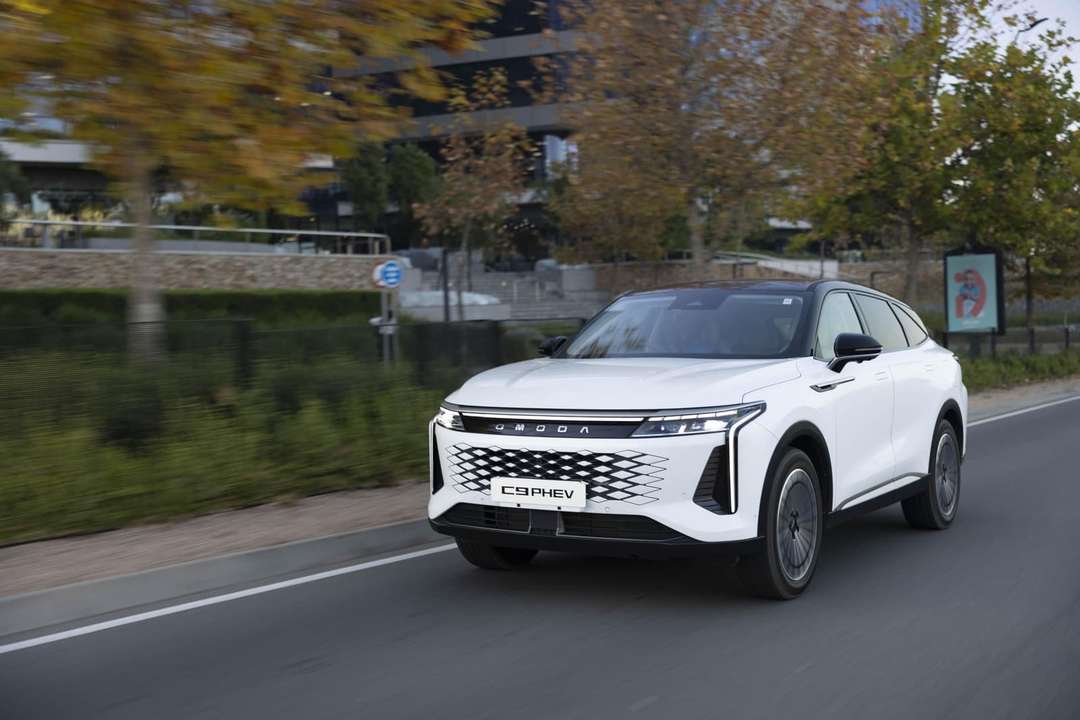
A convincing plug-in SUV that backs up its claims with real-world performance and value, let down only by ride harshness over broken tar and the usual new-model question marks about long-term local support.
Summary
Here's a real-world Omoda C9 review for South Africa, focused on the 1.5T AWD PHEV and what it actually delivers for the money. Powertrain, cabin, real-world running, warranty terms - it's all here. If you’re a family buyer eyeing a R999,000 Chinese PHEV aimed at the German and Swedish plug-in hybrid SUVs, but want the truth before signing, this is for you.
Introduction
Look, if you’re after premium-SUV pace and plug-in efficiency for about R260,000 less than the nearest BMW or Volvo, the Omoda C9 PHEV must be on your shortlist. Sure, the badge still needs to prove itself on local roads, but as of 2025, this is Omoda’s boldest move in South Africa. At R999,000, you’re cross-shopping it with the BMW X3 30e and Volvo XC60 T8 - both pricier, both with serious street cred. There’s actual value here. There are some trade-offs (obviously), but you can’t just look away from those specs.
Key takeaway: C9 PHEV gives you 440 kW, a 4.9-second 0-100, and a monster warranty for under R1 million, undercutting the Germans by about R260k.
Design & Exterior
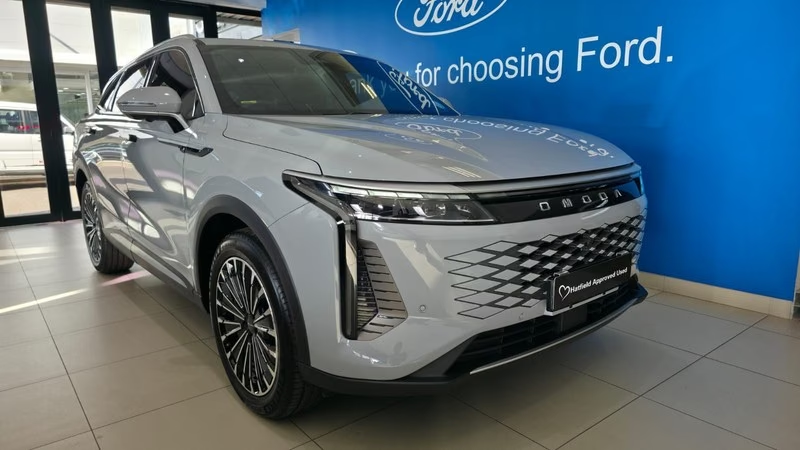
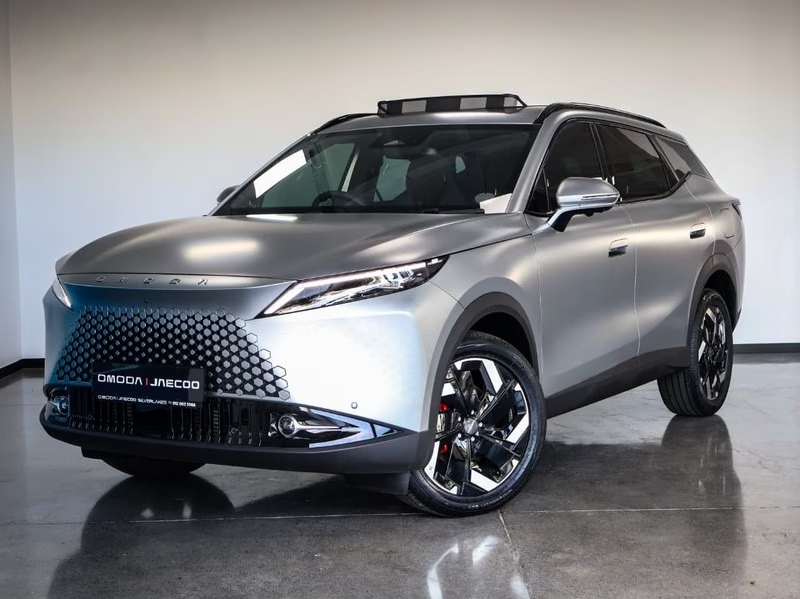
At 4,775 mm long and 1,920 mm wide, the Omoda C9 lands squarely in premium SUV territory. It’s bigger than a BMW X3 and, in width, is drifting close to X5 territory. The styling? Conservative. No oddball flourishes or glitzy chrome - just enough sculpting on the bonnet and sides to look upmarket without shouting for attention. These Chinese brands know South Africans want a premium look, but nothing that’s going to stand out awkwardly at the Gautrain parkade in Pretoria.
Wheels, stance and presence
Those 20-inch alloys fill the arches perfectly. The stance is assertive, but not shouty. Park it next to a Volvo XC60 at Hyde Park’s Woolworths, and most folks will guess it costs a lot more than it does. And that matters because for many buyers, ‘premium’ is about having a presence in the parking lot.
Omoda C9 colours in South Africa stay on the safe side: black, two whites (one pearl, one solid), gunmetal grey, and a dark green. No wild oranges or blues. Nothing that’ll look cringey in five years.
Practical exterior notes
Ground clearance for the Omoda C9 isn’t quoted locally. There’s a reason: this isn’t a Sani Pass climber. With those low-profile 20s, a hefty 2.2-tonne kerb weight, and twin electric motors, this is built for tar. Gravel? Fine, if you’re sensible. Don’t expect Fortuner-style abuse tolerance. Real off-roading is off the table.
Cabin & Practicality
Slide inside, and the first thing you see is the 24.6-inch curved screen. No exaggeration - it dominates the dash, and, credit to Omoda, it’s sharp, quick, and the climate controls aren’t buried in menus. That’s a win over some Eastern rivals.
Materials and switchgear
Stitched dash top, metal-feel switches on the steering wheel, and a centre console with both chilled and heated storage. That feature actually works - I kept a Steri Stumpie cool from Sandton to Hartbeespoort on a sweaty summer drive. Seats? Well bolstered. On paper at least, they’re softer than they look. Two hours on the N1 and my back was happy, though my shoulders wanted more lateral support.
Space and boot
Rear space is good for two adults. The centre seat? Not great, thanks to a big transmission tunnel (blame the rear motors). Just five seats, no option for seven - that’s intentional. Omoda claims big boot numbers, but real measurement in the petrol-only 2.0T showed just 328 litres in ISO-blocks versus the claimed 660. Expect the same gap here. If you pack smart, you’ll get a small family’s weekend stuff in. Three kids and a dog? That’s a stretch.
Tech features worth listing
- 12-speaker Sony audio, with headrest speakers up front
- 540-degree camera system, including a transparent bonnet view
- 50W wireless charging pad (actually quick, not just stickered)
- Panoramic glass roof with a powered blind
- Full ADAS suite - adaptive cruise, lane keep assist, the works
- Seven airbags
On the Road
Here’s what you’re working with: 440 kW, 915 Nm. The 1.5-litre turbo petrol makes 105 kW; the rest is all electric - one motor up front, two at the back. Independent testing put the 0-100 km/h at 4.89 seconds. That’s real. Most rivals are a bit optimistic with their numbers, but the C9 nails it.
How it actually drives
Day to day, the C9 drives far more like an EV than a hybrid. The 3-speed hybrid transmission lets the petrol engine either drive the front wheels or run as a generator, but in Joburg traffic, it mostly hums in the background. Sometimes you’ll hear the engine, but it doesn’t feel connected to your throttle input - slightly odd but calm. Put your foot down, and there’s just a beat of lag, then a proper shove. It’s quick. I remember overtaking a lumbering truck on the N3 near Harrismith - blink, and you’re past, with nothing but a faint whine from the motors.
Ride and refinement
Continuous Damping Control is a standard kit. On smooth tar, it’s plush. But South African roads? Not so gentle. Hit an expansion joint on the R21 by OR Tambo, and those 20-inch wheels plus the weight sent a solid thunk through the cabin. At highway speeds on the N1, it’s impressively quiet - quieter than some much pricier options. In stop-start traffic, the ride gets fidgety. That’s the compromise. You feel it.
Range and charging reality
Omoda claims 1.4 L/100 km (WLTP), but you’ll only see that if you’re religious about plugging in every night and avoiding long trips. In real mixed driving, I got 5.5 L/100 km - honest for a plug-in hybrid this size. The 34.5 kWh LFP battery (CATL-sourced, good for longevity) promises 150 km of electric range. DC fast charging tops at 70 kW, so a 30 to 80 per cent fill takes 20-25 minutes. AC is 6.6 kW, so a home wallbox will need about 5.5 hours for a full charge. If you’re in Joburg, commuting and charging every night, you could get away with barely touching the petrol tank for weeks.
Data & Comparison
Key specs at a glance
- Engine: 1.5L turbo petrol plug-in hybrid
- Power: 440 kW (590 hp)
- Torque: 915 Nm
- Drive: AWD
- Transmission: 3-speed dedicated hybrid
- Fuel consumption (combined, claimed): 1.4 L/100 km
- Length / width / height: 4,775 / 1,920 / 1,671 mm
- Seats: 5
- Doors: 5
How it stacks up against rivals
| Model | Power (kW) | 0-100 km/h | Price (approx) | Drive |
|---|---|---|---|---|
| Omoda C9 PHEV | 440 | 4.9 sec | R999,000 | AWD |
| BMW X3 30e | 220 | 6.2 sec | ~R1,260,000 | AWD |
| Volvo XC60 T8 Recharge | 335 | 4.9 sec | ~R1,310,000 | AWD |
| Chery Tiggo 9 CSH | 440 | 4.9 sec | ~R900,000 | AWD |
Ownership numbers
Omoda C9’s service plan in South Africa comes bundled with a 7-year/200,000 km vehicle warranty, 10-year/200,000 km cover for the electric drive unit, 10-year/1,000,000 km on the engine, and a 10-year/unlimited km battery warranty for the first owner. Projected five-year running costs land at R264,300, which is strong versus the Germans. Omoda’s R999,000 price puts the C9 about R260,000 cheaper than the X3 30e and R310,000 less than the XC60 T8. That’s deposit-on-a-flat money or roughly three years of fuel, if you’re counting.
Market trend context
South African SUV demand has stayed steady, with sales sitting in the mid-70s for most of 2026. Hybrid interest hovers just below, around 72. Plug-in hybrids like the C9 hit a sweet spot - buyers want EV running costs, but don’t trust full EVs for road trips up the N3 with the way load-shedding can catch you out.
People Also Ask
What is the Omoda C9 PHEV price in South Africa?
The Omoda C9 1.5T AWD PHEV launched in August 2025 at R999,000, including a full warranty and service plan. That seriously undercuts the BMW X3 30e (about R1.26 million) and the Volvo XC60 T8 (R1.31 million) by R260,000–R310,000 for similar performance.
What are common Omoda C9 problems?
It’s still early for a full verdict on long-term Omoda C9 reliability in South Africa. So far, reported issues are mostly niggles: sometimes the ADAS is over-eager, the big screen can glare on bright days, and the ride can get harsh on bad tar with those 20s. The CATL LFP battery tech is proven, so no panic there.
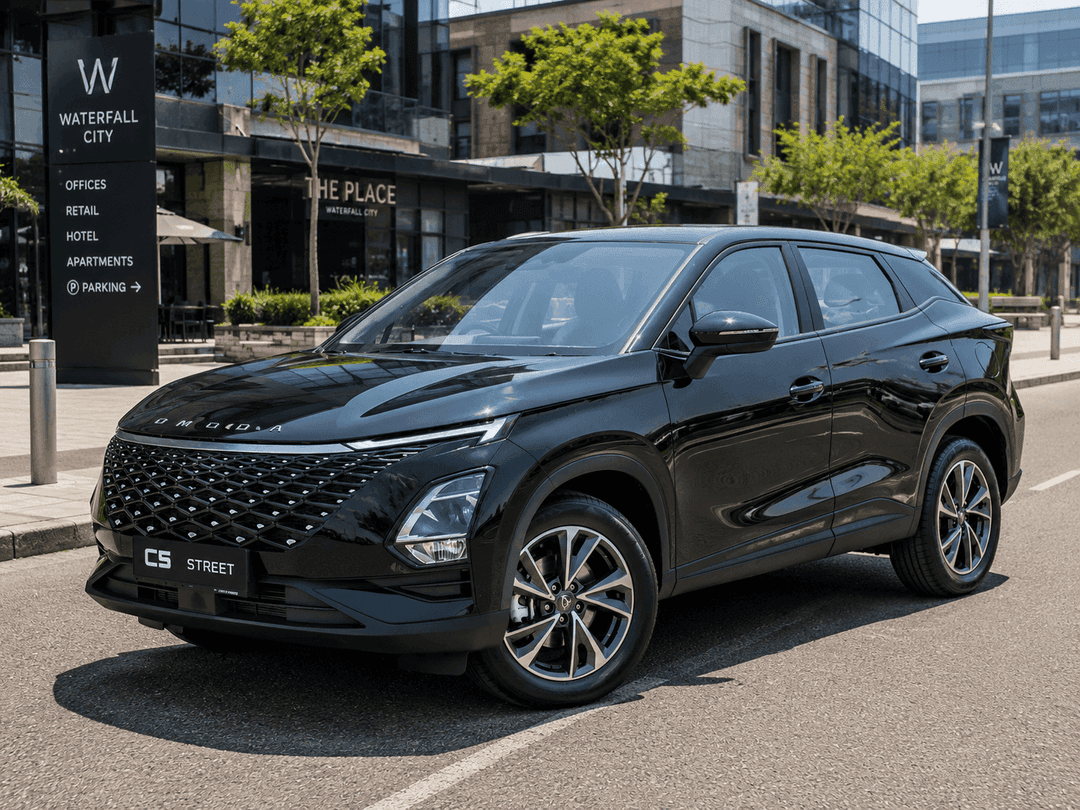
How does the C9 compare to the smaller C5?
Very different proposition. The C9 is bigger, a plug-in hybrid, AWD, and nearly three times the price. Early C5s had infotainment bugs and DCT hesitation, mostly fixed with OTA updates. The C9’s powertrain is all-new, so none of those issues should carry over. For more details, check any Omoda C9 brochure South African dealers provide - specs differ a bit from the C5.
What is the real-world fuel consumption?
Official claim is 1.4 L/100 km (WLTP), but you’ll only see that number if you’re charging nightly and keeping trips short. In mixed city and highway use, 5.5 L/100 km is realistic. If your daily drive is under 50 km and you have a charger at home, you’ll see single-digit fuel use most months.
Does the Omoda C9 have a spare wheel?
It doesn’t. You get a tyre repair kit. The battery and rear motors take up the space a spare would use. If you’re planning long trips on rural roads (and potholes are a real risk), run-flats or a decent roadside assistance plan is wise. Warranty support includes roadside help as standard.
Is the warranty really that good?
Yes, and it’s a major selling point for the C9. That 10-year/1,000,000 km engine warranty is unique at this price, and the 10-year unlimited battery cover for the first owner is aimed directly at PHEV resale fears. That matters - because a battery replacement out of warranty is not a bill you want.
Verdict
This Omoda C9 PHEV isn’t a half-baked experiment. It’s what the C9 should have been from the start: a well-sorted plug-in SUV at a price the Germans can’t touch. Not flawless - the ride is jittery at low speed, the boot is smaller than the brochure claims, and there’s no spare. But the powertrain is impressive, the warranty is unmatched, and the cabin feels premium for the money.
Consider it if you want premium-SUV pace and plug-in running costs, but don’t want to pay German money - and you’ve sorted home charging. Skip if towing is a priority (1,500 kg limit is tight), your roads are all gravel, or the badge still matters at the school gate. Hold off if you need seven seats - a bigger C9 is rumoured. For some, that’s the deal-breaker.
Rating: 8.5/10
A convincing plug-in SUV that delivers on its claims with real-world performance and value, let down only by ride harshness over broken tar and the usual new-model question marks about long-term local support.
Summary
What you’re looking at here is a full Omoda C9 review, focused on the 1.5T AWD PHEV and what it’s actually like to live with in South Africa. Powertrain, cabin, real-world running, warranty terms—the works. You’re a family buyer, and you’re eyeing a R999,000 Chinese PHEV that’s gunning for German an