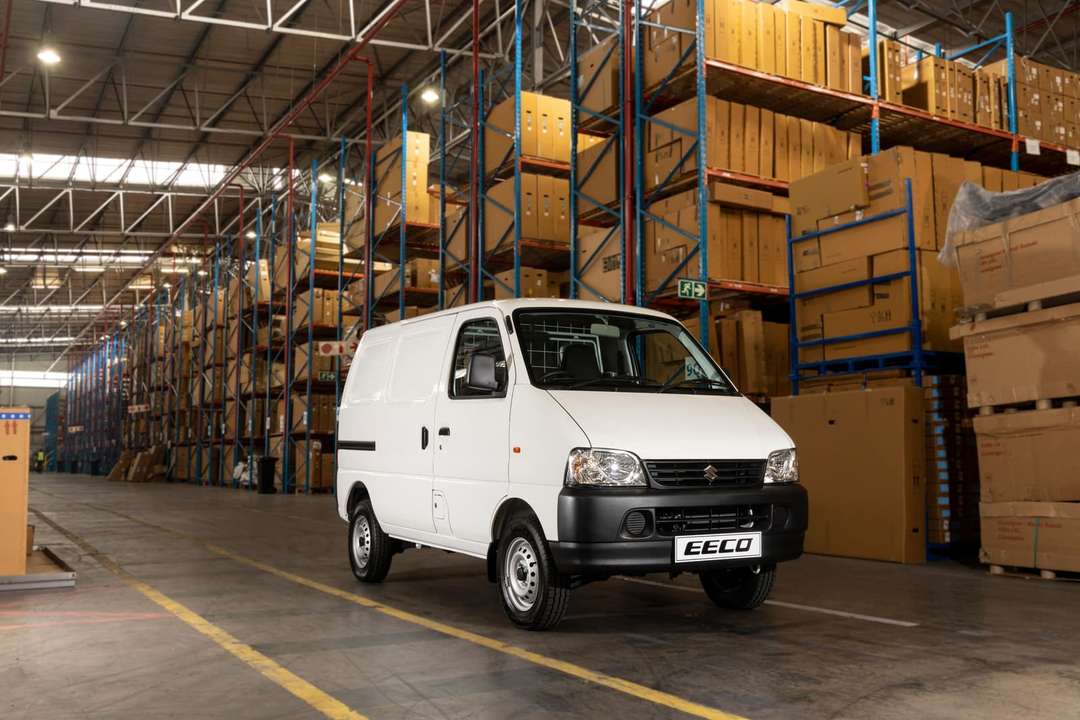
Suzuki Eeco 1.2 2WD 5MT (2026) Review

A practical, value-driven van—let down only by the lack of power steering and two-airbag spec. For its target buyer, it’s tough to beat.
Introduction
Look, the Suzuki Eeco 1.2 2WD 5MT Panel Van is for people who work for a living, not Instagram. If you’re running deliveries, trades, or courier jobs and your accountant’s strict on sub-R200k, VAT-claimable wheels that’ll take a standard SA pallet, this is your van. For 2026, it’s the most convincing new replacement for the Nissan NP200 and the old Suzuki Super Carry – and yes, that matters. Forget “lifestyle van” talk. This is a tool, plain and simple. Compared to Changan, DFSK, or converted hatchbacks like the Maruti Suzuki Eeco vs Renault Triber Express, the Eeco’s compact footprint, rear-wheel drive and Suzuki’s solid local dealer backup make sense where it counts – whether that’s on the N1 at load-shedding traffic or dodging potholes in Germiston.
Key takeaway: It’s the cheapest new van in SA that’ll swallow a pallet, and you get Suzuki’s extensive service network. Spartan cabin, no power steering, but the logic is airtight if you’re running a business.
Design & Exterior
If you ever sweated through a Suzuki Carry “Half Loaf” in the '90s, the Eeco will trigger familiar muscle memory. It’s the spiritual follow-up to that cab-over workhorse – a little taller and cleaner in the details, but every bit as honest.
Footprint and proportions
At 3675mm long, 1475mm wide and 1825mm high, the Eeco wastes nothing. Ideal dimensions for city deliveries. I wedged it between two Ranger double cabs outside a print shop – still had nearly a metre front and rear. Tall and narrow works downtown. Out on the N3 with a crosswind, you’ll remember why it’s not a highway cruiser. More on that later.
Doors and access
Here’s where the Eeco leaves converted hatches trailing:
- Twin sliding doors, one per side, so you can load from either pavement
- Large rear door with a glass window for genuine rear visibility
- Flat floor – no wheel arch stealing cargo space
- 13-inch steel wheels with full covers – cheap to replace, easy to fix after a puncture on the R21
That rear window actually matters. No reverse camera, but you can see out properly, which makes parking in tight spaces a lot less of a gamble compared to something like a Triber Express.
Cabin & Practicality
First thing that hits you: the steering position. Nearly upright, truck-style, with the 1.2L engine sitting just below your seat. Mid-engine in an R190k panel van – not something you’ll brag about, but your mechanic might raise an eyebrow.
Up front
Two seats. No pretence. Perforated PU leather that wipes clean – a lifesaver if you’re shifting cement bags or boxes of chicken feed. Air-con, yes. Radio? Not standard, but the dash is ready for one. No electric windows, no rev counter, and a digital speedo only. Forget about Bluetooth. Podcasts on your phone speaker is the best you’ll get. If you’re dreaming of Apple CarPlay, you’re in the wrong dealership.
Load bay
This is why you buy the Eeco. No contest.
- Length: 1620mm
- Width: 1300mm
- Height: 1070mm
- Payload: 615kg
- Standard SA pallet (1200x1000mm) fits flat through the rear door
Once helped a mate move four boxes of A3 paper and a full pallet of brochures from Edenvale. Everything slid in through the side door, strapped down, and the rear door closed the first time. No wheel arch drama, no box-Tetris. That’s the point.
Safety and equipment
Standard kit: dual airbags, ABS with EBD, ESP, rear sensors, immobiliser. For this price, that’s solid. India gets six airbags as standard from 2025. Here, just two – Suzuki South Africa blames pricing pressure, and you can see why, but it’s worth asking about at the dealer if you’re running a fleet.
On the Road
The K12N 1.2L puts out 59kW and 104Nm, sends drive to the rear wheels through a 5-speed manual, and prefers city speeds with a load on board.
In town
This is home turf for the Eeco. Short, high-up, stubby nose – threading through Joburg CBD or Workshop’s chaos in Durban is a breeze. Visibility is excellent. Gearshift is light, clutch is easy, and rear-drive means the front wheels just steer – tight turning circle too.
No power steering, though. Three-point turns with a heavy load will test your arms. If your driver is parking 30 times a day, they’ll feel it. I definitely did after offloading at five stops in Soweto. You adjust, but you won’t forget it.
On the open road
Drove it from Krugersdorp to Magaliesburg on the R24, half loaded. Tall, skinny body – you’ll feel every crosswind, and truck wash on the N1 towards Pretoria is genuinely sketchy. It’ll indicate 120 km/h, but the buzzy engine and light chassis are much happier at 90. Load it up and the ride settles. Empty, the rear can get nervous – this is a van built for work, not highway cruising.
Gravel and unmade roads
With 160mm clearance, it’s got more confidence on gravel than any hatchback van. On district dirt near Magaliesburg, it shrugged off corrugations at moderate speeds. Rear-wheel drive and a solid rear axle mean you can load it up without worrying about breaking CV joints.
Data & Comparison
The numbers tell the story. If you’re debating Suzuki Eeco vs Maruti Suzuki Omni or Suzuki Eeco vs converted hatches, this is for you.
Core specs at a glance
- Engine: 1.2L petrol, 59kW / 104Nm
- Gearbox: 5-speed manual
- Drive: RWD
- Claimed fuel: 5.4 L/100km
- Dimensions: 3675 / 1475 / 1825 mm
- Seats: 2
- Doors: 5 (twin sliders, two fronts, rear)
How it stacks up
| Model | Power (kW) | Fuel (L/100km) | Payload approx. | Layout |
|---|---|---|---|---|
| Suzuki Eeco 1.2 Panel Van | 59 | 5.4 | 615kg | RWD, dedicated van |
| Renault Triber Express | 52 | 5.5 (approx.) | ~500kg | FWD, hatch-converted |
| Hyundai Grand i10 Cargo | 57 | 5.4 (approx.) | ~450kg | FWD, hatch-converted |
| Changan Star Panel Van | ~72 | ~8.0 | ~700kg | RWD, dedicated van |
The Suzuki Eeco vs converted hatches is the big question for owner-operators. If you’re comparing directly with the Triber Express, it boils down to whether you need a real load bay or can live with a sealed-off rear seat. Eeco wins for space, payload and side access. Triber claws back points for comfort, power steering and some actual creature comforts. For those who remember the old Maruti Suzuki Omni, the Eeco is safer and thriftier, but remains a pure workhorse.
Ownership maths
- Suzuki Eeco 1.2 2WD 5MT price South Africa: under R200k for the base van, VAT-claimable if you’re registered
- Five-year estimated running cost: R362,300 (fuel, servicing, tyres, insurance)
- With a 32-litre tank and 5.4 L/100km claim, you’re looking at 593km range (on paper at least)
- DIY basics like oil and plugs are accessed under the driver’s seat, making home servicing simple
Reliability and ownership signals
Suzuki Eeco reliability is known territory. The Indian-built platform has been in service for decades – Carry vans ran for 25 years there. Owners in SA and abroad report the paint is thin and panels mark easily, but mechanical problems aren’t common. Actual Suzuki Eeco fuel consumption? Suzuki claims 5.4 L/100km, but expect closer to 6.0-6.5 L/100km in urban use, maybe 7.0 if you’re fully loaded and running air-con. Boot space? Nothing hatch-based touches it if you pack smart. Suzuki Eeco problems are usually minor; expect some cabin noise and cheap-feeling plastics, but the basics hold up. Routine maintenance is straightforward, and most Suzuki dealers stock parts.
Segment trend
Bakkie interest sat at 43 points late 2025, but panel vans crept up from 16.8 to 18.6 between June and November. Slow, steady growth. With the NP200 gone, the Eeco is stepping up for those buyers who just want something that works.
Verdict
The Suzuki Eeco doesn’t care about winning hearts. It’s designed to make you money. For this Suzuki Eeco review in South Africa, it stands out as the most sensible entry-level panel van you can buy new. Tradesmen, florists, couriers, print shops – go see one at your nearest Suzuki Auto dealer. Suburban families looking for a multipurpose runabout should look elsewhere; the heavy steering and lack of infotainment will grate fast.
Only reason to wait? If Suzuki SA launches an LPG or alt-fuel version, or matches India’s six-airbag spec. Either would make a good deal even better. Otherwise, this is what the Eeco should have been from the start: affordable, honest, easy to fix, and sized for real South African jobs.
Summary
Hands-on review of the 2025 Suzuki Eeco 1.2 panel van for South African small business owners—payload, cabin quirks, running costs, and how it really fares against hatchback-based cargo rivals on our roads.