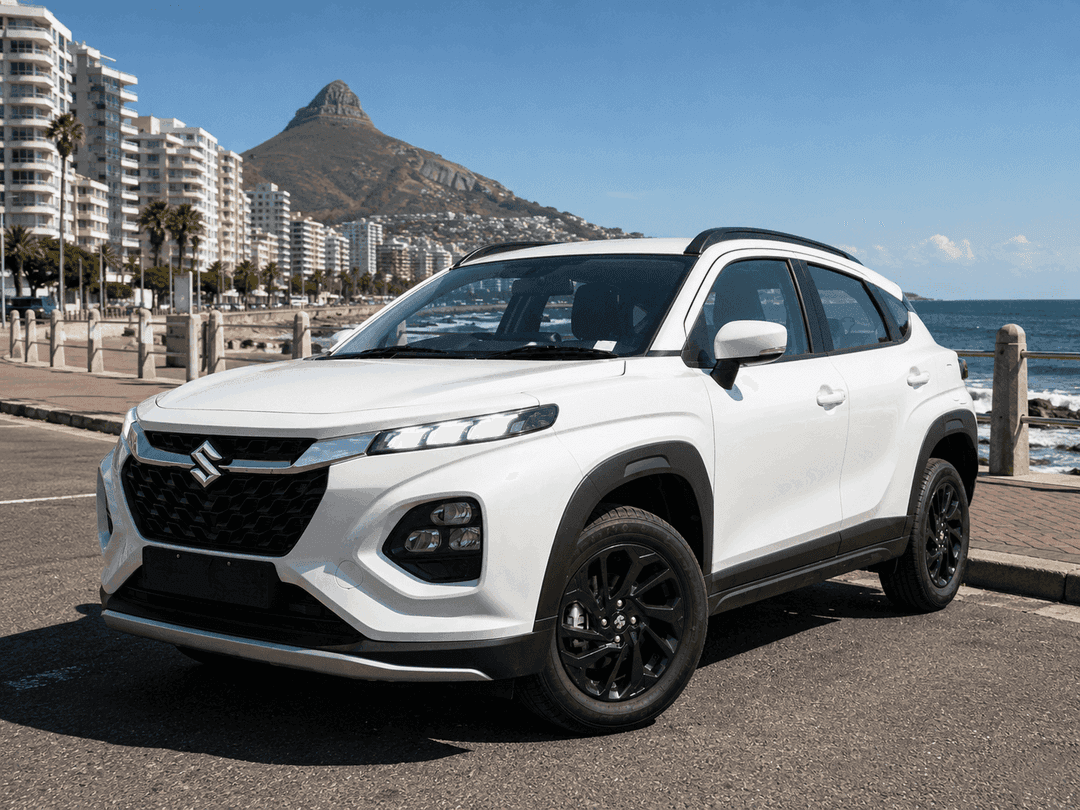
Suzuki Fronx 1.5 GL 4AT (2026) Review
Docked half a point for the safety shadow and the fact the 6AT isn’t here yet. Once it lands in local showrooms, bump that score to 8.
Introduction
Here’s the rub: would you actually hand over your cash for a Suzuki Fronx 1.5 Dualjet Mild Hybrid Automatic? If Suzuki South Africa brings in this 6AT MHEV, it’ll finally fix what’s held the Fronx back: the lacklustre 4AT, which always felt like it was holding the car back. On paper at least, the Fronx has shifted from oddball to mainstream hero since 2026. Now, with the K15C Dualjet and six-speed torque-converter likely incoming, there’s a real chance Suzuki buries its last major flaw. I’m stripping away the marketing fluff in this Suzuki Fronx review – it’s about what matters to real buyers, standing in a Suzuki dealer, staring down the Starlet Cross and Sonet, and deciding what’s actually going home to your driveway on Monday.
Key takeaway: The Fronx finally clicks with the 6AT mild-hybrid – buy it for the warranty, styling, and real-world economy, not for outright punch.
Design & Exterior
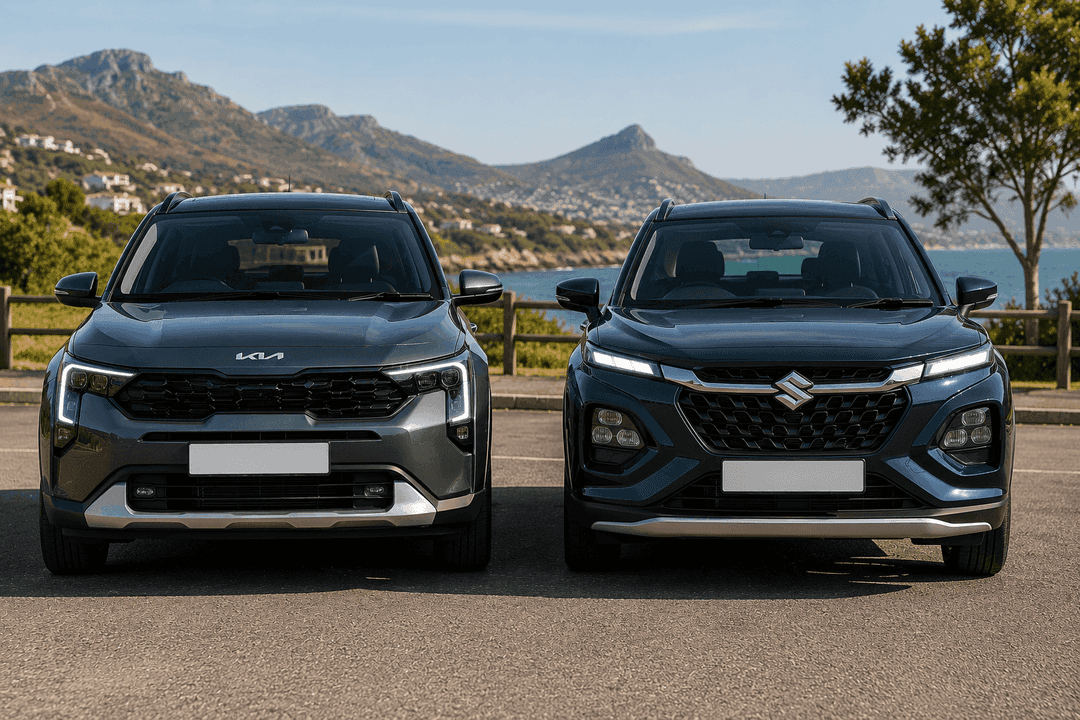
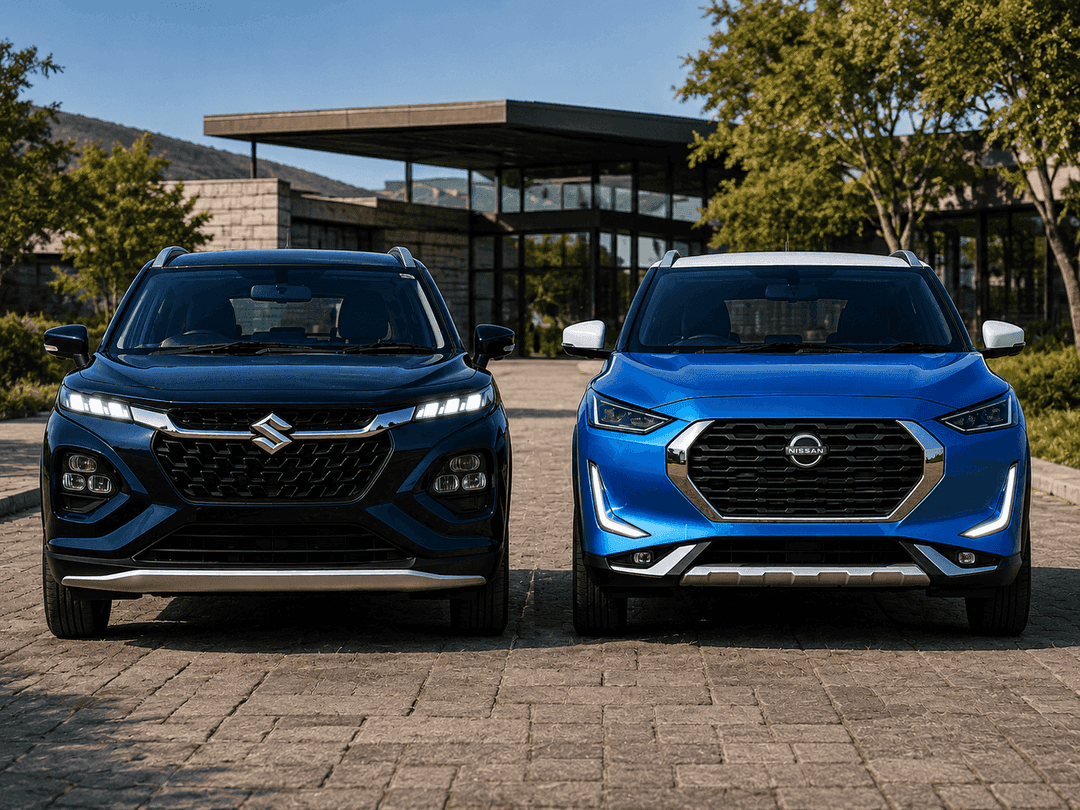
There’s some flair here, no question. The Fronx isn’t as boxy as a Vitara or as cutesy as a Swift – this one goes for a low-slung, coupe-inspired SUV look. You’ll get glances along Sea Point’s strip and crawling up Jan Smuts. That matters. In a class packed with the Hyundai Exter and Mahindra XUV 3XO, blending in is a sales death sentence.
What works visually
- Split LED headlamps – proper Euro-style at a fraction of the price.
- 16-inch alloys that fill the arches – no awkward wheel gap.
- Sleek roofline and ducktail rear – you won’t confuse it for a Starlet Cross, even if your uncle squints.
- 170mm ground clearance – makes gravel out to the Cradle a non-event.
Where it loses points
That coupe roofline is a double-edged sword. From the pavement, it’s sharp; inside, the shrinking glass and sloping tail cost you boot space before you’ve even opened the hatch. There’s still a bit too much Baleno in the DNA, and from some angles in full sun, the rear three-quarter view doesn’t quite land.
Cabin & Practicality
Hop inside – it’s pure Suzuki. Up front, the 9-inch touchscreen, head-up display, and wireless charging on top models look the part. But start tapping around, and you’ll find shortcuts – the plastics are hard lower down, and that gloss black gearlever surround picks up fingerprints and scratches fast. I had mine looking used after just two weeks.
Space and the boot question
The Suzuki Fronx boot space is measured at 304 litres with the seats up, 605 litres with the bench folded. That’s decent, though not best in class – the Kia Sonet has about 50 litres more. If you pack smart, a family run is doable. If you’re lazy, expect to wedge the cooler between the kids’ feet. I once crammed a pram and two weekend bags, just, with some creative Tetris in the load bay.
Rear bench reality
Here’s a twist: the 2,520mm wheelbase is actually 20mm longer than a Vitara, which means real rear legroom. Two adults behind two adults? Easy. Squeezing three? Only short school runs. ISOFIX is standard on the outer seats, and wide-opening doors mean you won’t pull a muscle fitting a car seat. Parents know – after the third attempt, you notice these things.
Materials
Most lower dash and door bits are hard plastic, but you get a better feel at the top and on the wheel. Suzuki could rethink the glossy gear area – it just doesn’t age well if you use it daily.
On the Road
This is where the Fronx story pivots. The global 2026 car gets the K15C 1.5 Dualjet, a 12-volt mild-hybrid, and a six-speed torque-converter auto. South Africans, for now, are stuck with the K15B and the old four-speed auto – and that gearbox drags, especially slogging up the N1 between Joburg and Pretoria. The 6AT MHEV (searches for Suzuki Fronx 1.5 GL 4AT review in South Africa are spiking) would totally shift the drive experience.
The mild-hybrid bit
Let’s be real: “Hybrid” here is a stretch. It’s a 12V ISG, not a 48V, nowhere near Toyota’s full hybrid. What you get: smoother stop-start (after a week, you barely notice it), and a little help at pull-off. No silent electric running. The power flow animation on the cluster? It’s mostly for show, and that’s the point.
Performance and gearbox
A power figure of 77 kW & 138 Nm and front-wheel drive gets you “adequate”. On the highway, the 6AT model sits relaxed in sixth, something the 4AT just can’t do, so it guzzles more fuel with revs climbing. Overseas, the 6AT averages 5.5 L/100km highway and 6.4 L/100km in traffic. That matters when petrol is close to R30 per litre.
Ride and handling
The chassis is better than you’d expect. Suspension is set up for South Africa: it takes speed bumps and patchwork roads in stride. Steering is light, but feels direct enough. I took a 100 km/h bend, and it stayed composed, no dramatic body roll like the Kiger.
Data & Comparison
Here’s where the Fronx carves out a niche. It’s not the cheapest, but few rivals match its warranty or actual running costs.
Specs at a glance
- Engine: 1.5 Dualjet (77 kW) Mild Hybrid Automatic, naturally aspirated four-cylinder.
- Gearbox: 6-speed automatic (torque converter).
- Drive: Front wheel drive.
- Body: 5-door SUV (coupe-crossover profile).
- Powertrain: MHEV with 12V belt-driven integrated starter-generator.
Rivals compared
| Model | Power (kW) | Avg price (ZAR) | Fuel type | Notes |
|---|---|---|---|---|
| Suzuki Fronx 1.5 MHEV | 77 kW | ~335 000 | Petrol | 6AT, FWD, MHEV assist |
| Chery Tiggo 4 1.5 Hybrid DHT | 71 kW (combined 157 kW) | 334 889 | Petrol hybrid | Full hybrid, larger body |
| Suzuki Vitara 1.4 BoosterJet | 104 kW | 335 465 | Petrol | Turbo, older platform |
| Mazda CX-5 2.0 Skyactiv-G | 116 kW | 336 353 | Petrol | Larger class entirely |
On Power, the Fronx’s 103 kW-equivalent is about 26% under the segment’s 140 kW average – and the MHEV badge doesn’t hide that. The Chery Tiggo 4 Hybrid DHT, for example, brings a real electric shove at pull-off, which the Fronx can’t match.
Ownership economics
- 5-year TCO estimate: R230 000 (fuel, servicing, tyres, insurance varies).
- Warranty: Suzuki SA’s 5-year/200,000km is top in class.
- Service plan: 4-year/60,000km as standard – matches Kia Sonet, but better than some.
- Trend signal: SUV demand hit 76.0 in November 2025 – way ahead of hatchbacks (41.1) or crossovers (35.9). South Africans want this body style.
Finance and pricing context
If you’re searching for the Suzuki Fronx finance in South Africa, a 72-month term at prime puts you at R6,000–R7,200 a month, depending on deposit and balloon. Pricing searches like "suzuki fronx price south africa instalment" show how much the standard 5-year warranty matters – run the car for six years and you’re still covered in the last year. The Suzuki Fronx price in SA is sharpest at entry spec; the auto commands about R20,000 more.
Safety rating
ANCAP · tested 2025
★☆☆☆☆ 1/5 adult occupant
Australian-market RHD rating — indicative for SA only where the SA derivative matches the tested safety spec (airbags/ESC/AEB). Official factsheet.
Verdict
Honestly, this is the Suzuki crossover I’ve waited for. It looks right parked outside, feels composed over battered tarmac, and the value – warranty, frugal hybrid, parts shared with most of Suzuki’s line-up – makes it a rare no-nonsense buy. During a quick run to the supermarket, I had two people stop and ask what it was – that’s rare for anything in this segment.
The flaws are there. Boot’s 50 litres down on the best. The 77 kW output won’t quicken your pulse, and you’ll work the gearbox up a mountain pass if you’re fully loaded. That December 2025 ANCAP score is a real concern, and Suzuki SA has to be transparent about local cars’ hardware.
Summary
Honestly, this is the Suzuki crossover I’ve wanted them to build for years. It looks just right parked outside a Bryanston townhouse, feels composed over the battered tarmac you’ll find in the Vaal, and the sums — warranty, frugal mild-hybrid, parts shared with half the Suzuki showroom — make it a rare no-nonsense buy. It’s not without flaws. That boot is 50 litres down on the class leader. The 103 hp output won’t raise your pulse, and you’ll be working the gearbox up Sir Lowry’s with four up.
Ratings
Pros
- ✓You want a stylish, efficient, bulletproof-warranty urban crossover and most of your miles are in-town or the odd N3 trip.
Cons
- ✗You’re constantly carrying four adults and luggage, need turbo punch for long Karoo overtakes, or won’t compromise on rear-seat safety transparency until Suzuki addresses the ANCAP issue.