Suzuki Fronx vs Nissan Magnite (2025)
my pick for regular Joburg-to-Durban trips—120 km/h is relaxed, and it feels solid even after a few hundred kays at speed. Buy the Nissan Magnite if… You need more boot space, crave turbo torque, and want a no-fuss auto for Cape Town’s gridlock.
Summary
Suzuki Fronx vs Nissan Magnite: the B-segment crossover fight that actually matters to South Africans. This isn’t about spec sheets or TikTok hype - these two have to deal with KZN’s axle-busters, Gauteng’s stop-start, and the reality of fitting groceries plus a pram. Both bring something tempting, but their compromises only reveal themselves once you’ve lived with them on local tar and gravel.
Introduction
Right, so you’re cross-shopping the Suzuki Fronx and Nissan Magnite. The Fronx keeps it simple - naturally aspirated 1.5, manual gearbox, and Suzuki’s killer after-sales promise. Nissan’s Magnite is the segment’s turbocharged bargain, with its CVT and the lowest new-SUV price tag you’ll find outside a dealership special. Both are compact, built for the school run through Pinetown or a Saturday detour onto gravel outside Dullstroom. But their true colours? Only show themselves after a week with the keys.
Key takeaway: Fronx: best warranty, refinement, and gearbox. Magnite: wins on price, turbo punch, and boot space. Forget the badge - focus on what fits your life.
Design & Exterior
Stance and street presence
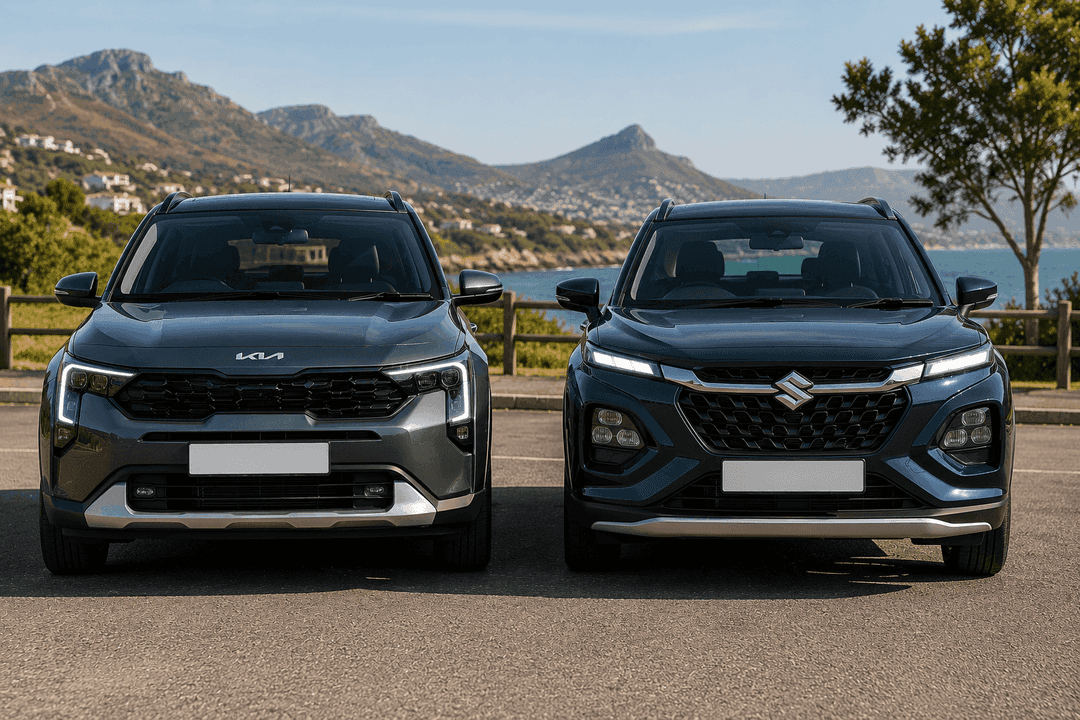
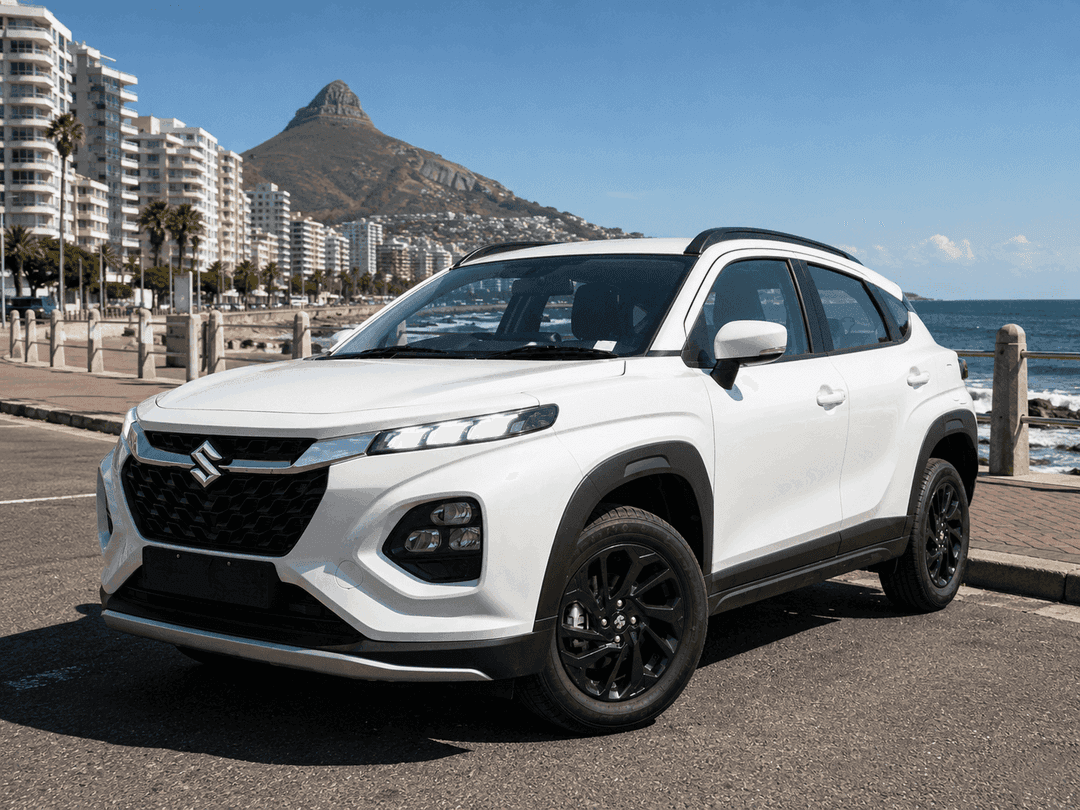
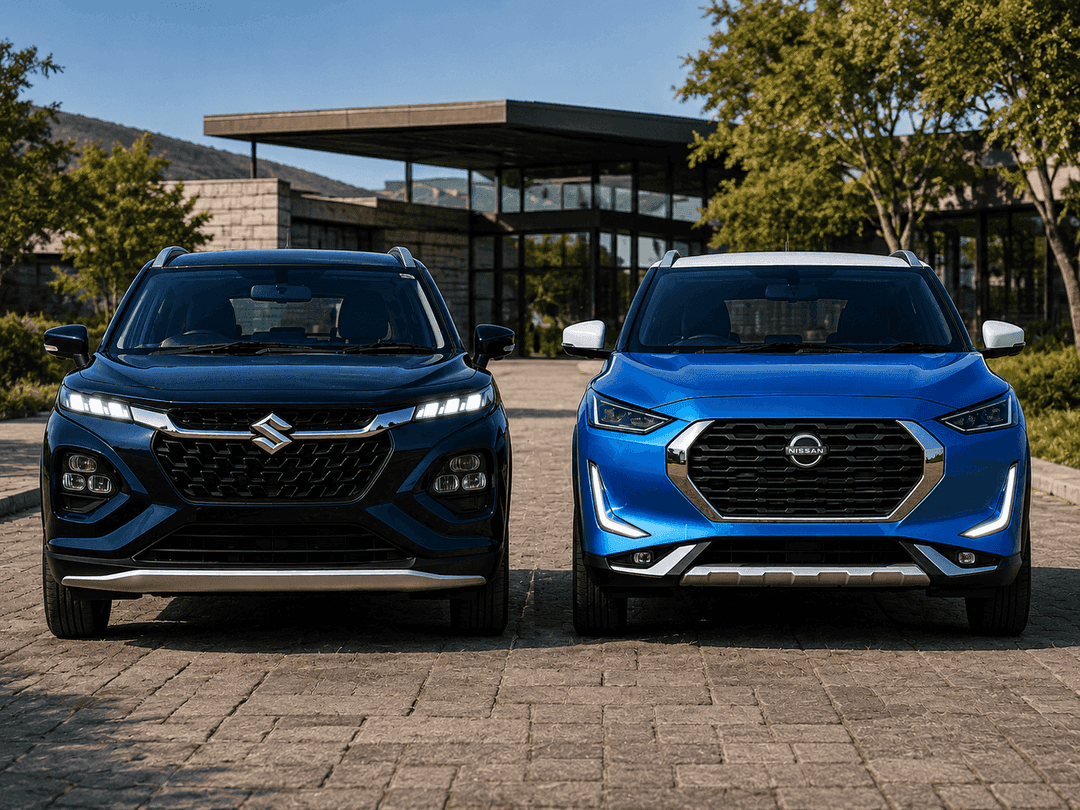
Fronx looks like Suzuki’s attempt at a coupé-crossover, with a full-width LED tail-bar, split headlights, and gunmetal alloys that punch above what you’d expect at R380k. Magnite? Squarer, taller, and that face is everywhere on Sandton’s school run. From certain angles, it’s got a whiff of Patrol. Nissan knows what it’s aiming for.
Dimensions and the SA road reality
Thanks to Indian tax rules, both squeeze under four metres, so the footprint is nearly a draw. The real kicker is ground clearance. On Joburg’s cratered back roads, the 170 mm under the Fronx means you can cross rough tar or gravel without hearing that wince-inducing scrape. Magnite keeps up, happy to tackle mall speedbumps and kerbs without complaint.
Colour and local availability
Suzuki’s two-tone black-roof Fronx pops, especially in brighter hues. Nissan’s palette is broader - bold reds, safe greys - and you’ll often find the Magnite on a showroom floor in the colour you want. For Fronx, expect a wait for the exact shade.
Cabin & Practicality
Materials and dashboard architecture
Jump into the Fronx, and the difference is immediate. The 9-inch screen sits high, wireless CarPlay and Android Auto work without fuss, and a head-up display - a unicorn at this price - greets you. Materials? Soft touch for elbows, scratchy bits lower down, but that’s par for the course under R400k. The Magnite’s cabin feels one generation older. Its 8-inch screen is fine, the physical climate dials are a win (no battling with laggy touch panels), but the plastics are rougher than in the Suzuki.
Space, boot and ISOFIX
- Boot capacity: Magnite wins with 336 litres. Fronx gives you 304 litres - blame the sloping roof.
- Rear legroom: Magnite edges it. If you’re tall, Fronx will pinch your headroom.
- ISOFIX: Both have two rear ISOFIX points, as they should.
- Fuel tank: Fronx’s 37-litre tank means more fill-ups. Magnite’s bigger tank stretches your N1 range before that Engen light nags you.
Tech and standard kit
Go GLX on Fronx, and you get wireless phone charging, a 360-degree camera, push-start, and six airbags. That alone makes the GLX worth the stretch - don’t bother with the GL if you care about safety kit. Magnite’s higher trims match the 360 cam and wireless charging. If infotainment sharpness is your thing, Fronx leads; if you need outright space, Magnite’s your winner.
On the Road
Suzuki Fronx behind the wheel
Spent the most time with the Fronx 1.5 manual - honestly, it’s the spec to have. The naturally aspirated 1.5 Dualjet puts out 77 kW and revs willingly. Clutch feel is light but predictable; no stalling in stop-start, no drama. Out on the freeway, sitting at 120 km/h in 5th, the engine hums quietly, and wind noise is well controlled. Steering’s on the lighter side but precise, and the suspension soaks up mid-corner bumps better than you’d expect in this class. Real-world fuel? Saw between 5.4 and 6.8 L/100 km - so not quite Suzuki’s claim. That little tank means you’ll fill up every 550 km if you drive gently.
Nissan Magnite behind the wheel
Magnite brings a different vibe. It's 1.0 turbo triple produces 74 kW, but more importantly, delivers torque earlier - overtaking trucks is less nerve-wracking. The CVT is far from perfect; it still drones under hard throttle, revving before you feel the speed. In traffic, the Magnite is easy - light steering, good visibility, and the suspension shrugs off tramline scars on older roads. On a Stellenbosch commute, I managed 6.1 L/100 km, which is about right for a small forced-induction crossover.
Refinement verdict
On the highway, Fronx is the quieter cruiser. Magnite brings more low-end go. Pick according to your commute needs.
Specs & Ownership
| Spec | 2024 Suzuki Fronx 1.5 | 2024 Nissan Magnite 1.0 Turbo CVT |
|---|---|---|
| Engine | 1.5 Dualjet | 1.0 Turbo |
| Power | 77 kW | 74 kW |
| Gearbox | 5-speed manual | CVT automatic |
| Drive | Front-wheel drive | Front-wheel drive |
| Body | 5-door SUV | 5-door SUV |
| Powertrain type | Conventional ICE | Conventional ICE |
| 5-year TCO estimate (ZAR) | R303,900 | R229,900 |
Cost of ownership
On paper at least, both land at R230,000 over five years - fuel, servicing, insurance, tyres, all in. Fronx goes further with a 5-year/200,000 km warranty and 4-year/60,000 km service plan. That’s the best after-sales coverage in the segment right now. Magnite can’t match that, so if you plan to keep your car long-term, it matters. Suzuki’s dealer network has exploded, now second for passenger cars, and parts support is solid. Nissan’s dealer web is older but still stretches from George to Polokwane - reassuring if you’re not a big-city driver.
The mild-hybrid clarification
Let’s call it: the Fronx’s “mild hybrid” is really just a 12V starter-generator with a little battery. You get smoother stop-start, a tiny drop in fuel use, but no EV driving. Magnite? Petrol only - no electrification window-dressing. Neither one is going to bluff you with hybrid claims that melt away after a week on the N3.
People Also Ask
Is the Suzuki Fronx worth the premium over the Nissan Magnite?
If warranty, infotainment, and a proper manual matter to you, then yes - the Fronx is worth it, especially if you hold onto your cars beyond five years. If your budget’s tight or you’re shopping entry-level, Magnite’s pricing is hard to ignore.
Which is better for long-distance SA driving?
Magnite’s turbo helps with overtakes on single-lane N-roads. That said, the CVT can get annoying. Fronx manual is quieter, more settled at 120 km/h. For a long-haul coast-to-Gauteng run, I’d take the Fronx. For shorter urban hops, Magnite’s auto makes sense.
Which has the bigger boot?
Magnite, no contest - 336 litres vs 304. If you pack smart, that 32-litre gap is the difference between fitting a pram and groceries, or not. Fronx’s sloped roof also makes loading taller stuff awkward.
Which is safer?
Both get ABS, EBD, ESP, and ISOFIX. Fronx GLX adds six airbags - a big leap over GL’s two. Magnite’s airbag count varies by trim. International safety scores have been mixed, so check the local spec sheet before you buy.
Which holds value better?
Neither is a used-car hero. Fronx rides Suzuki’s sales surge and borrowed Starlet Cross vibes. Magnite’s been around longer, so more used stock softens resale. After three years, both are similar - buy for what works for you now, not some fantasy trade-in later.
Is the Magnite's CVT reliable?
The latest Nissan CVTs have improved, and Magnite’s hasn’t shown any local horror stories yet. Stick to your service plan. Fronx’s 5-speed manual is dead simple and cheaper to fix as it ages - used buyers notice, and that matters.
Verdict
Buy the Suzuki Fronx if…
You want a sharp-shifting manual, the best warranty, and top infotainment for the money. The Fronx is my pick for regular Joburg-Durban trips - sits quietly at 120 km/h, feels planted even after hours on the R21.
Buy the Nissan Magnite if…
You need the bigger boot, want turbo urge, and an easy auto for Cape Town gridlock. If affordability trumps all, Magnite’s lower base price clinches it - especially if your focus is on monthly repayments, not long-term costs.
For the comfort-seeker
Magnite rides softer, needs fewer downshifts, and is less tiring in traffic. Fronx is firmer but more stable on a long haul. Never leaving the suburbs? Go Magnite. If your driving is mixed, Fronx gets my nod.
Wait scenario
If you can hold off, Suzuki’s lining up more Fronx specs, and a Magnite facelift is rumoured soon. Got six months left on your current ride? Waiting could pay off - both models are due for an update.
After a week swapping seats - N3 highway, a gravel shortcut near Magaliesburg, and everything in between - my money stays on the Suzuki Fronx 1.5 manual. Engine and gearbox deliver exactly what the segment should have been from the start, and the after-sales support is best-in-class. If my budget were tighter or I had to have an auto, I’d happily drive a Magnite. No shame in that…
Summary
Here's the clash: Suzuki Fronx 1.5 Dualjet Mild Hybrid versus Nissan Magnite 1.0 Turbo CVT. This is proper South African buying, not brochure fantasy—think actual street cred, packing space, running costs, and whether these two crossovers can handle KZN potholes and Gauteng’s stop-start grind. Each