Suzuki Swift 1.2 GL/GLX (2018) Review
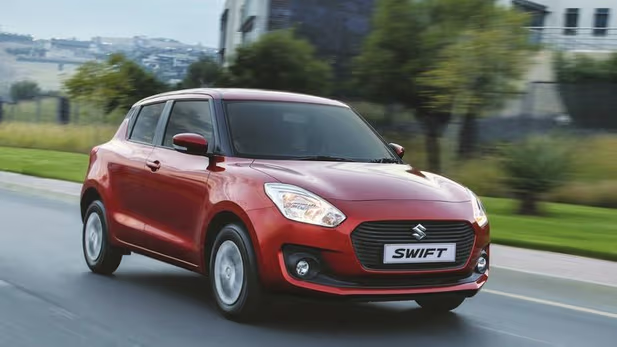
A brilliantly cheap, near-faultless first car held back mainly by its busy ride and basic entry-level cabin.
Introduction
Look, the used Suzuki Swift 1.2 GL or GLX is probably the car I’d recommend to almost any first-time buyer. It’s affordable, cheap to insure, easy to live with and generally very dependable. For South Africans watching every rand, that combination is hard to beat.
Nobody shopping the classifieds cares about an engine code. They care about the year, mileage, price and whether they can actually afford it each month. That’s how we’ll look at the Swift. As of 2025, listings range from around R80,000 to more than R360,000, although the sweet spot is comfortably below that.
Key takeaway: The 2018-on Swift 1.2 remains one of SA’s cheapest, most dependable first cars, with a GLX from 2020-2021 the smartest used buy.
Design & Exterior
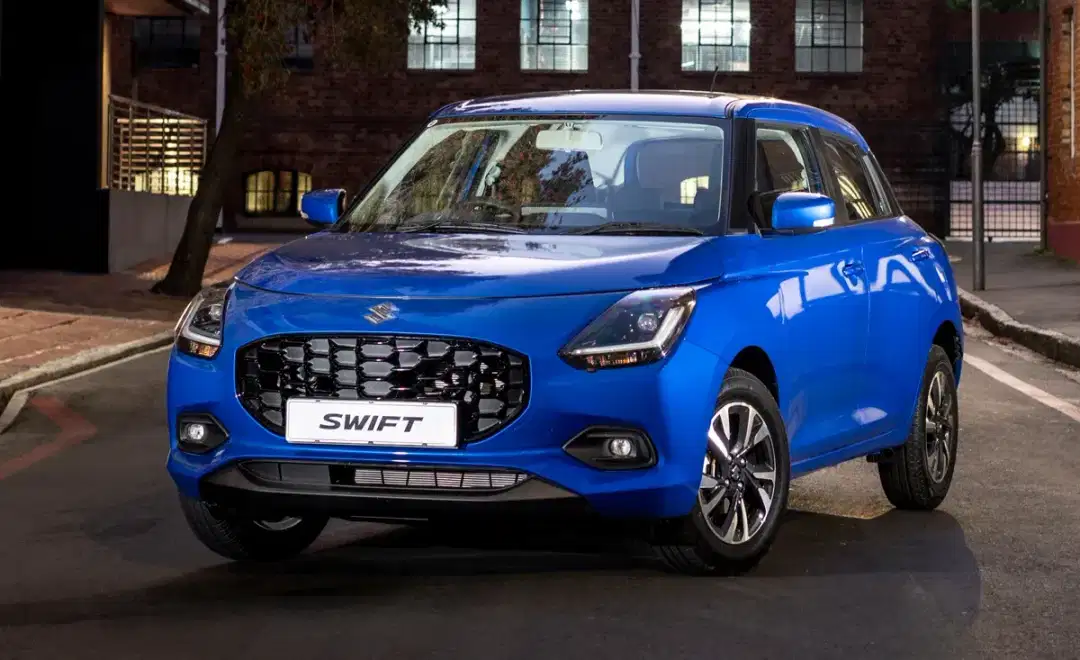
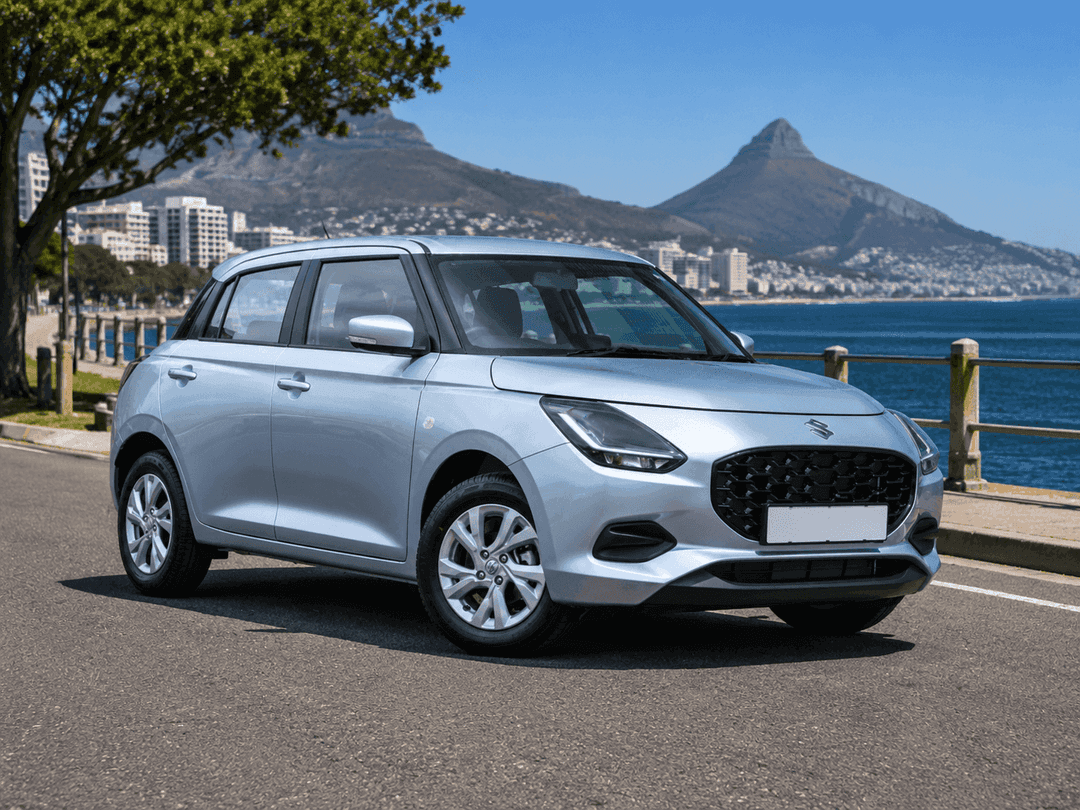
Suzuki introduced the third-generation Swift locally in June 2018, and it has aged surprisingly well. Those hidden rear door handles give it a convincing three-door look, even though every South African model has five doors.
It’s a small car with good proportions. The cheeky nose, swollen wheel arches and low stance give it more character than most budget hatchbacks.
Ground clearance is just 120mm, which is fine for Joburg speed bumps, but rutted gravel and the rougher approaches towards Sani Pass require a little patience.
Base GA models look fairly plain on steel wheels, while GL and GLX versions get alloys and a bit more visual sparkle. The GLX, in particular, looks more expensive than it is. That certainly won’t hurt when it comes time to sell.
Cabin & Practicality
Cost-cutting is obvious inside. SA-spec cars were deliberately leaner than European versions, helping Suzuki reach a competitive price but leaving early GA and GL cabins awash with hard plastic.
Materials and controls
Usability saves the cabin. Proper air-conditioning dials, real steering-wheel buttons and a conventional gear lever make daily driving simple, especially while you’re still gaining confidence behind the wheel.
Nothing important hides inside a slow touchscreen. GLX trim adds that screen, plus a reverse camera and climate control, without sacrificing the physical controls. That matters.
Space and boot
Five people fit on paper at least, although four will be happier. Adult rear passengers may complain during a long N3 trip, particularly across the busy surfaces around the toll sections.
Boot space is limited but usefully shaped. A compact pram and two soft overnight bags fitted during our check, provided the parcel shelf stayed at home. ISOFIX anchors are standard, while the 37-litre tank seldom feels restrictive given the Swift’s low thirst.
On the Road
Low weight is the Swift’s best trick. Sitting well below a tonne makes it lively in town, quick to respond and easy to place through tight M1 on-ramps.
Engine and gearbox
Power comes from the 1.2 K12M four-cylinder, producing 60kW and 112Nm. Modest numbers.
A claimed 0-100km/h time of 12.3 seconds tells the story. Overtakes need planning on the N1, and thin Highveld air doesn’t help, but urban performance feels adequate because there’s so little mass to move.
Buyers have two gearbox types to consider. The five-speed manual is light, pleasant and inexpensive to repair, while the earlier AMT is an automated manual that pauses between ratios.
Later cars adopted a smoother CVT. Watch for the nose nodding with each upshift during your test drive. If it does, you’re driving the AMT, and must decide whether its lower asking price compensates for the awkward behaviour.
Ride and refinement
Agility brings a compromise. Broken tar makes the Swift fidget, rear passengers feel the sharpest impacts and coarse gravel sends plenty of noise through the cabin.
Top speed is 180km/h, which is largely irrelevant. Wind and tyre noise become intrusive long before that, particularly during sustained N1 cruising.
Data & Comparison
Suzuki claims 4.3 L/100km combined, and that number proved credible. I recorded 5.1 L/100km over 436km, including stop-start traffic and a highway run at altitude. I also heard the cabin grow noticeably louder as the speed settled, with our meter showing 72 dB at 120km/h.
Paired with the 37-litre tank, that economy underpins the Swift’s low running costs. Fuel stops are cheap, even if they occur more often than in a larger hatchback.
Price bands by model year
Average asking prices from a large sample of listings give buyers a useful starting point:
- 2018: around R146 500 average, from R129 500.
- 2019: around R160 900 average, when GLX and standard ESC arrived.
- 2020: around R179 000 average.
- 2021: around R186 200 average, median close to R189 400.
- 2022: around R187 600 average, the deepest pool of stock.
- 2023: around R203 400 average.
- 2024: around R207 000 average.
One cheeky detail: the cheapest listing sampled was a 2016 car at R79 900. High mileage, naturally. At the opposite extreme, someone wanted more than R362 900 for a 2025 example.
Dealer groups and retailers such as WeBuyCars may offer tempting instalments, but compare mileage, service history and tyre condition before fixating on the monthly repayment.
Rivals compared
| Spec | Suzuki Swift 1.2 | VW Polo Vivo 1.4 | Kia Picanto 1.2 |
|---|---|---|---|
| Power | 82hp | ~74hp | ~82hp |
| Claimed economy | 4.3 L/100km | ~5.7 L/100km | ~5.4 L/100km |
| Typical used price (2021) | ~R186 200 | higher | similar |
| Insurance risk | Low | Higher (theft target) | Low |
South Africa’s locally built Polo Vivo remains the obvious rival, but its popularity works against owners. Strong demand lifts purchase prices, while higher theft risk can punish younger drivers at insurance-quote time.
Swift ownership is simpler. Against the Vivo and Picanto, its lighter body and lower claimed consumption reduce monthly fuel spending, although the Vivo provides more cabin space.
Residuals and TCO
- 3-year residual estimate: around R127 550.
- 5-year total cost of ownership estimate: around R230 000.
Those figures are strong for a budget hatchback. Launch pricing in 2018 sat near R159 900 for the base manual, so values have held up well despite plenty of stock reaching the used market.
Editorial Focus
Right, so let’s deal with the money and reliability myths directly. Here’s where the Swift earns its reputation.
Near-zero known issues, honestly
Credibility sometimes means admitting there isn’t much to warn buyers about. The Swift topped a large owner-reliability survey with a score near 99.5% and remained close to the top the following year.
Few owners reported faults, and most complaints involved minor interior trim issues repaired free within a day. Buyers should still confirm completion of two factory service actions affecting narrow 2017 production windows: a battery-charging software correction and an airbag pretensioner concern triggered by hard door-slams.
Check the VIN and service record. Then relax.
Running costs versus Picanto and Vivo
Fuel use is the clearest advantage. The Swift’s 4.3 L/100km claim beats both rivals, and even a small monthly difference becomes thousands of rands across a year.
Parts availability is good, servicing is straightforward and independent workshops know these cars. Pothole damage, tyres and neglected maintenance pose greater financial risks than the drivetrain.
Insurance for young drivers
Indicative Swift premiums can start in the low-to-mid R400s per month depending on profile, making it one of the cheaper cars to insure nationwide.
Affordable parts, modest repair costs and low theft risk explain the difference. For an under-25 buyer, insurance can decide whether an apparently affordable car fits the budget. The Swift usually does.
Safety rating
ANCAP · tested 2024
★★★☆☆ 3/5 adult occupant
Australian-market RHD rating — indicative for SA only where the SA derivative matches the tested safety spec (airbags/ESC/AEB). Official factsheet.
Verdict
Buy the Swift if you want a sensible, low-cost route into car ownership or an uncomplicated second vehicle. Students, first-time drivers and households watching every rand should place it high on the shortlist.
Skip one if four adults regularly travel long distances, or if a firm ride over rough tar will drive you mad. Real limitations, yes. Dealbreakers for most buyers, no.
A new Swift generation is filtering into showrooms, which should gently soften prices for 2018-2024 cars. Waiting a few months may save money, but this generation is already a dependable, understood quantity. It’s what an affordable first car should have been from the start, and that’s the point.
Summary
A used-buyer’s guide to the 2018-onward Suzuki Swift 1.2 GL/GLX, covering model-year prices, reliability, insurance and running costs against the Polo Vivo and Kia Picanto.